Category: State Economic Development Bulletin

  • State Economic Development Bulletin – Issue 58, June 2023

    State Economic Development Bulletin – June 2023

    Headlines 

    SEDE News

    Spotlight: Kevin McKinnon – Deputy Commissioner, MN Dept. of Employment & Economic Development

     $50M ‘Build to Scale’ Program Launched (U.S. EDA)

    Regional Technology and Innovation Hubs (Tech Hubs) NOFO Released (U.S. EDA)

    EDA Prepares for Recompete Pilot Program NOFO (U.S. EDA)

    MEP Awards $20 Million for Domestic Supply Chains Resiliency (NIST)


    Economy 

    The U.S. Added 339,000 Jobs in May. It’s a Stunningly Strong Number (NPR)

    Inflation Has Eased, but Economists Are Still Worried (The New York Times)


    Trade
    More Countries Line Up for U.S.’s EV Tax Credits (Politico)

    Why the World Still Needs Trade (Foreign Affairs)


    Industry Trends

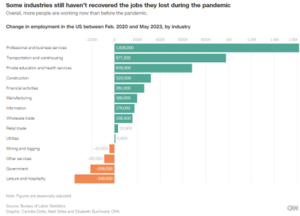
    From Teachers to Waiters: The Industries that Haven’t Bounced Back from the Pandemic (CNN)

    A Manufacturing Investment Supercycle is Starting (Axios)

    DOD Enters $13.8 Million Agreement to Expand Domestic Manufacturing (U.S. DOD)

    How AI Will Accelerate the Circular Economy (Harvard Business Review)


    Workforce

    The Post-Pandemic Workforce: New Data About the U.S. Labor Market After Coronavirus (Reuters)

    Why Americans Want Part-time Jobs Again (Time)

    Commerce Invests $1.7 Million to Expand Truck Driver Workforce Training in NC (EDA)


    Finance And Incentives

    GM, SDI Will Build a $3 Billion Battery Manufacturing Plant in Indiana (Reuters)

    Energy Tax Credits, Meant to Help U.S. Suppliers, May Be Hard to Get (The New York Times)

    Company Secures $850M Loan for Battery Manufacturing Plant in Arizona (VTDigger)

    Oregon Lawmakers Advance $255M in Additional Chip Industry Tax Incentives (OregonLive)

    Ultra Safe Nuclear Corp. Plans $232M Micro-Reactor Assembly Plant in Alabama (Al.com)

    Nevada Introduces State Incentives for Electric Trucks and Buses (Electrek)


    SEDE News

    Spotlight: Kevin McKinnon – Deputy Commissioner, MN Dept. of Employment & Economic Development Kevin McKinnon was appointed Deputy Commissioner of Economic Development at the Minnesota Department of Employment and Economic Development (DEED) in November 2014 after serving as the director of business development and executive director of the division. As Deputy Commissioner, he oversees five offices covering business development, business finance, community finance, trade, and broadband development. In addition to his positions at DEED, McKinnon served as the president of the Greater Fargo Moorhead Economic Development Corp., a Minnesota-North Dakota economic development partnership. He also served in a leadership role with the River Heights Chamber of Commerce in the Twin Cities area and was an economic development analyst with the City of Colorado Springs, Colorado. McKinnon has served on various committees and boards, including the Economic Development Association of Minnesota and the International Economic Development Council, and is a member of Economic Development and Corporate Real Estate Associations. He holds a bachelor’s degree from the University of North Dakota in Grand Forks and lives with his family in a Twin Cities suburb.

    $50M ‘Build to Scale’ Program Launched (U.S. EDA) The EDA is accepting applications for its Build to Scale (B2S) program to “support projects that strengthen equitable ecosystems and increase access to
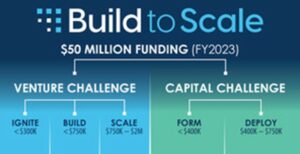
    capital for innovators, entrepreneurs, and startups.” The B2S Program has two competitions: the Venture Challenge, which supports programs that enable high-growth technology entrepreneurship, and the Capital Challenge, which increases access to capital in communities where risk capital is in short supply. Each challenge has multiple funding tiers, with an entry-level opportunity created this year for the Venture Challenge. The deadline to apply for this opportunity is July 28, 2023. For more information, visit EDA’s B2S program website.

    Regional Technology and Innovation Hubs (Tech Hubs) NOFO Released (U.S. EDA) The Tech Hubs program will invest directly in regions with the assets, resources, capacity, and potential to transform into globally competitive innovation centers in approximately 10 years while catalyzing the creation of good jobs for American workers at all skill levels, both equitably and inclusively. On May 12, 2023, EDA published the Tech Hubs Phase 1 Notice of Funding Opportunity (NOFO) (PDF)—the first of two phases.

    • PHASE 1 (Deadline: August 15, 2023): EDA will designate at least 20 Tech Hubs across the country and will separately award approximately $15 million in strategy development grants to accelerate the development of future Tech Hubs. The Tech Hubs designation will be a widely recognized indicator of a region’s potential for rapid technology-led economic growth.
    • PHASE 2 (EDA expects to release the Phase 2 NOFO in Fall 2023.): In Phase 2, EDA will make at least 5 implementation awards to designated EDA Tech Hubs. Only Tech Hubs that EDA designates during Phase 1 are eligible to apply for Phase 2.

    EDA Prepares for Recompete Pilot Program NOFO (U.S. EDA) The Recompete Pilot Program will support economic revitalization in distressed communities across the country. The program will target areas where prime-age (25-54 years) employment significantly trails the national average, with the goal to close this gap through flexible, bottom-up strategy development and implementation investments.

    EDA will deploy funding through a two-phase competition which will be detailed in the upcoming NOFO.

    Administration Awards $20 Million for Domestic Supply Chains Resiliency (NIST) The Hollings Manufacturing Extension Partnership (MEP), a program of the U.S. Department of Commerce’s National Institute of Standards and Technology (NIST), awarded roughly $400,000 to each of its MEP National Network Centers. The total $20 million in funding will make domestic supply chains more efficient. These awards will support a database called the National Supply Chain Optimization and Intelligence Network (SCOIN), which focuses on scouting services, filling supply chain gaps, and creating a map of U.S. supplier capacity. Each center must dedicate one staff member or contractor per year for an initial two years, with potential extension.


    Economy  

    The U.S. Added 339,000 Jobs in May. It’s a Stunningly Strong Number (NPR) A report from the U.S. Department of Labor states that job gains for last month were higher than initially expected, continuing trends seen since March. These strong numbers indicate that significant hiring in industries such as business services, health care, and hospitality continue to grow. Construction companies alone added 25,000 jobs in May, despite challenges seen in the housing market. However, despite this growing number of jobs, unemployment increased to 3.7% in May as more workers returned to the workforce. This tight job market has a strong outlook for workers but can contribute to continued concerns about inflation and price stability.

    Inflation Has Eased, but Economists Are Still Worried (The New York Times) Inflation is beginning to abate meaningfully for American consumers as prices are no longer climbing as rapidly across a wide array of products. The Fed has spent the past 15 months locked in an aggressive war against inflation, raising interest rates above 5 percent in an attempt to get price increases back down to a more normal pace. Fed Chair Jerome Powell emphasized that it was too early to declare victory in the battle against rapid price increases.


    Trade

    More Countries Line Up for U.S.’s EV Tax Credits (Politico) Southeast Asian nations including the Philippines, Malaysia, and Indonesia, are in negotiations to take advantage of the U.S. tax perks for electric vehicles. The Indo-Pacific Economic Framework, a trade initiative the Biden Administration launched with 13 other countries, could enable electric vehicle batteries made with critical minerals to qualify for tax credits that were created through the U.S. Inflation Reduction Act. The law requires foreign countries to have a free trade agreement with the U.S. in order to be eligible. These tax credits were created to incentivize the adoption of electric vehicles and increase domestic manufacturing, but these countries are seeking to boost their own production of clean technology using the tax credits..

    Why the World Still Needs Trade (Foreign Affairs) Globalization and economic interdependence has historically been crucial for the growth of the world’s largest economies. Barriers have been torn down to increase economic activity between nations, leading to greater prosperity, decreased poverty, and improved relations. However, in the past 15 years, this vision has been contested and shocks such as the global financial crisis, the COVID-19 pandemic, and the war in Ukraine have strained global trade relations. Okonjo-Iweala, the Director General of the World Trade Organization, argues that interdependence of these global economies is not the issue, but the overconcentration of some trade relationships for vital products could be improved upon, so that when there are supply chain challenges, the output of these products is at risk. “Reglobalization,” creating more diversified global supply chains, could be an alternative.


    Industry Trends

    From Teachers to Waiters: The Industries that Haven’t Bounced Back from the Pandemic (CNN) Many industries such as transportation and warehousing have recovered, and even gained, workers since the pandemic. However, some industries are still struggling to recover lost workers. The four sectors employing fewer workers now compared to before the pandemic are leisure and hospitality, government, other services, and mining and lodging. Leisure and hospitality have the largest shortage of workers, losing 349,000 workers.  Overall, more people are working now than before the pandemic, but may have switched industries due to pandemic closures; therefore, many of these industries have not been able to bounce back.
    A Manufacturing Investment Supercycle is Starting (Axios) There is currently billions of dollars flooding into large megaprojects to manufacture batteries, solar cells, semiconductors, and more. This is due to allocated funds from the Biden Administration’s legislation: the Inflation reduction Act, Bipartisan Infrastructure Law, and CHIPS and Science Act. Since April, spending on manufacturing construction is at a $189 billion annual rate, triple the average rate of the 2010s. The construction sector has added 192,000 jobs over the last year, despite challenges in the housing sector. This investment typically involves much larger capital outlays than what has previously been seen, such as two European companies announcing an investment of $2 billion in Texas for a synthetic natural gas plant. These facilities tend to create high-wage jobs, which could put sustained pressure on wages.


    DOD Enters $13.8 Million Agreement to Expand Domestic Manufacturing (U.S. DOD) The Department of Defense’s Office of the Assistant of Defense for Industrial Base Policy announces it has entered a $13.8 million agreement with the Timken Company to increase production of high-precision ball bearings in Keene, New Hampshire. Timken is also further investing $11 million to expand its facility. The funds will be used for operational and technological improvements at the facility, such as upgrading equipment and operator training. The supply of ball bearings is a constraint in increasing demand for advanced systems, so this investment will support important sectors and expand domestic supply chains.

    How AI Will Accelerate the Circular Economy (Harvard Business Review) The Digital, Data, and Design (D^3) Institute at Harvard Business School hosted an event focused on the circular economy, which is when businesses recover or recycle resources used in their value chain to increase productivity. Entrepreneurs and business leaders are using artificial intelligence (AI) to remove barriers and create new business models. Three main ways were identified to achieve a more circular economy: increasing product utilization, material efficiency, and use of recycled materials. In order to fully invest in the development of a circular economy, barriers must be eliminated, most easily through investors finding innovative solutions to these methods and bridging the gap that exists in funding. By doing so, there is potential for increased productivity both through the development of a circular economy and the usage of AI to do so.


    Workforce

    The Post-Pandemic Workforce: New Data About the U.S. Labor Market After Coronavirus (Reuters)

    The latest data from the BLS Occupational Employment and Wage Statistics program shows how the U.S. economy has adapted post-pandemic. Increases in work from home, expansions in the logistics industry, and technological changes led to an increase in managerial jobs and a decrease in office administration support positions. Transportation jobs especially grew, as demand for delivery services grew. Some smaller jobs have seen rapid growth, such as solar panel installers, counselors and therapists, and human resource specialists. However, some of these trends may be short-term due to demands resulting from pandemic recovery; tracking which of these workforce trends continue in the long-term will be important.

    Why Americans Want Part-time Jobs Again (Time) More Americans are interested in part-time and freelance work, seeking greater flexibility. The number of people working part-time for non-economic reasons, or by choice, reached 21.8 million in May, which is greater by 5% from last year. Some of this rise in part-time workers is due to Baby Boomers who are still working but are mostly retired. However, many younger workers are also preferring part-time work to account for other responsibilities such as child-care or caregiving for aging parents. This growth in part-time work even during high inflation suggests this could be a long-term trend.

    Commerce Invests $1.7 Million to Expand Truck Driver Workforce Training in NC (EDA) The Guilford Technical Community College in Jamestown, North Carolina will receive a $1.7 million grant from EDA to construct a truck driver training facility on the East Greensboro campus. This investment will be matched with $2.6 million in state funds and is expected to create 1,782 jobs. The funds will be used to create an asphalt training pad, parking, lot, and other infrastructure upgrades in order to efficiently provide training. This investment will create pathways to professional growth by increasing training opportunities in an underserved area.


    Finance and Incentives

    GM, SDI Will Build a $3 Billion Battery Manufacturing Plant in Indiana (Reuters) Scheduled to begin operations in 2026, General Motors (GM) and Samsung SDI will build a more than $3 billion electric vehicle battery cell plant in Indiana. The U.S. Energy Department finalized a $2.5 billion loan to the joint venture late last year. This plant will be near New Carlisle, Indiana and aims to create 1,700 jobs. GM predicts to build 400,000 electric vehicles in North America through mid-2024 and is considering building at least two additional plants to meet demand.

    Company Secures $850M Loan for Battery Manufacturing Plant in Arizona (VTDigger) The U.S. Department of Energy announced plans to loan KORE Power Inc., a battery manufacturing company, $850 million to fund construction of a new manufacturing facility in Buckeye, Arizona. This funding, administered through the Advanced Technology Vehicles Manufacturing Program, will be used to construct a 1.3 million square foot facility, and will employ over 1,250 people.

    Energy Tax Credits, Meant to Help U.S. Suppliers, May Be Hard to Get (The New York Times) The Inflation Reduction Act offers tax credits that can cover up to 70% of a renewable energy project’s cost if it meets criteria. However, in the short-term, many of these credits may be challenging to use due to new rules for eligibility. Manufacturers are concerned that in order to qualify for credit with 40% of the product being U.S. produced content, they may need to calculate each individual component in order to reach the threshold. The Inflation Reduction Act is overall a benefit for decarbonization and provides a strong incentive to utilize them. The Treasury Department is still accepting comments on the rules to be used for administering the credits.

    Oregon Lawmakers Advance $255M in Additional Chip Industry Tax Incentives (OregonLive) Lawmakers in Oregon approved $255 million in tax credits for semiconductor research in the state for over five years. A robust tax credit in research and development will assist in attracting investment to revive the state’s computer chip industry and semiconductor manufacturing. However, the bill  requires companies receiving enterprise zone incentives to negotiate a fee with local school districts to offset the loss in  portion of property tax revenue.

    Ultra Safe Nuclear Corp. Plans $232M Micro-Reactor Assembly Plant in Alabama (Al.com) Seattle-based company Ultra Safe Nuclear Corp. will build a $232 million micro-modular reactor assembly plant in Gadsden, Alabama. The plant will have 250 employees, both professional and technical workers. The facility will begin operations in 2027 and will manufacture, assemble, and test non-radiological modules to construct the reactor. Gadsden competed against other locations, but the unique facility will support Alabama’s interests in advanced manufacturing operations.

    Nevada Introduces State Incentives for Electric Trucks and Buses (Electrek) The Nevada Clean Trucks and Buses Incentive program was signed into law, which provides incentives for Nevada-based businesses and organizations that own gas or diesel-powered trucks and buses to switch to electric vehicles. The base incentive is determined by the gross vehicle weight rating class; incentives range from $20,000 for the lowest weight class to $175,000. Additional incentives can be combined with base incentives for independent truck owners, school districts, or disadvantaged small businesses.
    The State Economic Development Executives (SEDE) Network engages in regular events throughout the year. State Economic Development.org lists these activities and offers an interactive forum for discussion among peers.


    The SEDE Steering Committee includes: Sandra Watson (AZ), Chair; Don Pierson (LA), Vice-Chair; Kurt Foreman (DE); Kevin McKinnon (MN); Christopher Chung (NC); Alicia Keyes (NM); Andrew Deye (OH); Sophorn Cheang (OR); Adriana Cruz (TX); Joan Goldstein (VT); and Mike Graney (WV).


    Leif Olson of the Center for Regional Economic Competitiveness (CREC) led the development of this Bulletin; for questions on the content in this Bulletin or for information on the SEDE Network contact Bob Isaacson, CREC Senior Vice President.


  • State Economic Development Bulletin – Issue 57, May 2023

    State Economic Development Bulletin – May 2023

    Headlines 

    Economic Performance 

    The Fed Lifts Rates by A Quarter Point (CNN)

    Banks Report Tougher Credit Standards in Wake of Failures (Associated Press)

    Consumer Sentiment Tumbles to Six-Month Low in May (Market Watch)


    Economic Outlook

    The Potential Economic Impacts of Various Debt Ceiling Scenarios (Council of Economic Advisers)

    Consumer-Led Economic Slowdown to Hit the U.S. (Economist Intelligence Unit)


    SEDE News

    SEDE Curriculum Launches

    EDA Publishes Tech Hubs Phase 1 Notice of Funding Opportunity (NOFO) (EDA)

    White House Manufacturing Paper Features Contributions from State Leaders (The White House)

    IEDC Seeking to Place 65 Economic Recovery Corp (ERC) Fellows (IEDC)


    Trade
    U.S. Trade with the World Rose in March (AG WEB)

    China’s commerce minister to meet U.S. trade representative this month (South China Morning Post)

    Industry Trends

    U.S. Services Sector Still Growing; Inflation Remains Sticky (Reuters)

    Lackluster Results, Production Target Cuts Deepen EV Start-Up Gloom (Reuters)

    U.S. Manufacturing Contracts Again in April, But Pace Slows (Reuters)


    Workforce

    The U.S. Has Fallen Behind When It Comes to Women in The Workforce (Axios)

    Why Labor Shortages Could Be Here to Stay (Axios)

    Robots and Jobs: Evidence from U.S. Labor Markets (NBER)


    Finance And Incentives

    EV Automaker Canoo to Build Second U.S. Manufacturing Plant in Oklahoma (Repairer Driven News)

    Data Center, Hydrogen Fuel Hub to Bring More Than 2,000 New Jobs to Surry, VA (Smithfield Times)

    Mesquite, TX Approves New General Dynamics Plant (Dallas News)

    Coca-Cola to Build $650 Million Facility in Monroe County, NY (Governor of New York)

    6K Energy to Establish Battery Material Manufacturing Plant in Jackson, TN (Tennessee DEDC)

    FN America LLC To Build $33 Million Small Arms Plant in Pickens County, SC (SC Biz News)


    Economic Performance  

    The Fed Lifts Rates by A Quarter Point (CNN) The Federal Reserve voted unanimously to raise interest rates by a quarter point on May 3rd, the tenth rate hike since the central bank started its battle against inflation in 2022. The quarter-point increase brings the benchmark federal funds rate to a level of 5%-5.25%, its highest level in more than 15 years. However, employers still had 9.59 million job openings in March, (down from 12 million in March 2022), and the unemployment rate has not gone above 3.7% since the Fed began to lift rates last year. Despite recent bank failures, Powell played down fears of worsening turmoil in the banking sector. He said conditions have “broadly improved since March” and that many banks have been “attending to liquidity.”


    Banks Report Tougher Credit Standards in Wake of Failures (Associated Press) A recent Federal Reserve report showed that banks raised their lending standards for business and consumer loans in the aftermath of three large bank failures and expect to lift them more this year, a trend that could slow the economy in coming months and increases the risk of a recession. A year ago, slightly more banks were easing credit standards than raising them. Now nearly half are tightening. Federal Reserve officials and economists will closely scrutinize the report, because tighter credit standards are expected to be followed by a reduction in lending. That could force businesses to pull back on expansion plans and reduce hiring which could limit sales of cars and homes.


    Consumer Sentiment Tumbles to Six-Month Low in May (Market Watch) The University of Michigan’s gauge of consumer sentiment fell to a preliminary May reading of 57.7 from an April reading of 63.5. That is the lowest level since November 2022. Americans view on near-term inflation moderated slightly in May. Consumer spending is the engine of the economy. If households grow concerned about the outlook and pull back, it could push the economy into recession. “Consumers’ worries about the economy escalated in May alongside the proliferation of negative news about the economy, including the debt crisis standoff,” said the University of Michigan report.


    Economic Outlook 

    The Potential Economic Impacts of Various Debt Ceiling Scenarios (Council of Economic Advisers) New analyses by both the Congressional Budget Office and the U.S. Department of the Treasury suggest the United States is rapidly approaching the federal debt limit—the legal limit on the principal of outstanding federal liabilities. Because the government would be unable to enact counter-cyclical measures in a breach-induced recession, there would be limited policy options to help buffer the impact on households and businesses. Job loss, an economic recession and increased short- and long-term interest rates are among the impacts of a default.


    Consumer-Led Economic Slowdown to Hit the U.S. (Economist Intelligence Unit) U.S. economic data sent mixed signals in the first quarter of 2023. These mixed signals suggest that the U.S. economy is at a turning point, coming out of a year of robust growth in 2022. Real private consumption surged by 3.7% quarter on quarter (annualized) in the first quarter of 2023 which supported real GDP growth of 1.1% in the first quarter, despite a steep decline in private inventories. Manufacturing indices have been softening for several months, although the impact of this on overall GDP has thus far been offset by continued consumer demand.


    SEDE News

    SEDE Curriculum Launches New and experienced state economic development executives always make time to expand their skills and knowledge. With funding from the Economic Development Administration, SEDE and the Center for Regional Economic Competitiveness have developed a peer-led curriculum with short video modules with 12 SEDE executives discussing 18 leadership and programmatic topics. This approach meets the needs of busy SEDE executives and helps enhance their working relationship with EDDs. In addition to the state executives, EDA Assistant Secretary Alejandra Castillo shares her thoughts as part of the curriculum.  Check out the curriculum here!


    EDA Publishes Tech Hubs Phase 1 Notice of Funding Opportunity (NOFO) (EDA) The Tech Hubs Program is an economic development initiative designed to drive regional technology and innovation-centric growth by strengthening a region’s capacity to manufacture, commercialize, and deploy critical technologies. EDA will designate at least 20 Tech Hubs across the country and will separately award approximately $15 million in strategy development grants to accelerate the development of future Tech Hubs. The Tech Hubs designation will be a widely recognized indicator of a region’s potential for rapid technology-led economic growth. The Phase 1 application deadline is August 15, 2023. EDA expects to release the Phase 2 NOFO in Fall 2023.


    White House Features SSBCI Accomplishments in Manufacturing Report (The White House) The American Rescue Plan, passed in 2021, reauthorized and expanded the State Small Business Credit Initiative (SSBCI) and will provide nearly $10 billion in funds to help small businesses access the capital they need to invest in job-creating opportunities as the country emerges from the pandemic. These funds will be allocated to states, the District of Columbia, territories, and Tribal governments to promote American entrepreneurship and startup capital across the country, including in underserved communities.


    IEDC Seeking to Place 65 Economic Recovery Corp (ERC) Fellows (IEDC) The International Economic Development Council (IEDC) and its partners are seeking to place 65 Economic Recovery Corps (ERC) Fellows within partnering communities to activate economic development projects or plans that generate innovative practices and paradigms for equitable and inclusive change. IEDC is seeking organizations or communities ready to advance a local or regional economic development strategy or transformative project but has struggled to find the resources to bridge the gap between planning and implementation. Submit an Expression of Interest by June 30. The ERC program is open to the entire community and economic development field, from city and county government to regional coalitions, Tribal Nations, economic development organizations, economic development districts (EDDs), and entrepreneurial technical assistance providers.


    Trade

    U.S. Trade with the World Rose in March (AG WEB) U.S. trade with the rest of the world increased in March as companies shipped more oil, natural gas and vehicles and exported more products to China after it lifted COVID-19 restrictions. Exports rose 2.1% in March from the prior month to a seasonally adjusted $256.2 billion while imports declined 0.3% to $320.4 billion, the Commerce Department said. While the overall U.S. trade deficit narrowed to $64.2 billion in March from $70.6 billion in February on rising exports against imports that declined, the U.S. agriculture sector exports saw a wider deficit.

    China’s Commerce Minister to Meet U.S. Trade Representative in May (South China Morning Post) U.S. trade representative Katherine Tai plans to meet China’s commerce minister in Detroit, in what would be the most senior in-person encounter between the nations since the U.S. shot down an alleged Chinese spy balloon. The meeting between Tai and Wang Wentao of China would likely occur on the sidelines of a gathering of Asia-Pacific Economic Cooperation trade ministers on May 25-26, according to the people, who asked not to be identified citing information that is not yet public. Improving relations could open the way to clearing a backlog of bilateral engagements.


    Industry Trends

    U.S. Services Sector Still Growing; Inflation Remains Sticky (Reuters) The U.S. services sector maintained a steady pace of growth in April as new orders increased amid a surge in exports. Despite darkening clouds gathering over the economy as the lagged effects of higher interest rates start to have an impact, services businesses in the Institute for Supply Management (ISM) survey on Wednesday were upbeat. The ISM’s non-manufacturing PMI edged up to a reading of 51.9 last month from 51.2 in March. A reading above 50 indicates growth in the services industry, which accounts for more than two-thirds of the economy.


    Lackluster Results, Production Target Cuts Deepen EV Start-Up Gloom (Reuters) EV makers Fisker Inc (FSR.N), Nikola Corp (NKLA.O) and Lucid Group (LCID.O) disappointed investors with dull quarterly results and production target cuts. The downbeat updates from firms underscore the challenges facing cash-strapped EV companies, whose plans to disrupt the auto industry are unraveling in the face of rising interest rates and competition.


    U.S. Manufacturing Contracts Again in April, But Pace Slows (Reuters) U.S. manufacturing pulled off a three-year low in April as new orders improved slightly and employment rebounded, but activity remained depressed amid higher borrowing costs and tighter credit, which have raised the risk of a recession this year. The ISM said its manufacturing PMI increased to 47.1 last month from 46.3 in March, which was the lowest reading since May 2020. Activity could remain subdued as the ISM noted that customers’ inventory levels “are now at the low end of the ‘too high’ level,” and “likely not conducive to future output growth.”


    Workforce

    The U.S. Has Fallen Behind When It Comes to Women in The Workforce (Axios) The U.S. is facing a labor shortage that could worsen over the next decade as the population ages — and increasing the share of women in the workforce is one way to counteract that according to Moody’s Investor Service. Improved policies around child care and maternity leave have helped push up labor force participation rates in advanced economies— eliminating key barriers to keeping women attached to work. Though a few states offer paid parental leave, the country has no universal policy. And though there are some subsidies for child care, IMF notes that the service is generally more expensive here than in other countries.


    Why Labor Shortages Could Be Here to Stay (Axios) As an increasing number of Americans reach retirement age and leave the workforce, the implications on labor shortages will remain for the long-term. But the so-called “prime-age” workers are indeed working. The labor force participation rate among those aged 25–53 is now at 83.3% — slightly higher than where it was in February 2020. But overall labor force participation — that is the share of the total population either working or looking for work — is still slightly lower than where it was then.


    Robots and Jobs: Evidence from U.S. Labor Markets (NBER) As robots and other computer-assisted technologies take over tasks previously performed by labor, there is increasing concern about the future of jobs and wages. Daron Acemoglu, MIT, and Pascual Restrepo, Boston University, analyze the effect of the increase in industrial robot usage between 1990 and 2007 on U.S. local labor markets and found that robots may reduce employment and wages. The impact of robots is distinct from the impact of imports from China and Mexico, the decline of routine jobs, offshoring, other types of IT capital, and the total capital stock. According to the study, one more robot per thousand workers reduces the employment to population ratio by about 0.18-0.34 percentage points and wages by 0.25-0.5 percent.


    Finance And Incentives

    EV Automaker Canoo to Build Second U.S. Manufacturing Plant in Oklahoma (Repairer Driven News) Canoo, an electric vehicle (EV) and advanced mobility company, has partnered with AFV Partners to build its second U.S. manufacturing plant in Oklahoma City. The 500,000 square foot plant is strategically located with easy access to road, rail, and waterways. The building sits on more than 120 acres of land and will ramp up over the coming months with 500 employees being hired. The facility will produce Canoo’s LDV and LV vehicles for delivery to customers later this year. Canoo plans to reach a 20,000 unit annual run rate by the end of this year.


    Data Center, Hydrogen Fuel Hub to Bring More Than 2,000 New Jobs to Surry, VA (Smithfield Times) Surry County will be home to the United States’ first-of-its-kind combination data center and hydrogen fuel hub that is expected to generate 2,000 to 3,000 new jobs. Middleburg-based Green Energy Partners LLC has secured 641 acres adjacent to Dominion Energy’s Surry nuclear power plant to build a 1-gigawatt data center and hydrogen hub.


    Mesquite, TX Approves New General Dynamics Plant (Dallas News) Mesquite has approved plans for a new defense industry plant that will add more than 125 jobs. General Dynamics will occupy a 240,011-square-foot building in the Mesquite 635 Business Park. The new manufacturing operation will produce artillery casings for the U.S. Department of Defense and will employ about 50 salaried employees and another 75 to 100 hourly workers. The new plant comes as the Department of Defense is increasing munitions and weapons production to replace materials that were sent abroad to support the war in Ukraine.


    Coca-Cola to Build $650 Million Facility in Monroe County, NY (Governor of New York) The Coca-Cola Company has selected New York State for its preferred location for a new Fairlife production facility. The 745,000 square-foot facility is expected to create up to 250 new jobs the town of Webster. The company expects to break ground on the project sometime this fall, subject to appropriate approvals and final diligence, with the facility slated to be operational by Q4 of 2025. The total project investment has been estimated at $650 million.


    6K Energy to Establish Battery Material Manufacturing Plant in Jackson, TN (Tennessee DEDC) 6K Energy officials announced that the company will invest in a full-scale PlusCAM™ battery material manufacturing plant in Jackson, Tennessee. 6K Energy will invest $166 million in the plant for construction and equipment, expanding to $250 million in future phases. The company will also use its recently announced $50 million U.S. Department of Energy (DOE) grant opportunity for the factory placing the initial combined investment over $200 million.


    FN America LLC To Build $33 Million Small Arms Plant in Pickens County, SC (SC Biz News) FN America LLC will manufacture firearms and related products in a Pickens County facility near the town of Liberty. The Pickens County Council voted to grant a fee-in-lieu-of-tax agreement to FN America on at the offices of Alliance Pickens, which is located at the edge of the business park that will house FN America’s $33 million small arms factory. The company expects to break ground next year and start operations in 2025, bringing about 175 new jobs in the five years that follow.


    The State Economic Development Executives (SEDE) Network engages in regular events throughout the year. State Economic Development.org lists these activities and offers an interactive forum for discussion among peers.


    The SEDE Steering Committee includes: Sandra Watson (AZ), Chair; Don Pierson (LA), Vice-Chair; Kurt Foreman (DE); Kevin McKinnon (MN); Christopher Chung (NC); Alicia Keyes (NM); Andrew Deye (OH); Sophorn Cheang (OR); Adriana Cruz (TX); Joan Goldstein (VT); and Mike Graney (WV).


    Leif Olson of the Center for Regional Economic Competitiveness (CREC) led the development of this Bulletin; for questions on the content in this Bulletin or for information on the SEDE Network contact Bob Isaacson, CREC Senior Vice President.


  • State Economic Development Bulletin – Issue 56, April 2023

    State Economic Development Bulletin – April 2023

    Headlines 

    Economic Performance 

    American Inequality is Lessening (TIME)

    Inside the U.S. Jobs Report: Record-Low Black Unemployment (Reuters)

    U.S. Labor Market Remains Tight, Corporate Profits Decline (Reuters)

    U.S. Revises Down Last Quarter’s Economic Growth to 2.6% Rate (Associated Press)


    Economic Outlook

    U.S. Consumer Confidence Improved in March (CNN)

    Economic Pessimism Persists, With Inflation Still Key Concern (Gallup)

    U.S. Adds a Healthy 236,000 Jobs Despite Fed’s Rate Hikes (ABC News)


    SEDE News

    SEDE Curriculum

    SEDE Member Spotlight: Adriana Cruz

    Office of Manufacturing and Energy Supply Chains: State Manufacturing Leadership Program FOA


    Trade

    U.S. Goods Trade Deficit Widens as Exports Decline (Reuters)

    USTR’s Tai: Indo-Pacific Trade Talks Could See Results This Year (Reuters)


    Industry Trends

    Cummins Announces Investments of ~ $1 billion Across U.S. (Market Screener)

    US First-Quarter Auto Sales Set to Rise on Better Inventory (Reuters)

    Global Factory Activity Weakens as Demand Falters (Reuters)


    Workforce

    What Has Driven the Labor Force Participation Gap since February 2020? (New York Federal Reserve)

    DOE Seeks Input on Building the Solar Manufacturing Workforce (PV Magazine)


    Finance And Incentives

    Biden Administration Begins First Round of Transportation Grants (Department of Transportation)

    Treasury Releases Proposed Guidance on New Clean Vehicle Credit (U.S. Treasury)

    U.S. Announces $50 Million to Incentivize Smart Manufacturing (U.S. Department of Energy)

    LG Announces Huge Expansion of Plans for Battery Factory in Arizona (AZ Central)

    Toyota Boshoku Announces Plans for $225 Million ‘Smart Plant’ in Kentucky (WDRB)

    Hounen Solar Establishing First U.S. Operations in South Carolina (Governor Of South Carolina)

    Flender Corporation to Expand Manufacturing Facility in Illinois (Illinois.Gov)


    Economic Performance  

    American Inequality is Lessening (TIME) After decades of increasing income inequality, the rebound from the pandemic has led to something different: a slow reduction in inequality across the economy. Incomes of people in the bottom half of income distribution grew by 4.5% in the last calendar year, much faster than the 1.2% average income growth of all Americans, according to Realtime Inequality. Between February 2020 and September 2022, average income for the lowest earning 50% of Americans increased by more than 10%, faster than all groups of population except for the top 1%.


    Inside the U.S. Jobs Report: Record-Low Black Unemployment (Reuters) The Black unemployment rate hit a record low in March, a milestone for a U.S. labor market that most policymakers and economists expect to begin cooling in the face of higher interest rates. The Black unemployment rate tumbled to 5% last month from 5.7% in February, according to the Bureau of Labor Statistics. U.S. Adds a Healthy 236,000 Jobs Despite Fed’s Rate Hikes (ABC News) Overall, America’s employers added a solid 236,000 jobs in March and the unemployment rate fell to 3.5% suggesting that the economy remains on solid footing. Average hourly wages were up 4.2% from 12 months earlier, down sharply from a 4.6% year-over-year increase in February.


    U.S. Labor Market Remains Tight, Corporate Profits Decline (Reuters) The number of Americans filing new claims for unemployment benefits rose moderately last week, showing no signs yet that tightening credit conditions were having a material impact on the tight labor market. Initial claims for state unemployment benefits increased 7,000 to a seasonally adjusted 198,000 for the week ended March 25, the Labor Department said. Economists polled by Reuters had forecast 196,000 claims for the latest week. Claims have stayed low despite high-profile layoffs in the technology industry. But the risks to the economy are mounting. Other data showed corporate profits in the fourth quarter declining by the most in five years.


    U.S. Revises Down Last Quarter’s Economic Growth to 2.6% Rate (Associated Press) The U.S. economy maintained its resilience from October through December despite rising interest rates, growing at a 2.6% annual pace according to the Bureau of Economic Analysis in a slight downgrade from its previous estimate. But consumer spending, which drives most of the economy’s growth, was revised sharply down. The rise in the gross domestic product for the October-December quarter was down from the 3.2% growth rate from July through September. For all of 2022, the U.S. economy expanded 2.1%, down significantly from a robust 5.9% in 2021. This data suggested that the economy was losing momentum at the end of 2022.


    Economic Outlook 

    U.S. Consumer Confidence Improved in March (CNN) Confidence in the U.S. economy ticked up in March, despite the sudden turmoil in the banking industry, according to the latest report from the Conference Board. The business group’s Consumer Confidence Index increased to 104.2 in March from an upwardly revised reading of 103.4 the month before. The March headline index saw a boost from consumers’ improved levels of confidence for the six-month-ahead time frame. The Expectations Index increased to 73 from 70.4 in February, while the Present Situation Index dipped to 151.1 from 153.A reading below 80 on the Conference Board’s Expectations Index often signals that a recession will occur within the next year.


    Economic Pessimism Persists, With Inflation Still Key Concern (Gallup) The American public continues to rate the U.S. economy in mostly negative terms in March, with 83% describing current economic conditions as “only fair” or “poor.” Just 16% consider them “excellent” or “good.” Furthermore, 72% think conditions are getting worse, while 23% say they are improving. These consumer views of the nation’s economy round out a highly stable first quarter, with the March results closely matching what Gallup found in January and February.

    Source: Gallup Poll Social Series


    SEDE News

    SEDE Curriculum. New and experienced state economic development executives always make time to expand their skills and knowledge. With funding from the Economic Development Administration, SEDE and the Center for Regional Economic Competitiveness have developed a peer-led curriculum with short video modules with 12 SEDE executives discussing 18 leadership and programmatic topics. This short video approach meets the needs of busy SEDE executives and helps enhance their working relationship with EDDs. In addition to the state executives, EDA Assistant Secretary Alejandra Castillo shares her thoughts as part of the curriculum.  Check out the curriculum here!


    SEDE Member Spotlight: Adriana Cruz. Adriana Cruz was named Executive Director of the (Texas) Economic Development and Tourism (EDT) Division within the Office of the Governor in 2019. As Executive Director, Cruz provides leadership to Business and Community Development, Texas Tourism, Texas Workforce Investment Council, Texas Music Office, and the Texas Film Commission. Cruz has more than 20 years of leadership experience in economic development, marketing, and international business. Prior to her appointment to lead the Texas Economic Development and Tourism Office, Cruz was President of the Greater San Marcos Partnership, the regional economic development organization established to encourage and nurture economic growth in the City of San Marcos, and Hays and Caldwell counties. Previously, Cruz was the Vice President of Global Corporate Recruitment for the Austin Chamber of Commerce. Cruz has been married for 34 years to her husband Rik and has three grown children living in the Austin area.


    Office of Manufacturing and Energy Supply Chains: State Manufacturing Leadership Program FOA The Office of Manufacturing and Energy Supply Chains (MESC) is issuing a Funding Opportunity Announcement (FOA) that will support States in accelerating the deployment of smart manufacturing and high-performance computing technologies across the small- and medium-sized manufacturing firm (SMM) base. DOE expects to make a total of approximately $46 million of federal funding available for new awards under this FOA, subject to the availability of appropriated funds. Individual awards may vary between $1,000,000 and $2,000,000. DOE anticipates making approximately 20-25 awards under this FOA.


    Trade

    U.S. Goods Trade Deficit Widens as Exports Decline (Reuters) The U.S. trade deficit in goods widened modestly in February as exports declined, potentially setting up trade to be a small drag on economic growth in the first quarter. The trade deficit increased 0.6% to $91.6 billion. Goods exports dropped 3.8% to $167.8 billion last month with the decline led by an 11.9% plunge in shipments of motor vehicles and parts. Exports of consumer goods decreased 4.6%, while industrial supplies, which include petroleum, fell 4.2%.


    USTR’s Tai: Indo-Pacific Trade Talks Could See Results This Year (Reuters) U.S. Trade Representative Katherine Tai said that Indo-Pacific Economic Framework (IPEF) trade negotiations are progressing “at a very quick pace” and she expects results from the talks as early as by the end of the year. The United States and 13 Indo-Pacific countries last year launched negotiations on IPEF, Washington’s first major pan-Asian trade engagement effort in nearly a decade. Countries in the IPEF talks include Australia, Brunei, Fiji, India, Indonesia, Japan, South Korea, Malaysia, New Zealand, Philippines, Singapore, Thailand, and Vietnam. Together with the United States, the participants represent some 40% of global GDP.


    Industry Trends

    Cummins Announces Investments of ~ $1 billion Across U.S. (Market Screener) Cummins has announced that in addition to recent investments in Fridley, the company is investing more than $1 billion across its U.S. engine manufacturing network in Indiana, North Carolina, and New York. The investment will provide upgrades to those facilities to support the industry’s first fuel agnostic engine platforms that will run on low carbon fuels, including natural gas, diesel and eventually hydrogen, helping decarbonize the nation’s truck fleets today. Over half of all medium- and heavy-duty trucks on the road in the U.S. today use Cummins engines. This investment is intended to retain the thousands of current engineering and manufacturing jobs and support the creation of hundreds of new jobs across the company’s New York, North Carolina and Indiana footprint as Cummins invests in its people and facilities to grow innovation and manufacturing and accelerate our decarbonization efforts.


    US First-Quarter Auto Sales Set to Rise on Better Inventory (Reuters) Top global automakers reported a rise in first-quarter U.S. sales on improving shipments to dealers, except for Toyota Motor Corp, which continued to grapple with parts shortage. General Motors Co, which replaced Toyota as the top U.S. automaker in 2022, posted a 17.6% rise in first-quarter auto sales. Vehicle production took a hit after the pandemic disrupted supply of semiconductor chips and other raw materials, hurting carmakers’ ability to meet the upsurge in demand for personal mobility. The companies have been trying to make up for the lost production ever since as supply chain snags gradually ease. But rising interest rates and fears of a recession may play dampen growth in an industry where most vehicle purchases are financed with loans, analysts say, as they watch out for signs of plateauing demand.


    Global Factory Activity Weakens as Demand Falters (Reuters) Global factory activity weakened in March as consumers feeling the pinch from rising living costs cut back, surveys showed on April 3rd, suggesting a deteriorating outlook will remain a drag on economic. U.S. manufacturing activity slumped to the lowest level in nearly three years as new orders continued to contract, according to a survey by the Institute for Supply Management (ISM). The ISM manufacturing PMI fell to 46.3 last month, the lowest reading since May 2020, from 47.7 in February. Economists polled by Reuters had forecast the index dipping to 47.5. It was the fifth straight month that the PMI remained below the 50 threshold which indicates contraction in manufacturing.


    Workforce

    What Has Driven the Labor Force Participation Gap since February 2020? (New York Federal Reserve) The U.S. labor force participation rate currently stands at 62.5 percent, 0.8 percentage point below its level in February 2020, immediately prior to the pandemic. This “participation gap” translates into 2.1 million workers out of the labor force. There are three channels that have affected labor force participation: an aging population, increased post-pandemic retirements, and the falling participation of workers with disabilities. Researchers found that the surge of retirement of by baby boomers explains nearly all of the drop in the nation’s labor force participation.


    DOE Seeks Input on Building the Solar Manufacturing Workforce (PV Magazine) The U.S. Department of Energy (DOE) Solar Energy Technologies Office (SETO) released a request for information (RFI) to better understand what is needed to build out the U.S. solar manufacturing workforce. It seeks to understand the anticipated quantity, quality, and accessibility of solar manufacturing roles, the potential challenges for filling the jobs and training the people. The Inflation Reduction Act (IRA) delivers the supportive policy needed to increase domestic manufacturing by way of an advanced manufacturing tax credit, known as Section 45X, which provides tax incentives for specific manufactured goods produced and sold in the United States. The credit lasts through 2029 and then begins to phase down.


    Finance And Incentives

    Biden Administration Begins First Round of Transportation Grants (Department of Transportation) The U.S. Department of Transportation announced the first round of grants totaling over $94 million for 59 projects across the country through the new Strengthening Mobility and Revolutionizing Transportation (SMART) Grants Program. The competitive grant program provides State, local, and Tribal governments $500 million over five years. The funding will support a diverse array of projects to improve worker safety, make transit more reliable, and support local business districts.


    Treasury Releases Proposed Guidance on New Clean Vehicle Credit (U.S. Treasury) On March 31, the U.S. Treasury Department and the IRS released proposed guidance on the new clean vehicle provisions of the Inflation Reduction Act. The Notice of Proposed Rulemaking provides clarity and certainty to manufacturers on the Inflation Reduction Act requirements that vehicles eligible for the clean vehicle credit undergo final assembly in North America and do not exceed a Manufacturers Suggested Retail Price of $80,000 for a van, pickup truck, or sport utility vehicle, or $55,000 for any other vehicle. To be eligible for a $7,500 credit, clean vehicles must meet sourcing requirements for both the critical minerals and battery components contained in the vehicle. Vehicles that meet one of the two requirements are eligible for a $3,750 credit.


    U.S. Announces $50 Million to Incentivize Smart Manufacturing (U.S. Department of Energy) The U.S. Department of Energy (DOE) announced $50 million in funding from the Infrastructure Law for states to ensure that smart manufacturing technologies and high-performance computing are more accessible by domestic manufacturing firms. This program will support all U.S. states, including Washington, D.C., and U.S. territories, in accelerating the deployment of smart manufacturing technologies by small and medium-sized manufacturers by providing financial assistance to implement smart manufacturing technologies and practices and broaden access to high-performance computing resources. DOE seeks applications for programs that will be self-sustaining long-term. Competitive funding awards of up to $2 million per state will be made over an up-to three-year period. States will be required to provide a cost match of at least 30% of the award. Applications are due May 30, 2023.


    LG Announces Huge Expansion of Plans for Battery Factory in Arizona (AZ Central) LG Energy Solution said it will quadruple its initial budget for a battery manufacturing plant in Queen Creek and now plans to spend $5.5 billion for the project, which will create thousands of jobs and could become the largest stand-alone battery complex in North America. The South Korean company’s lithium-ion batteries power electric vehicles, mobility devices, information technology services and energy-storage services. The complex will consist of two manufacturing facilities — one for cylindrical batteries for electric vehicles and another for lithium iron phosphate batteries for energy storage systems. Production is expected to start in 2025.


    Toyota Boshoku Announces Plans for $225 Million ‘Smart Plant’ in Kentucky (WDRB) Toyota Boshoku (TBA) plans to build a $225 million facility in Hopkinsville. Kentucky Gov. Andy Beshear’s office said the 365,400-square-foot structure will be built on 49 acres in Christian County. It will be the first TBA plant in the world considered a “Smart Plant,” which means it will utilize “advanced robotics, planning and automation streamline processes, reduce waste and enhance productivity to maximize efficiency and operations,” Beshear’s office said. TBA plans to create 157 “quality” jobs for Kentuckians at the plant, which is scheduled to open in August 2024.


    Hounen Solar Establishing First U.S. Operations in South Carolina (Governor.SC.Gov) Hounen Solar (Hounen), a global solar panel manufacturer, today announced plans to establish its first United States manufacturing operations in Orangeburg County, South Carolina. The company’s $33 million investment will create 200 new jobs. Hounen manufactures solar photovoltaic (PV) panels worldwide, serving the clean energy market. In addition to solar panels, the company creates other electrical products. Hounen’s plans include leasing a 200,720-square-foot plant, marking the company’s first manufacturing operations in the U.S and first South Carolina location. The Orangeburg County facility will allow the company to develop, manufacture and sell one gigawatt (GW) crystalline silicon PV panels in the U.S.


    Flender Corporation to Expand Manufacturing Facility in Illinois (Illinois.Gov) Governor JB Pritzker, Flender Corporation and the Illinois Department of Commerce and Economic Opportunity (DCEO) announced that Flender will expand its current manufacturing facility in Elgin – creating 50 new full-time jobs and retaining 140 existing full-time jobs. Flender Corporation – which has had a manufacturing presence in Illinois since 1976 – is a leading global manufacturer of mechanical gears for industrial applications, including wind turbines. Flender’s drive components are installed in approximately thirty percent of wind turbines worldwide. The Flender Elgin Facility supplies and repairs gearboxes that are vital to the critical infrastructure needs of North America including renewable energy.

    The State Economic Development Executives (SEDE) Network engages in regular events throughout the year. State Economic Development.org lists these activities and offers an interactive forum for discussion among peers. The website is currently undergoing some minor reorganization, including adding resources on how state and local economic development districts can align strategies and collaborate on activities.


    The SEDE Steering Committee includes: Sandra Watson (AZ), Chair; Don Pierson (LA), Vice-Chair; Kurt Foreman (DE); Kevin McKinnon (MN); Christopher Chung (NC); Alicia Keyes (NM); Andrew Deye (OH); Sophorn Cheang (OR); Adriana Cruz (TX); Joan Goldstein (VT); and Mike Graney (WV).


    Leif Olson of the Center for Regional Economic Competitiveness (CREC) led the development of this Bulletin; for questions on the content in this Bulletin or for information on the SEDE Network contact Bob Isaacson, CREC Senior Vice President.


  • State Economic Development Bulletin – Issue 55, March 2023

    State Economic Development Bulletin 

    Headlines 

    Economic Performance 

    The U.S. Economy Added 311,000 Jobs in February, Outpacing Expectations (CNN)

    February’s Hot Data Releases (Board of Governors of the Federal Reserve)

    Inflation Gauge Increased 0.4% In February (CNBC)


    Economic Outlook

    Debt Default Would Cripple U.S. Economy, New Analysis Warns (New York Times)

    Pace of GDP Growth, Disinflation Key in U.S. Economic Outlook (St. Louis Federal Reserve)


    SEDE News

    SEDE Member Spotlight: Kurt Foreman

    SEDE Winter Meeting Summary


    Trade

    Treasury Targets Sanctions Evasion Network Moving Billions for Iranian Regime (U.S. Treasury)

    U.S. Trade Deficit Widens Moderately in January (Reuters)

    New U.S. Trade Controls on Russia Mark One Year of War in Ukraine (Hughes Hubbard & Reed)

    U.S. Seeks Cooperation with Brazil Amid Ukraine Tensions (Miami Herald)


    Industry Trends

    U.S. Government Steps in to Make SVB Depositors Whole (CNBC)

    Signature Bank’s Collapse Spells Trouble for Cryptocurrency Industry (Washington Post)

    U.S. Manufacturing Growth Outpaces the Rest of the World (Axios)

    U.S. Announces $6 Billion in Grants to Decarbonize Heavy Industry (Reuters)


    Workforce

    Who’s Not Working? Understanding The U.S.’s Aging Workforce (Minneapolis Federal Reserve)

    Number Of Women in The Workforce Tops Pre-Pandemic Levels for First Time (Axios)


    Finance And Incentives

    Solar Panel Company Establishing First U.S. Manufacturing Operations in SC (ABC 25 Columbia)

    Clean Drinking Water: Oregon to receive $18.9 Million (The Chronicle)

    Volkswagen’s Scout to Build $2 Billion Plant In South Carolina (Reuters)

    Ford Is Building a $3.5 Billion EV Battery Plant in Michigan (Thomas Net)

    Panasonic Will Build Plant in Kansas (Fox 23)

    Siemens Mobility Selects Davidson County for Major East Coast Manufacturing Center (NC Governor)


    Economic Performance  

    The U.S. Economy Added 311,000 Jobs in February, Outpacing Expectations (CNN) The U.S. economy added 311,000 jobs in February, according to the latest monthly employment snapshot from the Bureau of Labor Statistics, that is a pullback from the blockbuster January jobs report, when a revised 504,000 positions were added, but shows the labor market is still emitting plenty of heat. February’s modest net job gains surpassed economists’ estimates of 205,000 jobs added. While the report is a strong one, that’s actually bad news in the broader context of the Federal Reserve’s campaign to curb high inflation, said PNC Financial Services chief economist Gus Faucher. “It’s much hotter than the economy can run, and so this means the Fed is going to have to continue to hike interest rates,” he told CNN. “And that makes a recession more likely.”


    February’s Hot Data Releases (Board of Governors of the Federal Reserve) “Last month we received a barrage of data that has challenged my view in January that the Federal Open Market Committee (FOMC) was making significant progress in moderating economic activity and reducing inflation. Since the end of January, financial market participants have revised their outlooks in a way that has led them to mark up their expectations for the federal funds rate at the end of 2023 by about a half percentage point. Although inflation has been coming down since the middle of last year, the recent data indicates that we haven’t made as much progress as we thought. That assessment goes for both overall inflation, and “core” inflation, which strips out volatile energy and food prices and is a good guide to future price increases. And this holds for both CPI and PCE measures of inflation. Core CPI inflation over the last three months of 2022 was revised up from 3.1 percent (at an annual rate) to now be 4.3 percent.”

    Inflation Gauge Increased 0.4% In February (CNBC) Inflation rose in February but was in line with expectations, likely keeping the Federal Reserve on track for another interest rate hike next week despite recent banking industry turmoil. The consumer price index increased 0.4% for the month, putting the annual inflation rate at 6%, the Labor Department reported March 14th. Both readings were exactly in line with Dow Jones estimates. Excluding volatile food and energy prices, core CPI rose 0.5% in February and 5.5% on a 12-month basis. The monthly reading was slightly ahead of the 0.4% estimate, but the annual level was in line.  


    Economic Outlook

    Debt Default Would Cripple U.S. Economy, New Analysis Warns (New York Times) The U.S. economy could quickly shed a million jobs and fall into recession if lawmakers fail to raise the nation’s borrowing limit before the federal government exhausts its ability to pay its bills on time, the chief economist of Moody’s Analytics, Mark Zandi, warned a Senate panel on March 7th. The damage could spiral to seven million jobs lost and a 2008-style financial crisis in the event of a prolonged breach of the debt limit, Mr. Zandi and his colleagues Cristian Deritis and Bernard Yaros wrote in an analysis prepared for the Senate Banking Committee’s Subcommittee on Economic Policy. Mr. Zandi said he favored eliminating the statutory debt limit entirely to end the threats that a potential default posed to the economy. “I just think you want to break that cycle once and for all as best you can, because it’s very counterproductive,” he said.


    Pace of GDP Growth, Disinflation Key in U.S. Economic Outlook (St. Louis Federal Reserve) U.S. economic growth, as measured by real gross domestic product (GDP), downshifted markedly in 2022, slowing from a 5.7% increase in 2021 to a 0.9% increase in 2022. Although the stepdown in growth was broad-based, growth slowed the most in personal consumption expenditures and residential fixed investment. In fact, the latter declined by 19% in 2022. The Federal Open Market Committee (FOMC) raised the federal funds rate target range by 425 basis points in 2022. These actions slowed activity in interest rate-sensitive sectors like housing, but also had the intended effect of slowing the rate of price inflation—though admittedly, the reversal of some temporary factors (e.g., supply-side disruptions) also mattered: Growth of the all-items (headline) consumer price index (CPI) declined from 7.2% in December 2021 to 6.4% in December 2022, while the growth of the headline personal consumption expenditures (PCE) price index slowed from 6% in December 2021 to 5.3% in December 2022.


    SEDE News

    SEDE Member Spotlight. Kurt Foreman was appointed President and CEO of Delaware Prosperity Partnership (DPP) in the spring of 2018. DPP is the public-private economic development organization that promotes the State of Delaware as a business location for companies considering new locations or expansions and to attract entrepreneurs and innovators eager to nurture and grow new ideas and ventures in a vibrant and supportive environment. DPP is a 501c3 nonprofit funded by the state and private-sector investors. Foreman’s experience includes serving in various senior roles in economic development groups throughout the United States, including in Oklahoma, Louisiana, Pennsylvania, Wisconsin, and twice in the Washington, D.C. metro area. Foreman has served as a site selection consultant working directly with companies to help assess and choose where to locate or expand throughout the nation. He also worked as an executive recruiter with a leading global executive search firm supporting senior-level searches across many sectors. Foreman received his bachelor’s degree at Franklin & Marshall College in Lancaster, PA, and his master’s degree from Wake Forest University in Winston-Salem, NC He and his wife, Julie, have four grown children and three grandchildren.


    SEDE Winter Meeting Summary. The State Economic Development Executives (SEDE) Network’s Winter Networking Meeting was held on February 27-28, 2023, in New Orleans, LA. The state executives discussed a variety of topics including site improvement issues, labor force challenges, housing shortages, remote work, automation, and childcare. Alejandra Castillo, EDA Assistant Secretary, attended the meeting and offered thoughts on new EDA initiatives and how states and EDA could work together to meet important economic development challenges. Mojdeh Bahar, Associate Director for Innovation and Industry Services at the National Institute of Standards and Technology (NIST), discussed several NIST programs and noted how MEP centers can be great partners to state economic development agencies.


    Trade

    Treasury Targets Sanctions Evasion Network Moving Billions for Iranian Regime (U.S. Treasury) On March 9, the U.S. Department of the Treasury’s Office of Foreign Assets Control (OFAC) sanctioned 39 entities constituting a significant “shadow banking” network, one of several multi-jurisdictional illicit finance systems which grant sanctioned Iranian entities, such as Persian Gulf Petrochemical Industry Commercial Co. (PGPICC) and Triliance Petrochemical Co. Ltd. (Triliance), access to the international financial system and obfuscate their trade with foreign customers. The action was taken pursuant to Executive Order (E.O.) 13846 and follows OFAC’s February 9, 2023, designation of nine companies in Iran, Singapore, and Malaysia for their role in the production, sale, and shipment of hundreds of millions of dollars’ worth of Iranian petrochemicals and petroleum to buyers in Asia on behalf of Triliance.


    U.S. Trade Deficit Widens Moderately in January (Reuters) The U.S. trade deficit widened slightly in January as export growth nearly kept pace with increases in imports. The trade deficit increased 1.6% to $68.3 billion, and data for December was revised to show the trade gap widening to $67.2 billion instead of $67.4 billion as previously reported. Economists polled by Reuters had forecast the trade deficit rising to $68.9 billion.


    New U.S. Trade Controls on Russia Mark One Year of War in Ukraine (Hughes Hubbard & Reed) On February 24th, to mark the one-year anniversary of the Russian invasion of Ukraine, the White House announced a new set of sanctions and related measures targeting Russia in response to its aggression in Ukraine. The U.S. actions include new rules issued by the U.S. Department of Commerce, Bureau of Industry and Security (“BIS”) that significantly broaden the export controls applicable to Russia and Belarus. The updates include:

    • Strengthened export controls
      • Updates to the Russian and Belarusian industry sector sanctions and luxury goods sanctions
      • Changes to Russia/Belarus license requirements and creation of new Iranian license requirements
      • Entity list additions
    • Office of Foreign Assets Control (OFAC) sanctions
    • Increased tariffs and State Department sanctions

    U.S. Seeks Cooperation with Brazil Amid Ukraine Tensions (Miami Herald) The United States and Brazil can work together to address the economic effects of the Russian invasion of Ukraine on energy supply and food production, U.S. Trade Representative Katherine Tai told the Miami Herald and el Nuevo Herald in an exclusive interview on March 10th following her trip to Brazil this week. “I went to test out the theory that this is a good moment of opportunity for the United States and Brazil, especially just weeks after President Lula’s visit to Washington, D.C. The reception I received was so warm and enthusiastic that I am really delighted, and I think there will be a lot that we can do. The most concrete outcome of this first set of meetings is that my Brazilian minister counterpart [Vice President and Minister of Development, Industry, Foreign Trade and Services Geraldo Alckmin] has agreed to reconvene under the Agreement on Trade and Economic Partnership (ATEC), an agreement between the United States and Brazil.”


    Industry Trends

    U.S. Government Steps in to Make SVB Depositors Whole (CNBC) Banking regulators devised a plan March 12th to backstop depositors with money at Silicon Valley Bank, a critical step in stemming a feared systemic panic brought on by the collapse of the tech-focused institution. Depositors at both failed SVB and Signature Bank in New York, which was shuttered on the 12th over similar systemic contagion fears, will have full access to their deposits as part of multiple moves that officials approved over the weekend. Along with that move, the Federal Reserve also said it is creating a new Bank Term Funding Program aimed at safeguarding institutions affected by the market instability of the SVB failure. The Fed facility will offer loans of up to one year to banks, saving associations, credit unions and other institutions. Those taking advantage of the facility will be asked to pledge high-quality collateral such as Treasurys, agency debt and mortgage-backed securities. Securities will be valued at par value rather than the market value assessed at the discount window.


    Signature Bank’s Collapse Spells Trouble for Cryptocurrency Industry (Washington Post) Signature Bank, a New York based financial institution with deep ties to the cryptocurrency industry, collapsed over the weekend after depositors made a run on the bank. The bank has long been an integral financial institution for the industry, hosting tools for facilitating digital transactions and counting notable crypto companies, such as the cryptocurrency exchange Coinbase, as its clients. The Federal Deposit Insurance Corporation took over Signature Bank, guaranteeing that clients’ deposits over the $250,000 federal limit became available March 13th. But it is unclear how the bailout impacts other parts of the bank’s operations, notably a transaction system, Signet, used to process cryptocurrency transactions.


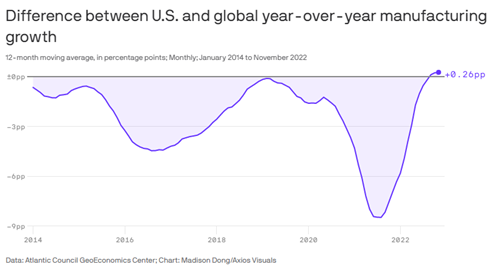
    U.S. Manufacturing Growth Outpaces the Rest of the World (Axios) American manufacturing growth started outpacing the rest of the world’s growth at the end of last year — for the first time in recent memory. The reasons for the surprising flip-flop are primarily energy and Covid-related, according to the Atlantic Council GeoEconomics Center. The chart shows the difference between the U.S. and the world’s (excluding the U.S.) industrial production year-over-year percent change. The Atlantic Council calculations are based on data from the Federal Reserve Bank of Dallas.


    U.S. Announces $6 Billion in Grants to Decarbonize Heavy Industry (Reuters) The Biden administration said on March 8th it is directing $6 billion in funding to speed decarbonization projects in energy-hungry industries like steel, aluminum, and cement making that contribute nearly 25% of U.S. greenhouse gas emissions. The Industrial Demonstrations Program will provide competitive grants to technology developers, industry, universities, and others for up to 50% of the cost of projects that aim to cut emissions from industry that also includes production of chemicals, ceramics and paper, the Department of Energy (DOE) said.


    Workforce

    Who’s Not Working? Understanding the U.S.’s Aging Workforce (Minneapolis Federal Reserve) The American workforce has gotten older, with young people staying in school longer and older people increasingly delaying retirement. Seniors aged 65 to 69, past the standard retirement age, are more likely to have a job than teenagers. A full 32 percent of these post-retirement-age seniors have jobs, up from less than one-quarter in 2000. This isn’t just an artifact happening at the extremes. Work has become less common this century among every single age bracket under 55, while every single age bracket over 55 is more likely to work. No single factor explains this long-term shift in the U.S. workforce. While the U.S. population is getting older, the data show a changing workforce even controlling for age. Other factors include:

    • Young people are more likely to be in school
    • Students are less likely to work
    • Older Americans are delaying retirement


    Number Of Women in The Workforce Tops Pre-Pandemic Levels for First Time (Axios) The number of women in the workforce in February was higher than pre-pandemic levels for the first time, according to the latest jobs data out March 10th. The strength of women’s return to work was faster than anyone could have imagined just a few years ago when dire predictions about a “she-cession” flooded the news. 105,000 of the 311,000 jobs added in February were in the leisure and hospitality sector, where women hold most positions. Women’s labor force participation — that is, the percentage of women working or looking for work — is at 57.2%, almost back to the February 2020 participation level of 57.9%.


    Finance And Incentives


    Solar Panel Company Establishing First U.S. Manufacturing Operations in SC (ABC 25 Columbia) A global solar panel manufacturer announced plans to establish its first U.S. facility in Orangeburg County, South Carolina. Hounen Solar serves the clean energy market by providing solar photovoltaic panels and other electrical products worldwide. The company plans to lease a 200,720 square-foot plant and invest $33 million in operations. The expansion will create 200 new jobs.


    Clean Drinking Water: Oregon to receive $18.9 Million (The Chronicle) Oregon will receive $18.9 million from the Bipartisan Infrastructure Law to address emerging contaminants like Per- and Polyfluoroalkyl Substances (PFAS) in drinking water. Oregon received this funding through the U.S. Environmental Protection Agency’s (EPA) Emerging Contaminants in Small or Disadvantaged Communities (EC-SDC) Grant Program that assesses and improves access to safe and clean water in small, rural, and disadvantaged communities while supporting local economies.


    Volkswagen’s Scout to Build $2 Billion Plant In South Carolina (Reuters) Volkswagen’s off-road brand Scout Motors said March 3rd it would build a $2 billion manufacturing plant near Columbia, South Carolina, for trucks and SUVs. The investment could potentially create 4,000 or more permanent jobs and more than 200,000 Scout vehicles could be produced annually at the facility. Groundbreaking is planned for mid-2023 and production is projected to begin by the end of 2026. Scout, an independent U.S. company owned by Volkswagen Group, is currently evaluating the potential for outside investment.


    Ford Is Building a $3.5 Billion EV Battery Plant in Michigan (Thomas Net) The latest auto brand to make waves in battery development is Ford, who recently announced plans to build an EV battery plant in its home state of Michigan. The investment amounts to $3.5 billion, and Ford says it will produce lithium-iron-phosphate, or LFP batteries, with the help of tech partner CATL. Ford says the plant should create around 2,500 jobs in Marshall, Michigan, and will pay $20 to $50 an hour. The company hopes to be online by 2026.


    Panasonic Will Build Plant in Kansas (Fox 23) Panasonic has chosen to build its new electric car battery factory in Kansas, edging out Oklahoma for the financial opportunity worth several billion dollars. Politicians in Kansas and Oklahoma have been courting the company for months. Oklahoma Governor Kevin Stitt signed House Bill 4455 into law in April. The Lead Act provides nearly $700 million dollars in financial incentives to any company that meets certain requirements when building a facility in Oklahoma. Panasonic builds batteries for Tesla vehicles.


    Siemens Mobility Selects Davidson County for Major East Coast Manufacturing Center (NC Governor) Siemens Mobility, Inc., the global manufacturer of rail transportation vehicles and control systems, will build a major advanced manufacturing and rail services center in Davidson County, creating 506 jobs. Siemens Mobility’s advanced manufacturing center in North Carolina will involve multiple buildings on the 200-acre site, which will also feature more than 11,000 feet of rail track. The company will manufacture passenger rail vehicles at the Lexington facility, allowing it to better serve its East Coast customers while meeting growing demand for its products.


    The State Economic Development Executives (SEDE) Network engages in regular events throughout the year. State Economic Development.org lists these activities and offers an interactive forum for discussion among peers. The website is currently undergoing some minor reorganization, including adding resources on how state and local economic development districts can align strategies and collaborate on activities.


    The SEDE Steering Committee includes: Sandra Watson (AZ), Chair; Don Pierson (LA), Vice-Chair; Mike Preston (AR); Kurt Foreman (DE); Kevin McKinnon (MN); Christopher Chung (NC); Alicia Keyes (NM); Andrew Deye (OH); Sophorn Cheang (OR); Adriana Cruz (TX); Joan Goldstein (VT); Lisa Brown (WA) and Mike Graney (WV).


    Leif Olson of the Center for Regional Economic Competitiveness (CREC) led the development of this Bulletin; for questions on the content in this Bulletin or for information on the SEDE Network contact Bob Isaacson, CREC Senior Vice President.
     

  • State Economic Development Bulletin – Issue 54, February 2023

    State Economic Development Bulletin 

    Headlines 

    Economic Performance 

    The Fed Raises Interest Rates by Only a Quarter-Point After Inflation Drops (NPR)

    Fed Loan Officer Survey Finds Tighter Loan Standards, Reduced Demand (Reuters)

    US Inflation Slows To 6.4%, But Price Pressures Re-Emerge (Associated Press)

    Atlanta Fed Research Examines Racial Disparities in Mortgage Refinancing (Fed of Atlanta)


    Economic Outlook

    U.S. Consumer Confidence Lags As 2023 Gets Under Way (Associated Press)

    What Recession? Some Economists See Chances of a Growth Rebound (New York Times)

    Federal Reserve Issues FOMC Statement (Federal Reserve)


    Trade

    America’s Trade Deficit Surged in 2022, Nearing $1 Trillion (New York Times)

    Germany’s Habeck Optimistic EU And U.S. Can Reduce Trade Tension (Reuters)

    Chinese Chip Trade Group Opposes Export Controls from U.S., Netherlands, Japan (Reuters)


    Industry Trends

    U.S. Service Sector Rebounds in January – ISM Survey (Reuters)

    U.S. Manufacturing Sector Sinks Further in January (Reuters)


    Workforce

    U.S. Department of Labor Again Cites Missouri Cattle Processor for Potentially Lethal CO2 Levels (DOL)

    AFL-CIO Wants Bigger Say in U.S. Digital Trade Deals for Workers (Reuters)

    Unemployment Is Low, But So Is the Labor Force Participation Rate (Forbes)

    Workforce Layoffs 2023: Big Tech’s Loss is Another Industry’s Gain (Forbes)

    With High-Tech Manufacturing Jobs in Ohio, Workforce Developers Race to Get Ready (Brookings)


    Finance And Incentives

    HyRel Technologies Commences Operations at Manufacturing Facility in Peoria (AZCommerce)

    New Oregon Coastal Protections Will Help Nature and Communities (Pew)

    Tennessee Announces $447 Million In Broadband Infrastructure Investments (The Rogersville Review)

    New York Announces $22 Million for Regional Economic Development Initiative (New York State)

    What States Need to Know About Federal Funding for High-Speed Internet (Pew)


    Economic Performance

    The Fed Raises Interest Rates by Only a Quarter-Point After Inflation Drops (NPR) The Federal Reserve raised interest rates by a quarter percentage point, its eighth increase in less than a year, as the central bank continues its crackdown on inflation. The hike in the Fed’s benchmark rate is the smallest since last March and may signal that policymakers are shifting to a more cautious approach. Consumer spending has cooled in recent months and inflation has dropped significantly, although prices are still climbing. “It’s the early stages of disinflation,” Fed chairman Jerome Powell told reporters. “And it’s most welcome to be able to say that. But we just see that it has to spread through the economy and it’s going to take some time.”


    Fed Loan Officer Survey Finds Tighter Loan Standards, Reduced Demand (Reuters) Lending officers at major banks told the Federal Reserve that in the final three months of last year they tightened standards and saw reduced demand across a wide array of business and consumer credit fronts. On the consumer front, survey respondents to the January Senior Loan Officer Opinion survey reported that real estate and related lending standards got tighter amid declining demand for the same period. The same dynamic played out for auto, credit card and other types of consumer lending. The survey also found that trends in late 2022 may carry into 2023, “Banks, on balance, reported expecting lending standards to tighten, demand to weaken, and loan quality to deteriorate across all loan types.”


    U.S. Inflation Slows To 6.4%, But Price Pressures Re-Emerge (Associated Press) The pace of consumer price increases eased again in January compared with a year earlier, the latest sign that the high inflation that has gripped Americans for nearly two years is slowly easing. Consumer prices climbed 6.4% in January from a year earlier, down from 6.5% in December. It was the seventh straight year-over-year slowdown and well below a recent peak of 9.1% in June. Yet it remains far above the Federal Reserve’s inflation target. Core prices rose 5.6% from a year ago, down just a tick from December’s 5.7%.


    Atlanta Fed Research Examines Racial Disparities in Mortgage Refinancing (Fed of Atlanta) Black homeowners were largely absent from the surge of borrowers who refinanced their mortgages to lower rates during the COVID-19 pandemic, though recent research by the Atlanta Federal Reserve shows the group benefitted from other measures that eased foreclosure pressures during the economic downturn. Researchers determined the total annual savings for mortgages refinanced by October 2020 was about $5 billion. Black households are to reap an estimated $198 million of the amount while White households account for an estimated $3.8 billion.


    Economic Outlook

    U.S. Consumer Confidence Lags As 2023 Gets Under Way (Associated Press) The Conference Board reported Tuesday that its consumer confidence index slipped to a still-optimistic 107.1 in January, down from 109 in December. Last month’s reading was the highest the index has reached since April. However, the board’s expectations index — a measure of consumers’ six-month outlook for income, business, and labor conditions — deteriorated to 77.8 in January from 83.4 in December. A reading under 80 often signals a recession in the coming year, the Conference Board said. The Board added that consumers’ intention to buy big-ticket items like cars held steady but plans to purchase homes fell even further with higher interest rates and home prices.


    What Recession? Some Economists See Chances of a Growth Rebound (New York Times) Many economists expected a slowdown and potential recession going into 2023. But the recession calls are now getting a rethink. Employers added more than half a million jobs in January, the housing market shows signs of stabilizing or even picking back up, and many Wall Street economists have marked down the odds of a downturn this year. Not every data point looks sunny: Manufacturing remains glum, consumer spending has been cracking, and some analysts still think a mild recession this year remains likely. But there have been enough surprises pointing to continued momentum that Fed officials themselves seem to see a better chance that the nation will avoid a painful downturn.


    Federal Reserve Issues FOMC Statement (Federal Reserve) Recent indicators point to modest growth in spending and production. Job gains have been robust in recent months, and the unemployment rate has remained low. Meanwhile, inflation has eased somewhat but remains elevated and Russia’s war against Ukraine is contributing to elevated global uncertainty. The Committee seeks to achieve maximum employment and inflation at the rate of 2 percent over the long run. In support of these goals, the Committee decided to raise the target range for the federal funds rate to 4.5% to 4.75%. The Committee anticipates that ongoing increases in the target range will be appropriate to attain a stance of monetary policy that is sufficiently restrictive to return inflation to 2% over time.


    Trade

    America’s Trade Deficit Surged in 2022, Nearing $1 Trillion (New York Times) The overall U.S. trade deficit rose 12.2% last year, nearing $1 trillion as Americans purchased large volumes of foreign machinery, medicines, industrial supplies, and car parts, according to data released by the Commerce Department. The goods and services deficit reached $948.1 billion, its largest total on record, after rising $103 billion from the previous year. The data showed evidence of the U.S. economy’s continuing recovery from the pandemic, which had held down spending on services like travel and entertainment and pushed up purchases of imported goods. Rapid inflation and higher energy prices were responsible for some of the growth, because the trade data is not adjusted for inflation.


    Germany’s Habeck Optimistic EU And U.S. Can Reduce Trade Tension (Reuters) German Economy Minister Robert Habeck expressed optimism about resolving a European Union trade dispute with Washington, saying he saw room for compromise on certain elements of the U.S. Inflation Reduction Act and its green subsidies. Many EU leaders are worried the local content requirements of $369 billion of green subsidies in the U.S. Inflation Reduction Act will encourage companies to relocate, making the United States a leader in green tech at Europe’s expense. U.S. Treasury Secretary Janet Yellen will be meeting with Habeck along with French Finance Minister Bruno Le Maire as part of Washington’s “ongoing and sustained engagement” on the Inflation Reduction Act and the European Union’s Green Deal Industrial Plan, a Treasury official said.


    Industry Trends

    U.S. Service Sector Rebounds in January – ISM Survey (Reuters) U.S. services industry activity rebounded strongly in January, with new orders recovering and prices paid by businesses for materials continuing to rise at a moderate pace, hopeful signs for the economy as it braces for a possible recession this year. The Institute for Supply Management (ISM) said on Friday its non-manufacturing PMI increased to 55.2 last month. The ISM survey’s gauge of new orders received by services businesses increased to 60.4 in January from 45.2 in December. A measure of prices paid by services industries for inputs dropped to 67.8 from 68.1 in December as supply bottlenecks continued to ease.


    U.S. Manufacturing Sector Sinks Further in January (Reuters) U.S. manufacturing contracted further in January as higher interest rates stifled demand for goods, but factories did not appear to be laying off workers in large numbers. The Institute for Supply Management (ISM) said on Wednesday that its manufacturing PMI dropped to 47.4 last month from 48.4 in December. The third straight monthly contraction pushed the index to the lowest level since May 2020 and below the 48.7 mark viewed as consistent with a recession in the broader economy.


    Workforce

    AFL-CIO Wants Bigger Say in U.S. Digital Trade Deals for Workers (Reuters) The AFL-CIO wants a bigger say in how the U.S. Trade Representative’s office (USTR) sets goals in digital trade, arguing they are too often dictated by big technology companies. The largest U.S. labor organization on Tuesday issued a set of principles that it says is needed to protect workers, the public’s privacy, and government’s ability to regulate a rapidly evolving sector as the USTR negotiates digital trade agreements. U.S. Trade Representative Katherine Tai has pledged to create a “worker-centric” trade policy, but the AFL-CIO said digital trade negotiations too often make no mention of labor standards nor the workers who write software or support networks.


    Unemployment Is Low, But So Is the Labor Force Participation Rate (Forbes) Recently, the unemployment rate has been low despite rounds of layoffs at tech companies and fears of a recession. Since December 2021, the official unemployment rate has dropped from 3.9% to 3.5%. Other measures of unemployment have also dropped, with the U-6 rate falling from 7.3% to 6.5%. The U-6 measures all unemployed plus those who are willing to work, but who have not looked in the past four weeks plus those who are employed part-time for economic reasons.


    However, since the start of the pandemic, the labor force participation rate has remained below historical levels. There are a few explanations for the low labor force participation rate:

    • Increased dependent care needs
    • Fear of getting COVID
    • Higher unemployment benefits
    • Desire for higher wages reducing interest in low-paying jobs
    • Higher pace of retirements due to an aging population
    • Slower population growth


    Workforce Layoffs 2023: Big Tech’s Loss is Another Industry’s Gain (Forbes) Instead of being alarmed by layoffs that totaled over 150,000 by late 2022 and continue to grow, market watchers see those workers as a healthy boon for innovation across other sectors. Some laid off workers could find a warm welcome at startups desperately in need of their expertise for long-term growth. According to the International Data Corporation (IDC), by 2024, companies offering frontline workers democratized access to digital collaboration, process automation and similar tools will see a 20% increase in revenues due to improved productivity. These analysts expect the business benefits of technology to increase over time. They said that driven by skills shortages, CIOs investing in digital adoption platforms and automated learning technologies will see a 40% increase in productivity by 2025 delivering greater speed to expertise.


    With High-Tech Manufacturing Jobs in Ohio, Workforce Developers Race to Get Ready (Brookings) The CHIPS and Science Act appropriates $39 billion to subsidize the construction or expansion of U.S. fabrication plants for logic and memory components and mature-technology semiconductors. Ohio’s Columbus region —site of the first new fabrication plant associated with the CHIPS Act—is one place to look for ideas on how to deliver accessible semiconductor manufacturing jobs. There, construction of Intel’s $20 billion facility is already underway, as are local leaders’ plans for innovating and scaling the region’s workforce training pipeline. To design and build a statewide strategy that meets the expansive needs of Intel’s technicians and suppliers, Columbus State Community College (CSCC) partnered with the Ohio Association of Community Colleges to recruit and train workers from community colleges across all corners of Ohio. Under this statewide strategy, CSCC has adopted two distinct training priorities. First is a short-term certificate program for upskilling existing workers; second is a curriculum-enhancement approach to widen job prospects in the long term.


    Finance And Incentives


    HyRel Technologies Commences Operations at Manufacturing Facility in Peoria (AZCommerce) HyRel Technologies, a global provider of quick turn semiconductor modification solutions, announced it has commenced operations of its manufacturing facility in Peoria, Arizona, creating 50 new jobs. Representing a $15 million investment, the custom 20,000-square-foot facility will be geared towards touchless robotic processing systems for microelectronic components, semiconductors, tape and reel, component recovery, and contract manufacturing services. HyRel provides services to aerospace, defense, medical, industrial, commercial, and original equipment manufacturers. HyRel is also focused on industry-leading tin-mitigation processes, utilizing their unique micro robotic systems.


    New Oregon Coastal Protections Will Help Nature and Communities (Pew) After more than three years of collaboration among coastal residents, community groups, and policymakers, Oregon’s Ocean Policy Advisory Council (OPAC) approved new conservation designations for six rocky intertidal and offshore areas on Dec. 9. These designations will increase state agency attention to managing these areas, and because the designation process galvanized community leaders, they should also enhance collaboration between state agencies and local communities. The designations also will make it easier for the state to secure future funding and protection for these areas.


    Tennessee Announces $447 Million In Broadband Infrastructure Investments (The Rogersville Review) The Governor of Tennessee announced on January 21st that the government will award $446.8 million in grants for the expansion of internet access across the state. In total, the broadband infrastructure grants will provide broadband access to more than 150,000 unserved homes and businesses across 58 counties. According to the 2020 Broadband Deployment Report published by the Federal Communications Commission (FCC), one in six rural Tennesseans lacks access to broadband. Funding for these grants comes through the Tennessee Emergency Broadband Fund – American Rescue Plan (TEBF-ARP), which utilizes a portion of the state’s federal American Rescue Plan funds. Tennessee’s Fiscal Stimulus Accountability Group dedicated $500 million to broadband funding from this program, with more than $446 million going to infrastructure and nearly $50 million going to broadband adoption and digital literacy efforts.


    New York Announces $22 Million for Regional Economic Development Initiative (New York State) Over $22 million has been awarded to support 21 projects across New York State through the Regional Economic Development Council initiative. Round XII included core capital grant and tax-credit funding from Empire State Development, which was made available on a continuous and competitive basis to support the immediate needs of communities. The application for ESD Grant funds remains open, and applications are being reviewed on an on-going basis until funds are exhausted. Applicants with strong, shovel-ready projects that align with the state and region’s economic development priorities can apply through the Consolidated Funding Application.


    What States Need to Know About Federal Funding for High-Speed Internet (Pew) In November 2021, President Joe Biden signed the Infrastructure Investment and Jobs Act into law which established the Broadband Equity, Access, and Deployment (BEAD) Program. BEAD dedicates more than $42 billion to construct broadband networks, establish subsidies to offset the cost of internet service for lower-income households, and create programs to provide end users with the devices and training. BEAD spending should prioritize:

    • Fiber connectivity directly to the end user.
    • Unserved locations—those without access to 25-megabit-per-second (Mbps) download service and 3-Mbps uploads, commonly expressed as 25/3-Mbps service.
    • “Proposals that improve affordability to ensure that networks built using taxpayer dollars are accessible to all Americans.

    Congress split BEAD funding into three formula-based allocations: minimum, high-cost, and remaining funds. The minimum allocation to states, Washington, D.C., and Puerto Rico will be $100 million each; other U.S. territories will receive minimum allocations of $25 million. The NTIA will allocate the remaining funds based on the ability of individual states and territories to provide broadband to unserved areas that meets the minimum project criteria outlined earlier.

    The State Economic Development Executives (SEDE) Network engages in regular events throughout the year. State Economic Development.org lists these activities and offers an interactive forum for discussion among peers. The website is currently undergoing some minor reorganization, including adding resources on how state and local economic development districts can align strategies and collaborate on activities.


    The SEDE Steering Committee includes: Sandra Watson (AZ), Chair; Don Pierson (LA), Vice-Chair; Mike Preston (AR); Kurt Foreman (DE); Kevin McKinnon (MN); Christopher Chung (NC); Alicia Keyes (NM); Andrew Deye (OH); Sophorn Cheang (OR); Adriana Cruz (TX); Joan Goldstein (VT); Lisa Brown (WA) and Mike Graney (WV).


    Leif Olson of the Center for Regional Economic Competitiveness (CREC) led the development of this Bulletin; for questions on the content in this Bulletin or for information on the SEDE Network contact Bob Isaacson, CREC Senior Vice President.
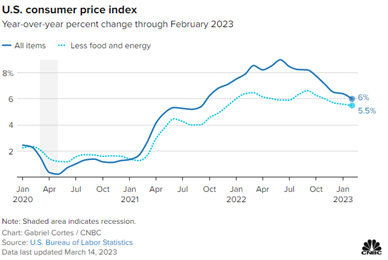
     

  • State Economic Development Bulletin – Issue 53, January 2023

    State Economic Development Bulletin 

    Headlines 

    Economic Performance 

    Applications For U.S. Unemployment Aid Rose Slightly Last Week (Associated Press)

    CPI For All Items Falls 0.1% In December as Gasoline Decreases (Bureau of Labor Statistics)

    U.S. Job Openings Stayed High in Sign of Economic Resilience (Associated Press)


    Economic Outlook

    New Fed Research Flags Rising Risk of U.S. Recession (Reuters)

    As Inflation Eases, U.S. Economy Looks A Little Less Bleak (CBS News)

    Beige Book Brings Some Positive Signs on Inflation (Federal Reserve Bank of Atlanta)


    SEDE News 

    SEDE Hosts Meeting for Top Executives

    January 31st SEDE Webinar: Creating Resilient Supply Chains


    Trade

    Biden Admin Bows Slightly to European Pressure in Trade Clash (Politico)

    U.S. Puts 3 dozen More Chinese Companies on Trade Blacklist (ABC News)

    India, U.S. Establish New Trade Group to Bolster Supply Chains (Reuters)


    Industry Trends

    U.S. Manufacturing Output Tumbles in December (Reuters)

    Tesla Deliveries Miss Estimates Due to Logistical Issues, Slowing Demand (Reuters)

    Startups Spring from Ashes of Big Tech Purge (Reuters)


    Workforce

    Move on from COVID? Child Care Disruptions Continue (Associated Press)

    Abortion, Cannabis, Equal Pay Among Top Labor Issues for States in 2023 (Reuters)

    One Billion Days Lost: How COVID-19 Is Hurting the U.S. Workforce (McKinsey)


    Finance And Incentives

    Origin Materials Announces Louisiana State Bond Commission Approval for Origin 2 (TMC Net)

    ‘Green Banks,’ Poised for Billions in Climate Funds, Draw States’ Attention (Pew)

    Vermont Takes a Regional Approach to Rural Broadband Expansion (Pew)


    Economic Performance 

    Applications For U.S. Unemployment Aid Rose Slightly Last Week (Associated Press) The number of people seeking unemployment benefits rose only slightly in the week of December 18th, with the labor market remaining strong despite the Federal Reserve’s efforts to cool the economy. Applications for unemployment aid for the week ending Dec. 24 climbed 9,000 to 225,000, the Labor Department reported. The four-week average of applications, which smooths out some of the week-to-week swings, slipped just 250 to 221,000. So far, the level of jobless claims remains quite low, evidence that Americans are enjoying a high degree of job security.


    CPI For All Items Falls 0.1% In December as Gasoline Decreases (Bureau of Labor Statistics) The Consumer Price Index for All Urban Consumers (CPI-U) declined 0.1% in December on a seasonally adjusted basis, after increasing 0.1% in November. Over the last 12 months, the “all items” index increased 6.5% before seasonal adjustment. The index for gasoline was by far the largest contributor to the monthly all items decrease, more than offsetting increases in shelter indexes. The food index increased 0.3% over the month with the food at home index rising 0.2%. The energy index decreased 4.5% over the month as the gasoline index declined; other major energy component indexes increased over the month.


    U.S. Job Openings Stayed High in Sign of Economic Resilience (Associated Press) U.S. job openings slipped in November but remained high, suggesting businesses are still determined to add workers. There were 10.46 million job vacancies on the last day of November, down slightly from 10.51 million in October, according to the Labor Department. Openings peaked at 11.9 million in March. Yet, figures show there are nearly 1.8 jobs for every unemployed person, down from a peak of 2 but historically very high. Before the pandemic, there were usually more unemployed people than jobs. Such a high number of job openings suggests the economy is not yet in recession or close to falling into one. Typically, businesses stop advertising job openings as the economy stumbles.


    Economic Outlook

    New Fed Research Flags Rising Risk of U.S. Recession (Reuters) Just over half of the 50 U.S. states are exhibiting signs of slowing economic activity, breaching a key threshold that often signals a recession, new research from the St. Louis Federal Reserve Bank reports. The St. Louis Fed said in its report that if 26 states have falling activity within their borders, that offers “reasonable confidence” that the nation will fall into a recession. Right now, the bank said that 27 states had declining activity in October. That’s enough to point to a looming downturn while still short of the numbers that have been seen ahead of some other recessions.


    As Inflation Eases, U.S. Economy Looks A Little Less Bleak (CBS News) In recent weeks, with inflation showing widespread signs of easing, a more cheerful view of the U.S. economy has gained traction: Maybe a recession isn’t inevitable after all. U.S. wage acceleration is slowing, and the job market remains stable. These trends are raising expectations that the Fed might manage to engineer an often-elusive “soft landing,” whereby the economy slows but doesn’t go into reverse and the unemployment rate rises slightly but stays low. “All the signs are pointing to a higher, not a lower, probability of a soft landing,” said Alan Blinder, a Princeton University economist who formerly served as vice chair of the Fed. “It may still not be more than 50-50. But 50-50 is looking better than it was a few months ago.”


    Beige Book Brings Some Positive Signs on Inflation (Federal Reserve Bank of Atlanta) From mid-November through December last year, the gap between labor supply and demand appeared to narrow, and nonlabor cost increases slowed, according to the Federal Reserve Bank of Atlanta’s new Beige Book report of economic conditions in the Southeast. Broadly, economic activity grew gradually as retailers reported solid holiday sales, auto sales rose, and leisure travel and tourism business were brisk. On the other hand, home sales declined, commercial real estate conditions weakened, and transportation activity slowed. Fed policymakers are closely tracking the labor market as they battle high inflation. Several Atlanta Fed contacts said entry-level jobs were easier to fill even as it remained tough to fill higher-skilled positions. Overall, staffing remained a major concern and businesses for the most part say they’re determined to keep talent even if demand slows for goods or services. Most said they will try to avoid layoffs and trim labor costs through attrition if business deteriorates.


    SEDE News 

    SEDE Hosts Meeting for Top Executives: The State Economic Development Executives (SEDE) Network is building on the success of the June 2022 meeting by holding a Winter 2023 meeting for state leaders in New Orleans. The meeting will begin at noon on Monday, February 27th and conclude at noon on Tuesday, February 28th, 2023. SEDE Steering Committee Vice-Chair Don Pierson and the Louisiana Economic Development team are hosting the meeting and have scheduled a tour of the NASA Michoud Assembly Facility. The agenda will include discussions of hot issues facing states and many opportunities for networking among the state economic development commissioners, secretaries and executive directors or their top deputy. Registration for the state economic development executive or their deputy is available here.


    January 31st SEDE Webinar, Creating Resilient Supply Chains: Join the SEDE Network in a conversation with Zack Valdez, Chief of Staff, U.S. Dept. of Energy Office of Manufacturing and Energy Supply Chains; Buckley Brinkman, CEO of the Wisconsin Center for Manufacturing & Productivity (the MEP Center for WI); and Nikhil Kalathil, PhD student in the Department of Engineering and Public Policy at Carnegie Mellon University on creating sustainable and resilient supply chains.


    Our speakers’ presentations will focus on a range of topics including: the role that sustainability – both economic and environmental – plays in supply chain support, the state-level perspective on utilizing supply chain data, and the role that economic development agencies can play in supporting state-level supply chains through economic dynamism.


    Trade

    Biden Admin Bows Slightly to European Pressure in Trade Clash (Politico) The Biden administration signaled some flexibility in how it would implement a revised tax credit for electric vehicles in the new Inflation Reduction Act which has rankled the European Union and other trading partners. The Treasury Department, in a new “white paper”, indicated it would adopt an expansive definition of which countries have a “free trade agreement” with the United States. The department also issued guidance for a separate tax credit for clean commercial vehicles which isn’t as stringent as the one for new consumer car sales.  That could provide some opportunities for overseas manufacturers through dealerships that lease cars to consumers. The EU welcomed the move, calling it “a win-win” for both sides.


    U.S. Puts 3 dozen More Chinese Companies on Trade Blacklist (ABC News) The U.S. Department of Commerce is adding 36 Chinese high-tech companies, including makers of aviation equipment, chemicals, and computer chips, to an export controls blacklist, citing concerns over national security, U.S. interests and human rights. The move signals a hardening of U.S. efforts to prevent China, especially its military, from acquiring advanced technologies such as leading-edge computer chips and hypersonic weapons. It’s the latest in a years-long escalation of U.S. restrictions of Chinese technology that began with President Donald Trump and has continued under President Joe Biden’s administration.


    India, U.S. Establish New Trade Group to Bolster Supply Chains (Reuters) India and the United States have established a new working group to build sustainable supply chains and boost bilateral trade, the governments said in a joint statement. The working group will initially focus on trade facilitation, digitization of customs procedures, issues related to sustainable finance and the scaling up of innovative clean technologies, according to the statement issued after a Trade Policy Forum meeting in Washington D.C. India’s trade minister, Piyush Goyal, also said the two countries are looking at larger bilateral footprints for trade and investments than mini deals, with a focus on greater market access and ease of doing business. U.S. companies are also looking to invest more in India, he added. “U.S. companies have ambitious plans and are looking to invest large capital and bring technology to India,” said Goyal.


    Industry Trends

    U.S. Manufacturing Output Tumbles in December (Reuters) Production at U.S. factories fell more than expected in December and output in the prior month was weaker than previously thought, indicating that manufacturing was rapidly losing momentum as higher borrowing costs hurt demand for goods. Manufacturing output dropped 1.3% in December and data for November was revised lower to show production at factories decreasing 1.1% instead of the previously reported 0.6%. Economists polled by Reuters had forecast factory production would decline 0.3%. Output fell 0.5% on a year-on-year basis in December. It decreased at a 2.5% annualized rate in the fourth quarter.


    Tesla Deliveries Miss Estimates Due to Logistical Issues, Slowing Demand (Reuters) Tesla Inc (TSLA.O) said quarterly deliveries fell short of market estimates on Monday, held back by ongoing logistical issues and growing demand concerns that rounded off a tumultuous 2022.

    The company is still the world’s most valuable automaker even after losing 65% of its market value in 2022. Shares fell 8.5% to $112 on Tuesday. Tesla delivered 405,278 vehicles in the fourth quarter ended Dec. 31, short of analysts’ estimates of 431,117, according to Refinitiv. For all of 2022, the electric-vehicle maker’s deliveries rose by 40%, missing its 50% annual target.


    Startups Spring from Big Tech Drawdown (Reuters) U.S. tech giants including Meta, Microsoft, Twitter, and Snapchat have reduced staffing by more than 150,000, according to Layoff.fyi, which tracks technology job losses. While overall venture capital financing fell 33% globally to about $483 billion in 2022, early-stage funding was robust, with $37.4 billion raised in so-called angel or seed rounds, in line with the record level seen in 2021, according to data from research firm PitchBook. Some investors compared the 2022 downturn to the dotcom crash of the early 2000s, when dozens of overvalued startups went bust, flooding the market with talent, and helping to spark a wave of new companies such as Facebook and YouTube. Some industry players say former Big Tech employees are uniquely placed to start their own companies, having seen first-hand how some of the biggest firms in the world operate, and enjoying ongoing access to their network of highly skilled colleagues.


    Workforce

    Move on from COVID? Child Care Disruptions Continue (Associated Press) This fall and winter have upended life for working parents of little children, who thought the worst of the pandemic was behind them. The arrival of vaccines for younger children and the end of quarantines for COVID exposure were supposed to bring relief. Instead, families were treated to what some called a “tripledemic.” Flu, COVID-19, and respiratory syncytial virus (RSV) cases collided, stressing children’s hospitals, and threatening the already imperiled childcare system. A record-high 104,000 people missed work in October because of childcare problems, surpassing even early pandemic levels, Bureau of Labor Statistics data shows. Childcare-related absences fell to 59,000 in November, but numbers still surpass typical pre-pandemic levels.


    Abortion, Cannabis, Equal Pay Among Top Labor Issues for States in 2023 (Reuters) State lawmakers in the coming year will consider how some of the most contentious issues facing the country, including recreational cannabis, abortion access and equal pay, will affect the workplace.

    • Pay Transparency: On Jan. 1, California and Washington will join Colorado, New York City and several other locales that have adopted so-called pay transparency laws, while a statewide law takes effect in New York in September. Alaska, Massachusetts, Pennsylvania, and South Carolina are among the states expected to take up similar proposals in 2023. Supporters say disclosing salary up front makes it less likely that employers will offer lower pay to women and minorities and allows workers to see how their compensation compares to their colleagues.
    • Abortion: About half of U.S. states are expected to adopt new abortion restrictions or begin enforcing existing ones, but the status of those restrictions is uncertain as lawsuits wend their way through courts across the country.
    • Marijuana: A growing number of U.S. states have legalized marijuana use, with Maryland and Missouri doing so most recently, and are now taking steps to protect workers’ off-duty medical or recreational marijuana use. Washington, D.C., and at least eight states including California, New York, and New Jersey have adopted laws barring employers from firing workers or refusing to hire applicants who use marijuana outside of work.


    One Billion Days Lost: How COVID-19 Is Hurting the U.S. Workforce (McKinsey) COVID-19 has gradually become a part of the U.S. landscape. Changes in official policy have indicated as much, as has the public’s clear acceptance of the risks of the disease. These shifts are consistent with the scenarios that we and others have described: COVID-19 is now endemic in the United States. COVID-19 affects workforce productivity in four ways:

    • Missed work due to acute illness. The average symptomatic person loses some productive working time because of COVID-19, and the amount of time lost varies.
    • Productivity loss due to long COVID. Long COVID is a complex and poorly understood syndrome.
    • Missed work due to isolation based on COVID-19 protocol. While compliance is far from universal, some people, irrespective of symptoms, do follow the U.S. Centers for Disease Control and Prevention’s (CDC’s) recommendation to isolate for at least five days after testing positive.
    • Productivity loss while caregiving for a dependent family member. Cases in dependent family members can also lead to workdays lost, as parents may have to care for sick children (or grandparents).

    Across all four categories, McKinsey estimates that each case of COVID-19 in the United States currently causes workers to lose between 1.0 and 1.5 days of work. The final analysis indicates that the U.S. workforce might have lost around 1 billion workdays in 2022 due to COVID-19.


    Finance And Incentives


    Origin Materials Announces Louisiana State Bond Commission Approval for Origin 2 (TMC Net) Origin Materials, Inc. the world’s leading carbon negative materials company, announced that the Louisiana State Bond Commission has unanimously passed a resolution granting its final approval of the issuance of up to $1.5 billion of tax-exempt bonds for the financing for the construction of Origin 2, the Company’s first world-scale manufacturing facility, to be located in Geismar, Louisiana. Building on the strong foundation of the previously announced expected $400 million in Private Activity Bond (“PAB”) volume cap allocation, the Bond Commission has authorized issuing bonds of up to $1.5 billion, inclusive of the PAB cap, to support construction and commissioning of Origin 2. This could enable the debt financing of Origin 2 using entirely tax-exempt bonds.


    ‘Green Banks,’ Poised for Billions in Climate Funds, Draw States’ Attention (Pew) Congress last year approved a Greenhouse Gas Reduction Fund of $27 billion, largely to pour money into green banks and similar financial institutions. Newly established green banks from Nevada to Illinois are readying for federal support that could supercharge their efforts, while bipartisan leaders in places such as New Mexico and Alaska are pushing to create their own state green banks. Green banks provide financing to support climate-friendly projects, often focusing on energy savings and solar generation in residential and commercial buildings. Such projects have struggled to obtain capital from traditional financing institutions. Established green banks say their successes should prompt more states to follow suit. “The clean energy projects pay for themselves,” said Jeff Diehl, CEO and executive director of the Rhode Island Infrastructure Bank. “The energy that’s being created through renewable assets or money that is saved through energy efficiency upgrades pays for the financing.”


    Vermont Takes a Regional Approach to Rural Broadband Expansion (Pew) In 2015, the Vermont General Assembly passed legislation allowing towns and cities to collaborate and form communications union districts (CUDs) to provide broadband service. In the years since, CUDs have become a central component of Vermont’s efforts to close the digital divide. Regional districts change the market dynamics of broadband projects in several ways. First, they aggregate demand across a large area, which helps create a sufficient customer base to make infrastructure projects financially feasible. They also boost the efficiency of service delivery by using one large network, rather than multiple systems serving individual communities. In 2021, the state’s General Assembly created the Vermont Community Broadband Board (VCBB) “to coordinate, facilitate, support, and accelerate the development and implementation of universal community broadband solutions.” The VCBB provides administrative and technical support to CUDs—which are largely volunteer-led—facilitates partnerships between regional districts and ISPs, and administers the Vermont Community Broadband Fund, which was also established in 2021. In addition to the state’s funding, Vermont allocated more than $240 million in State and Local Fiscal Recovery Fund and Capital Projects Fund dollars through the American Rescue Plan Act (ARPA) to support the state’s goal of universal broadband access at speeds of 100 Mbps symmetrical. Vermont plans to continue investing in CUDs with broadband funding available through the Infrastructure Investment and Jobs Act (IIJA).


    The State Economic Development Executives (SEDE) Network engages in regular events throughout the year. State Economic Development.org lists these activities and offers an interactive forum for discussion among peers. The website is currently undergoing some minor reorganization including adding resources on how state and local economic development districts can align strategies and collaborate on activities.


    The SEDE Steering Committee includes: Sandra Watson (AZ), Chair; Don Pierson (LA), Vice-Chair; Mike Preston (AR); Kurt Foreman (DE); Kevin McKinnon (MN); Christopher Chung (NC); Alicia Keyes (NM); Michael Brown (NV); Andrew Deye (OH); Sophorn Cheang (OR); Adriana Cruz (TX); Joan Goldstein (VT); Lisa Brown (WA) and Mike Graney (WV).


    Leif Olson of the Center for Regional Economic Competitiveness (CREC) led the development of this Bulletin; for questions on the content in this Bulletin or for information on the SEDE Network contact Bob Isaacson, CREC Senior Vice President.

  • State Economic Development Bulletin – Issue 52, December 2022

    State Economic Development Bulletin 

    Headlines 

    Economic Performance 

    U.S. Employers Added 263,000 Jobs in November (New York Times)

    U.S. Revises Up Last Quarter’s Economic Growth To 2.9% Rate (ABC News)

    U.S. Hiring Stays Strong, Complicating Fed’s Inflation Fight (Associated Press)


    Economic Outlook

    Prices Cooled Last Month, Raising Hopes That Inflation Is Easing (Washington Post)

    Powell: Fed to Keep Rates Higher for Longer to Cut Inflation (Associated Press)

    U.S. Fed Policy Now More Hawkish Than Policy Rules Suggest Is Needed (Reuters)


    SEDE News 

    SEDE Hosts Meeting for Top Executives

    Upcoming SEDE Webinar


    Trade

    Tax Credits for EU Electric Vehicles to Dominate U.S. Trade Talks (Reuters)

    Mexico Tells U.S. It Wants to Keep Talking on Trade Disputes (Associated Press)


    Industry Trends

    U.S. Factory Orders Beat Expectations in October (Reuters)

    U.S. Services Industry Regains Steam; Factory Orders Accelerate (Reuters)

    Trade Group Predicts Trouble Ahead for U.S. Chemical Industry (C&EN)


    Workforce

    Rail Workers Say Deal Won’t Resolve Quality-Of-Life Concerns (Associated Press)

    $981 Million Investment to Expand Opportunities for Rural Businesses (USDA)

    Long Covid Is Distorting the Labor Market (CNBC)


    Finance And Incentives

    Inflation Is Cutting into States’ Big Infrastructure Windfall (Pew Charitable Trusts)

    ARC: ‘Billions’ Coming to Coal Communities from Feds (West Virginia News)

    Dept Of Energy Issues Funds to Expand Domestic Sources of Lithium (Global Mining Review)

    Largest Landfill Solar Project in North America Completed in Mt. Olive (New Jersey Business Magazine)

    Abbott Laboratories To Build $536M Plant In Ohio To Produce Powder Formula (abc6onyourside.com)

    Virginia Taps Electric Companies to Help Expand Rural Broadband Access (Pew Charitable Trusts)


    Economic Performance  

    U.S. Employers Added 263,000 Jobs in November (New York Times) U.S. employers created 263,000 jobs in November, even as a wave of layoffs in the tech industry made headlines. The labor market has been surprisingly resilient in the face of successive interest rate increases by the Fed, adding an average of 323,000 jobs for the last six months. Growth is now largely coming from service sectors like education, health care and hospitality, which powered November’s job gains. Hiring in industries most sensitive to rising borrowing costs, like construction and manufacturing, have started to level off, and workers have put in fewer hours during the average week.


    U.S. Revises Up Last Quarter’s Economic Growth To 2.9% Rate (ABC News) Despite high interest rates and inflation, the U.S. economy grew at a 2.9% annual rate from July through September in a healthy upgrade from its initial estimate. Economists expect the economy to eke out modest 1% annualized growth from October through December, according to a survey of forecasters conducted by the Federal Reserve Bank of Philadelphia. The nation’s manufacturing sector is slowing despite an easing of supply chains that had been backlogged since the economy began rebounding from the pandemic recession two years ago. Inflation is also threatening to weaken the crucial holiday shopping period. Retailers say inflation-weary shoppers are shopping cautiously, with many holding out for the most attractive bargains.


    U.S. Hiring Stays Strong, Complicating Fed’s Inflation Fight (Associated Press) The nation’s employers kept hiring briskly in November despite high inflation and a slow-growing economy — a sign of resilience in the face of the Federal Reserve’s aggressive interest rate hikes. However, there were some signs of weakness in Friday’s hiring figures: Retailers, transportation and warehousing companies all cut jobs as did temporary staffing agencies. Temp employment, often seen as a leading indicator of hiring, has declined for three straight months. As a result, more than half the job growth last month — 170,000 — came from just two large industries: Education and health care, and a category made up mostly of restaurants, hotels, and entertainment firms. These sectors are still replacing workers who were lost during the pandemic. Most other industries have surpassed their pre-pandemic levels of employment. Signs of weakness have sparked concerns about a likely recession next year, in part because many fear that the Fed’s surging rate hikes will end up derailing the economy.


    Economic Outlook 

    Prices Cooled Last Month, Raising Hopes That Inflation Is Easing (Washington Post) Data by the Bureau of Labor Statistics showed that prices rose 7.1 percent in November compared to last year, and 0.1 percent over October. Those figures are too high for a healthy economy, but they showed further progress since the most recent inflation report, offering policymakers and the American public fresh hope that the Fed’s aggressive moves to tame inflation are paying off. The latest inflation data comes as the Federal Reserve convenes for its final meeting of the year.  The Fed will  release a fresh set of internal projections showing how much further rates could climb and how long borrowing costs may stay high. The central bank’s baseline rate is expected to eclipse 5 percent before they pause hikes sometime next year.


    Powell: Fed to Keep Rates Higher for Longer to Cut Inflation (Associated Press) The Federal Reserve will push rates higher than previously expected and keep them there for an extended period, Fed Chair Jerome Powell noted in remarks likely intended to underscore the Fed’s single-minded focus on combating stubborn inflation. In a speech at  Brookings Powell  stressed that smaller hikes shouldn’t be taken as a sign the Fed will let up on its inflation fight anytime soon. “It is likely that restoring price stability will require holding (interest rates) at a restrictive level for some time,” Powell said. “History cautions strongly against prematurely loosening policy.”


    U.S. Fed Policy Now More Hawkish Than Policy Rules Suggest Is Needed (Reuters) Federal Reserve interest rate policy has moved beyond the level called for by commonly followed monetary policy rules, according to a report released by the Cleveland Fed, pointing to how hawkish the central bank has become in its inflation battle. The Fed’s short-term rate target should be at 3.52% in the final quarter of the year, according to the bank’s latest quarterly estimate of where the key central bank rate should be based on seven different rules. This estimate is under the current 3.75% to 4% federal funds rate setting. Some Fed officials have said the target should rise to around 5% by next year. The Cleveland Fed report also said policy rules say the federal funds rate should be at 4.08% in the final quarter of next year and at 4.29% in the fourth quarter of 2024.


    SEDE News 

    SEDE Hosts Meeting for Top Executives. The State Economic Development Executives (SEDE) Network is building on the success of the June 2022 meeting by holding a Winter 2023 meeting for state leaders in New Orleans. The meeting will begin at noon on Monday, February 27th and conclude at noon on Tuesday, February 28th, 2023.  SEDE Steering Committee Vice-Chair Don Pierson and the Louisiana Economic Development team are hosting the meeting and have scheduled a tour of the NASA Michoud Assembly Facility. The agenda will include discussions of hot issues facing states and many opportunities for networking among the state economic development commissioners, secretaries and executive directors or their top deputies. More information and registration forthcoming.


    Upcoming SEDE Webinar: In the coming months, the SEDE Network will be hosting a webinar on supply chain resilience and sustainability featuring three content experts (TBD). Keep a lookout for more information on the SEDE Website!


    Trade

    Tax Credits for EU Electric Vehicles to Dominate U.S. Trade Talks (Reuters) The United States and the European Union cited progress addressing EU concerns about a U.S. climate law that would cut off the bloc’s electric vehicles from U.S. tax credits but failed to resolve the matter. They issued a joint statement after the third ministerial-level of the U.S.-EU Trade and Technology Council (TTC) vowed to work constructively to resolve it. Officials agreed on a “joint roadmap” to assess trustworthy artificial intelligence technologies and set up a task force to reduce research barriers related to quantum computing science and technology. They also agreed to support connectivity projects in Jamaica and Kenya, with an eye to expanding such work in other third world countries and pledged to boost transparency about public subsidies to the semiconductor sector going forward.


    Mexico Tells U.S. It Wants to Keep Talking on Trade Disputes (Associated Press) Mexico’s economy secretary on Thursday proposed another round of talks with the United States on a dispute over Mexico’s energy sector. Mexico hopes to stave off a full-fledged trade complaint under the U.S.-Mexico-Canada trade agreement. The United States says Mexico is unfairly favoring its state-owned electricity and oil companies over American competitors and clean-energy suppliers. Canada has also joined in that complaint. U.S. Trade Representative Katherine Tai appeared willing to keep talking, but her office said she “underscored the urgency of prompt and meaningful progress in our ongoing consultations” at a recent meeting with Mexican Economy Secretary Raquel Buenrostro.


    Industry Trends

    U.S. Factory Orders Beat Expectations in October (Reuters) New orders for U.S.-manufactured goods increased more than expected in October amid strong gains in demand for machinery and a range of other goods, which could allay concerns of a sharp slowdown in manufacturing. The Commerce Department said that factory orders jumped 1.0% after rising 0.3% in September. Economists polled by Reuters had forecast orders advancing 0.7%. Orders shot up 12.8% on a year-on-year basis in October. An Institute for Supply Management survey last week showed its measure of the nation’s factory activity contracted in November for the first time in 2-1/2 years. Manufacturing accounts for 11.3% of the U.S. economy and fuels economic impacts in other sectors. October’s jump in factory orders was driven by a 2.2% rise in bookings for transportation equipment, which followed a 2.3% increase in September. Transportation equipment orders were boosted by increases in orders for both defense and civilian aircraft. Motor vehicle orders rebounded 1.7%.


    U.S. Services Industry Regains Steam; Factory Orders Accelerate (Reuters) U.S. services industry activity unexpectedly picked up in November, with employment rebounding, offering more evidence of underlying momentum in the economy as it braces for an anticipated recession next year. The survey from the Institute for Supply Management (ISM) on Monday followed on the heels of news that the economy continued to create jobs at a solid clip in November, with wage growth accelerating. Consumer spending also rose strongly in October. The flow of strong data raises the risk that the Federal Reserve will continue hiking interest rates and lift its policy rate to a higher level than the recently projected 4.6%, where it could stay for some time.


    Trade Group Predicts Trouble Ahead for U.S. Chemical Industry (C&EN) The U.S. economy will experience a “shallow recession” early next year, contributing to a slump for the nation’s chemical sector, according to a forecast from the American Chemistry Council (ACC), an industry trade group. “We’re seeing recessionary conditions start to take hold,” Moore said. “Decades-high inflation is really underlying all of this.” It has eroded household purchasing power and has prompted interest rate hikes by the Federal Reserve that will dampen economic growth. Higher interest rates on mortgages are increasing the cost of borrowing to buy homes. “So, we’re going to see a continuation of the downturn in housing,” Moore said. The ACC expects that U.S. housing starts, a big outlet for chemical products, will decline from 1.6 million in 2022 to 1.3 million in 2023.


    Workforce

    Rail Workers Say Deal Won’t Resolve Quality-Of-Life Concerns (Associated Press) President Joe Biden signed a bill Friday December 2nd, to block a strike and force workers to accept the agreements union leaders made in September, even though four of the 12 unions — which include a majority of rail workers — voted to reject them. Business groups had been urging Biden to intervene for weeks. The five-year deals that rail workers wound up with include 24% raises and $5,000 in bonuses. The railroads agreed to offer three unpaid days for engineers and conductors to tend to medical needs as long as they are scheduled at least 30 days in advance. They also promised to negotiate further to improve the way regular days off are scheduled to help workers better know when they will be off.


    $981 Million Investment to Expand Opportunities for Rural Businesses (USDA) On December 6th, U.S. Department of Agriculture (USDA) Secretary Tom Vilsack announced that the Department is investing $981 million to help create new and better market opportunities and expand essential services for rural people, businesses, and entrepreneurs in 47 states, Guam and the Virgin Islands. The funding will include affordable financing and technical assistance. It is designed to help rural Americans start businesses and assist small business owners. The USDA investment includes 242 awards through eight programs designed to create economic opportunities for people and businesses in rural areas. These programs are the Biofuel Producer Relief Payments Program, Business and Industry (B&I) Loan Guarantees, Community Facilities Guaranteed Loan Program, Rural Cooperative Development Grant Program, the Rural Economic Development Loan and Grant Program, Rural Innovation Stronger Economy Grants program, the Rural Microentrepreneur Assistance Program, and the Water and Waste Disposal Loan Guarantees.


    Long Covid Is Distorting the Labor Market (CNBC) At a time when job openings are near an all-time high, long Covid is reducing the supply of people able to fill those positions. Economic models suggest that hundreds of thousands of people and potentially millions are out of work because of long-haul symptoms after a Covid infection. “At a minimum, long Covid is adding a lot of uncertainty to an already very uncertain economic picture,” Paige Ouimet, an economist and finance professor at the University of North Carolina, wrote in September. According to economists Gopi Shah Goda and Evan Soltas, the average work absence from long Covid translates to $9,000 in foregone earnings over a 14-month period — representing an 18% reduction in pay during that time. In aggregate, the lost labor supply amounts to $62 billion a year — equivalent to half the lost earnings attributable to illnesses like cancer or diabetes.


    Finance and Incentives

    Inflation Is Cutting into States’ Big Infrastructure Windfall (Pew Charitable Trusts) States have been seeing 20% to 40% hikes in project costs, depending on the region and materials, said Susan Howard, director of policy and government relations at the American Association of State Highway and Transportation Officials. “You have to settle for less or use this money for projects on track that you already planned to do, instead of the dream projects you haven’t realized.” The cost of asphalt, for example, was up more than 20% in October 2022, compared with October 2021, according to the Associated General Contractors of America, a construction industry trade group. Concrete costs rose 14%, and fabricated structural metal for bridges jumped more than 23% during that period. Transportation officials say supply chain disruptions also are extending the time it takes to get and deliver materials and equipment.


    ARC: ‘Billions’ Coming to Coal Communities from Feds (West Virginia News) Massive economic opportunities are available for rural energy communities according to Gayle Manchin, the co-chair of the Appalachian Regional Commission (ARC). Manchin was in Wheeling Wednesday at Northern Community College and met with state and federal leaders representing a variety of government agencies. She and other panelists outlined approximately $200 billion of what was called a “once-in-a-generation investment” targeted at coal-impacted communities. Increases in funding are anticipated for everything from water and sewage projects, brownfield cleanup, and mineland reclamation, to small business support and regionally collaborative economic development.


    Dept Of Energy Issues Funds to Expand Domestic Sources of Lithium (Global Mining Review) The U.S. Department of Energy (DOE) has issued a $12 million Funding Opportunity Announcement (FOA) to support the extraction and conversion of lithium from geothermal brines to use in batteries for stationary storage and electric vehicles (EVs). This investment will support projects that strengthen and diversify the lithium supply chain—an important step on the path to achieving the goal of a net-zero clean energy economy by 2050 and 50% EV adoption by 2030. Geothermal brines are a by-product of clean, geothermal power that contain a host of minerals, including lithium. This funding opportunity will support technologies to directly extract battery-grade lithium from geothermal brines – providing a cost-effective, domestic source of this critical material.


    Largest Landfill Solar Project in North America Completed in New Jersey (New Jersey Business Magazine) CEP Renewables, along with CS Energy, Terrasmart, Lindsay Precast and NJR Clean Energy Ventures, announced the completion of the largest landfill solar project in North America. The 25.6 megawatt solar project, located in Mount Olive, has enabled the township to recoup nearly $2.3 million in past taxes while at the same time transitioning the former Combe Fill North Landfill Superfund site into a revenue-generating, clean energy asset. This structure was entirely unique and resulted in the project winning the 2021 Award for Innovation in Governance from the New Jersey League of Municipalities.


    Abbott Laboratories To Build $536 Million Plant In Ohio To Produce Powder Formula (abc6onyourside.com) Ohio Gov. Mike DeWine announced Thursday that Abbott Laboratories plans to build a new powder-formula plant in Ohio that will cost $536 million and will create 450 permanent jobs. The facility will be built in Bowling Green and will produce specialty and metabolic powder nutritional products. State and local incentives still need to be approved, but the plan is to break ground in 2023 and complete construction in 2026. JobsOhio plans to provide assistance for the project.


    Virginia Taps Electric Companies to Help Expand Rural Broadband Access (Pew Charitable Trusts) Virginia is one of the first states to employ a strategy through its Utility Leverage Program, which aligns the state’s broadband goals with efforts to modernize its electrical infrastructure to successfully expand broadband service into areas that lack access. Launched as a pilot in 2019, the program provides a mechanism for investor-owned utilities to lease fiber capacity to ISPs in unserved areas in the state. The program focuses on facilitating “middle-mile” connections—the part of a network that links the large fiber optic pipes that are the main data routes for the internet (called the “backbone”), with the “last mile,” which is the network segment built by ISPs that connects a local ISP to a customer. Virginia’s model leverages planned upgrades to electric infrastructure in hard-to-reach areas to expand middle-mile capacity. This approach enables ISPs to devote money to last-mile connections that they otherwise would have spent on costly middle-mile infrastructure and allows the Virginia Telecommunications Initiative (VATI), the state’s grant program for last-mile connections, to fund more projects. Virginia’s General Assembly made the program permanent in 2021 and has since seen it yield several successful middle-mile partnerships between investor-owned utilities, ISPs, and localities.


    The State Economic Development Executives (SEDE) Network engages in regular events throughout the year. State Economic Development.org lists these activities and offers an interactive forum for discussion among peers. The website is currently undergoing some minor reorganization including adding resources on how state and local economic development districts can align strategies and collaborate on activities.


    The SEDE Steering Committee includes: Sandra Watson (AZ), Chair; Don Pierson (LA), Vice-Chair; Mike Preston (AR); Kurt Foreman (DE); Kevin McKinnon (MN); Christopher Chung (NC); Alicia Keyes (NM); Michael Brown (NV); Andrew Deye (OH); Sophorn Cheang (OR); Adriana Cruz (TX); Joan Goldstein (VT); Lisa Brown (WA) and Mike Graney (WV).


    Leif Olson of the Center for Regional Economic Competitiveness (CREC) led the development of this Bulletin; for questions on the content in this Bulletin or for information on the SEDE Network contact Bob Isaacson, CREC Senior Vice President.

  • State Economic Development Bulletin – Issue 51, November 2022

    State Economic Development Bulletin 

    Headlines 

    Economic Performance 

    Slowing U.S. Inflation Rate Raises Hopes Cost of Living Crisis May Have Peaked (The Guardian)

    U.S. Economy Returned to Growth Last Quarter, Expanding 2.6 Percent (Politico)


    Economic Outlook

    Fed Seen Slowing Rate Hike Pace as Inflation Eases (Reuters)

    As The Fed Raises Rates, Worries Grow About Corporate Bonds (The New York Times)

    Global Financial System Under Pressure from All Sides, Fed Report Says (The Washington Post)

    Tremors In Treasury Bonds Worry Wall Street and Washington (The Washington Post)


    SEDE News 

    SEDE Hosts Meeting for Top Executives

    SEDE Member Spotlight: Joan Goldstein

    Upcoming SEDE Webinars


    Trade

    U.S. Treasury Finds No Currency Manipulation by Major Trading Partners (Reuters)

    U.S. Treasury Chief Janet Yellen Pitches for A Global Trade Route Away from China (The Economic Times)


    Industry Trends

    U.S. Solar Tax Credits Hike Factory Activity but Supply Lines Limit Growth (Reuters)

    There’s A Major Shift Underway in Manufacturing for U.S. Companies (CNBC)

    Tech Industry Squeezed by U.S.-China Rift: “The Music Is Going to Stop” (Axios)

    More Women Are Suddenly Working in Construction (Washington Post)


    Workforce

    Health Care, Education, Food Service: A Data Snapshot of Job Departures (U.S. News)

    A Closer Look at A Hot Labor Market (Brookings)


    Finance And Incentives

    Treasury Seeks Public Input on Clean Energy Tax Provisions of the IRA (U.S. Treasury)

    $8.28B Available for Investments in CDFIs and MDIs (U.S. Treasury)

    Minnesota Receives $15 Million To Boost Meat Processing (Minnesota Department of Agriculture)

    Georgia County Begins Work On $40m Rural Fiber Expansion (Government Technology)

    UMOS Receives $56.9 Million Grant to Help Agricultural Workers (Milwaukee Journal Sentinel)


    Economic Performance  

    Slowing U.S. Inflation Rate Raises Hopes Cost of Living Crisis May Have Peaked (The Guardian) The lower-than-expected U.S. inflation rate in October raised the prospects of a shallower recession next year across the industrialized world, but the increased demand for government debt sent bond prices higher. The U.S. Bureau of Labor Statistics reported in October that the 12-month annual inflation as measured by the consumer prices index fell to 7.7% – the lowest since January, when it was 7.5%. The core inflation rate, which excludes the volatile energy and food sectors, halved month over month. Last week the Fed increased rates for the sixth time since March, making borrowing money through credit card use and mortgages more costly. Fed Chair Jerome Powell said the Fed would slow rate rises at some point, but it was still “very premature to think about pausing.”


    U.S. Economy Returned to Growth Last Quarter, expanding 2.6 Percent (Politico) The U.S. economy grew at a better-than-expected 2.6 percent annual rate from July through September. Stronger exports and steady consumer spending, backed by a healthy job market, helped restore growth to the world’s biggest economy. Consumer spending, which accounts for about 70 percent of U.S. economic activity, expanded at a 1.4 percent annual pace while exports shot up at an annual pace of 14.4 percent.


    Economic Outlook 

    Fed Seen Slowing Rate Hike Pace as Inflation Eases (Reuters) A larger than expected drop in consumer inflation last month will likely prompt the Federal Reserve to pare down future interest rate increases as the impact of its swift monetary tightening this year begins to take hold. After raising rates more sharply this year than at any time since the 1980s, including four straight 75-basis-point rate hikes that brought the policy rate to a 3.75%-4% range as of last week, the Fed is now seen shifting to a half-point rate hike next month and quarter-point hikes after that. Rate futures contracts are now pricing in a top policy rate in the 4.75%-5% range next March — lower than the 5%-plus range seen before the report — and interest-rate cuts in the second half of the year.


    As the Fed Raises Rates, Worries Grow About Corporate Bonds (The New York Times) As the Federal Reserve raises interest rates to tame inflation, the corporate bond market has been hammered particularly hard. The yield on bonds issued by solid businesses is now about 6 percent, about twice as much as it was a year ago. That number indicates how high an interest rate that rock-solid corporations would have to pay to borrow more money right now; rates are even higher for smaller businesses or those that investors consider risky. Before rates jumped, companies borrowed at a rapid pace, with even lower-rated firms selling more new bonds in 2021 than in any other year. But that flow has turned into a trickle as interest rates have risen and investors have grown more discerning. In what Moody’s calls its “moderately pessimistic scenario,” the default rate among corporate bonds below the top tier “investment grade” rating will climb to 7.9 percent in September 2023 from 2.3 percent in September of this year, well above the historical average. That could lead many companies to file for bankruptcy and lay off workers.


    Global Financial System Under Pressure from All Sides, Fed Report Says (The Washington Post) Fresh threats are complicating the Federal Reserve’s aggressive campaign to tame some of the highest inflation in 40 years, the central bank warned Friday. Chief among these risks is rising volatility in financial markets, diminishing liquidity for government bonds and geopolitical tensions worldwide. “Today’s environment of rapid synchronous global monetary policy tightening, elevated inflation, and high uncertainty associated with the pandemic and the war raises the risk that a shock could lead to the amplification of vulnerabilities, for instance due to strained liquidity in core financial markets or hidden leverage,” said Fed Vice Chair Lael Brainard. Still, the banking system appears stable and household debt has not emerged as a major source for concern. Prices of risky assets have fallen as the economic outlook has deteriorated and interest rates have risen.


    Tremors in Treasury bonds worry Wall Street and Washington (The Washington Post) The market for U.S. Treasury bonds has lately displayed a level of volatility not seen since the beginning of the pandemic-related crisis in 2020. The market is drawing increased attention out of concern there may at some point not be enough buyers of debt issued by the U.S. government. With prices falling, yields on 10-year Treasury bonds have already risen from less than 1.5 percent to roughly 3.8 percent this year. (Bond prices and bond yields move in opposite directions.) A dearth of buyers could cause a ripple effect by forcing down the price of bonds. A sell-off of U.S. Treasurys could give investors further leverage to demand higher returns, or yield, on their bond purchases. That would mean higher prices for all kinds of financial instruments pegged to those rates. It would also drive up the cost to the governmental entities of financing debt.


    SEDE News 

    SEDE Hosts Meeting for Top Executives. The State Economic Development Executives (SEDE) Network is building on the success of the June 2022 meeting by holding a Winter 2023 meeting for state leaders in New Orleans. The meeting will begin at noon on Monday, February 27th and conclude at noon on Tuesday, February 28th, 2023.  SEDE Steering Committee Vice-Chair Don Pierson and the Louisiana Economic Development team are hosting the meeting and have scheduled a tour of the NASA Michoud Assembly Facility. The agenda will include discussions of hot issues facing states and many opportunities for networking among the state economic development commissioners, secretaries and executive directors or their top deputies. More information and registration forthcoming.


    SEDE Member Spotlight: Joan Goldstein has been a leader in the SEDE Network since its inception and is currently on the SEDE Steering Committee.  She has been Commissioner of the Vermont Department of Economic Development since April of 2015 when she was appointed by Democratic Governor Peter Shumlin and subsequently reappointed by Republican Governor Phil Scott. Joan has particular interest in advancing the state’s entrepreneurial activities and has built a multi-talented team of professionals with varied expertise across sectors including financial, technology, media, small business, and government. Prior to her appointment to commissioner, she spent six years as Executive Director of the Green Mountain Economic Development Corporation (GMEDC). Before moving to Vermont from New York City 17 years ago, Joan spent many years in the financial services industry at JP Morgan and Credit Suisse in a variety of international sales, marketing, client relationship, and project management roles. Joan presently serves and has previously served on many municipal, nonprofit, and for-profit boards including Selectboard, Gifford Health Care, Vermont Institute of Natural Science, and Mascoma Bank. In her leisure time, she enjoys spending time with family, cooking, and travel. She has traveled extensively to over 35 countries.   She currently lives in Shelburne, VT with her husband, Mark, and they have a grown son, Evan, who resides in Cambridge, MA.


    Upcoming SEDE Webinars. Several SEDE webinars are in development addressing topics including incentives (December 7), CHIPS Program Office activities (December 8), and supply chains (TBA January 2023).  Please visit the SEDE website to learn more about these exciting upcoming SEDE Network webinars.


    Trade


    U.S. Treasury Finds No Currency Manipulation by Major Trading Partners (Reuters) The U.S. Treasury Department in a semi-annual report reported that no major U.S. trading partner manipulated its exchange rates to gain an unfair competitive advantage. “Treasury is cognizant that a range of approaches by developing and emerging economies to global economic headwinds may be warranted in certain circumstances,” said Treasury Secretary Janet Yellen. The report noted that Switzerland once again exceeded U.S. thresholds for possible currency manipulation under a 2015 U.S. trade law but refrained from branding it – or any other country – a currency manipulator.


    In First Trip to India, US Treasury Chief Janet Yellen Pitches for A Global Trade Route Away from China (The Economic Times) U.S. Treasury Secretary Janet Yellen has pitched a new version of global trade, calling for ‘like-minded countries’ to work together to reduce the world’s dependency on ‘risky countries’ like China. “For too long, countries around the world have been overly dependent on risky countries or a single source for critical inputs,” Yellen said during her first trip to India as Treasury Secretary. In proof of what Yellen has termed “friendshoring,” Western companies have already begun shifting production from China to countries like India and Vietnam, in a bid to reduce dependency on China.


    Industry Trends

    U.S. Solar Tax Credits Hike Factory Activity but Supply Lines Limit Growth (Reuters) The Inflation Reduction Act (IRA) has spurred several announcements of new solar manufacturing facilities, but far more is required to match growth expectations. The IRA includes new tax incentives designed to spur domestic manufacturing, including a 30% Investment Tax Credit (ITC) and a production tax credit (PTC) that is product specific. Tax credits for solar builders have been extended by ten years. Developers will need access to lower-cost Asian products until U.S. manufacturing is scaled up. The IRA incentives should reduce the price gap with Asia, according to Kevin Smith, the CEO for the Americas at developer Lightsource bp. “We are paying a premium for our U.S. supply, but that gap is narrowing, and the IRA tax framework should make domestic prices even more competitive,” Smith said.


    There’s A Major Shift Underway in Manufacturing for U.S. Companies (CNBC) A new survey from SAP finds more than half (51%) of U.S. companies expect the supply chain to remain challenging into 2023. The findings from the German software giant paint a picture of a supply chain that will remain in rapid flux for the U.S. economy. Many U.S. companies are now shifting from a “just in time” supply chain model to a “just in case” model — essentially carrying more inventory and often use of more suppliers closer to the United States as opposed to reliance on Chinese manufacturing. This shift is expected to increase costs while U.S. consumers are also dealing with historic inflation. With the disruption of the Covid pandemic easing, U.S. businesses now say the war between Russia and Ukraine is the top factor causing supply chain disruption. Issues related to the European conflict, lack of raw material/ components and rising fuel/energy costs were the other top factors listed by companies.


    Tech Industry Squeezed by U.S.-China Rift: “The Music Is Going to Stop” (Axios) The new round of U.S. efforts to slow China’s access to semiconductor technology went further than many people expected. And more restrictions are seen as likely. The tech industry once drove a wider movement to tie the world’s economies together. Now it’s becoming a victim of larger forces that are tearing them apart. Experts say it’s also a cautionary tale for companies who still have a big dependency on China, either as a market for their products or as part of their supply chain. The new rules go further than past ones to limit China’s access to chips and to chipmaking technology, as well as preventing U.S. citizens from working on key technology that is sold to China. The U.S. has made overtures to Japan and European allies seeking to get them to follow suit and suggested that additional restrictions on China’s access to other key technologies could also be on the table.


    Workforce

    Health Care, Education, Food Service: A Data Snapshot of Job Departures (U.S. News) While industries across America are dealing with staffing shortages, Americans are leaving their jobs at historic rates. What does that mean for industries that support the nation’s public health? Registered nurses – as well as physicians and surgeons – switched occupations (3%) or stopped working (4%) at some of the lowest rates among all categories, indicating that shortages in nurse staffing may have more to do with factors like increased demand on health care providers and a shortage of people entering the workforce. On the other hand, licensed practical and vocational nurses departed at higher rates, along with combined emergency medical technicians and paramedics; nursing, psychiatric and home health aides; and physician assistants. Generally, higher-paying occupations tended to fare better in retaining their employees than lower-paying jobs across these occupational realms, with highly paid medical personnel staying in their roles at much higher rates than their counterparts in the education and food service spaces. Among the occupations with the highest rates of departures, most fell below a median income of $50,000 annually.


    A Closer Look at a Hot Labor Market (Brookings) This recent Brookings study provides evidence that the job openings-to-hires and job openings-to-net hires ratios are worthwhile additions to the list of indicators that assess the state of the labor market. The analysis finds that most industries are in a “high need” state: the job openings-to-hires ratio hit a historic high in April 2020 and remains elevated in almost every industry. But some evidence suggests that job openings tend to move more than hires, such that an increase in hires is associated with a proportionally large increase in job openings. The research also suggests that a high job opening-to-unemployment rate ratio overstates how hard it is for firms to hire, i.e., how tight the labor market is.


    Finance and Incentives

    Treasury Seeks Public Input on Additional Clean Energy Tax Provisions of The Inflation Reduction Act (U.S. Treasury) The U.S. Department of the Treasury and the Internal Revenue Service (IRS) today issued three additional notices requesting public input on key climate and clean energy tax incentives in the Inflation Reduction Act. In addition to these notices requesting public comment, the Department has also been hosting a series of roundtable discussions with key stakeholder groups representing thousands of companies, millions of workers, and trillions of dollars in investment assets, as well as climate and environmental justice advocates, labor unions, community-based organizations, and other key actors that are critical to the success of the Act.


    $8.28B Available for Investments in Community Development Financial Institutions and Minority Depository Institutions (U.S. Treasury) Secretary of the Treasury Janet L. Yellen announced that the Department of the Treasury has made over $8.28 billion of investments in 162 community financial institutions across the country through the Emergency Capital Investment Program (ECIP). These funds will support the efforts of community financial institutions to provide loans, grants, and other assistance to small and minority-owned businesses and consumers, especially in low-income and financially underserved communities that struggled during the COVID-19 crisis. These dollars are in addition to funding some CDFIs received from states through the State Small Business Credit Initiative (SSBCI).


    Minnesota Receives $15 Million To Boost Meat and Poultry Processing (Minnesota Department of Agriculture) The State of Minnesota is receiving $15 million from the United States Department of Agriculture to establish a revolving loan program that will support small and medium-sized meat and poultry processors. The new Meat and Poultry Revolving Loan Fund will be available through the Minnesota Department of Agriculture’s (MDA) Rural Finance Authority. The fund will offer low-interest loans for the start-up, expansion, or operation of slaughter and value-added meat and poultry processing. Loans of up to $10 million will be available at a 3% fixed interest rate with a term of up to 10 years. Funds can be used to purchase land or equipment, cover start-up costs, and make other business investments. Repayments will seed a revolving loan fund and be made available to new borrowers.


    Georgia County Begins Work On $40M Rural Fiber Expansion (Government Technology) Lowndes County, Ga., announced the start of a $40 million multi-year project to bring high-speed fiber optic Internet service to thousands of the county’s rural residents. Of the $40 million price tag, Windstream is putting up $18 million while state grants will cover the remaining $22 million, said Michael Force, who oversees Windstream operations in Georgia. The project aims to provide broadband Internet access to 18,000 homes in rural Lowndes County that are “unserved or underserved.” Work on the fiber optic system is slated to start in 2023 with a deadline set by Gov. Brian Kemp of 2026, Force said. The project involves 900 miles of fiber optic lines and no copper lines.


    UMOS Receives $56.9 Million Grant to Help Agricultural Workers (Milwaukee Journal Sentinel) Milwaukee-based UMOS has been given a grant worth nearly $56.9 million from the United States Department of Agriculture to assist roughly 75,000 farm workers and meatpackers nationwide, including more than 14,000 in Wisconsin. The grant includes a one-time payment of $600 to be paid to more than 75,000 eligible applicants nationwide within a two-year period, according to the announcement made Friday.  UMOS and its partners plan to outreach to employers of farm workers and meatpacking workers, accept and process applications, collect verification, determine eligibility, and issue payments. UMOS says it plans to “maintain strong financial controls to ensure funds get into the hands of eligible workers and will use an elaborate database system to avoid payment duplication for those who migrant and work throughout several states.”


    The State Economic Development Executives (SEDE) Network engages in regular events throughout the year. State Economic Development.org lists these activities and offers an interactive forum for discussion among peers. The website is currently undergoing some minor reorganization including adding resources on how state and local economic development districts can align strategies and collaborate on activities.


    The SEDE Steering Committee includes: Sandra Watson (AZ), Chair; Don Pierson (LA), Vice-Chair; Mike Preston (AR); Kurt Foreman (DE); Kevin McKinnon (MN); Christopher Chung (NC); Alicia Keyes (NM); Michael Brown (NV); Andrew Deye (OH); Sophorn Cheang (OR); Adriana Cruz (TX); Joan Goldstein (VT); Lisa Brown (WA) and Mike Graney (WV).


    Leif Olson of the Center for Regional Economic Competitiveness (CREC) led the development of this Bulletin; for questions on the content in this Bulletin or for information on the SEDE Network contact Bob Isaacson, CREC Senior Vice President.


  • State Economic Development Bulletin – Issue 50, October 2022

    State Economic Development Bulletin 

    Headlines

    Economic Performance 

    Unemployment Rate Falls To 3.5% In September, Payrolls Rise By 263,000 (CNBC)

    U.S. Job Openings Sink as Economy Slows, Cost to Borrow Rises (TIME)

    Why The U.S. Dollar’s Supremacy Is Hurting the Rest of The World (El País)

    GDP Set to Turn Positive Again Due to Shrinking U.S. Trade Deficit (MarketWatch)


    Economic Outlook

    SURVEY: Americans Concerned U.S. Economy Will Get Worse Before It Gets Better (Nationwide News)

    Fed United on Inflation Front as Brainard Rejects Early Rate Cuts (Reuters)

    US Starts Fiscal Year with Record $31 Trillion In Debt (Associate Press)


    SEDE News 

    SEDE Member Spotlight: Christopher Chung, CEO, Economic Development Partnership of North Carolina


    Trade

    US Trade Deficit Narrows for A Fifth Month to Smallest in A Year (Mint)

    U.S. Aims to Hobble China’s Chip Industry with Sweeping New Export Rules (Reuters)


    Industry Trends

    More Women in Manufacturing Jobs in Every Age Group (US Census Bureau)

    Five Trends That Will Impact the Food Industry for Many Years (NIST)


    Workforce

    The U.S. Has Reversed Pandemic Job Losses. Most Individual States Haven’t. (PEW)

    Americans Are Becoming Less Productive, And That’s a Risk to The Economy (NPR)


    Finance and Incentives

    Commerce Announces 51 “Build to Scale” Grants to Fuel Innovation and Economic Development (U.S. EDA)

    Impact of the Inflation Reduction Act of 2022 on Renewable Energy Tax Credits (JD Supra)

    Iowa Economic Development Agency Awards $5.17 Million for Historic Buildings (The Gazette)

    Grappone Receives $18 Million New Markets Tax Credit to Build New Facility (New Hampshire News Review)

    Honda and LG Energy Solution Announce Joint Venture EV Battery Plant in Ohio (Cision Newswire


    Economic Performance  

    GDP Set to Turn Positive Again Due to Shrinking U.S. Trade Deficit (MarketWatch) The U.S. trade deficit fell in August to a 15-month low of $67.4 billion, paving the way for a resumption of growth in gross domestic product in the third quarter. Lower trade deficits add to GDP because consumers are spending relatively less on foreign-produced goods and services and/or foreign consumers are spending relatively more on domestically produced goods and services. GDP is calculated by taking the net of imports and exports and adding it to consumption, investment, and government spending. The shrinking trade gap is set to add a whopping three points to third-quarter GDP, according to estimates from S&P Global Market Intelligence. That is the mirror opposite of what happened in the first quarter, when the record trade gap caused GDP to turn negative for the first time since early in the pandemic.


    Unemployment Rate Falls To 3.5% In September, Payrolls Rise By 263,000 As Job Market Stays Strong (CNBC) Job growth fell just short of expectations in September and the unemployment rate declined despite efforts by the Federal Reserve to slow the economy. The Labor Department reported that nonfarm payrolls increased 263,000 for the month. The unemployment rate was 3.5% versus the forecast of 3.7% as the labor force participation rate edged lower to 62.3% and the size of the labor force decreased by 57,000. September’s payroll figure marked a deceleration from the 315,000 gain in August and tied for the lowest monthly increase since April 2021. Markets widely expect the Fed to continue the pace of its rate hikes with another 0.75 percentage point increase in November.


    U.S. Job Openings Sink as Economy Slows, Cost to Borrow Rises (TIME) The number of available jobs in the U.S. plummeted in August compared with July. That is good news for the Federal Reserve in its efforts to bring down high prices without plunging the economy into a recession. The government jobs report released Tuesday also showed that layoffs remained historically low, even after a modest increase in August. And overall hiring was essentially unchanged that month. Federal Reserve officials are hoping to reduce the demand for workers by raising interest rates, which pushes up the cost of mortgages, auto loans, consumer credit and borrowing for businesses.


    Why The U.S. Dollar’s Supremacy Is Hurting the Rest of The World (El País) The U.S. dollar is seen as a safe-haven asset internationally. Recently, investors have flocked to the dollar due to the global uncertainty related to the pandemic, energy crisis, and looming global recession. Consequently, the U.S. dollar index is performing at a 20-year-high. However, a valuable dollar is harmful for other countries and for international firms. Expensive dollars mean that imports of U.S. goods are more expensive, and debt denominated in dollars is harder to settle. Further, companies which have not hedged against currency fluctuation risk, and which must pay for dollar-denominated goods (like oil), will suffer financial losses. Ultimately, how these issues resolve depends on the Federal Reserve. If inflation begins to decline and the Fed slows or stops rate hikes, currency markets will adjust.


    Economic Outlook 

    SURVEY: Americans Concerned U.S. Economy Will Get Worse Before It Gets Better (Nationwide News) Increased interest rates, climbing inflationary costs and a higher cost of living are concerning consumers as they fear a looming recession, leaving them feeling unprepared when it comes to their personal finances. Roughly 3 in 4 (76%) of consumers rate the current U.S. economy as ‘poor’ or ‘fair.’ And when asked about the state of their personal finances, more than half (53%) say their situation is ‘poor’ or ‘fair.’ The survey also showed 68% of consumers expected interest rates to rise in the coming months. There is also no anticipation that inflation will decline in the next six months – 64% believe inflation will increase. Additionally, two-thirds of consumers expect the U.S. economy will be in recession in the next six months, and more than half (55%) expect the U.S. stock market to decline further. Unfortunately, less than 4 in 10 (37%) consumers feel prepared to weather a recession.


    Fed United on Inflation Front as Brainard Rejects Early Rate Cuts (Reuters) Fed Vice Chair Lael Brainard added her full endorsement of the U.S. central bank’s higher-for-longer game plan for interest rates.

    In her first public remarks since the Fed’s decision to raise its benchmark interest rate, the Vice Chair said: “Monetary policy is focused on restoring price stability in a high-inflation environment.” Brainard

    said it will take time for price pressures to come down and that it is far too soon to declare victory over inflation.

    U.S. Starts Fiscal Year with Record $31 Trillion In Debt (Associated Press) The nation’s gross national debt has s

    urpassed $31 trillion, according to a U.S. Treasury report that logs America’s finances. This moves the government closer to the statutory ceiling of roughly $31.4 trillion — an artificial cap Congress placed on the government’s ability to borrow. Higher interest rates may make the debt more difficult to pay. The Congressional Budget Office earlier this year released a report on America’s debt load, warning in its 30-year outlook that, if unaddressed, the debt will soon spiral upward and may imperil the U.S. economy. The administration has taken steps to partially address the flurry of debt issuance. In its August Mid-Session Review, the administration forecasted that this year’s budget deficit will be nearly $400 billion lower than it estimated back in March, due in part to stronger than expected revenues, reduced spending, and an economy that has recovered all the jobs lost during the pandemic. In full, this year’s deficit will decline by $1.7 trillion, representing the single largest decline in the federal deficit in American history, the Office of Management and Budget said in August.


    SEDE News 

    SEDE Member Spotlight: In 2015, Christopher Chung joined the Economic Development Partnership of North Carolina (EDPNC) as Chief Executive Officer. Chris brings nearly 22 years of state-level economic development experience to his role including various executive and management responsibilities at the Missouri Partnership (2007-2014) and the Ohio Department of Development, now known as Jobs Ohio (1997-2007).
     

    As a public-private partnership, the EDPNC is responsible for several economic development functions on behalf of the State of North Carolina, including new business recruitment, existing business support, international trade and export assistance, small business start-up counseling, and tourism, sports, and film promotion. With a staff of more than sixty-five professionals and an annual operating budget of more than $24 million, the EDPNC is focused on improving the economic well-being and quality of life for North Carolina’s 10 million residents. Since 2015, the EDPNC has helped North Carolina win more than five hundred recruitment and expansion projects, resulting in 67,000 announced new jobs and $14 billion in announced new investments across the state.


    Chris attended The Ohio State University (OSU), graduating Phi Beta Kappa with a double-major in Japanese and economics. He also completed significant coursework towards a Master’s in Public Policy and Management. Chris and his wife Emily reside in Raleigh, North Carolina.


    Trade

    US Trade Deficit Narrows for A Fifth Month to Smallest in A Year (Mint) The trade deficit narrowed by $3.1 billion to $67.4 billion last month, the lowest level since May 2021. The value of goods and services declined 1.1% to $326.3 billion, while exports eased 0.3% to $258.9 billion. A shift in consumer spending patterns that favors services and experiences — and comes at the expense of merchandise — is helping temper demand for products made overseas. Furthermore, some retailers have reported canceling and reducing orders to bring inventories more in line with sales.

    U.S. Aims to Hobble China’s Chip Industry with Sweeping New Export Rules (Reuters) The Biden administration published a set of export controls, including a measure to cut China off from certain semiconductor chips made with U.S. equipment. The measures could amount to the biggest shift in U.S. policy toward shipping technology to China since the 1990s. If effective, they could hobble China’s chip manufacturing industry by forcing American and foreign companies that use U.S. technology to stop buying from China’s leading factories and chip designers. Senior government officials said they had not secured any promises that allied nations would implement similar measures and that discussions with those nations are ongoing. China’s commerce ministry said that it firmly opposes the U.S. move as it hurts the normal trade and economic exchange between the two countries. According to The New York Times, officials say the U.S. has “essentially declared war on China’s ability to advance the country’s use of high-performance computing for economic and security gains”. These regulations will effectively block China from buying advanced semiconductors or the equipment necessary to make them, setting the two countries on the path to further trade conflict.


    Industry Trends

    More Women in Manufacturing Jobs in Every Age Group (US Census Bureau) The general decline in manufacturing employment from 2000 to 2010 may have opened new opportunities for women. Although men still hold the majority (67.9%) of U.S. manufacturing jobs, the Census Bureau’s Job-to-Job (J2J) Flows Explorer shows that from 2010 until the pandemic struck in 2020, the share of women in manufacturing jobs rose in every working-age category up until 2020. In 2021, the data show the numbers going back up to pre-Covid levels. Some groups, like women aged 55 to 64, even saw increased gains after the pandemic, from 8.6% of employees to 9.1%. Two industry strategies may be contributing to this workforce change: encouraging girls at a young age to study STEM subjects and changing the perception of women in manufacturing.


    Five Trends That Will Impact the Food Industry for Many Years (NIST) The Center for Innovative Food Technology (CIFT) and JobsOhio recently commissioned a business intelligence group, TEConomy Partners, to conduct a study on the current and future state of the food industry. The findings identified five large-scale trends, or themes, which are having a significant impact on the industry:

    1. Supply Chain Adaptability: During the pandemic, food processors learned that supply chains were significantly exposed to risk. Current and future investments in this area will yield technological changes and increased resilience.
    2. Digitalization of Food: As technology advances, more food processors are using big data to streamline processes and increase production.
    3. Automation, Robotics, and Industry 4.0: Advances in robotic production with the guidance of AI technology will increase efficiency, increase total productive uptime, and reduce labor demand.
    4. Consumer Empowerment: Customers are looking for more choices and more information about their products. Customization may include greater product information about climate impacts or animal welfare and/or more options for purchasing, shipping, and packaging.
    5. Resource Optimization: The food industry is likely to face increases in regulations pertaining to emissions, resource use and waste. Many food companies can make significant improvements in this area by learning how to quantify their waste streams and measure improvements.

    Workforce

    The U.S. Has Reversed Pandemic Job Losses. Most Individual States Haven’t. (Pew) In July, the U.S. economy regained the twenty-five million jobs it had lost in the pandemic. But in thirty-one states and the District of Columbia, employment still lags pre-pandemic levels. New York state is down 327,800 jobs as of August and midwestern states have lost thousands of manufacturing and hospitality jobs. But the jobs picture is brighter in parts of the South and West. In most states, there was a correlation between population changes and job growth. The Northeast lost almost 450,000 residents between April 2020 and July 2021, and the Midwest lost 144,000, while the South gained almost 960,000 and the West added about 79,000 during that time, U.S. Census Bureau estimates show.

    Americans Are Becoming Less Productive, And That’s a Risk to The Economy (NPR) Data from BLS show that the U.S. workforce is not as productive as just a year ago. Productivity is down 4.1% on an annualized basis, the biggest decline since the government started keeping track of the number back in 1948. Julia Pollak, chief economist with ZipRecruiter, believes there are likely several factors contributing to the drop in productivity, but she believes burnout, frustration, and economic dissatisfaction (aka “ennui”) is part of it. The Peterson Institute for International Economics (PIIE) explains that slower productivity may boost inflation rates unless there is a significant slowdown in compensation. Inflationary pressure could lead to a Fed-induced recession and lower total employment. Perhaps counterintuitively, lower levels of employment would boost overall productivity by decreasing the ratio between output and employment. Read the full PIIE report here.


    Finance and Incentives

    Commerce Announces 51 “Build to Scale” Grants to Fuel Innovation and Economic Development (U.S. EDA) Today, U.S. Secretary of Commerce Gina Raimondo announced that the Department’s Economic Development Administration (EDA) is awarding 51 “Build to Scale” grants – totaling $47 million – to organizations that support technology entrepreneurs, catalyze innovation and fuel economic growth. EDA’s “Build to Scale” program provides annual grants that aim to accelerate technology entrepreneurship by increasing inclusive access to entrepreneurial support and startup capital. The 2022 awardees will leverage an additional $48 million in matching funds from a variety of private and public sector sources. These EDA investments will support advanced manufacturing, bioscience, clean energy, and blue economy clusters in regions throughout the United States.

    Impact of the Inflation Reduction Act of 2022 on Renewable Energy Tax Credits (JD Supra) The Inflation Reduction Act contains major incentives for domestic production of clean energy technology. It also extends and modifies the production tax credit and investment tax credit, and it creates a new Clean Electricity Investment Credit and Clean Electricity Production Credit. Wind, solar (which previously had expired), closed-loop biomass, open-loop biomass, geothermal, landfill gas, municipal solid waste, qualified hydropower, and geothermal facilities in service after December 31, 2021, would qualify for a PTC base credit amount of 0.3 cents per kWh. A new ITC base credit amount of 6% would also be available to solar energy property, fuel cell property and waste energy recovery property, as well as the newly added energy storage technology, qualified biogas property and microgrid controllers, which begin construction by December 31, 2024. The Act also provides a new production tax credit and investment tax credit for projects generating electricity that place in service after December 31, 2024 and have a greenhouse gas emission rate of zero or less.

    Iowa Economic Development Agency Awards $5.17 Million To Three Corridors Groups for Historic Buildings (The Gazette) Three organizations in the Corridor received funds from the Iowa Economic Development Authority through the Historic Preservation Tax Credit program for a total of $5.17 million. The three area recipients of 2023 tax credits were:

    • Palmer Building LLC — $3.19 million to convert a Burlington, Cedar Rapids and Northern railroad building in Cedar Rapids for market-rate residential use
    • Catalyst Development Newton — $1.39 million to develop the Highlander Supper Club and Convention Center in Iowa City into a hotel or other lodging
    • Brucemore Inc. — $1,389,034 for its museum and library. This part of a multi-year effort to restore the estate’s buildings — including the 1886 mansion — and landscape, which were damaged during the 2020 derecho.

    Awards are based on “readiness, financing and local support and participation,” the agency said. The Historic Preservation Tax Credit program provides a state income tax credit to projects that rehabilitate historic buildings while maintaining the character-defining features that enhance neighborhoods and communities.

    New Projects Expected to Create More Than $318.4 Million in Investments in Ohio (Ohio Office of the Governor) On August 29th, Ohio Governor Mike DeWine and Lt. Governor Jon Husted announced the approval of assistance for ten projects set to create 767 new jobs and retain 2,032 jobs statewide. A few projects of note include:

    • Advanced Drainage Systems Inc., city of Hilliard (Franklin County), expects to create 200 full-time positions, generating $20 million in new annual payroll and retaining $89.48 million in existing payroll, as a result of the company’s expansion project in Hilliard. Advanced Drainage Systems is a leading manufacturer of high-performance thermoplastic corrugated pipe for water management, corrugated pipe, fittings, filters, and other allied products. The TCA approved a 2.200%, 10-year Job Creation Tax Credit for this project.
    • DRB Systems LLC, city of Green (Summit County), expects to create 83 full-time positions, generating $5.1 million in new annual payroll and retaining $18.4 million in existing payroll, as a result of the company’s expansion project in Green. DRB Systems designs and develops point-of-sale software and corresponding kiosks for car washes. The TCA approved a 1.469%, eight-year Job Creation Tax Credit for this project.
    • Western Alliance Bank, location TBD, expects to create 150 full-time positions, generating $18.75 million in new annual payroll, as a result of the company’s new location project. Western Alliance Bank operates individual, full-service banking brands and has offices in key markets nationwide. The TCA approved a 2.300%, nine-year Job Creation Tax Credit for this project.

    Grappone Receives $18 Million New Markets Tax Credit to Build New Facility (New Hampshire News Review) The Grappone group of auto dealerships has received an $18 million New Markets Tax Credit to build a new 25,800-square-foot Mazda dealership that will also include a training center and community meeting space. The community meeting space will host over a dozen local nonprofits organizations, including Riverbend Community Mental Health, Dartmouth-Hitchcock Youth Summit, NH Children’s Trust, and the Center for Family Enterprise. Additional space at the facility will also be used to accommodate automotive technical training programs with Concord High School’s Regional Technical Center and Nashua Community College. According to Mascoma Community development, the new facility is projected to create thirty-five new jobs.


    The State Economic Development Executives (SEDE) Network engages in regular events throughout the year. State Economic Development.org lists these activities and offers an interactive forum for discussion among peers. The website is currently undergoing some minor reorganization including adding resources on how state and local economic development districts can align strategies and collaborate on activities.


    The SEDE Steering Committee includes: Sandra Watson (AZ), Chair; Mike Preston (AR); Kurt Foreman (DE); Don Pierson (LA); Kevin McKinnon (MN); Christopher Chung (NC); Alicia Keyes (NM); Michael Brown (NV); Andrew Deye (OH); Sophorn Cheang (OR); Adriana Cruz (TX); Joan Goldstein (VT); Lisa Brown (WA) and Mike Graney (WV).


    Leif Olson led the development of this Bulletin; for questions on the content in this Bulletin or for information on the SEDE Network contact Bob Isaacson, CREC Senior Vice President.


  • State Economic Development Bulletin – October 2022


    <!–

    State Economic Development Bulletin

    <!–
    <!–

    Headlines:

    <!–
    <!–

    Economic Performance 

    Economic Outlook

    SEDE News 

    Trade 

    Industry Trends

    Workforce

    Finance and Incentives

    <!–
    <!–
    <!–
    <!–

    Economic Performance

    <!–
    <!–

    U.S. Consumer Inflation Expectations Fall in September; Sentiment Rises (Reuters) Consumer near-term inflation expectations fell this month to 4.6% from 4.8% in August, according to a University of Michigan survey. Consumers’ five-year inflation expectations also fell from 2.9% in August to 2.8% this month. Consumer confidence increased over the same period. Much of these shifts in perception are driven by falling gas prices, but future rate hikes and recession may dampen consumer sentiment going forward.

    <!–
    <!–

    Pass-Through of Wages and Import Prices Has Increased in the Post-COVID Period (Liberty Street Economics) Researchers at the New York Federal Reserve analyzed two major contributors to inflation: higher wages and increased input prices. They found that both factors have a greater impact on prices now than they have in the past. Mangled supply chains and higher prices in other countries have contributed more to U.S. inflation in the past two years than they have in the past ten years. Researchers saw the same pattern with U.S. wages. In the past, increased worker wages have not contributed strongly to inflation. However, in the past two years—likely due to a tight labor market and increased bargaining power—higher wages have contributed more significantly to the general price level.

    <!–
    <!–
    <!–
    <!–

    Economic Outlook

    <!–
    <!–

    Pandemic Aid Averted Global Depression But Left a Bad Hangover (Reuters) While economists largely agree that stimulus was necessary to prevent a global recession, evidence suggests governments may have overspent. Global inflation, particularly acute in the US, is indicative of both supply shocks and of an overabundance of cash. To tame inflation, the Federal Reserve continues hiking interest rates and shedding assets—risking a global recession and currency crises in developing countries. Further, the historically inverse relationship between unemployment and inflation implies that U.S. unemployment may reach higher-than-expected levels before prices come down. 

    <!–
    <!–

    Fed Goes Big Again With Third-Straight Three-Quarter-Point Rate Hike (CNN) On Wednesday September 22nd, the Federal Reserve hiked interest rates by 75 basis points for the third consecutive time. This hike raises the benchmark rate to a range of 3-3.25%. Higher interest rates also mean worsening economic conditions across an array of measures. The median predicted unemployment rate in 2023 is up to 4.4%, and the June GDP growth rate was revised down from 1.7% to 0.2%. While consumer spending and the job market remain strong, more economic measures are pointing toward a hard-landing recession.

    <!–
    <!–
    <!–
    <!–

    SEDE News

    <!–
    <!–

    SEDE Website Update (SEDE) The State Economic Development Executives website has been redesigned to offer a more up-to-date user experience. We’ve introduced several changes:

    • New, modern look
    • Consolidated and reorganized content tabs
    • More accessible blogs and bulletins pages
    • More content including: research on EDA Statewide Planning Grants and new webinars and blogs

    This refresh is part of an ongoing process to update online SEDE resources to better serve leaders. If you have any questions or if you have suggestions for future updates, contact Leif Olson.

    <!–
    <!–
    <!–
    <!–

    Trade

    <!–
    <!–

    U.S. Trade Chief Tai, EU’s Dombrovskis to Keep Talking On EV Tax Credits (Reuters) South Korean and EU officials raised concerns over the U.S.’s electric vehicle subsidies, claiming they may constitute a violation of the World Trade Organization’s national treatment principle. National treatment obliges member state governments to treat domestic and foreign goods the same, without discrimination. The U.S.’s Katherine Tai met with her EU counterpart on Wednesday, September 14th to discuss EV subsidies. “Both ministers agreed to continue discussions on the electric vehicle tax credits in the Inflation Reduction Act,” USTR said, referring to the $430 billion climate, health and tax bill signed into law by President Joe Biden last month. 

    <!–
    <!–

    U.S., Paraguay Discuss Ways To Deepen Trade Ties (Reuters) The United States and Paraguay reaffirmed their mutual commitment to deepen bilateral trade relations under a 2021 trade and investment agreement. Paraguay plans to begin exporting beef and other nontraditional products to the U.S. and to enhance anti-corruption and transparency measures. Both countries agreed to review customs fees and procedures to reduce costs and increase efficiency for traders and operators. From the Observatory of Economic Complexity: “In June 2022 United States exported $145M and imported $25.7M from Paraguay, resulting in a positive trade balance of $120M. Between June 2021 and June 2022 the exports of United States have decreased by $-55.7M (-27.7%) from $201M to $145M, while imports increased by $11.9M (85.7%) from $13.9M to $25.7M.”

    <!–
    <!–

    U.S. Decides Against National Security Tariffs On Rare Earth Magnets From China, Japan, EU (Politico) President Biden has decided against tariffs on rare earth magnets from China, Japan, and the EU. Neodymium magnets are used in several high-tech products including electric vehicles and wind turbines. The move will prevent both a new front on the trade war with China and even tighter constraints on domestic manufacturers of high-tech goods. Biden’s decision is based on a Commerce report which advised against tariffs and encouraged investment in key parts of the magnet supply chain including support for domestic markets and strengthened ties with magnet producers in allied countries.

    <!–
    <!–
    <!–
    <!–

    Industry Trends

    <!–
    <!–

    Shift to Working from Home Diminished Large Cities’ Productivity Premium (Dallas Federal Reserve) The COVID-19 pandemic forced large numbers of workers to adapt to working from home, emptying out previously dynamic central business districts and industry clusters. Since large cities and industry clusters are places where interactive activities occurred before the pandemic, work from home likely reduced these locales’ productivity premium the most. Indeed, there was a drop in large cities’ wage premium. This research finds that the most important factor explaining the drop wage premium among the professions with high-work-from-home adoption is diminished rewards for “relationship-building” and “marketing and public relations” skills. In other words, an important reason for the big decline in finance and computer jobs’ large-city premium is that the wage reward for relationship-building and marketing skills fell much more in large cities relative to small cities.

    <!–
    <!–

    Plastics Sector Jumps from Eighth to Sixth Largest US Industry (Plastics Today) The U.S. plastics industry moved from the eighth to the sixth largest industry in the country, according to the 2022 PLASTICS Size and Impact report. However, growth projections between 2022 and 2023 are muted as plastics are quite sensitive to other sectors in the U.S. economy—especially manufacturing. Further, because final plastic goods are mostly for personal consumption, softening consumption due to inflation and a possible recession will slow plastics growth.

    <!–
    <!–

    Manufacturers’ Third Quarter Outlook Shows Continued Supply Chain Issues, Growing Workforce Needs and Rising Costs (National Association of Manufacturers) On Monday, September 19th, the National Association of Manufacturers released its Manufacturers Outlook Survey for the third quarter of 2022 and the results are mixed. While three out of four manufacturers are optimistic about their own business, many expect a recession in the next year and are still facing supply chain and workforce challenges.

    Key findings:

    • 78.3% of manufacturing leaders listed supply chain disruptions as a primary business challenge with only 10.8% believing improvement will occur by the end of the year.
    • Attracting and retaining a quality workforce (76.1%), increased raw material costs (76.1%) and transportation and logistics costs (65.9%) were not far behind supply chain challenges as the biggest problems faced by manufacturers.
    • More than three-quarters of manufacturers felt that rising material costs were a top business challenge (tied with workforce challenges and slightly below supply chain worries), and 40.4% said that inflationary pressures were worse today than six months ago. In addition, 53.7% noting that higher prices were making it harder to compete and remain profitable.
    • The top sources of inflation were increased raw material prices (95.2%), freight and transportation costs (85.4%), wages and salaries (81.7%), energy costs (54.4%) and health care and other benefits costs (49.0%), with 21% also citing the war in Ukraine and global instability.
    • When asked about what aspects of the CHIPS and Science Act were most important for supporting manufacturing activity, 69.6% of respondents cited strengthening U.S. leadership in energy innovation and competitiveness.
    <!–
    <!–
    <!–
    <!–

    Workforce

    <!–
    <!–

    Getting to Work[force]: State Business Incentive Database Summer 2022 Update (C2ER) The Council for Community and Economic Research (C2ER), in partnership with the Center for Regional Economic Competitiveness (CREC) presents the Summer 2022 update of the State Business Incentive Database. In this blog, Jessica Holmes of CREC details the number and type of state workforce development programs. She explains that most workforce development programs are found east of the Mississippi, but that the number of programs does not correlate with state population. The majority of programs are either tax credits or grants and most programs are devoted to job creation and job training. For more information, click the link above.

    <!–
    <!–

    Inflation Pushes Minimum Wages Higher in Some States (PEW) Thirteen states and Washington D.C. index their minimum wage to inflation, meaning they will be significantly increasing their state minimum wages. “In total, 27 states and Washington, D.C., will raise their minimum wages next year, either because of inflation or previously scheduled increases, according to the Economic Policy Institute, a left-leaning Washington, D.C., think tank.” Twenty-three states have no minimum wage increases scheduled. Minimum wage increases do not apply to all workers.

    <!–
    <!–
    <!–
    <!–

    Finance & Incentives

    <!–
    <!–

    States’ Environmental Investments Continue to Grow: State Economic Development Expenditures Database Update (C2ER) The State Economic Development Expenditures Database blog series begins today and marks the release of the updated database. Over the next several weeks, the Council for Community and Economic Research (C2ER) will be releasing blogs that highlight important findings from the latest update. In this blog, Jacob Stenstrom of the Center for Regional Economic Competitiveness documents increasing state environmental investments following a general trend since the signing of the Paris Climate Accords in 2016. Overall, states are beginning to take the lead in funding environmental programs—taking over from the initial support from federal programs and other funding. The five states that spent the most on environmental economic development were Kansas, Hawaii, Pennsylvania, New Jersey, and Ohio. You can learn more by following the link above.

    <!–
    <!–

    Centre County PA Expands Clean Energy Financing Program (The Express) The Centre County Planning and Community Development Office announced recently the Centre County Board of Commissioners approved the expansion of the Centre County Commercial Property Assessed Clean Energy (CPACE) program. The CPACE is a financial tool for property owners to obtain low-cost, long-term financing for energy efficiency, renewable energy, air quality and water conservation projects. Commercial and industrial building owners, nonprofits and agricultural projects are eligible for the program. CPACE financing is administered for Centre County and 20 other Pennsylvania counties by Sustainable Energy Fund.

    <!–
    <!–

    Tennessee Awards Nearly $450 Million To Providers To Expand Broadband Internet Access (WBIR) Governor Bill Lee on Monday announced the state approved nearly $450 million in grants as part of a large initiative to expand broadband internet access across Tennessee. The state approved $447 million in grants to various utility providers to expand broadband access to more than 150,000 unserved homes and businesses in 58 counties. Utility providers in the state that are receiving funds in this round provided roughly $331 million in matching funds to complete broadband expansion projects, meaning a total of $778 million is being invested in broadband infrastructure projects. The state said the projects must be completed within three years. According to the Federal Communications Commission’s 2020 Broadband Deployment Report, one in six rural Tennesseans lacked access to broadband internet.

    <!–
    <!–

    $150 Million Financing Closed by Qcells For Largest Standalone BESS In Texas’ ERCOT Market (Energy Storage News) Vertically integrated solar PV and clean energy company Qcells has closed a $150 million financing deal for its first large-scale standalone battery energy storage system (BESS). Qcells secured a revolving credit loan facility with lead arrangers BNP Paribas and Crédit Agricole CIB for its 190MW, two-hour duration (380MWh) Cunningham Energy Storage Project in Texas. It is anticipated that Cunningham Energy Storage Project, on which construction has already begun, will be the largest standalone battery storage system operating in Texas’ ERCOT grid service area and market when it comes online. In related news from the Texas market, sister site PV Tech reported this week that independent power producer (IPP) Cypress Creek Renewables has closed a $216 million financing deal for a solar-plus-storage project. Cypress Creek is developing the Zier Solar and Storage project, pairing 208MW of solar PV with a 40MW/80MWh BESS.

    <!–
    <!–
    <!–
    <!–
    <!–
    <!–

    The State Economic Development Executives (SEDE) Network engages in regular events throughout the year. State Economic Development.org lists these activities and offers an interactive forum for discussion among peers. The website is currently undergoing some minor reorganization including adding resources on how state and local economic development districts can align strategies and collaborate on activities.

    <!–
    <!–

    The SEDE Steering Committee includes: Sandra Watson (AZ), Chair; Mike Preston (AR); Kurt Foreman (DE); Don Pierson (LA); Kevin McKinnon (MN); Christopher Chung (NC); Alicia Keyes (NM); Michael Brown (NV); Andrew Deye (OH); Sophorn Cheang (OR); Adriana Cruz (TX); Joan Goldstein (VT); Lisa Brown (WA) and Mike Graney (WV).  

    <!–
    <!–
    <!–
    <!–

    Leif Olson led the development of this Bulletin; for further questions on the content in this Bulletin or for information on the SEDE Network contact Bob Isaacson, CREC Senior Vice President, at bisaacson@crec.net.

    <!–