Author: William Cook

  • State Economic Development Bulletin – May 2019
    State Economic Development Bulletin – May 2019
    Latest News

    * SEDE Network Exclusive *
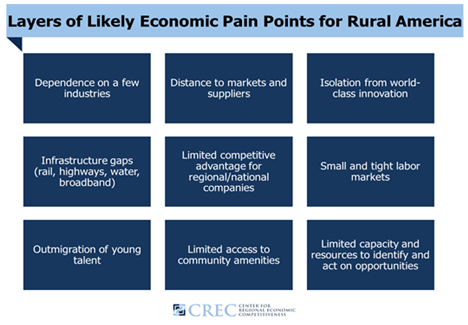
    State Approaches to Developing Rural Economies (CREC and Entreworks). Rural America faces unique challenges in building thriving economies – stemming primarily from geographic remoteness which makes routine economic interactions more difficult and costly for businesses. This is borne out by indicators that show declining population, limited employment opportunities, and lack of public investment that highlight potential negative consequences on the enduring economic vitality of rural communities. When rural areas decline, this sets in motion a vicious cycle of further disinvestment and decline. Rural job growth, for instance, has lagged the gains in urban areas since the Great Recession, causing rural residents to look increasingly outside their communities to find new work and opportunities. This further reduces the talent and local leadership available to build future prosperity.

    This white paper developed for the State Economic Development Executives (SEDE) Network describes state approaches and promising practices for rural economic development based on recent research findings and the collective wisdom of state economic development officials for improving and expanding rural regions.


    State Economic Performance

    Fifty State Budget Report Cards Released (Volcker Alliance). State Budget Sources is designed to provide improved tools for public officials, policy advocates, journalists, academics, and concerned citizens researching the critical fiscal decisions states must make. The guide includes the Volcker Alliance’s exclusive State Budget Report Cards, which grades state budgeting practices, from A to D-minus, based on five areas of best practices necessary for a transparent and sustainable budget: budgeting forecasts, budgeting maneuvers, legacy costs, reserve funds, and transparency. A clickable map provides information for each state and is accompanied by a downloadable PDF of each report card.


    Topics and Trends

    Industry Watch

    Information Technology Industry Continues to Grow (CompTIA). The global information technology industry is on pace to reach $5 trillion in 2019. The enormity of the industry is a function of economies, jobs, and personal lives becoming more digital, more connected, and increasingly, more automated. Waves of innovation build over time, powering the technology growth engine that appears to be on the cusp of another major leap forward. The United States is the largest tech market in the world, representing 31% of the total, or approximately $1.6 trillion for 2019. In the U.S., as well as in many other countries, the tech sector accounts for a significant portion of economic activity. CompTIA’s Cyberstates report reveals the economic impact of the U.S. tech sector, providing an interactive map and dashboard to explore the tech sector in states and key metro areas across the United States.

    Trade/Tariffs

    US Tariffs on China Jump as Deadline Passes, China Says it will Retaliate (CNBC). The U.S. is hiking duties on $200 billion worth of Chinese products from 10% to 25%. It had been hoped that a resolution could be reached by the two sides prior to the deadline for the tariff hike, but no deal materialized. For industries and businesses affected by the tariff hike, it will apply to goods exported after May 10, according to the Office of the U.S. Trade Representative. It will not affect products already in transit to the United States. The U.S. has prepared to put even more pressure on China, threatening to slap 25% tariffs on $325 billion in Chinese goods that remain untaxed as it aims to resolve grievances such as intellectual property theft, forced technology transfers and trade deficits. China took a tougher stance in negotiations after getting a sense the U.S. may be willing to compromise believing the US economy was in worse shape than publicly reported.

    Opportunity Zones

    Making the Most of US Opportunity Zones (McKinsey & Company). The sheer number of opportunity zones and the volume of capital they are expected to attract create a daunting challenge for investors choosing between locations and projects. As of March 2019, more than 230 so-called “opportunity funds” are collectively seeking to raise upward of $25 billion across a range of investments. The funds are geographically diverse, with nearly half focusing on specific states, a quarter focusing on investments across a specific region, and the rest open to any investment opportunities nationwide. As interest in the opportunity-zone program has grown, many states have begun taking steps to build on the program’s promise. McKinsey recommends the following five steps for states: 1. Develop a statewide opportunity-zone strategy; 2. Understand the needs of opportunity-zone census tracts; 3. Build a detailed investor prospectus; 4. Consider coordinating targeted state and local incentives with capital investments; and 5. Use online and in-person channels to align and excite stakeholders.

    Opportunity Zones a ‘Game Changer’ for Entrepreneurs (Fox Business). AOL co-founder and former CEO Steve Case believes investments in opportunity zones will create a terrific place for entrepreneurs to cluster. According to Case, fifty years ago when you wanted to reinvent a neighborhood, you brought artists in from places like SoHo in New York. Now to reinvent communities, you want to bring the entrepreneurs in. However, communities need to build the infrastructure to support them like co-working space, mixed-use developments, and to be supportive of those entrepreneurs. He believes opportunity zones can create that incentive for investors to back some of the companies that are either in opportunity zones or might move to opportunity zones, which can be a game changer. For more information on Opportunity Zones, our partners at CDFA have extensive resources available, click here.

    Opportunity Zone Rules Leave Out Data Reporting, Penalty Details (Bloomberg). Proposed rules on opportunity zones left some holes, such as the breadth of data the government has the authority to collect on the funds and how the Internal Revenue Service will handle penalties. The extent to which the IRS and Treasury Department will provide answers is unclear. Officials have said publicly that there will be three tranches of rules, with the April 17 batch being the second (REG-120186-18). But a Treasury official told reporters when the rules were released that the department doesn’t have a set plan for a third round, and this latest batch could be the last depending on the reactions of people invested in opportunity zones.

    The Opportunity Zones program provides a tax incentive for investors to re-invest their unrealized capital gains into Opportunity Funds that are dedicated to investing into Opportunity Zones designated by the chief executives of every U.S. state and territory. Treasury has certified more than 8,700 census tracts as Qualified Opportunity Zones (QOZs) across all states, territories, and the District of Columbia. For a map of all designated QOZs, click here.

    Inclusive Growth

    Inclusion Remains Elusive Amid Widespread Metro Growth and Rising Prosperity (Brookings). Truly inclusive economic growth remains rare in metro America. Over the decade from 2007 to 2017, most metro areas (64) made progress on prosperity indicators, but only a minority did so on inclusion (29), racial inclusion (26), and growth (10). As a result, only one metro area—Denver—posted across-the-board improvements in all four areas. The number of metro areas making progress between 2016 and 2017 was: 77 for growth, 71 for prosperity, 24 for inclusion, and 24 for racial inclusion. These relatively rare instances of inclusive economic growth demonstrate that even as most metro areas have rebounded to pre-recession levels of output, jobs, and living standards, other changes in the economy and labor market have mostly served to widen their gaps by race and income.

    Innovation

    Women Still Comprise a Small Minority of Patented Inventors (US Patent & Trademark Office). The United States Patent and Trademark Office (USPTO) recently released a report, Progress and Potential: A profile of women inventors on U.S. patents, on the trends and characteristics of U.S. women inventors named on U.S. patents granted from 1976 through 2016. The report shows that women still comprise a small minority of patented inventors and highlights an untapped potential of women to spur innovation in the United States. Among the findings: The share of patents that include at least one woman as an inventor increased from about 7 percent in the 1980s to 21 percent by 2016; Technology-intensive states, as well as those where women comprise a large percentage of the state’s overall workforce, show higher rates of women inventors; and Women are increasingly likely to patent on large, gender-mixed inventor teams, and are less likely than men to be an individual inventor on a granted patent.

    Infrastructure

    Report Finds more than 47,000 ‘Structurally Deficient’ Bridges in the U.S. (American Road & Transportation Builders Association). The length of America’s structurally deficient bridges if placed end-to-end would span nearly 1,100 miles, the distance between Chicago and Houston, a new examination of federal government data shows. The American Road & Transportation Builders Association (ARTBA) analysis of the recently released U.S. Department of Transportation 2018 National Bridge Inventory (NBI) database reveals 47,052 of America’s 616,087 bridges are “structurally deficient” and in poor condition. Cars, trucks and school buses cross these compromised structures 178 million times every day, the data show. Nearly 1,775 are on the Interstate Highway System. Bridges in poor condition pose a potential threat to lives and the flow of commerce. The ARTBA report provides state by state reports including the most traveled structurally deficient bridges by state.


    Deal Makers

    Incentives in Action

    Why Do We Use Incentives? (Smart Incentives). We use incentives to achieve our community’s economic development goals. These goals may vary by location and even by incentive program, but might include promoting more or better jobs, helping businesses grow, increasing investment in our communities, revitalizing neighborhoods or redeveloping brownfield sites, and strengthening the tax base – among others. They key point here is that incentives should not be just about winning a deal. However, one of the biggest challenges we see is the lack of clearly defined economic development goals either overall or within incentive programs. There are big gains to be made without a huge expenditure of resources just by clarifying what the programs are trying to achieve.

    Virgin Galactic is Finally Moving to New Mexico’s Spaceport (Washington Post). Richard Branson’s Virgin Galactic announced that after years of waiting and delays, it will finally move its operations to Spaceport America, the launch site in rural New Mexico that bills itself as the world’s first purpose-built commercial spaceport. For years the spaceport, which cost New Mexico taxpayers $220 million to build, waited for its anchor tenant to arrive. It stood as a symbol for the uncertain future of whether private companies would one day be able to fly ordinary people to space. Recently, the company finally reached its elusive goal when two test pilots flew SpaceShipTwo to an altitude of 51.4 miles, crossing the Federal Aviation Administration’s definition of space. Virgin Galactic will be shifting operations to Spaceport America near the southern New Mexico town of Truth or Consequences as it begins to prepare for commercial space tourism service later this year.

    Michigan Business Development Program Offers Positive Returns and Good Practices (CREC & Upjohn Institute). The Michigan Business Development Program (MBDP) provides grants and loans to businesses for highly competitive projects in Michigan that create jobs and provide investment. The Michigan Economic Development Corporation (MEDC) engaged the Center for Regional Economic Competitiveness (CREC) and the W.E. Upjohn Institute for Employment Research to examine the MBDP to assess effectiveness. The study estimates that the MBDP has an ROI of 3.86. That is, for every $1 the state invests in the MBDP, the program results in a net gain of $3.86 in per capita income for Michigan residents. This ROI is higher than that for many other state incentive programs because: Michigan has targeted relatively high multiplier industries with an extensive network of local manufacturing suppliers that benefit when their incentivized customer grows; Michigan’s MBDP incentives are provided up-front, which increases cost-effectiveness because many businesses pay the most attention to near-term investment returns; and Michigan’s MBDP incentives are relatively modest in size, which increases effectiveness per dollar as incentives tend to experience declining returns as size increases.

    The State Business Incentives Database is a national database maintained by the Council for Community and Economic Research (C2ER) with almost 2,000 programs listed and described from all U.S. states and territories. The Database gives economic developers, business development finance professionals, and economic researchers a one-stop resource for searching and comparing state incentive programs. To view the information available in the database, click here.

    New Growth Opportunities

    5G to Impact 20 Industries the Most (CB Insights). The next generation of 5G wireless technology could affect a wide range of industries, from healthcare to financial services to retail. Major 5G networks are expected to be deployed by 2020 and will transform many industries due to the technology’s ability to provide wider network coverage, more stable internet connections, and faster data transfer speeds. 5G will also enable the rise in the number of Internet of Things (IoT) devices, along with the amount of data they generate. From enabling remote robotic surgery and widespread adoption of autonomous cars to improving crop and livestock management, 5G is poised to disrupt a plethora of the world’s biggest industries. This report from CB Insights considers some of the potential industry impacts.

    Talent Development/Attraction

    The Geography of Brain Drain in America (Route Fifty). Many studies have documented the growing divergence between places based on their ability to attract, retain, and cluster highly educated and skilled workers and to develop high-tech startup companies. A new report from the Social Capital Project of the Joint Economic Committee of the U.S. Congress takes a close look at the reality of brain drain across the 50 states. The report uses U.S. Census data and focuses on people in their post-college and post-graduate-school years—people between the ages of 31 and 40 who are either “movers” or “leavers,” heading off to different states, or “stayers” who continue to live in their home state. There is also an interactive map with all of the data points.

    Opportunity Occupations (Federal Reserve Banks of Cleveland and Philadelphia). Opportunity employment, defined as employment accessible to workers without a bachelor’s degree and typically paying above the national annual median wage ($37,690), adjusted for regional differences in consumer prices, accounts for 21.6 percent of total employment in the 121 metro areas analyzed in the report. Some of the largest opportunity occupations, including a number in health care and the skilled trades, could experience above-average growth through 2026 and are not considered to be at significant risk of automation, while the reverse is true for some occupations in office and administrative support. Registered Nurses; Heavy and Tractor-Trailer Truck Drivers; Bookkeeping, Accounting, and Auditing Clerks; Maintenance and Repair Workers; and Carpenters are the largest opportunity occupations based on overall employment. Plumbers, Pipefitters, and Steamfitters; Registered Nurses; and Heating, Air Conditioning, and Refrigeration Mechanics and Installers are projected to be the fastest growing Opportunity Occupations in coming years.

  • State Economic Development Bulletin – April 2019

    State Economic Development Bulletin – April 2019

    Latest News

    Treasury Releases Second Tranche of Proposed Regulations for Opportunity Zones (CDFA) The Department of the Treasury just released its second round of proposed regulations on Opportunity Zones. These rules are designed to make compliance easier for opportunity fund investors.


    State Economic Performance

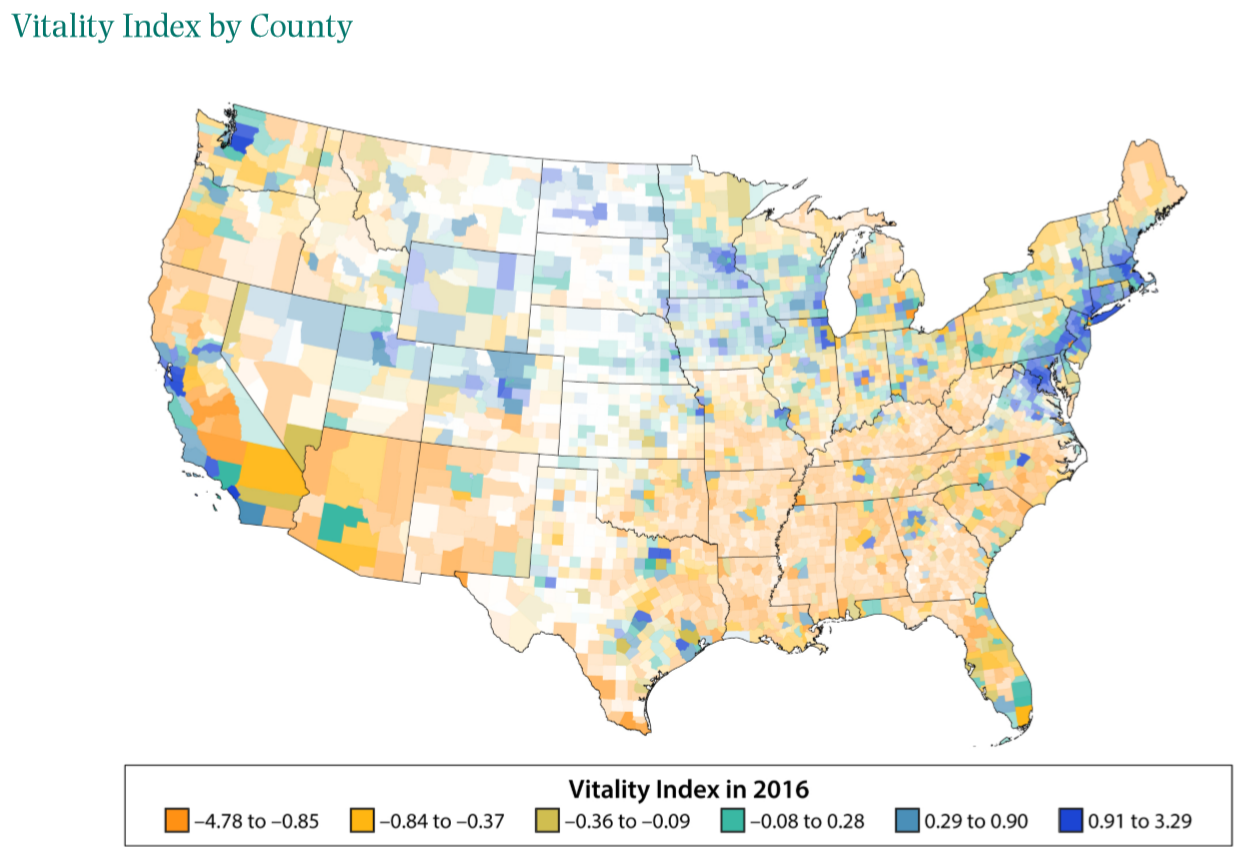
    The Geography of Prosperity Measured (Brookings). The Hamilton Project (THP) is an economic policy initiative at the Brookings Institution. THP conducted an exploration of the geography of prosperity and found economic vitality varies widely between counties and not only across regions. For this study, THP constructed a Vitality Index to measure a place’s economic and social wellbeing. The index combines a county’s median household income, poverty rate, unemployment rate, prime-age employment rate, life expectancy, and housing vacancy rate. It turns out economic vitality is quite stable over time. For instance, places that were highly innovative in 1975 (as measured by patent activity) are still more vital today. In contrast, counties with a high share of employment in manufacturing in 1980 and counties with a high concentration of employment in one industry tended to fare worse over time. THP also provides an interactive web tool that allows users to explore the vitality index and its components at the county level and state averages.


    Topics and Trends

    Industry Watch

    Revitalizing American Leadership in Advanced Manufacturing (Manufacturing USA). Manufacturing USA is a network of institutes that bring together multiple federal agencies, large and small manufacturers, universities, community colleges, and nonprofits to catalyze new technologies, meet research needs and train the workforce of the future. This initiative bore out from the question: How can we foster a competitive U.S. innovation agenda and ensure that research and technology advances happen in and benefit our communities? Manufacturing USA now supports the co-investment of 14 Institutes supporting various research concentrations from digital manufacturing to flexible electronics to remanufacturing to battery lifespan. On March 26, 2019, the House Committee on Science, Space, and Technology’s Subcommittees on Research & Technology and Energy held a hearing on Revitalizing American Leadership in Advanced Manufacturing. The panel consisted of representatives from the federal agencies, institutes, and members that are part of the Manufacturing USA network. For an overview of Manufacturing USA, click here.

    Trade/Tariffs

    United States-Mexico-Canada Agreement State Fact Sheets (United States Trade Representative). The United States, Mexico, and Canada have reached an agreement that supports North American manufacturing and mutually beneficial trade. The new United States-Mexico-Canada Agreement (USMCA) is intended to create more balanced, reciprocal trade that supports high-paying jobs for Americans and grows the North American economies. The Office of the United States Trade Representative (USTR) within the Executive Office of the President negotiates directly with foreign governments to create trade agreements, to resolve disputes, and to participate in global trade policy organizations. USTR has developed USMCA State Fact Sheets which summarize for each state overall and key industry exports to Canada and Mexico, along with how provisions under USMCA will potentially impact states.

    Opportunity Zones

    State, Local Governments Work to Steer Opportunity Zones Investment (Journal of Tax Credits). The involvement of state and local leaders in pursuing OZ investment in their communities is smart, in both attracting and directing investment. The incentive is a work in progress, but the benefits of bringing billions of dollars of investment to low-income communities can be a game-changer. One crucial way for states to encourage use of the OZ incentive is to conform state tax law to the federal Internal Revenue Code–offering a deferral and reduction in state tax on capital gains that are invested in qualified opportunity funds (QOFs).  Most states have done so–41 states either conformed to the federal OZ provisions or lacked a tax on capital gains, making the point moot. Beyond tax conformity, several states are considering additional financial incentives to encourage and direct OZ investments within their states.

    Opportunity Zones Knocking, But Few Answering the Call So Far (Bloomberg). Treasury Secretary Mnuchin predicted the tax incentive for Opportunity Zones could take in $100 billion of investments a year. CoStar Realty Information Inc., a real estate data firm, says it’s tracking more than 258 funds. But OpportunityDB, a database for Opportunity Zones, saw only 88 funds seeking to raise a total $26.4 billion as of April 1. Timing is crucial. Investors get a reduction in postponed taxes – 10 percent if they hold on to their new investments for five years, and an additional 5 percent for another two years. But to capture that extra 5 percent before the postponed tax bill comes due at the end of 2026, investors must get in by Dec. 31 this year. For more information on Opportunity Zones, our partners at CDFA have extensive resources available, click here.

    Issues to Track in the Second Tranche of OZ Guidance (Opportunity Zones Resource Center). Months ago, the Treasury department issued its first tranche of guidance concerning the opportunity zones (OZ) tax incentive, releasing 74 pages of regulations, a revenue ruling, an updated Q&A document and a draft of Internal Revenue Service Form 8996. In the next few weeks, the second tranche will be released. The article provides a summary of 20 OZ guidance areas that will go a long way in determining the success of the OZ incentive in facilitating the investment of equity capital in real estate and operating businesses in distressed communities. The list is segregated into six broad categories: Compliance testing/calculations; Operating businesses; Real estate; Renewable energy; Corporations; and Fund management.

    The Opportunity Zones program provides a tax incentive for investors to re-invest their unrealized capital gains into Opportunity Funds that are dedicated to investing into Opportunity Zones designated by the chief executives of every U.S. state and territory. Treasury has certified more than 8,700 census tracts as Qualified Opportunity Zones (QOZs) across all states, territories, and the District of Columbia. For a map of all designated QOZs, click here.

    Inclusive Growth

    How Stagnating Cities Can Prepare for the Future (Manhattan Institute). America’s most disadvantaged cities, too often left and behind and forgotten, were undone by powerful forces like deindustrialization and the rise of the global knowledge economy that undermined their economic raison d’être. Difficult as it may be to accept, until market forces swing back in their favor, no major economic recovery is likely for most of them. This doesn’t mean adopting a rhetoric of hopelessness. Rather, it means instead of speculative projects or subsidies, their best strategy is to create the preconditions of revival by fixing their finances, reforming their governance, and rebuilding the core public services on which their residents depend.

    Innovation

    Innovation Isn’t Only for High-Tech Businesses (Innovation Policyworks). Many small businesses are concerned about increases to the minimum wage, arguing that they couldn’t raise their prices. For small businesses that sell products based on price alone, it’s probably true that raising prices isn’t possible. But why don’t these businesses try to offer new products or services that aren’t commodities? Why don’t they try innovation as a strategy? It may be that many small businesses think innovation is only something that high-tech companies can do. But there are examples that prove them wrong. One example is Sea Bags, based on the waterfront in Portland, ME, which makes tote bags. You’d think that tote bags are all the same. But Sea Bags decided to make theirs out of old sails. So, not only are they a sustainable business, using recycled materials, but their bags are very different – each one is unique, depending on the sail it was made from. By being unique, Sea Bags has earned their price point. Sea Bags has grown to have 19 retail outlets and sells online as well as to corporate clients. More small businesses should strive to provide customers with something that is “meaningfully unique.”

    Infrastructure

    New Investments in 13 States for Rural Electric Infrastructure and Smart Grid Improvements (US Department of Agriculture). USDA is providing financing through the Electric Loan Program to improve rural electric infrastructure in Georgia, Illinois, Iowa, Michigan, Minnesota, Mississippi, Missouri, New Mexico, North Carolina, North Dakota, South Dakota, Texas and Wisconsin. These investments will help build or improve 2,635 miles of line. Overall USDA is investing $485 million to upgrade these rural electric systems and reduce energy costs. The funding includes nearly $7.1 million for smart grid technologies that improve system operations and monitor grid security. Increasing investments in rural infrastructure, such as these, is a key recommendation of the federal government’s Interagency Task Force on Agriculture and Rural Prosperity.


    Deal Makers

    Incentives in Action

    Benefits and Costs of Tax Incentives – Scenario Builder (Pew Charitable Trusts). States use economic development incentives to encourage companies to locate or expand. An incentive has benefits for residents when the economic gains it generates, less its costs and any negative effects, are positive. Pew has created an incentive scenario builder to see an interactive illustration of how each economic and policy factor can influence the costs and benefits of incentives. Specifically, Pew recommends as policymakers and development officials evaluate their incentives, they should keep Costs, Targets, Program Design, and Economic Conditions in mind.

    Huge Incentives Helped Georgia Land $1.7 Billion Battery Plant (WSB-TV Atlanta). Georgia’s biggest jobs deal in a decade came with one of the state’s biggest-ever incentive packages. The state and Jackson County combined offered SK Innovation about $300 million in grants, tax breaks and free land to convince the company to build an electric car battery plant along I-85 in Commerce. Georgia’s offer includes sales tax exemptions for equipment and energy as well as research and development tax credits that could generate millions more in benefits to SK Innovation for years to come. In an interview, the company’s CEO said Georgia’s offer was similar to packages from other Sun Belt states, but there were other factors that weighed on the decision, including workforce availability, the state’s business climate and perhaps most importantly, Georgia’s Quick Start customized training program. The incentive deal is the largest in Georgia since the $1.2 billion Kia Motors factory opened in West Point in 2009.

    The State Business Incentives Database is a national database maintained by the Council for Community and Economic Research (C2ER) with almost 2,000 programs listed and described from all U.S. states and territories. The Database gives economic developers, business development finance professionals, and economic researchers a one-stop resource for searching and comparing state incentive programs. To view the information available in the database, click here.

    New Growth Opportunities

    Impact Investing: Good for The Planet, Good for Profit? (NPR). Foundations and pension funds are under pressure to do more “impact investing,” focusing not just on the bottom line, but also on doing good for people and the planet. But is it effective? If so, why isn’t impact investing catching on more?  This 47-minute discussion on NPR’s On Point covers the topic and its potential to promote positive economic growth and profitable returns to investors. Guests include Marc Gunther, Fortune Magazine writer and author of the four-part series “Good Returns” on impact investing in the Chronicle of Philanthropy; Deval Patrick, managing director of Bain Capital Double Impact and former governor of Massachusetts; and Andy Posner, founder and chief executive officer of the nonprofit Capital Good Fund, which offers small personal loans and financial services to help end endemic poverty.

    Talent Development/Attraction

    The 10 Jobs Disappearing the Fastest (Governing). The largest occupation losses tend to be low-wage positions that have been disrupted by automation, although there are other factors at play as well. It’s likely that many local economies where these jobs are heavily concentrated could soon incur downsizing if they haven’t already. The Jacksonville, Fla., and Salt Lake City metro areas, for example, employ disproportionately large numbers of workers in disappearing fields. The following 10 occupations had the highest percentage job losses over the last decade: Telemarketers; File Clerks; Postal Service Mail Sorters, Processors and Machine Operators; Bill and Account Collectors; Data Entry Keyers; Order Clerks; Chief Executives; Production Worker Helpers; Installation, Maintenance and Repair Worker Helpers; and Telecommunications Line Installers and Repairers.

    Cybersecurity Training at Historically Black Colleges and Universities (Diverse Education). The rise of cyber-enabled economic espionage has created a great demand for new cyber-related jobs. It is estimated there will be a 1.8 million workforce shortage in this field by 2022. In response, several Historically Black Colleges and Universities (HBCUs) are increasing engagement with industry, government and education partnerships to train more cybersecurity analysts. For example, Morgan State has created the Center for Reverse Engineering and Assured Microelectronics (CREAM), a Department of Defense-funded program that addresses the increasing dependence on cybersecurity for warfare. Norfolk State now offers malware reverse engineering training that allows students to work with and study malware. The school has also submitted a proposal for a cyber psychology program. As a result of these programs, the Department of Homeland Security and the National Security Agency have credentialed both Norfolk State and Morgan State as Centers of Academic Excellence in cyber defense education.

  • State Economic Development Bulletin – March 2019

    State Economic Development Bulletin – March 2019

    Latest News

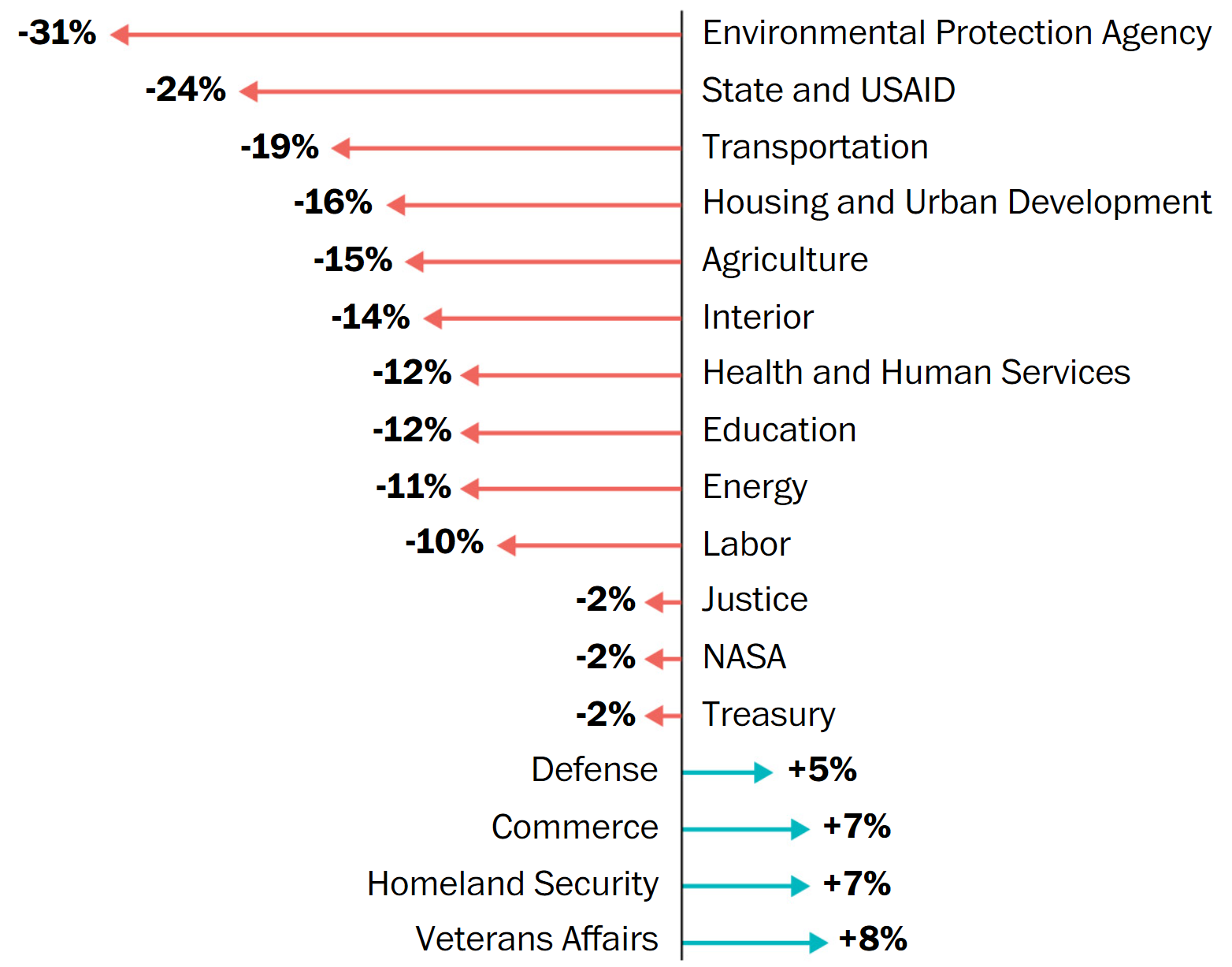
    President Releases 2020 Budget Proposal (Washington Post). The President recently released his 2020 budget proposal. The budget proposal calls for the elimination of the EDA, the Manufacturing Extension Partnership program, the CDBG Program, as well as significant funding cuts for HUD, EPA, DOT, and USDA. While many of the cuts are unlikely to become reality, the budget is an important signal of the administration’s priorities and suggests a major funding fight in the months ahead.

    Proposed Changes to Funding in President’s Budget


    State Economic Performance

    What Do Governors Care About in 2019? (MultiState Insider). Education was the most prevalent category of issues cited by governors in State of the State addresses this year. Thirty-six governors said education funding and/or reform would be a priority for their administration. School safety was another frequently addressed education issue, with 12 governors mentioning it. Other oft-cited issues were health care (20 governors), criminal justice (19 governors), workforce development (16 governors), economic development (15 governors), opioids and drug policy (14 governors), and general budget issues (14 governors). The chart shows the issues mentioned in each of eight broad policy categories, and each bar in the chart indicates the number of governors that mentioned that issue as a priority in their State of the State address.


    Topics and Trends

    Industry Watch

    Counting Jobs in the Marijuana Industry (Route Fifty). With federal jobs figures for the state legal marijuana trade in short supply, some independent groups are taking a crack at a count. Marijuana website Leafly and consultant Whitney Economics issued a jobs report for the legal cannabis industry this week that suggests there are about 211,000 jobs now tied directly to the sector. They say that this figure is higher than the 69,000 brewery workers and 112,000 textile manufacturing employees in the U.S. And that it’s up from about 120,000 in early 2017. Pot is now legal for medical use in 34 states and for adult recreational use in 10 and in the District of Columbia. But it is still deemed to be an illegal drug under federal law.

    Trade/Tariffs

    U.S. Business Groups Encouraged by Prospect of US-China Deal (Associated Press). U.S. business groups said they are encouraged by China’s approval of a new law that loosens restrictions on foreign investment and said it could help smooth the way to a substantive trade agreement between the two countries. China’s ceremonial legislature passed a measure Thursday seeking to prevent Chinese officials from forcing U.S. and other foreign companies to turn over proprietary technology, a key sticking point in the trade fight between the two countries. U.S. companies have long complained that Chinese officials informally push them to turn over trade secrets in order to access China’s market. In some cases U.S. businesses are required to form a joint venture with a Chinese partner, and share technology with them. In other cases U.S. companies are forced to provide trade secrets to win regulatory approval from local officials, who then turn over those secrets to Chinese firms.

    Opportunity Zones

    How Philanthropy Can Catalyze Private Investment in Opportunity Zones (Philanthropy News Digest). Opportunity Zones represent the first time federal tax policy has sought to tap unrealized capital gains to advance economic and community development. Proponents believe the incentive will help transform low-wealth communities, while skeptics have doubts that funds will flow to the people and places most in need — and, even if they do, that the ensuing transformation will have a positive impact on longtime residents and small businesses. Against this backdrop, philanthropy should step up and help shape the Opportunity Zone landscape so that benefits of the legislation also accrue to longtime residents and businesses. This blog includes six ways philanthropy can help.

    Ohio Announces Incentive to Bring Investment to Local Opportunity Zones (OH Governor Press Release). Ohio Governor Mike DeWine announced that his proposed budget for the 2020-2021 biennium will include a state tax incentive to attract more investment to Ohio’s Opportunity Zones. Under the governor’s proposal, Ohio would provide a 10 percent, nonrefundable income tax credit to those who invest in the state’s Opportunity Zones. The proposal is “budget-neutral,” using existing tax credit availability to create the new incentive. For more information on Opportunity Zones, our partners at CDFA have extensive resources available, click here.

    The Opportunity Zones program provides a tax incentive for investors to re-invest their unrealized capital gains into Opportunity Funds that are dedicated to investing into Opportunity Zones designated by the chief executives of every U.S. state and territory. Treasury has certified more than 8,700 census tracts as Qualified Opportunity Zones (QOZs) across all states, territories, and the District of Columbia. For a map of all designated QOZs, click here.

    Inclusive Growth

    Wage growth for Low-Wage Workers has been Strongest in States with Minimum Wage Increases (Economic Policy Institute). Last year, the minimum wage was increased in 13 states and the District of Columbia through legislation or referendum. In eight more states, the minimum wage increased automatically because it is indexed to inflation. These changes came on the heels of other minimum wage increases in many of the same states over the previous few years. In fact, after three years of mostly only indexed minimum wage increases, there was a spate of newly legislated state-level minimum wage increases starting in 2014. When we compare states with any minimum wage change over the last five years with those without any, the association between states with at least one minimum wage change and growth in wages for low-wage workers is quite strong.

    Innovation

    Bill Gates Says These Tech Innovations Will Change the World (MIT Technology Review). Bill Gates has made his fortune, and has given much of it away, thinking about the endeavors that will make the world a healthier, connected and equitable place. Recently, the MIT Technology Review asked the Gates Foundation and Microsoft co-founder to share the inventions and technologies that he believes will effect real change this year and beyond. Some of the advances he offered up include projects such as Dactyl, which teaches robots how to develop fine motor skills like flipping a block in its hand, and work being done to develop machines that could pull carbon dioxide from the air to lessen the effects of climate change. Given his interest in improving conditions around the world, many of the innovations on Gates’s list focus on wellness.

    Infrastructure

    Addressing the Infrastructure Funding Shortfall of America’s Airports (Airports Council International). America’s airports are a fundamental component of our nation’s transportation infrastructure. Over 1.7 billion passengers and 31.7 million metric tons of cargo traveled through U.S. airports. To meet the capacity demands of the future with safe, efficient, and modern facilities that passengers and cargo shippers expect, airports need to make new investments to maintain and modernize our nation’s airport infrastructure. The ACI estimate of airports’ infrastructure needs for 2019 through 2023, adjusted for inflation, is $128.1 billion or $25.6 billion annualized. About 65.9 percent of the development is intended to accommodate growth in passenger and cargo activity, and 27.8 percent is intended to rehabilitate existing infrastructure, maintain a state of good repair, and keep airports up to standards for the aircraft that use them.

    What to Do About the Rural Housing Crisis? (Entreworks). Issues of housing affordability and availability are reaching a crisis point in many communities across the US. Places like Seattle and the Bay Area get a lot of attention for their high housing costs, but housing problems are emerging everywhere today. And, the pressures in rural America are especially intense. Housing markets are affected by three factors: demand, supply, and affordability. Rural America is challenged on all three fronts.


    Deal Makers

    Incentives in Action

    State Tax Incentive Evaluations Database (NCSL). State tax incentives continue to be on state legislative agendas and more and more lawmakers have expressed interest in having good information on the impact of incentives. As a result, states across the country are starting to gather data and use evidence to systematically evaluate tax incentives. To illustrate what sort of evaluations states are conducting, the National Conference of State Legislatures (NCSL), with support of The Pew Charitable Trusts, created a database of state tax incentive evaluations. Evaluations published since the start of 2008 are included and more reports will be added over time. This tool allows users to search for state evaluations by analysis topic, type of incentive, state, and year.

    A Better Way to Attract Amazon’s Jobs (New York Times). In New York, the governor and mayor structured an agreement with Amazon using policy tools already established in the law. Amazon received “as-of-right” incentives, which are given automatically when a company wants to expand or relocate its facilities. New York’s as-of-right incentives, which are available to any company in a priority industry for the state that goes to a borough outside Manhattan, have been widely criticized as flawed and outdated. The Amazon deal in Virginia shows that a different approach is possible.

    The State Business Incentives Database is a national database maintained by the Council for Community and Economic Research (C2ER) with almost 2,000 programs listed and described from all U.S. states and territories. The Database gives economic developers, business development finance professionals, and economic researchers a one-stop resource for searching and comparing state incentive programs. To view the information available in the database, click here.

    New Growth Opportunities

    Rural Prosperity Through the Arts & Creative Sector (NGA). While there are many inspiring success stories to celebrate in rural areas, some regions also are contending with stark economic challenges, outmigration, education gaps and infrastructure needs. By leveraging the creative industries, states can deploy proven strategies that help all rural communities to thrive. This guide for Governors and states offers creative policy solutions that draw on home-grown arts and cultural assets to address the urgent problems facing rural America. The action guide is part of a collaborative project between the National Governors Association (NGA), the National Endowment for the Arts and National Assembly of State Arts Agencies.

    Talent Development/Attraction

    Manufacturers Association of Maine Launches Strategy to Grow Workforce (Mainebiz). The Manufacturer’s Association of Maine launched two new programs this month to assist the state’s manufacturers to fill jobs. The first program – Manufacturing Career Connection – seeks to build the talent and workforce pipeline by focusing on students, educators, veterans and immigrants. The second program is a nationwide program (SEMI High Tech U) that connects high school students and educators to an intensive three-day, hands-on program for those interested in STEM careers and led by industry volunteers.

    Private Sector Partnerships in Work-Based Learning: Lessons Learned from States (NGA). The National Governors Association Center for Best Practices has been very engaged in recent years helping states take to scale work-based learning initiatives for youth and young adults in STEM-intensive industries, including apprenticeships. NGA’s work includes administering a three-year-long Policy Academy on Scaling Work-Based Learning with 18 states and territories; and providing support to grantees of the U.S. Department of Labor’s American Apprenticeship Initiative. Listen to the recording from the SEDE network’s recent webinar on this topic describing leading state efforts. Among the valuable lessons learned are the need to emphasize business engagement and partnership development in expanding access to work-based learning opportunities and improving state talent pipelines as a critical component of a successful economic development strategy.

  • State Economic Development Bulletin – February 2019

    State Economic Development Bulletin – February 2019

    Latest News

    *SEDE Network Members Testify at IRS Opportunity Zone Hearing *

    Opportunity Zone Experts Voice Concerns over Program’s Rules, Suggest Fixes in IRS Hearing The Internal Revenue Service sought feedback in creating the regulations at a five-hour hearing on February 14, during which over two dozen stakeholders highlighted concerns they have with the rules of the program and suggestions for how they can be improved. Several stakeholders pushed the IRS to loosen the restrictions on funds investing in businesses, as the proposed IRS regulations make it difficult for funds to put money into businesses.

    These stakeholders included Rhode Island Secretary of Commerce Stefan Pryor and Delaware Prosperity Partnership CEO Kurt Foreman, who testified on behalf of a group of 12 state economic development executives, outlining four key recommendations to ensure OZs fulfill the intent of Congress to attract scarce equity capital to underinvested communities for two purposes: the development of brick and mortar projects as well as the growth of operating businesses.


    State Economic Performance

    How Venture Capital will Change in 2019 (GeekWire). With seed deal size rising, more non-traditional investment vehicles, and an increasing amount of companies going public, the venture capital industry continues to evolve. Analysts from investment data research firm, PitchBook, made six predictions for 2019 on shifts in the VC climate from current levels:

    • IPOs as a proportion of total VC exit value will hit another decade high.
    • New participants in VC will continue to proliferate.
    • Median early-stage valuation step-ups will hit 2.0x in 2019.
    • Median angel & seed deal size will continue to climb.
    • Growth in median fund size will decelerate.
    • Banks will back more institutional blockchain solutions.

    In separate research based on PitchBook data, SSTI found that VC investments nearly tripled in the past six years; and 31 states outperformed 5-year averages for VC dollars invested in 2018. The SSTI information on VC investment by state and changes over time is available for viewing and download.


    Topics and Trends

    Industry Watch

    Best Industries for Starting a Business in 2019 (Inc.). To launch a successful business, you need a good idea and the boldness to act on it. While all first-time entrepreneurs have their work cut out for them, anyone who can identify industries uniquely positioned for growth has a clear advantage. Each year, Inc. crunches the latest data and speaks with industry experts to determine the sectors that are most likely to take off. Key growth industries for tomorrow’s fastest-growing startups include:

    • Micromobility
    • Digital Therapeutics
    • Cannabidiol (CBD) Products
    • Personalized Nutrition
    • Healthy Jerky
    • Baby Tech
    • Selfie Services
    • Workleisure Apparel

    In separate research reported in Entrepreneur, 99designs compared thousands of design contests and projects launched in 2018 with those launched in 2013 and identified artificial intelligence (AI) for healthcare, personal coaching, founding an influencer agency, and the drone industry as growing industries. The AI healthcare category, for example, which includes the likes of virtual doctors and smart health apps, showed a 48 percent spike since 2013.

    Trade/Tariffs

    Tariffs May Live on as Best Bet to Enforce a China Deal (Bloomberg). Trump advisers say China has failed to meet commitments in the past, one reason they decided early in the president’s term to emphasize the stick over the carrot. U.S. tariffs on Chinese goods have upended financial markets, shaken the world economy, and caused businesses to reconsider their supply chains. They’re due to more than double on March 2 if the countries can’t reach a deal. But even if they can, analysts say, that doesn’t mean the import duties will disappear forever. Any accord is likely to include assurances by China on issues such as granting licenses to U.S. companies without hidden regulations that undermine them; buying more American goods over the long run, rather than just conceding a one-time feel-good boost; and punishing theft of U.S. commercial secrets. And all those commitments will need to be monitored by the U.S.

    Opportunity Zones

    Model Opportunity Zone Reporting Framework Released (U.S. Impact Investing Alliance). The Opportunity Zones Reporting Framework is a voluntary guideline designed to define best practices for investors and fund managers looking to invest in Opportunity Zones. This tool is specifically focused on how Opportunity Fund managers can thoughtfully deploy the capital they raise from investors. It includes a set of first principles and a detailed impact measurement framework. The Opportunity Zones Framework was a project of the U.S. Impact Investing Alliance and the Beeck Center for Social Impact + Innovation at Georgetown University, and developed in consultation with a broad array of industry leaders — including investors, asset managers, academics, policy experts and community stakeholders — who all contributed to developing the principles and measurement framework. For more information on Opportunity Zones, our partners at CDFA have extensive resources available, click here.

    The Opportunity Zones program provides a tax incentive for investors to re-invest their unrealized capital gains into Opportunity Funds that are dedicated to investing into Opportunity Zones designated by the chief executives of every U.S. state and territory. Treasury has certified more than 8,700 census tracts as Qualified Opportunity Zones (QOZs) across all states, territories, and the District of Columbia. For a map of all designated QOZs, click here.

    Inclusive Growth

    Policies to Promote Inclusive Urban Growth (George W. Bush Presidential Center). Inclusive growth is economic growth that is distributed fairly across society and creates opportunities for all. The Bush Center recently hosted a symposium on what American cities can do to better promote upward mobility among people who feel left behind by economic growth in their city and nationwide. A video of the proceedings has been released, including expert panels and case studies detailing how American cities can successfully stabilize neighborhoods, revive the urban middle class, and address the growing attainable housing crisis.

    Innovation

    Identifying Peer States for Technology-Based Economic Development (SSTI). New research finds that all 50 states improved on more than half of 53 TBED measures published by the NSF through its Science & Engineering Indicators series. The measures were tracked over a dozen years and revealed “really persistent peers” among states based on similarities that appear at the beginning of the measurement period and remain until the end of the period. A map of the 12 “really persistent peer” clusters is shown below, which gives each state a better idea of who their peers are when they are evaluating their own progress on TBED measures.

    “Really Persistent Peers” and Technology-Based Economic Development

    Infrastructure

    What’s Up for Energy Infrastructure in 2019 (InsideSources). Energy infrastructure is a broad term, encompassing not only oil and natural gas pipelines, but also power plants, transmission lines, and the other parts of what is generally termed “the grid.” As currently designed, the grid has been successful in getting the U.S.–even in its most rural areas–electrified. Now the challenge is integrating intermittent renewable energy sources, such as wind and solar, and also trying to better secure the grid against attacks from cyber criminals and foreign adversaries. Historically, economic growth has been accompanied by increased energy needs. Experts predict there is a lot to build in the coming year for additional grid infrastructure and 2019 could set records.


    Deal Makers

    Incentives in Action

    North Dakota Legislators Look at Budgeting Money for Housing Incentive Fund (Dickinson ND Press). North Dakota legislators are considering putting money back into the Housing Incentive Fund, a state program that seeks to make housing affordable. The program that was first funded in 2011 has been used to help finance 2,500 rental housing units statewide, but the state didn’t have dollars available in 2017. This year, legislators are evaluating three proposals that would provide $10 million to $40 million for the Housing Incentive Fund. The Governor recommended $20 million for the Housing Incentive Fund, with the dollars coming from the Strategic Investment and Improvements Fund, saying the program would help North Dakota develop and retain workers and build healthy, vibrant communities.

    Mississippi Moves to Re-instate Movie Industry Incentives (WLBT Jackson MS). Mississippi lawmakers seem to be on board with re-instating movie incentives that expired, causing the state to lose out on films based in Mississippi but shot out of state. The measure gives film production companies up to 25 percent rebates and sales tax and use tax reductions. Each movie is capped at $10 million dollars. Movies like Get On Up, the James Brown Story, the western The Making of Helena and others were filmed in Mississippi before the tax incentive expired in 2017. According to supporters, money spent by production crews add up in local salaries, lodging, food and more.

    The State Business Incentives Database is a national database maintained by the Council for Community and Economic Research (C2ER) with almost 2,000 programs listed and described from all U.S. states and territories. The Database gives economic developers, business development finance professionals, and economic researchers a one-stop resource for searching and comparing state incentive programs. To view the information available in the database, click here.

    New Growth Opportunities

    DOJ Reverses Course, Changing the Odds on the State-Regulated Gambling Industry (Venable). The regulatory framework for online gambling recently took a wild turn when the Department of Justice Office of Legal Counsel (“OLC”) announced its view that the Wire Act applies to all forms of gambling—not merely sports betting. This marked a 180-degree reversal from the OLC’s previous stance. Four states—Delaware, Nevada, New Jersey and Pennsylvania—currently allow online gambling, and Michigan came close to legalizing it at the end of last year. The new OLC opinion is surprising on many levels, not least of which because it comes so closely on the heels of the Supreme Court’s May 2018 Murphy decision, which paved the way for legalized sports betting—but for the Wire Act.

    Talent Development/Attraction

    How Migration of Millennials and Seniors has Shifted since the Great Recession (Brookings). While millennials and baby boomers are America’s largest generations, they are following quite different post-recession migration paths. Today’s Millennials are more mobile than their elders and more apt to shift with changing opportunities, particularly to areas with knowledge-based economies. In contrast, those seniors who do move are zeroing in on a smaller set of exclusively Sun Belt destinations that have long been associated with retirees, warm climates and recreation. The study uses recently released migration data from the U.S. Census Bureau’s American Community Survey to identify major metropolitan areas that attract age groups dominated by millennials and baby boomers. The data show that the top regional magnets for young adults (ages 25-34) do not overlap with those attracting seniors (ages 55 and older) and for both groups, the recent magnets differ from those prior to the Great Recession.

    How Manufacturers Will Tackle the Talent Shortage in 2019 (IndustryWeek). There is an overall hiring crisis in America. According to the U.S. Bureau of Labor Statistics, there are currently more job openings in the U.S. economy than there are people looking for work. However, manufacturers are feeling the pinch more than most because the sector is suffering the consequence of an aging workforce. Nearly 27% of manufacturing workers are set to retire over the next ten years, taking their specialized skills and institutional knowledge with them. And despite manufacturing being increasingly high-tech oriented—with robotics, specialized software, artificial intelligence, and computer-connected equipment quickly becoming the new norm—young people don’t view industrial manufacturing as a desirable career path. In 2019, manufacturers will attack the lack of workers problem head on.

  • State Economic Development Bulletin – January 2019

    State Economic Development Bulletin – January 2019

    Latest News

    State Economic Performance

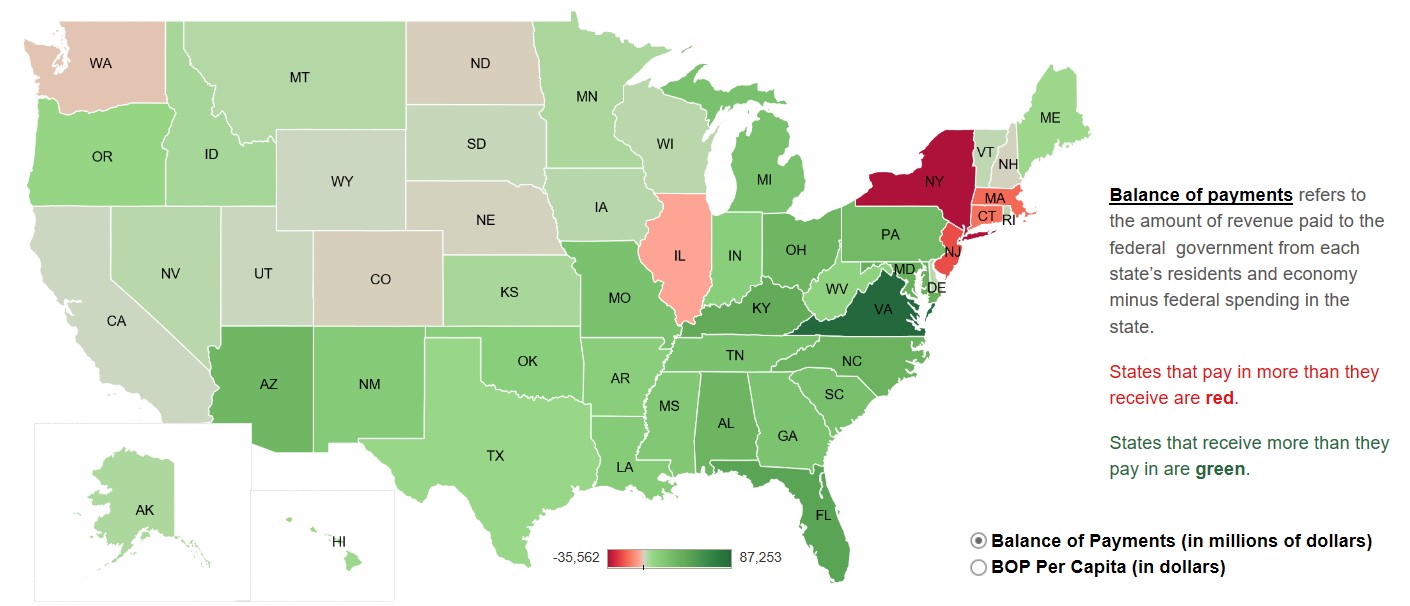
    Balance of Payments Dashboard Details Funding Flow between States and Federal Government (Rockefeller Institute)
    The Rockefeller Institute of Government has released its second annual report analyzing the distribution of federal budget receipts and expenditures across the United States, providing policymakers and the public with vital information about the redistribution of federal funding and its impact in each state. This year, the report is accompanied by an interactive dashboard that allows users to explore the distribution of funds across all 50 states and view state-by-state breakdowns of how funds are spent.

    Who Gives and Who Gets?


    Topics and Trends

    Industry Watch

    Understanding Manufacturers’ Challenges Entering the New Year (NIST-MEP)
    The MEP National Network comprises the National Institute of Standards and Technology’s Manufacturing Extension Partnership (NIST MEP), with 51 MEP Centers located in all 50 states and Puerto Rico. For more than a decade, NIST MEP has gathered data from its manufacturing clients asking them about their challenges, providing a peek at what is on the minds of CEOs. The prioritization of challenges has changed as the economic environment and the manufacturing landscape have changed. Some of the challenges have been consistent (such as continuous improvement and product development), while others have become increasingly important over time. The most significant changes to client responses focus on the issue of employee recruitment and retention. The share of MEP clients reporting this as a challenge has nearly tripled and is now the second most frequently reported challenge companies are facing.

    Trade/Tariffs

    Department of Commerce’s ITA Releases New Market Diversification Tool (International Trade Administration)
    Among U.S. companies that export, more than half only export to one market. The Market Diversification Tool can help identify potential new export markets using a company’s current trade patterns. Based on the products a company exports and the markets it currently exports to, the tool uses an algorithm to rank potential markets the business may want to consider as future export markets.

    Opportunity Zones

    * Special SEDE Blog *
    Opportunity Zones: Here We Go Again
    Richard Cowden is a journalist and urban planner who served as executive director of the American Association of Enterprise Zones from 1985 to 1999. He retired in 2015 as a managing editor who covered financial services and commercial real estate law at Bloomberg BNA. He shares his insights with the SEDE Network on the Opportunity Zone program – “the @257;rst time since 1993 a true federal enterprise zone-styled policy has reached the operational stages. Like the early proposals advanced by Rep. Jack Kemp, it will test whether capital gains tax incentives can have a positive impact in urban and rural areas.”

    How Opportunity Zones Could Transform Communities (Governing)
    Opportunity Zones represent a breakthrough approach to community development. The program relies on an ingenious mechanism for spurring investment: Instead of tax credits or other traditional subsidies, investors are offered a temporary tax deferral for capital gains reinvested in designated opportunity zones. A significant hazard, however, is that both investors and opportunity zone communities will need extensive matchmaking to find each other. Therefore, states will need strategies for marketing and promoting their zones, as well as identifying promising investors and steering them toward the best opportunities. For more information, our partners at CDFA have extensive resources available, click here.

    The Opportunity Zones program provides a tax incentive for investors to re-invest their unrealized capital gains into Opportunity Funds that are dedicated to investing into Opportunity Zones designated by the chief executives of every U.S. state and territory. Treasury has certified more than 8,700 census tracts as Qualified Opportunity Zones (QOZs) across all states, territories, and the District of Columbia. For a map of all designated QOZs, click here.

    Ohio Adds Opportunity Zone Designation to State’s Site Selection Tool (Jobs Ohio)
    The JobsOhio Site Selection Portal, which includes approximately 3,500 active commercial/industrial properties across Ohio, has been augmented to reflect Ohio OZs. Specifically, the site has been enhanced in two respects: (1) it displays all OZs across Ohio and, on a site-specific basis, tags the site as either in or out of an OZ. For example, if a user clicks on “South Afton Industrial Park,” the user can see that this Clermont County property is in an OZ under the “Incentives” segment. Since corporate clients think about incentives in total (not just one type), the OZ designation is listed among other incentives such as Enterprise Zone, Foreign Trade Zone, etc. (2) Second, the system also gives users a map of the OZs in Ohio without digging into a specific site by clicking on “Local Layers,” “Incentives,” and then OZs.

    Inclusive Growth

    Inclusive Growth Resources and Stories (OECD)
    Inclusive growth is economic growth that is distributed fairly across society and creates opportunities for all. The Organization for Economic Cooperation and Development (OECD) works to promote policies that will improve the economic and social well-being of people around the world. In many OECD countries, inequalities are at their highest levels in 30 years and are widening. For instance, the top 10 percent of income earners take home over ten times more pay than the bottom 10 percent; children whose parents did not complete secondary school have four times less chances of making it to university than children who have at least one parent with a university education. The OECD provides data, analysis, case studies, and recommendations to learn from one another and invent solutions.

    Innovation

    Apple is Dropping $1 Billion on a Huge New Campus in Texas (Business Insider)
    Apple recently announced that it is building a new $1 billion campus in Austin, Texas to house engineering, R&D, operations, finance, sales, and customer support. It will be powered by 100% renewable energy. The company said the new campus will span 133 acres, and house an initial 5,000 employees, with the potential to expand to 15,000 staff.

    Apple has added 6,000 jobs to its US workforce in 2018 and is on track to create 20,000 jobs across the country by 2023. The company currently employs 90,000 people across all 50 states. “Talent, creativity and tomorrow’s breakthrough ideas aren’t limited by region or zip code, and, with this new expansion, we’re redoubling our commitment to cultivating the high-tech sector and workforce nationwide,” Apple CEO Tim Cook said in a statement.

    The Austin campus is part of a more general push to expand in the US. Apple also announced that over the next three years, it will be adding 1,000 employees each to its sites in Seattle, San Diego, and Culver City, along with 100 extra in Pittsburgh, New York, Boulder, Boston, and Portland, Oregon.

    Infrastructure

    What Successful Public-Private Partnerships Do (Harvard Business Review)
    Despite spending $2.5 trillion a year on roads, railways, ports, water, and other public infrastructure projects, countries around the world are still falling far short of what they need to invest. Yet, some public-private partnership (P3) initiatives have been highly successful, and they provide a trove of valuable lessons for managing any large project that involves multiple organizations. In particular, effective P3 efforts share three things in common: a commitment to a strong partnership beyond the terms of the contract; built-in mechanisms to share perspectives about the project (especially problems and concerns); and effective ways to rebound from failures to deliver.

    Rural Broadband Emerging as Early Theme for 2019 (SSTI)
    Action toward improving the availability and speed of broadband in rural areas is emerging as an early theme in 2019, continuing activity from 2018. Oregon, Washington and the USDA all announced new initiatives last month. Specifically, in mid-December, the USDA announced the availability of $600 million in grants and loans to support improvement of broadband accessibility across rural America.


    Deal Makers

    Incentives in Action

    Nebraska Lawmakers Recommend Ending Advantage Act’s Incentives Early (Omaha World-Herald)
    A Nebraska Economic Development Task Force, a committee of 10 state senators, released a report with recommendations that call for the state to end its top economic incentive program a year sooner than planned. The senators have called for the sunsetting of the Nebraska Advantage Act at the end of 2019 instead of 2020, saying that they do not believe the program is generating sufficient jobs for the millions of dollars in tax incentives that it provides. They also called on the state to design stronger and more targeted economic incentive programs to replace the 13-year-old Advantage Act and its affiliated programs.

    Maryland Proposes $56.5 Million, including Incentives, to Spur Development and Business Creation in ‘Opportunity Zones’ (Baltimore Sun)
    Maryland Governor Larry Hogan has proposed a $56.5 million set-aside for economic development and business-creating in Maryland Opportunity Zones. Hogan’s plan involves offering businesses additional state tax credits, job training programs, small business loans and affordable housing incentives, in some cases through proposed legislation.

    The State Business Incentives Database is a national database maintained by the Council for Community and Economic Research (C2ER) with almost 2,000 programs listed and described from all U.S. states and territories. The Database gives economic developers, business development finance professionals, and economic researchers a one-stop resource for searching and comparing state incentive programs. To view the information available in the database, click here.

    New Growth Opportunities

    * We Need Your Help *

    The SEDE Network promotes communication and collaboration among state commerce officials. This includes identifying promising practices, shared challenges, and information of mutual benefit. CREC is asking for the help of each state in completing two short surveys to be sent out next week asking about Rural Economic Development Efforts and Workforce Attraction Efforts underway. The responses to these surveys will provide us with valuable information and insights as we prepare next month to host more in depth conference calls on these topics among state economic development officials. During the calls, we will discuss with states lessons learned in these two topic areas. The responses from the surveys and conference calls will be aggregated and incorporated into upcoming white papers on the two topics and/or published in a future edition of the bulletin. Thank you for your assistance and continued support of the network.

    Talent Development/Attraction

    The Labor Force and Economic Effects of the Opioid Crisis State-by-State (American Action Forum)
    While the human toll of the opioid crisis is unquestionable, rising opioid dependency is also likely impacting the nation’s labor market and economy. The study and web tool examine the impact of the opioid crisis on labor force participation and economic growth, both nationally and in each state. While several previous studies have estimated the economic costs associated with the opioid crisis, none has estimated the impact on workers and economic growth in each state.

    New Program Offers Connecticut Workers Job Opportunities in Manufacturing (CT Public Radio)
    Manufacturers in Connecticut are feeling the pinch of low unemployment, coupled with not enough skilled workers. To address the state’s manufacturing shortage, Connecticut is expanding a free, short-term training program that will help residents upgrade their skills and apply for those available manufacturing jobs. The program, Skill Up for Manufacturing, was initially a short-term “Intro to Manufacturing” course created through the Eastern Connecticut Manufacturing Pipeline Initiative. Now, the model has been expanded into a five-week training program that provides general curriculum that is applicable to most manufacturers in the state, as well as specific on-job training. Besides free classes, Skill Up for Manufacturing participants can receive travel reimbursement, daycare assistance, and a cash stipend for successful completion of the program’s benchmarks.


    SEDE Network Updates

    For further questions on the content in this Bulletin or for information on the SEDE Network contact Marty Romitti, CREC Senior Research Fellow, at mromitti@crec.net.

  • State Economic Development Bulletin – December 2018

    State Economic Development Bulletin – December 2018

    Latest News

    State Economic Performance

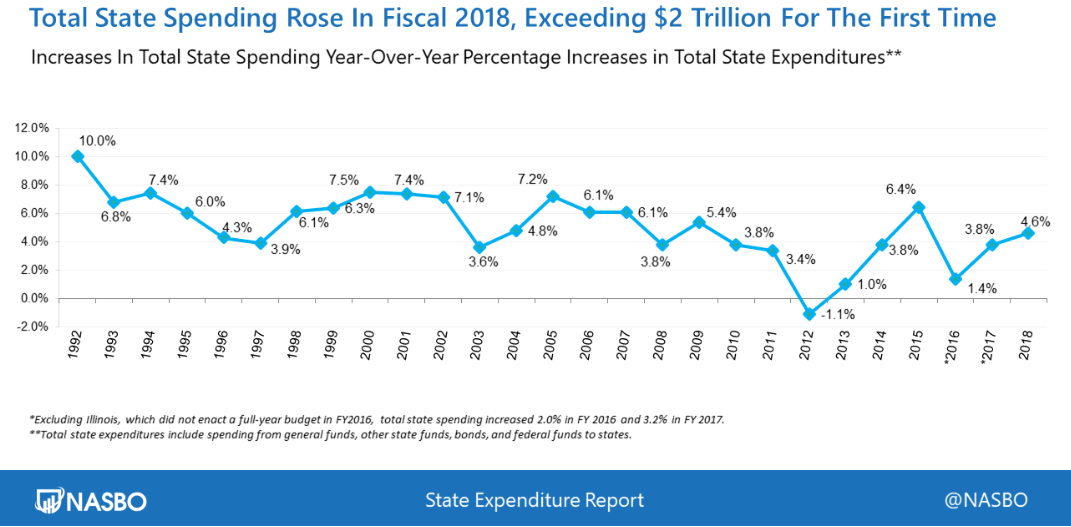
    Total State Spending Exceeds Record $2 Trillion in Fiscal 2018 (National Association of State Budget Officers). A report released by NASBO found that state governments will spend more than a combined $2 trillion this fiscal year – a new high – led by spending on transportation infrastructure, education and entitlement programs. The State Expenditure Report also found that state government spending rose by 4.6 percent in fiscal year 2018, slightly higher than FY 2017’s (3.8 percent) growth, but below a three-decade average of 5.6 percent. While all geographic regions saw a slight increase in FY 2018 spending, the strongest growth was reported in the far West and the Southeast.


    Topics and Trends

    Industry Watch

    Is the Future of Work in Manufacturing at Risk? (Deloitte). According to a report released by Deloitte, there will be 4.6 million new manufacturing jobs in the U.S. between 2018 and 2028, but over half of those newly created jobs – 2.4 million – are predicted to go empty, unless manufacturers start exploring new strategies to find and retain qualified individuals to work in their specialized factories. The report attributes the lack of qualified employees to three things: an increase in the skill level required for manufacturing jobs, as manufacturers make more use of automation; a loss of many experienced workers as baby boomers transition out of or leave the workforce; and, the continuing negative perception of the manufacturing industry by both students and parents. Short-term possible solutions to address and stem the shortage of potential employees involve raising wages to attract or retain workers, outsourcing some tasks or activities, and allowing for more flexibility in hiring requirements (e.g., looking for potential in hires rather than experience).

    The story above is from MEP State News published monthly by the State Science and Technology Institute (SSTI). SSTI provides information and services for those involved in technology-based economic development. For more information visit www.ssti.org.

    Trade/Tariffs

    New Tariffs on Christmas Lights Arrive Just in Time for the Holiday Season (Tariffs Hurt the Heartland). Because there are no major American Christmas light manufacturers, nearly all Christmas tree lights are imported. According to U.S. Census data, over 80% of US imports of Christmas lights from the world in 2017 came between August and October as companies stock up for the holiday season, with China accounting for about 85% of those imports. Already subject to 8% Most Favored Nation (MFN) tariffs, the Section 301 dispute added another 10% tariff, to 18% overall. Lights could become even more expensive next Christmas, as the Section 301 tariff will increase to 25% (or an overall rate of 33%) on January 1st 2019.

    Opportunity Zones

    Trump to Steer More Money to ‘Opportunity Zones’ (New York Times). President Trump directed federal agencies via an Executive Order signed on Wednesday, December 12 to steer spending toward certain distressed communities across the country — part of his administration’s push to turn a tax break included in last year’s $1.5 trillion tax package into a broader effort to combat poverty and geographic inequality. Mr. Trump signed the executive order which establishes the White House Opportunity and Revitalization Council and charges it to encourage public and private investment in urban and economically distressed areas, including qualified opportunity zones, read Executive Order. Mr. Trump told attendees at the meeting that the zones would receive “massive incentives” for private-sector investment with the goal being to help draw investment into neglected and underserved communities of America. For more information on Opportunity Zones, our partners at CDFA have extensive resources available, click here.

    The Opportunity Zones program provides a tax incentive for investors to re-invest their unrealized capital gains into Opportunity Funds that are dedicated to investing into Opportunity Zones designated by the chief executives of every U.S. state and territory. Treasury has certified more than 8,700 census tracts as Qualified Opportunity Zones (QOZs) across all states, territories, and the District of Columbia. For a map of all designated QOZs, click here.

    Inclusive Growth

    Why Rural Areas Can’t Catch a Break on Speedy Broadband (CNet). Broadband is a game changer for rural America. In previous generations, communities thrived based on their proximity to infrastructure like roads, railways, airports and rivers to distribute goods. Today, it’s about having access to reliable, affordable high-speed internet. Communities without access may simply wither and die. However, even after billions of dollars in private investment and government subsidies over multiple decades, the numbers still paint a disturbing picture. Roughly 39 percent of rural Americans lack access to high-speed broadband, compared with just 4 percent of urban Americans. The biggest barrier to getting broadband in certain areas of the country is low population density. Broadband providers simply won’t offer service if they can’t get enough customers to pay for it.

    Innovation

    How Can States and Cities Join the Growing AI Economy? (Government Technology). As Artificial Intelligence (AI) gains ground, many countries are setting national strategies to promote the technology’s adoption. AI is poised to make a significant impact on the global economy, adding a projected $15.7 trillion to the GDP by 2030. State and local governments may not have those same resources, but they can make AI more accessible. A key challenge faced is ensuring that AI is accessible, available and affordable for local businesses, especially small and medium-sized businesses that may not have the resources of their larger counterparts.

    Infrastructure

    Talent Wants Transit: Companies Near Transportation Gaining the Upper Hand (National Public Radio). Talent is choosing to ride transit. For example, McDonald’s traded the lawns, trees and ponds of its suburban corporate offices for sidewalks, concrete, glass and steel and moved into a new corporate headquarters building, just west of downtown Chicago. It’s within walking distance of a stop on two Chicago Transit Authority “L” lines. Chicago isn’t the only region experiencing this business boom along transit lines. From Seattle to St. Louis and Minneapolis to Atlanta, studies show that companies are relocating to be near transit lines, as they seek to attract workers, especially millennials, who prefer living in more urban areas and increasingly don’t want the long, driving commutes of their parents’ generation.

    A State-by-State Look at the Fastest Internet Download Speeds (Open Signal). According to new data about the state of mobile broadband in the US from OpenSignal, the fastest download speeds are along the East Coast, as well as other population centers like California and Florida. For instance, New Jersey outperformed other states in upload and download speeds, with an average download connection of 24.1 Mbps and an average upload connection of 7.1 Mbps. Rural states without any major urban population centers tended to have slower download speeds.


    Deal Makers

    Incentives in Action

    Inside Tesla’s Massive Gigafactory in Nevada (The Verge). Tesla told the state of Nevada that the factory would eventually create 6,500 on-site jobs and give a $100 billion boost to Nevada’s economy over the next two decades. The company has met and even exceeded some of those goals. Tesla employs more than 7,000 workers on-site; Panasonic, which leases part of the Gigafactory and makes battery cells for Tesla, employs 3,000 more people. While CEO Elon Musk has said that he plans to open around a dozen Gigafactories, he has also guessed it would take 100 Gigafactories across the globe to run the entire world on sustainable energy.

    New York’s Agreement with Amazon (Smart Incentives). After conducting a yearlong search for a second home, Amazon selected the Long Island City neighborhood of Queens and the Crystal City area of Arlington, Va., a Washington DC suburb. This article examines the terms of New York’s memorandum of understanding with Amazon pertaining to $1.7 billion in incentives from the Excelsior Jobs Program (tax credits) and Empire State Development (capital grant).

    Hollywood Sees a Jobs Boost Thanks to California Tax Incentives (Los Angeles Times). Each year, California awards hundreds of millions of dollars in tax credits to movie and TV productions that shoot in-state. That money has helped to give a significant boost to production jobs. According to the California Film Commission report, productions receiving state tax credits hired more than 18,000 cast and 29,000 crew members during the first three years of the program. The current incentive program was set to expire in 2020, but state officials recently extended it to 2025, at the same level of $330 million in credits per year.

    The State Business Incentives Database is a national database maintained by the Council for Community and Economic Research (C2ER) with almost 2,000 programs listed and described from all U.S. states and territories. The Database gives economic developers, business development finance professionals, and economic researchers a one-stop resource for searching and comparing state incentive programs. To view the information available in the database, click here.

    New Growth Opportunities

    Curbing Carbon Emissions Could Boost State Economies (CNN Money). The Global Commission on the Economy and Climate projected that a set of policies aimed at combating global warming could yield $26 trillion in economic gains through 2030 if governments and businesses start enacting them in the next two to three years. The commission is composed of former heads of state, big city mayors, CEOs, and directors of international institutions like the World Bank. The report’s principal recommendation: Imposing a tax on carbon to generate revenue that can then be used to pay for an estimated $90 trillion in sustainable infrastructure like mass transit and energy efficient buildings. Seventy states and countries already have various types of carbon taxes. British Columbia, for example, imposed an annual tax of $8 per each ton of carbon dioxide in 2008, which rose to $24 a ton since 2012. The Canadian province’s economy has grown faster than the national average, with help from clean energy businesses that sprang up to meet the increased demand.

    Talent Development/Attraction

    The Promise of Community Colleges as Pathways to High-Quality Jobs (Brookings). In this podcast, representatives from the Brookings Metropolitan Policy Program and the Brown Center on Education Policy discuss the important role that community colleges play in putting young adults on a pathway to higher-quality jobs and other strategies for improving economic outcomes for youth from lower-income and disadvantaged backgrounds. The Brookings Podcast Network is a platform for high-quality, informative, and relevant discussions with public policy experts about their ideas and solutions to the most important challenges of our time.

  • State Economic Development Bulletin – November 2018

    State Economic Development Bulletin – November 2018

    Latest News

    State Economic Performance

    Opportunity Atlas Provides Resource for Place-Based Interventions (US Census and Opportunity Insights). The new Opportunity Atlas released by Opportunity Insights, with assistance from the U.S. Census Bureau, finds that the economic mobility of Americans is tied to the neighborhoods in which they live. The data reveals that opportunities for upward mobility are not necessarily better for children growing up in cities rather than in rural areas. All research results are provided in a publicly available online data visualization tool, the Opportunity Atlas, where users can view the data for every census tract in America, overlay their own data points of interest, and export into a data set for their own analysis.


    Topics and Trends

    Industry Watch

    Drywall Manufacturing Impacted by Coal-Fired Power Plant Closures (Pittsburgh Post-Gazette). The decline of coal-fired energy in the U.S. has strained the symbiotic relationship between drywall manufacturers and coal plants, which produce calcium sulphate (gypsum rock) as a byproduct of the burning process. The wallboard industry began locating plants right next to coal plants that were outfitted with the sulfur dioxide-removal technology in the 1990s and subsequently signed long-term contracts with their neighbors for a steady “coal ash” supply. Now, upwards of 45 percent of U.S. wallboard supply may be impacted as the industry seeks to adapt.

    Trade/Tariffs

    Walmart Sounds Trade War Alarm (Business Insider). Walmart, the largest retailer in the United States and a major buyer of U.S. manufactured goods, sent a letter to the Trump administration asking it to reconsider new tariffs on $200 billion worth of Chinese goods. In a letter to the US Trade Representative, the retailer indicated that the immediate impact of the new tariffs “will be to raise prices on consumers and tax American business and manufacturers.”

    Opportunity Zones

    Treasury Releases Proposed Regulations on Opportunity Zones (US Treasury) The Treasury Department issued proposed guidance related to the new Opportunity Zone tax incentive. The tax benefit, created by the 2017 Tax Cuts and Jobs Act, is designed to spur economic development and job creation by encouraging long-term investments in economically distressed communities nationwide. The proposed regulations clarify what gains qualify for deferral, which taxpayers and investments are eligible, the parameters for Opportunity Funds, and other guidance. For more information, our partners at CDFA have extensive resources available, click here.

    The Opportunity Zones program provides a tax incentive for investors to re-invest their unrealized capital gains into Opportunity Funds that are dedicated to investing into Opportunity Zones designated by the chief executives of every U.S. state and territory. Treasury has certified more than 8,700 census tracts as Qualified Opportunity Zones (QOZs) across all states, territories, and the District of Columbia. For a map of all designated QOZs, click here.

    VCs Hit Snag in Proposed OZ Regulations (Bloomberg). The recently proposed Opportunity Zones guidelines require that businesses generate at least half their gross income within a zone. According to various investors and venture capitalists, the 50 percent requirement will hurt high-growth startups. For example, that threshold may be fine for an apartment building or a grocery store, but difficult to meet for a business hoping to manufacture a product to be sold widely or provide services online.

    Inclusive Growth

    Integrating Housing and Economic Development Strategies (Smart Incentives). Housing is becoming a greater priority for economic development organizations because they are highly focused on talent. Economic development leaders care about the factors that affect where individuals working in high-demand occupations at all skill levels want to — and are able to — live as well as where they work. Worrying about jobs without also worrying about how people will get to those jobs and the residences they are coming from is inadequate. The challenge is to identify ways that communities can get housing, transportation, and economic development strategies to work together.

    Innovation

    The Future of Autonomous Vehicles (National Governors Association). Many commentators have noted the potential consequences of autonomous transportation, particularly how it will lead to job losses for taxi and truck drivers. However, there are critical second and third order effects that will have additional impacts on society. A world without traffic violations and parking meters means massive disruptions to insurance, real estate, and public safety. Far too little attention has been paid to these upcoming changes. Preparing for this new reality will require close cooperation and collaboration between state, local, and federal leaders.

    Infrastructure

    The State of Broadband 2018 (Broadband Commission for Sustainable Development). Broadband is vital infrastructure, as essential as water and electricity networks. The data analysis and recommendations contained in this year’s State of the Broadband report come at a crucial time when Internet access is more important than ever before. To boost broadband, the report recommends: building leadership for broadband; promoting Internet training; stimulating consumer and business demand; monitoring Information and Communications Technology (ICT) developments to inform policy; reviewing universal service measures; strengthening digital skills and literacy; supporting local e-Businesses and entrepreneurs; adapting legal frameworks; and reducing taxes and duties on telecom products and services.


    Deal Makers

    Incentives in Action

    Amazon Plans to Split HQ2 between Long Island City, NY and Arlington, VA (New York Times). After conducting a yearlong search for a second home, Amazon has switched gears and is now finalizing plans to have a total of 50,000 employees in two locations. The company is nearing a deal to move to the Long Island City neighborhood of Queens and the Crystal City area of Arlington, Va., a Washington DC suburb. Amazon already has more employees in those two areas than anywhere else outside of Seattle, its home base, and the Bay Area.

    The Cities that Lost Out on Amazon’s HQ2 Still Won (CNN Business). Seventeen cities in North America didn’t land prizes in the Amazon sweepstakes, but they laid the groundwork to become tech hubs for years to come. Additionally, some of the nation’s most valuable real estate and commercial assets have been put on hold because cities were taking a wait-and-see approach with Amazon. In a post-HQ2 environment, you’re going to see a new wave of expansions and re-locations over the next 18 months.

    Innovative State Business Incentives 2018 (Business Facilities). Locations are crafting incentives that target specific growth sectors, provide support for entrepreneurs, and attract projects promising a bevy of high-wage, high-tech new jobs. Business Facilities magazine made its annual Editor’s Picks for incentives, looking for innovative perks that address a specific growth sector, or support entrepreneurs and startups, as well as more generic offerings designed to spur relocations, exports, workforce development and the like.

    The State Business Incentives Database is a national database maintained by the Council for Community and Economic Research (C2ER) with almost 2,000 programs listed and described from all U.S. states and territories. The Database gives economic developers, business development finance professionals, and economic researchers a one-stop resource for searching and comparing state incentive programs. To view the information available in the database, click here.

    New Growth Opportunities

    The State of Innovation: Building a Stronger & Fairer Economy in New Jersey (SSTI). Governor Phil Murphy presented his economic development strategic plan – The State of Innovation: Building a Stronger & Fairer Economy in New Jersey – that seeks to set the state on a path to a stronger future, where innovation and diversity are at the forefront of its economy, while re-establishing New Jersey as the state of innovation. The plan seeks to advance five key goals by 2025, including to: (1) foster a better, more supportive business climate to add 300,000 jobs; (2) achieve 4 percent wage growth or $1,500 median wage increase; (3) double venture capital in New Jersey, while attracting $625 million in new venture capital and bring 40,000 more women and minorities into STEM-related fields; (4) close the racial and gender wage and employment gaps by increasing wages between $15,000 to $23,000 for those groups and adding 42,000 new women and minorities to the workforce; and (5) encourage a thriving and inclusive New Jersey by reducing city poverty rates and investing in its urban centers and downtowns.

    The story above is from MEP State News published monthly by the State Science and Technology Institute (SSTI).  SSTI provides information and services for those involved in technology-based economic development.  For more information visit www.ssti.org.

    Talent Development/Attraction

    EntreEd Expands America’s Entrepreneurial Schools Initiative (EntreEd). America’s Entrepreneurial Schools commits schools to provide entrepreneurial education to every student within their building every year. Each K-12 school that completes this goal receives designation as one of America’s Entrepreneurial Schools and is awarded and recognized for their achievements. Last year, over 40,000 K-12 students in 7 states, 23 counties, and 28 school systems were introduced to entrepreneurship education through the program. Most recently, the initiative expanded to include two additional counties in Eastern Kentucky.

  • State Economic Development Bulletin – October 2018

    State Economic Development Bulletin – October 2018

    Latest News

    State Economic Performance

    Top 9 Economic Predictions for the Next 10 Years (The Balance). This article discusses the top nine predictions that most affect the U.S. and your own personal economy over the next decade. Among the predictions – the U.S. economy will boom, then bust. More specifically, the Federal Reserve predicts that economic growth, as measured by gross domestic product, will rise to 2.4 percent in 2019. That’s within the ideal range of 2 to 3 percent. But a 4 percent growth rate could set off a dangerous boom-and-bust cycle. If growth does hit that level, it could create a recession by 2020.


    Topics and Trends

    Industry Watch

    White House warns of ‘domestic extinction’ of defense suppliers (Defense News). The outlook for lower-tier suppliers in the nation’s defense industrial base is troubling, with DOD facing “limited capabilities, insecurity of supply, lack of R&D, program delays and an inability to surge in times of crisis,” according to the Trump administration’s interagency study of the defense base. In response, the report calls for extending direct investment by the federal government in the industrial base’s lower tiers through DOD’s Defense Production Act Title III, manufacturing technology, and industrial base analysis and sustainment programs. That type of intervention would address “critical bottlenecks, support fragile suppliers and mitigate single points-of-failure.”

    Trade/Tariffs

    U.S. bicycle industry feels effects from tariffs (Daily Gazette – Capital Region NY). The U.S. tariffs enacted on thousands of Chinese-made items will eventually trickle down to the same two places: American businesses and their customers. One such place where the rubber hits the road is an independent bicycle shop on Freemans Bridge Road. Bicycle companies are boosting the wholesale price of bikes to cover the 10 percent tariff enacted the Trump administration in late September, and may boost prices again after Jan. 1, when the punitive import duty rises to 25 percent.

    Resources for Doing Business in the United Kingdom (US Trade Office). Approximately 7,500 U.S. firms have a presence in the United Kingdom, and more than 40,000 U.S. companies already sell their goods and services in the UK. Resources for U.S. small businesses looking to export to the UK are available to help. For example, the UK and US governments have published new IP and trade toolkits for SMEs for SMEs to help protect intellectual property rights in their markets.

    Opportunity Zones

    Early Adopters Move Ahead with Opportunity Funds (CDFA Weekly Review) The Opportunity Zones (OZ) incentive has been part of the federal tax code for less than a year, but early participants are setting the groundwork to facilitate and make Qualified Opportunity Fund investments in distressed communities.

    The Opportunity Zones program provides a tax incentive for investors to re-invest their unrealized capital gains into Opportunity Funds that are dedicated to investing into Opportunity Zones designated by the chief executives of every U.S. state and territory. Treasury has certified more than 8,700 census tracts as Qualified Opportunity Zones (QOZs) across all states, territories, and the District of Columbia. For a map of all designated QOZs, click here.

    Inclusive Growth

    Measuring Inclusion (Urban Institute). Being more inclusive can make states and cities stronger and more stable and can give all residents a chance to improve their quality of life. To better understand what constitutes “inclusive”, the Urban Institute collected data on 274 of the largest U.S. cities and ranked those cities on economic, racial, and overall inclusion across four decades. Also available is a dashboard to explore national trends, learn lessons from case-study cities, and dig deeper into your own areas.

    Innovation

    Why Cultivating Your Innovation Ecosystem Is Worth the Work (Stanford Review). Despite the recognition of their importance for economic development, the concept of local innovation ecosystems remains fuzzy. This can make it challenging for practitioners working on ecosystem-strengthening initiatives—particularly outside of existing innovation hubs—to articulate the value of their work and to engage the collaborators whose participation they need. This article presents strategies to help ecosystem-builders.

    Infrastructure

    The State of U.S. Infrastructure (Council on Foreign Relations). Debate has intensified over how to improve the nation’s infrastructure, as analysts say U.S. transportation, water, and other systems face major shortfalls. Much of the discrepancy between the United States and its peers can be traced to very different funding levels. On average, European countries spend the equivalent of 5 percent of GDP on building and maintaining their infrastructure, while the United States spends 2.4 percent.


    Deal Makers

    Incentives in Action

    State Business Incentives Database (Bloomberg). The 2018 legislative season has proven to be a somewhat quiet year for state tax credits. Aside from big company incentives (e.g., Amazon and Foxconn), state legislatures simply do not have the resources to introduce new tax credit programs. Despite the lull, September did see the enactment of four new tax credits: one each in Maine and Massachusetts, and two in the District of Columbia.

    The State Business Incentives Database is a national database maintained by the Council for Community and Economic Research (C2ER) with almost 2,000 programs listed and described from all U.S. states and territories. The Database gives economic developers, business development finance professionals, and economic researchers a one-stop resource for searching and comparing state incentive programs. To view the information available in the database, click here.

    New Growth Opportunities

    JobsOhio signs a collaboration agreement to accelerate growth of midmarket companies (Business Wire). ELITE, London Stock Exchange Group’s (LSEG) international business support and capital raising program, signed an agreement with JobsOhio, the privately funded non-profit corporation that promotes job creation and economic development for the State of Ohio, to provide midmarket companies in Ohio with access to ELITE’s unique training program to support their growth. This collaboration signifies the first entrance of the ELITE platform into the U.S. market.

    Talent Development/Attraction

    Scaling Reform: Inside Tennessee’s Statewide Teacher Transformation (FutureEd). The federal Every Student Succeeds Act has placed authority for improving education squarely in states’ hands. This report chronicles how one state has made valuable changes to its teaching profession, with powerful lessons for other states. Over the past decade, Tennessee has led one of the most comprehensive educator reform efforts in the country, under both Republican and Democratic administrations.

    South Carolina launches THINKER program to close skills gap (SSTI). The Economic expansion and baby boomer retirements will likely create a need to fill 3.4 million manufacturing jobs between 2015 and 2025, but only 1.4 million positions are likely to be filled, according to a study by Deloitte and the Manufacturing Institute. However, South Carolina’s new THINKER (Technology-Human Integrated Knowledge Education & Research) program, created by Clemson University and funded by the National Science Foundation, hopes to close the skills gap that hinders the remaining 2 million jobs. THINKER is described as the first program in the nation that brings together graduate students and technical college students in advanced manufacturing. The program seeks to equip students with both technical skills and soft skills (such as communication and collaboration), in order to create well-prepared leaders in advanced manufacturing, and assist in better understanding the interaction of machines, people and data.

    The story above is from MEP State News published monthly by the State Science and Technology Institute (SSTI). SSTI provides information and services for those involved in technology-based economic development. For more information visit here.

  • State Economic Development Bulletin – September 2018

    State Economic Development Bulletin – September 2018

    Latest News

    State Economic Performance

    Fiscal 50: State Trends and Analysis (Pew). Since the Great Recession, the economy’s slow recovery has played out unevenly across states. The Pew Charitable Trusts provides an interactive resource that allows you to sort and analyze data on key fiscal, economic, and demographic trends in your state and understand their impact on fiscal health. The tool presents data and analyses that help states look beyond their current budgets, size up their progress over time, consider different ways to measure performance, and easily compare their outcomes with neighbors or peers that have similar resources and challenges.


    Topics and Trends

    Industry Watch

    2018 Aerospace manufacturing attractiveness rankings (PricewaterhouseCoopers). PwC’s annual aerospace manufacturing attractiveness rankings report is a guide to promising geographic locations for aerospace development. The index offers comparisons within the United States and globally as well, providing organizations with data they can leverage to help plan for the future.

    Trade/Tariffs

    Tariff Concerns Expressed by Apple (Apple Insider). In a letter to the U.S. Trade Representative, Apple – the largest US corporate taxpayer – expressed that “tariffs will lead to higher U.S. consumer prices, lower overall U.S. economic growth, and other unintended economic consequences.”

    State International Trade Directors Meeting Notes (CREC). The Center for Regional Economic Competitiveness (CREC) recently participated in the monthly call between the U.S. Department of Commerce International Trade Administration ITA and State International Trade Directors. The call covered five (5) topics and notes from that call are included in the link.

    Opportunity Zones

    The Council of Development Finance Agencies (CDFA) has a new report describing steps states are taking to make the most of their Opportunity Zones. One common strategy is assessing how other incentive programs can be combined with Opportunity Zones to maximize investor interest. According to the report, 33% of states indicated they are considering creating incentives for Opportunity Fund investments.

    The Opportunity Zones program provides a tax incentive for investors to re-invest their unrealized capital gains into Opportunity Funds that are dedicated to investing into Opportunity Zones designated by the chief executives of every U.S. state and territory. Treasury has certified more than 8,700 census tracts as Qualified Opportunity Zones (QOZs) across all states, territories, and the District of Columbia. For a map of all designated QOZs, click here.

    Inclusive Growth

    Economic development organizations have a role to play in addressing barriers to inclusive growth (Brookings). This is a complicated era for economic development leaders—they must simultaneously deliver environments in which firms and industries can thrive and create good jobs while also creating systems and networks that help lift up workers and communities, especially those that have been historically disadvantaged.

    Net Neutrality

    Net neutrality legislation has been introduced in over half of the states (NCSL), largely in response to the Federal Communications Commission Restoring Internet Freedom Order issued on Jan. 4, 2018. Legislators in 30 states have introduced over 72 bills requiring internet service providers to ensure various net neutrality principles. Governors in six states—Hawaii, New Jersey, New York, Montana, Rhode Island, Vermont—have signed executive orders. Three states—Oregon, Vermont, and Washington—enacted net neutrality legislation.

    Hot Button Issues

    The opioid crisis continues to have an impact on the American workforce (Axios). Nearly 1 million “prime-age individuals” (men and women between the ages of 25 and 54) were not in the workforce, due to opioids. Employers often have a direct interest in combating the opioid crisis, and the business impact of those out of the workforce and struggling with opioid addiction will become only more noticeable for states.


    Deal Makers

    Incentives in Action

    What states learned about wooing companies with big tax breaks (CNN Money). So, are tax breaks cost-effective? It really depends on how much a local government thinks the jobs are worth — and whether the company would have walked away without the extra incentive. Benefits from these deals haven’t always materialized, prompting many states to think more carefully about them. Here are some of the largest tax break packages of the past decade and what has happened since.

    New Growth Opportunities

    Mississippi says $9.8 million wagered on sports in first month (AP). Mississippi officials say gamblers bet $9.8 million on sporting events from Aug. 1 through Labor Day.

    Talent Attraction

    Michigan launches first talent attraction and retention campaign (Michigan.gov), which went into media markets in Chicago, Pittsburgh, Madison, and across Michigan. The Choose Michigan campaign stemmed from several rounds of research and a targeted focus group held earlier this year.