Category: State and Local Alignment

  • Economic Development Trends: Insights from SEDE’s 2026 Fall Meeting

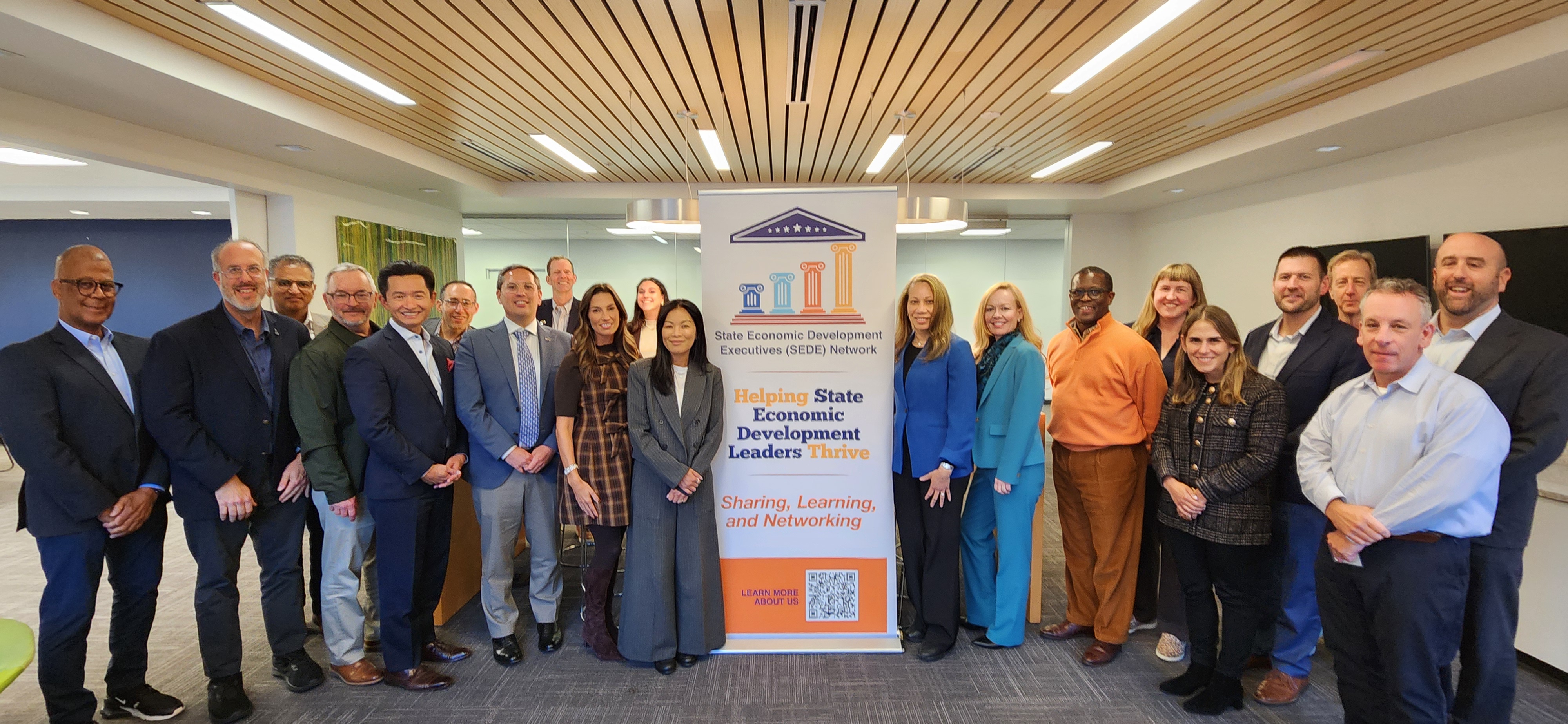
    SEDE Meeting1 10.26 (1)

    State economic development leaders face a critical moment as the economy, technology, and public expectations shift. 

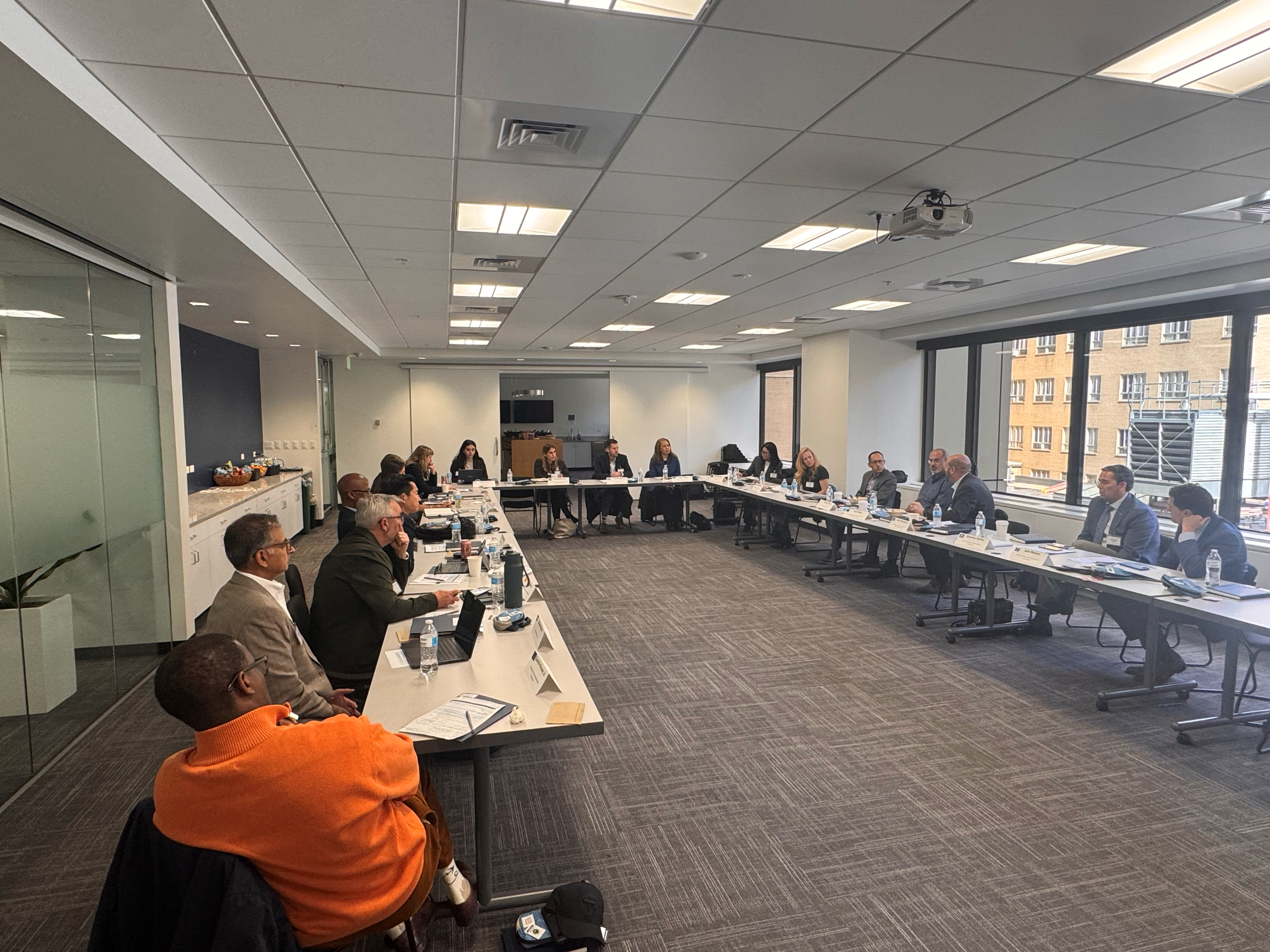
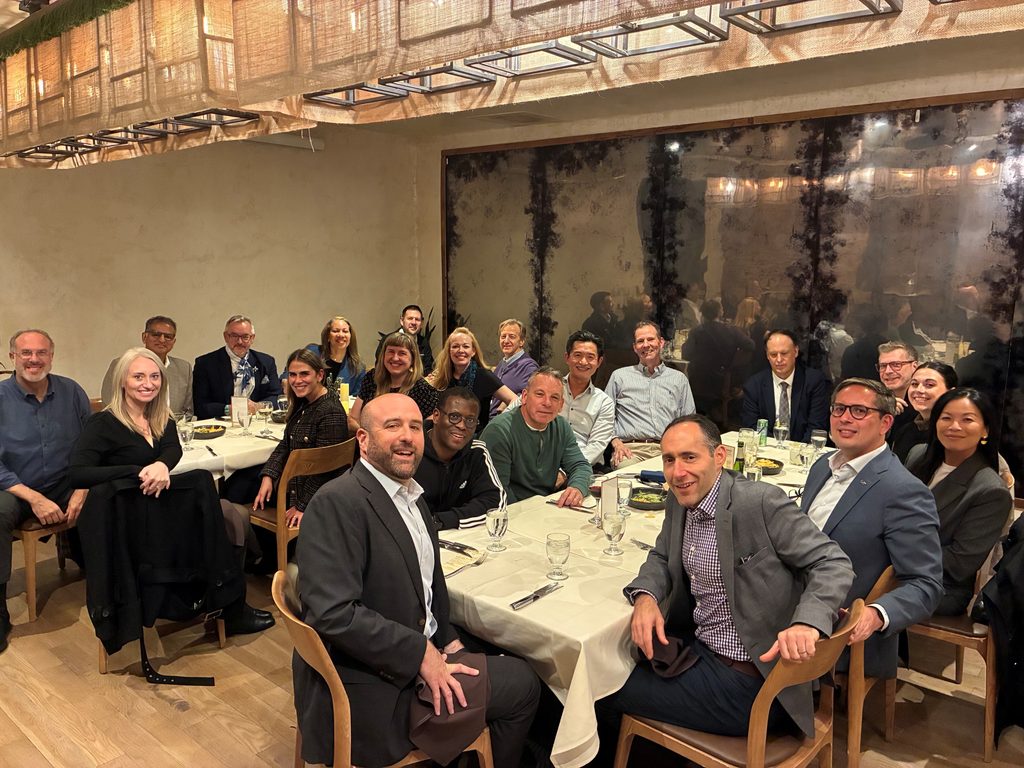
    They convened to compare notes and consider what the field should look like in the years ahead on October 15-16, 2026. This meeting of the State Economic Development Executives Network (SEDE) brought together leaders from 18 state economic development organizations in Denver to discuss the trends, challenges, and strategies shaping state economic development.

    Hosted by the Colorado Office of Economic Development and International Trade (OEDIT), the meeting emphasized candid peer exchange on public trust, data center policy, political transitions, and state economic development organization structure and funding.

    The semiannual convening state economic development leaders is a unique opportunity for state leaders to have candid and productive discussions with peers that rarely have the opportunity to occur. Participants compared their agencies’ organizational structures and how public, quasi-public, and public-private models compare in terms of flexibility, funding, and relationships with state leadership. They also discussed how affiliated foundations and nonprofits can supplement public resources and provide stability as leadership and priorities change. No single model was preferred; the idea was to discuss how each state’s structure reflects its own history, politics, and needs.

    As the field evolves, so does skepticism about the work. What is economic development is a question that continues to evolve as the challenges facing our states change.  Leaders also asked how they can better explain the value of public investment in economic growth and job opportunities The answers to these questions have real consequences. Incentives and programs face growing scrutiny in state legislatures. Several leaders noted that the term “economic development” has been embraced by so many people and become defined so broadly that it risks becoming meaningless.

    Leaders agreed that traditional measures of success, such as jobs created, capital investment, and return on investment continue to be important, but they no longer resonate the way they once did. Stories about people and communities do. Residents and legislators want to know how economic development improves people’s lives, whether through better wages, new opportunities, or stronger communities. Storytelling campaigns, plain-language branding, and stronger external affairs functions are just some approaches that state leaders find that are working. Others include spotlighting local entrepreneurs for legislators and making the benefits of projects visible to residents, such as company-supported training centers. Leaders also cautioned that not every community wants to grow. For those places, framing growth around economic opportunity and mobility can help bridge that divide
    SEDE

    Data centers and artificial intelligence (AI) were closely tied to this conversation and generated extensive discussion. Leaders described how quickly data centers have shifted from a sought-after investment to a political flashpoint, driven by concerns about utility rates, water use, noise, broader sentiment against large companies, and backlash against AI itself. In many communities, data centers have become the most visible symbol of public concern about AI.

    For economic developers, that shift raises a hard question:

    What role should state agencies play when an industry becomes a source of community opposition?

    Responses shared by states included:

    • Create community investment frameworks to guide local governments negotiating with developers;
    • Provide guidance on the use of non-disclosure agreements that can undermine community engagement;
    • Adjust new utility rate classes; and
    • Build stronger zoning and regulatory frameworks.

    Participants also considered the future of data center technology, including whether rapid change could leave today’s facilities outdated. They discussed the capacity of state agencies to vet project claims and job projections in such a fast-moving field. They also weighed whether states can collaborate on responsible AI regulation or a national framework, with interest in sharing approaches across states rather than each state working alone.

    Leaders also discussed other pressures facing the field. Most states reported a weaker supply of industrial sites five to ten years ago. Housing, childcare, water, energy, and constrained budgets were raised across states, as was the challenge of scaling support for small businesses. Federal policy shifts and the impacts on workforce training and higher education were also mentioned, and how state partnerships can be strengthened.

    At the end of the program, Maybell Quantum Industries, a quantum infrastructure company in Denver, hosted participants on site tour. With the evolution of quantum computing and its implications for national security and technological advancement, the tour offered a closer look at the industry and at how states like Colorado and New Mexico are positioning themselves as global leaders. It was a fitting close to a meeting focused on how states can prepare for industries that are growing and evolving.

    Across every session, a common thread emerged: economic development works best when the public trusts it. Whether the topic was data centers, incentives, site readiness, or small business support, leaders kept returning to transparency, clear communication, and showing how investments benefit people and communities. In a moment of rapid change, the field’s greatest asset may be the willingness of state leaders to learn from one another. SEDE will continue fostering that exchange when the network convenes again in spring 2027 alongside SelectUSA.
    SEDE Fall 2026 (3) (1)
  • Alternative Governance Models for State Economic Development

    With 36 state gubernatorial elections scheduled for 2026, changing economic conditions may encourage new governors to revisit how their economic development organizations are structured, funded, and governed. Although most states have economic development agencies, one trend that has gained momentum over the past several decades is the move away from traditional state agencies toward alternative organizational models that combine public authority with private-sector flexibility.[1]

    These models have gained attention as states seek greater operational flexibility, alternative sources of funding, and new ways to deliver economic development programs. At the same time, shifting responsibilities outside traditional state agencies can raise important questions about transparency, accountability, and oversight.

    For state leaders considering structural changes, the key question is how to design a structure that balances flexibility with public accountability, regardless of which model they adopt.

    What are Public Private Partnerships in Economic Development Models?

    Within the broader category of public-private partnerships (PPP), states typically use three structures to deliver economic development services: quasi-public authorities, private nonprofits, and hybrid models. Their legal status, funding mechanisms, and governance structures differ significantly.

    Table 1. State Economic Development Governance Models Compared

    ModelStructureStrengthsDrawbacks
    Quasi-public authoritiesState-created entities funded through annual legislative appropriations. They operate under state legislative authority, with governor-appointed boards that include state officials, and report to state oversight bodies.Bipartisan support can keep the organization stable across administrationsIntegrated with broader state strategyEmphasis on transparencyLegislature can reform the organization when neededConstrained by annual budget cyclesSlower decision-making than private models
    Private nonprofitsIndependent 501(c)(3) nonprofit corporations funded through dedicated revenue streams outside the state budget (e.g., profits from a state enterprise such as Ohio’s wholesale liquor business). Self-governing boards; operational independence from legislative oversight.Faster decision-making that moves at the speed of businessLeaner operations with private-sector expertisePotential for significant economic gainsIndependence from budget cyclesCan be exempt from public records lawsFunding flows can be difficult to verifyFewer accountability mechanisms
    Hybrid (quasi-public + nonprofit)Two-entity structure. A state-funded quasi-public agency handles core functions through appropriations. A separate 501(c)(3) companion accepts private donations for supplementary programs. The two entities share aligned missions.Private fundraising supplements appropriationsPerformance-based, milestone-metered incentivesPotential for measurable economic resultsDual funding reduces state budget pressureDonors to the nonprofit companion may be undisclosedCorporate donors can gain preferential access to state officialsTwo entities make accountability more complexEffectiveness depends on paired accountability mechanisms

    Quasi-public authorities are state-created entities that receive direct appropriations from the state budget and operate under state legislative authority.[2] Funding typically flows through annual legislative appropriations, and the organizations report to appointed boards that include state officials. Core functions include business recruitment, retention, workforce development, and tax incentive administration.

    Private nonprofits operate outside the state budget system, relying on dedicated revenue streams such as tax revenue or enterprise operations. This provides operational independence from annual budget cycles and legislative oversight while retaining nonprofit status. JobsOhio is the clearest example of this structure, with funding mechanisms resting on Ohio’s Beverage System which it manages.[3]

    Some states use a two-entity structure that pairs a state-funded quasi-public agency with a separate private nonprofit foundation. The agency handles select economic development functions funded through state appropriations, while the nonprofit organization accepts private donations and raises funds for other activities and programs. This model creates a dual-funding structure, with state operations and private fundraising managed through separate legal entities with aligned missions. States using this approach provide case studies for identifying successful practices and opportunities for institutional improvement.

    Case Studies

    Pennsylvania

    Pennsylvania was among the first states to develop a longstanding quasi-public program with the creation of the Ben Franklin Technology Partners in 1982.[4] Ben Franklin operates as a network of regional nonprofits funded through the state’s Department of Community and Economic Development. Ben Franklin invests in early-stage technology companies and established manufacturers, providing capital and expertise, in partnership with universities, and focusing specifically on technology, commercialization, innovations, and start-ups.[5]

    Ohio

    Established in 2011 by Governor John Kasich, JobsOhio was designed as a private nonprofit corporation to enable some of Ohio’s economic development operations to function more like a business, with faster decision making, leaner operations, and private-sector expertise guiding business recruitment and retention.[6] JobsOhio is funded primarily through the JobsOhio Beverage System (JOBS) liquor enterprise which it purchased in 2013. JobsOhio works in tandem with the Ohio Department of Development, a state agency.

    Virginia

    The Virginia Economic Development Partnership (VEDP) also presents a case of institutional success. Created in 1995, the organization is a quasi-public economic development organization and governed by a 17-member Board of Directors that selects the President and CEO. VEDP supports business attraction, retention, and expansion.

    Michigan

    Michigan’s Economic Development Corporation (MEDC) is supported by the Michigan Economic Development Foundation (MEDF).[7] The MEDF operates from corporate and nonprofit contributions and supports efforts that include investment missions, hosting foreign delegations, and hospitality opportunities.

    Key Takeaways

    State leadership transitions present several reform opportunities, but leaders pursuing alternative economic development models must first grapple with several fundamental questions and considerations:                          

    Accountability and Operational Checkpoints for Transitions

    • Bipartisan/sustainable commitment is important for program longevity.
    • Clear, measurable scope helps organizations stay focused on their mission.
    • Strategies should align with broader economic development planning.
    • Boards should have expertise needed to oversee the organization.
    • Transparency is essential for any economic development organization and to help identify where improvement is needed.
    • Focused performance metrics will encourage political and public support.

    Ultimately, alternative structures can provide greater flexibility and access to private-sector resources, but structure alone does not guarantee success. Pennsylvania, Ohio, Virginia, and Michigan show that each model depends on long-term political commitment, clear objectives, and measurable outcomes.


    [1] The Promise and Perils of Privatizing State Economic Development Agencies – Community and Economic Development, UNC School of Government, https://ced.sog.unc.edu/2013/11/05/the-promise-and-perils-of-privatizing-state-economic-development-agencies/

    [2] Public-Private Economic Development Partnerships, Connecticut General Assembly Office of Legislative Research, Report 2006-R-0019, https://cga.ct.gov/2006/rpt/2006-r-0019.htm

    [3] JobsOhio Official Website, https://www.jobsohio.com/about-us

    [4] Ben Franklin Technology Partners Official Website, https://cnp.benfranklin.org/about-us/

    [5] Partnerships – Ben Franklin Technology Partners, https://www.sep.benfranklin.org/partnerships/

    [6] JobsOhio Official Website and Annual Report, https://www.jobsohio.com/files/jo26_annual-report_v2.5-spread-web.pdf

    [7] Michigan State University’s The State News, “MSU board member’s organization faces scrutiny for giving businesses access to state officials,” November 4, 2025, https://statenews.com/article/2025/11/trustees-charity-faces-scrutiny-for-giving-businesses-access-to-state-officials


  • Midwestern Governor’s Association Webinar Series: New America’s Smartland: Electricity Affordability

    In the face of unprecedented load growth in the U.S., many states are experiencing increases in the cost of electricity. You are invited to a five webinar series hosted by the Midwestern Governors Association that will discuss energy affordability from a variety of perspectives. These webinars will be useful regardless of where your state is located.  Webinar topics will include:

    • Trends in Affordability (March 26)
    • How are State Governments Responding? (April 7)
    • Affordability in a Time of System Investment (April 16)
    • Community Engagement and Customer Bills (April 28)
    • Affordability in the News (May 12)

  • Rebuilding How America Delivers: What State Economic Development Leaders Can Do Next

    States are at a critical inflection point. Significant federal resources have flowed to communities, creating real opportunity to strengthen housing supply, modernize infrastructure, improve water systems, and drive regional growth. These investments also exposed a clear challenge. As AmericaFWD’s State of Play (released December 2025) makes clear, the systems used to plan, fund, and deliver projects are not keeping up with the scale or speed that today’s economy requires.

    For state economic development leaders, the message is straightforward and operational. Communities want results they can see. They want projects that move on schedule, control costs, and translate investment into jobs, competitiveness, and growth. Too often, delivery slows because responsibilities are fragmented, processes are outdated, and incentives across agencies do not align. Capital helps. Execution determines outcomes.

    The report highlights an important advantage that states already have. Local governments, utilities, and regional partners are ready to deliver. When outcomes fall short, the barrier is rarely vision or commitment. It is capacity, coordination, and process. States sit at the center of that equation. When state systems align funding, permitting, technical assistance, and accountability, projects move faster and perform better.

    AmericaFWD also reinforces a lesson state leaders know well. Housing, transportation, water, and economic opportunity operate as connected systems. Treating them separately raises costs and delays impact. Integrated planning across agencies and programs improves sequencing, reduces duplication, and strengthens returns for communities and employers alike. States are uniquely positioned to drive that alignment.

    A central takeaway for states is the importance of capacity. Communities with skilled staff, technical expertise, and clear authority consistently outperform those without it. Strategic technical assistance, clearer guidance, and streamlined state-level processes help local teams manage risk and deliver projects efficiently. This is not about adding bureaucracy. It is about improving performance across the delivery system.

    AmericaFWD’s State of Play offers a constructive path forward. Its near-term agenda focuses on strengthening local capacity, accelerating project delivery, modernizing systems, and sharing what works across states and regions. For state economic development leaders, the opportunity is clear.

    Apply these lessons now to turn investment into durable growth, competitive places, and visible results. This moment calls for sharper execution. The tools are available. The challenge is alignment and delivery. This report provides a practical blueprint for moving faster and delivering better outcomes for states and the communities they serve.

    Read full report here.