
Author: Marty Romitti

  • State Economic Development Bulletin – May 2020

    State Economic Development Bulletin – May 2020

    Latest News


    State Economic Development Officials Collaborate to Counter the Pandemic’s Impact (Pew Charitable Trusts). As states grapple with the unexpected and dramatic changes brought on by the novel coronavirus, economic development leaders are playing important roles in the emergency response. They are helping to ensure that health care workers have the equipment they need, while working to address the challenges facing companies, both in the short term and as they begin the long road to recovery. Working through the State Economic Development Executives (SEDE) Network, economic development secretaries, commissioners, and chief executives of state commerce authorities have been holding weekly strategy sessions to brainstorm and share information about how to respond to a national emergency that has brought great public health and economic challenges. For these officials, the need for multifaceted responses to the pandemic has altered the nature of their work and put a greater emphasis on the value of creative collaboration toward a common goal. For further information on the network, go to www.stateeconomicdevelopment.org.

    * * *

    – FYI –
    House Passes $3 Trillion HEROES Act

    On May 15, the U.S. House of Representatives approved a mammoth $3 trillion relief package designed to alleviate the health and economic fallout of the deadly coronavirus pandemic. The 208-199 vote was largely on party lines. The legislation includes hundreds of billions of dollars for medical equipment and coronavirus testing, a new round of direct cash payments for individuals and families and an expansion of unemployment insurance benefits. A third of the bill – almost $1 trillion – would go to state and local governments to shore up coffers battered by emergency spending and a loss of tax revenue. The Senate will not take up its version of the bill until sometime in June, with the expectation that a compromise bill would likely be enacted either before the July 4th recess or at some point in July.

    * * *

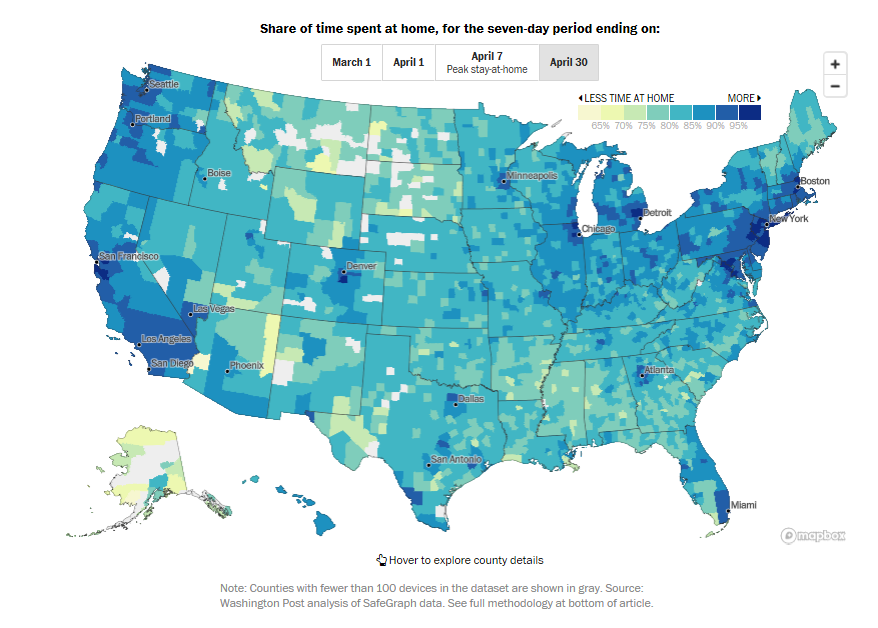
    Where Americans are Still Staying at Home the Most (Washington Post). According to an analysis of cellphone location information, the peak period of our collective, coronavirus-induced lockdown was the seven-day period ending April 7. During that time, U.S. residents spent 93 percent of their time at home, up from the early March averages of roughly 70 percent. Since then, U.S. residents began to inch out of their homes, mostly going to parks and grocery stores. Workplace visits, however, have barely risen since mid-March. The data lines up with responses in a May 5 poll in which more than half of people said they were comfortable visiting grocery stores, but 78 percent said they would not be comfortable eating at a sit-down restaurant, 67 percent said they wouldn’t be comfortable shopping in a clothing store, and just 18 percent were in favor of reopening movie theaters. The data clearly shows that when Americans were told it was time to stay home, most people did. It also indicates that they are deciding for themselves when to go back out.



    State Economic Performance

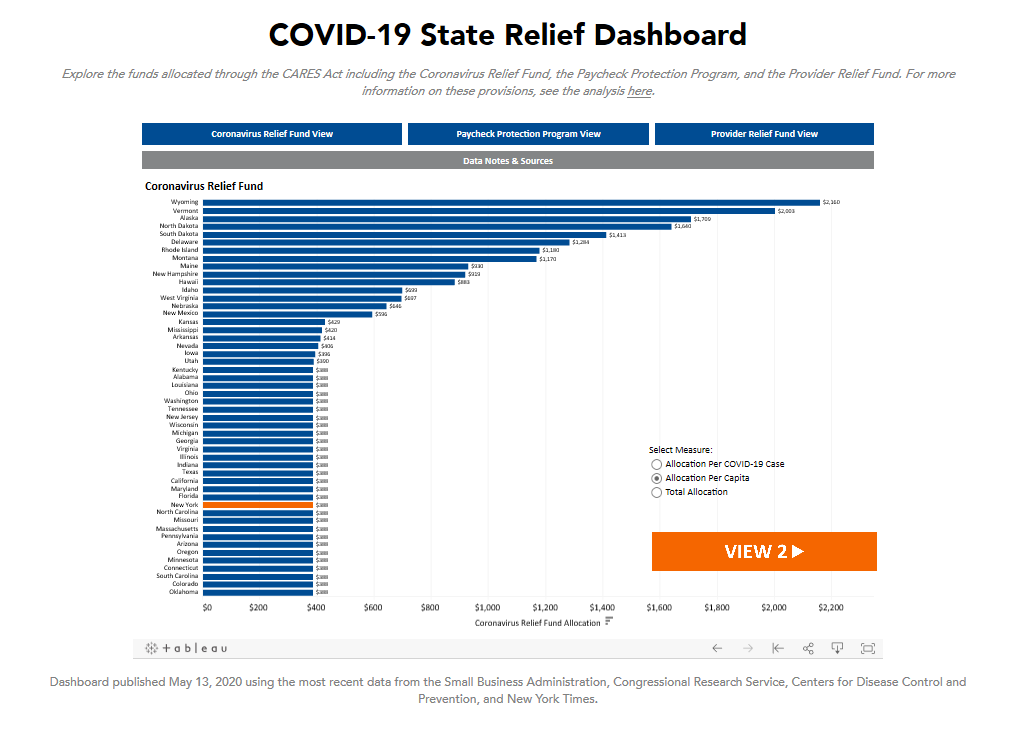
    COVID-19 State Relief Dashboard (Rockefeller Institute). To date, the Federal government has allocated almost $2.5 trillion to individuals, businesses, state and local governments, schools, and healthcare providers to relieve the fiscal and economic costs of the COVID-19 pandemic. Data are now being released detailing the distribution of several of the CARES Act provisions. The Rockefeller Institute has created a data dashboard to track how Federal COVID-19 relief spending is being dispersed across the states. The dashboard includes data from three of the federal programs: Coronavirus Relief Fund, Paycheck Protection Program, and Provider Relief Fund. The dashboard will continue to be updated as data updates become available.


    Topics and Trends

    Industry Watch

    Shipping Industry Must Adapt to Survive in Modern World (World Finance). Currently, shipping is the dominant mode of transporting goods, with more than 90 percent of world trade being seaborne. A host of technological, environmental, and geopolitical challenges will test the resilience of the maritime sector over the coming decades. Cheap, clean fuel is an asset that can make or break a shipping company’s balance sheet. Consequently, firms have increasingly turned to liquefied natural gas (LNG) to reduce their impact on the environment. However, the cost of installing the necessary equipment is often prohibitive and the heavy metallic tanks used to store the fuel reduce the volume of freight LNG-powered vessels can carry. In response, Ocean Finance is building a carbon-fiber tank that is up to 90 percent lighter than conventional tanks, borrowing technology and techniques from the aerospace industry. The transition to greener technology poses a conundrum to shipowners, though, as they are forced to make investment decisions without having a clear picture of the industry’s future needs and regulatory framework. A ship ordered in 2025 will still need to be operating in 2050, if the owner is not to face substantial losses. Companies that are fortunate enough to place their bets well will survive; the rest will struggle – or go under. 

    Trade/Tariffs

    The U.S. and China’s Next Battle Won’t Be Won with Tariffs (Barron’s). No other country comes near China in terms of broad 5G investment and infrastructure deployment. The speed and low latency of 5G means that it is well suited to power the next wave of wireless communications like smart grids, self-driving cars, autonomous weapons, and robotic surgery. In the U.S., 5G progress has largely been limited to cities and sports stadiums. Factors holding U.S. 5G deployment back include a heavy reliance on private sector investment and a lack of wireless spectrum, or airwaves, devoted to 5G signals. While China has quickly reallocated its spectrum, the U.S. airwaves have been tied up in disputes between the military and other federal agencies fighting for allocations. U.S. efforts to catch up with China on 5G—and the inevitable Chinese pushback—could force the rest of the world to choose sides in a tech cold war. In May, the U.S. Commerce Department amended export rules, curtailing Huawei’s access to global chip makers that use U.S. technology. The move largely affects Taiwan Semiconductor Manufacturing (TSM), which makes advanced chips for 5G smartphones; Huawei is the largest customer for those Taiwan Semi chips. The move is a major blow to both Huawei, the privately held Chinese firm, and China’s 5G ambitions and will be consequential to the course of the U.S.-China relationship in the near term.

    Opportunity Zones

    Opportunity Zone Commitments Reach $10 Billion Mark, That We Know Of (Motley Fool). Opportunity Zones passed the $10 billion mark in commitments to qualified opportunity funds (QOFs) shortly before the COVID-19 pandemic. Novogradac – which oversees the Opportunity Zones Working Group of investors, community development financial institutions, and other stakeholders – said its list of such funds grew from 502 in January to 621 in mid-March and that 406 of them reported the amount of equity they have raised. The consultancy said the total raised and poised to help revive moribund local economies is perhaps double or triple the $10.1 billion it knows about in QOFs. Its list is a rolling survey that includes many funds that have not revealed their totals, and there are funds that are not part of the survey, including private pools formed by corporations and high net worth individuals. Anecdotal evidence since March 13 (the day President Trump declared a national emergency) suggests QOFs are seeing a pause in new investment as the nation struggles to react to the pandemic. To view the Final Regulations on Opportunity Zones issued by the U.S. Treasury Department and IRS, click here.

    How Opportunity Zones Can Restore the Economy Post-COVID-19 (Milwaukee Community Journal). Opportunity zones can be an important and effective part of the recovery for a few reasons. For one, improvements to distressed communities will build on themselves. If businesses in the zones thrive, the communities will have more jobs and better salaries to offer. More people will want to relocate to these areas, which will increase real estate values and breathe new life into local shops and stores. Second, investors can make money as well as save on taxes. Those who invest can benefit from more than just the initiative’s capital gains tax breaks. They can also see a significant return off their investments. Third, investors can help improve people’s lives. The zones give investors who want to do more than just make money a chance to have a positive impact on low-income urban and rural communities, and the lives of many people. Therefore, opportunity zones can simultaneously channel economic help to distressed communities and create an outsized return for investors. Both these things will be critically important to bring back jobs and restore the economy coming out of the pandemic. For more information on Opportunity Zones, CDFA has extensive resources available, click here.

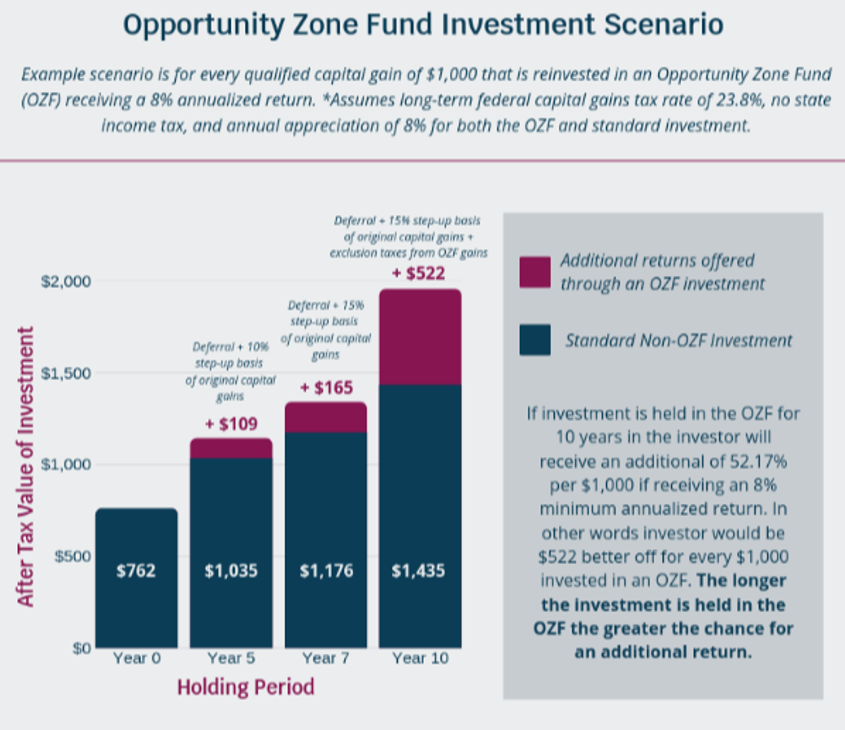
    The Opportunity Zones program provides a tax incentive for investors to re-invest their unrealized capital gains into Opportunity Funds that are dedicated to investing into Opportunity Zones designated by the chief executives of every U.S. state and territory. Treasury has certified more than 8,700 census tracts as Qualified Opportunity Zones (QOZs) across all states, territories, and the District of Columbia. For a map of all designated QOZs, click here.

    Inclusive Growth

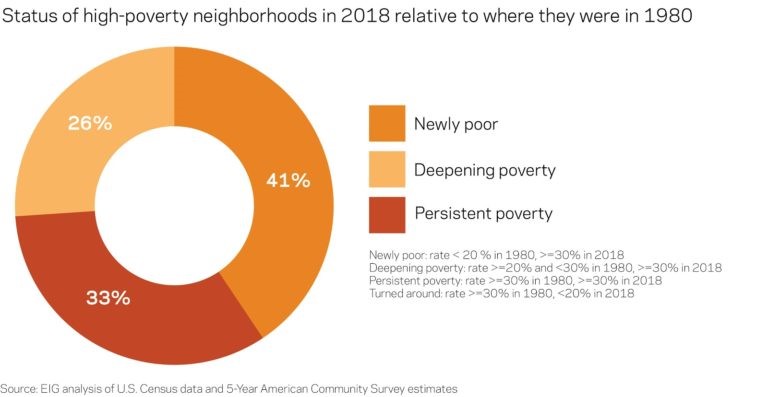
    The Persistence of Neighborhood Poverty (Economic Innovation Group). The Economic Innovation Group (EIG) recently launched the Neighborhood Poverty Project by analyzing the spread and evolution of high-poverty neighborhoods throughout the United States over the last four decades. While the last national economic expansion brought growth and prosperity to many areas, it failed to reverse the spread of high-poverty neighborhoods the country has experienced going back to 1980. The research reveals that it is much more common for neighborhoods to fall into and remain in poverty than to climb out of it. In total, 64 percent of neighborhoods that were high poverty in 1980 were still high poverty in 2018, 38 years later. Only 14 percent had experienced a meaningful turnaround—most of which were on the suburban/exurban fringe of metro areas, immediately adjacent to downtowns, or in New York City, which accounts for 22 percent of the national total of turnaround neighborhoods. In some cities, the rate of downward neighborhood mobility over the last several decades has been alarming. While Rust Belt cities have been the hardest hit by this trend, even in Sun Belt growth poles such as Houston and Phoenix, about one in five neighborhoods that were low poverty in 1980 were high poverty in 2018.


    Innovation

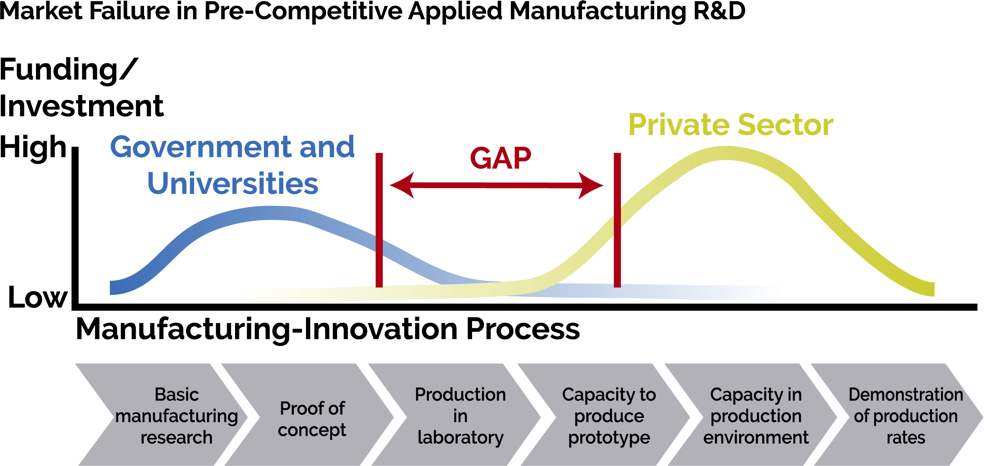
    Creating Antivirals like Remdesivir is a Biological and Economic Challenge (Smithsonian Magazine). Antivirals that work against many diverse viruses, broad-spectrum drugs, would help us prepare for new diseases but creating them is a big biological challenge. Viruses are more slippery targets than bacteria. They are often a hundred times smaller and consist only of bare-bones cellular machinery. Their tiny footprint creates a conundrum for researchers: There are simply fewer targets at which to aim antivirals, especially for drugs that would shoot for the rare viral components that remain common across diverse types of viruses. Hepatitis C, for example, is caused by HCV viruses from Flaviviridae, a family that also includes the virus behind yellow fever. Some Hepatitis C treatments are so targeted that they combat only some of the six main types of HCV, and certainly not yellow fever. Scientists call this virus-pinpointing model the “one drug, one bug” approach. On top of the biological challenge of finding new broad-spectrum antiviral drugs lies an economic one. Pharmaceutical companies have little financial incentive to develop broad-spectrum drugs against emerging diseases since they have no guarantee they will recoup the costs of research. While federal funds have bankrolled research in this area, Congress has historically been more apt to spend money on already-here crises like Ebola than on preparedness measures. A better model would be to push research and industry toward a “one drug, many bugs” concept.

    Infrastructure

    Let States Take the Wheel on Infrastructure (Fox News). The federal government has been at the center of the national infrastructure issue since President Eisenhower led the charge to build the national interstate system in the 1950s. But there are some who would like states – which have been thrust into a leading role in the coronavirus crisis – to take the lead. When Maryland Governor Larry Hogan assumed the chairmanship of the National Governors Association (NGA) in 2019, he started pushing for just that. In particular, the NGA effort focuses on four main areas: relieving congestion to boost economic competitiveness, eliminating red tape and integrating smart technology, protecting America’s critical infrastructure, and leveraging private sector investment. The ideas being raised are not all about raising taxes at the federal level. There are plenty of private sector investment dollars, public-private partnerships, P3’s, that have been successful in other places around the world. Ultimately, the plan is to share ideas among and between the governors, but also for the governors to get that input from the private sector and make proposals to Congress and in the administration.


    * Check out the SEDE Website *

    StateEconomicDevelopment.org

    The SEDE Network engages in regular activities and events throughout the year. You can stay up to date on all these activities via the SEDE Network website. The newest addition to the site includes a collection of websites and other communication resources used by states to address the Coronavirus Challenge.

    Click the link above and check it out!


    Deal Makers

    Incentives in Action

    Arkansas Bridge Loans Help Save an Estimated 3,500 Jobs (KATV Little Rock). Bridge loans to Arkansas businesses from a program created to stem job losses caused by the COVID-19 pandemic have helped retain almost 2,500 full-time jobs and about 1,000 part-time jobs. The governor is adding another $1 million to the Quick Action Loan Guaranty Program from his Quick Action Closing Fund that is used to recruit and retain jobs. He announced the program March 18 for small businesses needing help with payroll and other essential costs. The 0% interest loans can be up to $250,000 and allow for no payments for up to 12 months. Arkansas Secretary of Commerce Mike Preston said 246 bridge loans were made before exhausting the $8 million set aside for the program. He said the $1 million added Friday will fund about 100 pending applications.

    Coronavirus Small-Business Loans Over $2 million will be Audited (New York Post). The federal government plans to audit all large coronavirus relief loans amid an outcry over big companies getting help at the expense of struggling small businesses. The U.S. Small Business Administration will review all Paycheck Protection Program loans worth more than $2 million before forgiving the debt. Loans from the $659 billion program can be forgiven if the recipients do not lay off workers. Some 248 publicly traded companies have received taxpayer-funded loans valued at $905 million. While several big companies such as Shake Shack, Nathan’s Famous, and the Los Angeles Lakers have pledged to return their loans, those that keep them could face “criminal liability” for falsely claiming they needed the money.

    * SEDE Network Resource *

    SEDE Network Framing Questions for Existing Incentive Agreements

    CREC and Smart Incentives worked with SEDE Network members to develop a list of principles and framing questions to help states determine possible adjustments to existing incentive performance agreements in response to the current economic crisis. This document addresses issues to consider when adjusting the terms of existing incentive agreements for discretionary incentives that have already been provided to companies.


    Nebraska Taxpayers Won’t Have to Repay Incentives Due to Virus (Law 360). The Nebraska Department of Revenue has said that taxpayers receiving tax benefits as a part of the state’s economic development incentive program will not have to repay those benefits if they fail to meet certain requirements due to COVID-19. Under the Nebraska Advantage Act, businesses must repay all or a portion of tax incentives earned if the project-holder does not meet the required employment or investment levels or fails to maintain those levels during the entitlement period. Exceptions are if the failure to maintain those levels results from an act of God or national emergency. To avoid repaying the incentives, project-holders must demonstrate that they failed to maintain employment and investment requirements as a result of the national emergency declared on March 13 in response to the coronavirus pandemic. However, a project-holder will not be eligible for relief if a decision is made to reduce the workforce rather than use a paid ready-to-work program, nor will it be sufficient to demonstrate that the emergency declaration simply made maintaining requirements less profitable. The length of time the relief applies will depend on the project-holder’s ability to show that the pandemic continued to prevent it from maintaining employment and investment levels.

    The State Business Incentives Database is a national database maintained by the Council for Community and Economic Research (C2ER) with almost 2,000 programs listed and described from all U.S. states and territories. The Database gives economic developers, business development finance professionals, and economic researchers a one-stop resource for searching and comparing state incentive programs. To view the information available in the database, click here.


    * Thank You EDOs *

    EDOs Bridge Gap Between Relief Packages and Businesses

    Economic Development Organizations (EDOs) are now on the front lines acting as “economic first responders” helping companies navigate the economic fallout of the public health crisis. Mandatory shutdowns are requiring businesses in sectors such as tourism, hospitality, retail, and personal services to hibernate, and companies that have been deemed to be providing essential services are still operating but are facing challenges including supply chain disruptions and the implementation of new health and safety regulations. Governments at all levels are rolling out assistance programs designed to help businesses survive the crisis and companies of all types are turning to EDOs to help them navigate these newly established programs. In response, EDOs have taken on three new duties: providing up-to-date information; offering pivot assistance to companies working to meet COVID-related demand; and strategic planning for the post-COVID-19 recovery period. EDOs have become critical information sources, disseminating information on relief programs, state and local regulations, and funding opportunities through their websites, email lists, and social media accounts.


    New Growth Opportunities

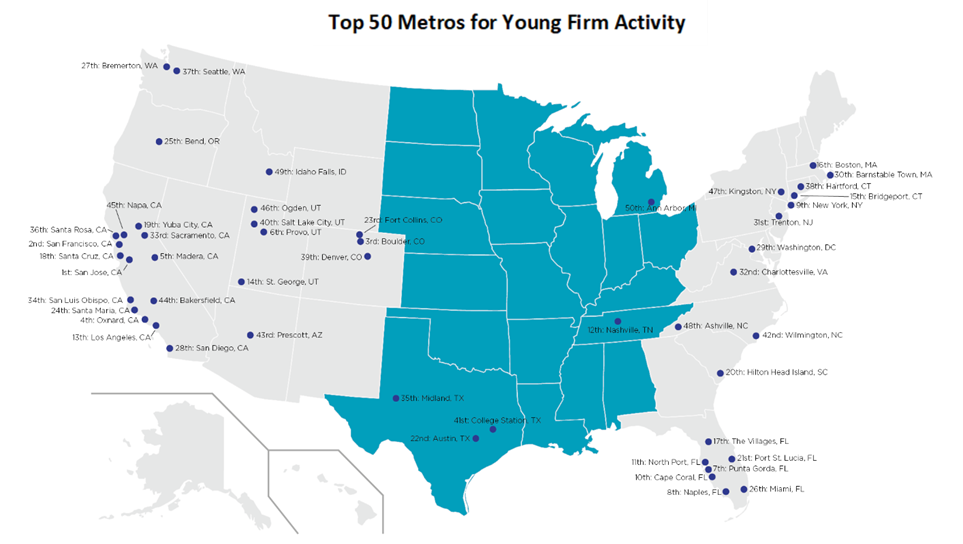
    Young Firms and Regional Economic Growth (Heartland Forward). New research finds a strong link between entrepreneurship and cities’ long-term economic success. The study by Heartland Forward, an institute for economic renewal based in Bentonville, Arkansas, suggests the key to long-term economic success lies in developing environments that are conducive for entrepreneurs to start and scale up their firms. The research analyzed two main factors to rank cities across the U.S. on the strength of their entrepreneurial ecosystems. The first is the share of employment at young firms, and the second is the share of that employment with a bachelor’s degree or higher. Communities can expect 15 percent faster employment growth with higher young firm employment and 34 percent faster growth with higher knowledge intensity. The report presents specific recommendations for how policymakers and civic leaders can foster entrepreneurship in their own communities. Among the solutions: Establish support organizations and incubators; Build the amenities required to attract and retain entrepreneurs; Ensure entrepreneurship is part of the core mission of economic development organizations; and Encourage universities to focus on entrepreneurship education and commercializing innovation.
     

    Talent Development/Attraction

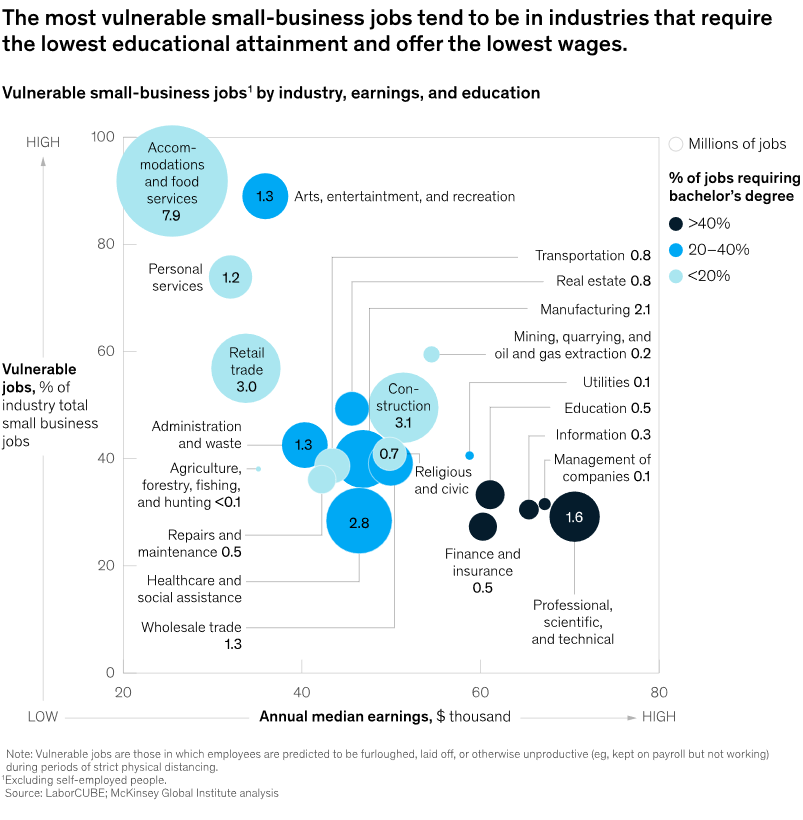
    COVID-19’s Effect on Jobs at U.S. Small Businesses (McKinsey & Company). Before COVID-19, small businesses provided nearly half of all US private-sector jobs, yet they account for 54 percent (30 million) of the jobs most vulnerable during COVID-19. Specifically, half of jobs at firms with fewer than 100 employees are vulnerable, compared with 40 percent of those at large private-sector employers. That estimate is based on an analysis of whether jobs are typically deemed essential and whether they require close proximity to others. Vulnerable jobs in small businesses largely mirror those in larger ones. Nearly half of these jobs are concentrated in a handful of industries, especially accommodations and food services, construction, retailing, and healthcare and social assistance. Two occupational categories—food service and customer service and sales—account for more than four in ten vulnerable small-business jobs. There is a serious danger that the loss of work will disproportionately affect those who can least afford it, since workers in these occupations have lower wages and educational attainment, on average. A challenge for policy makers and executives is figuring out how to get these employees back to work.
     

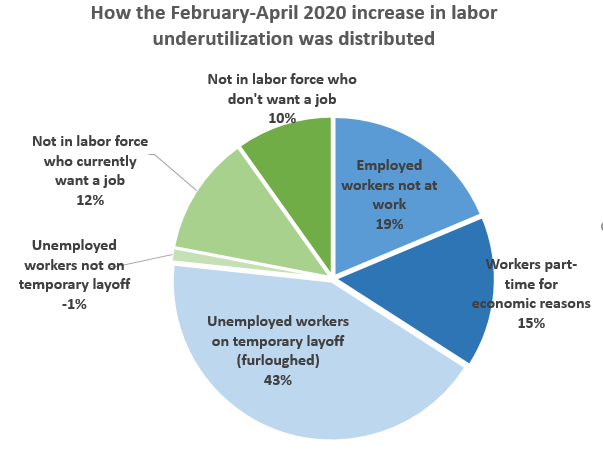
    What the April 2020 Jobs Report says about COVID-19’s Impact (Cornell ILR School). According to the Bureau of Labor Statistics, April’s unemployment rate was the worst since the Great Depression. Last month, 20.5 million people lost their jobs with the unemployment rate increasing by 10.3 percentage points since March to 14.7 percent. This is the highest rate and the largest over-the-month increase in the history of the series (seasonally adjusted data are available back to January 1948). The COVID crisis has suspended or curtailed about 23.4 percent of U.S. employed workers. Of those, 79 percent maintained a tie with their employer, while the remaining 21 percent did not and exited the labor force. The high share of maintained relationships with employers should be helpful for speeding the recovery when restrictions are lifted. However, this alone cannot guarantee a rapid recovery because ties can weaken over time, some employers will not survive long enough to recall their workers, and other employers may need a new business model with different staffing requirements.
     

    * * *

    SEDE Network Updates

    * Upcoming SEDE Event Postponed *

    The previously scheduled
    May 31, 2020
    In-Person SEDE Meeting before the SelectUSA Summit
    in Washington, DC

    POSTPONED Due to the CORONAVIRUS TRAVEL RESTRICTIONS
    and Cancellation of the SelectUSA Summit

    We are currently considering alternatives for continuing to share information and support the network. Please check the events page at www.stateeconomicdevelopment.org for the latest updates.


    * * *

    The SEDE Network Steering Committee includes: Stefan Pryor (RI), Chair; Val Hale (UT), Vice Chair; Julie Anderson (AK); Dennis Davin (PA); Jennifer Fletcher (SC); Kurt Foreman (DE); Joan Goldstein (VT); Manuel Laboy Rivera (PR); Kevin McKinnon (MN); Don Pierson (LA); Mike Preston (AR); Sandra Watson (AZ).

    For further questions on the content in this Bulletin or for information on the SEDE Network contact Marty Romitti, CREC Senior Vice President, at mromitti@crec.net

  • State Economic Development Bulletin – April 2020

    State Economic Development Bulletin – April 2020

    Latest News


    Regional Business Conditions and Long-Term Recovery from COVID-19 (Greater Washington Board of Trade). The COVID-19 pandemic is a public health emergency with far-reaching and severe economic impacts. Tom Barkin, President & CEO of the Federal Reserve Bank of Richmond, explained what the Fed has done to address the pandemic crisis and how he sees that dovetailing with other government intervention. Key points from his remarks include:

    The economic impacts are serious.
    • The US is mostly a service economy, and now 70% of the service sector has been shut down. Other industries have been deeply impacted too, including auto sales, hospitals, retail, and airlines. Unemployment claims have skyrocketed.

    The response has three lanes: public health, fiscal, and monetary.
    • We can’t get our economy rolling again without knowing that people will be safe. The best “stimulus” would be widespread testing. Making sure the hospitals have enough capacity and that we are working as quickly as possible on a vaccine are also important.
    • The second lane is fiscal. The aim here is stabilization more than stimulus. The challenge now is delivering these benefits to people and businesses in a timely manner.
    • The third lane is monetary. With lessons learned in 2009, the Fed was able to move the fastest, dropping interest rates to 0 among other steps.

    How do we get to the other side of this economic crisis?
    • We need our essential industries to continue to operate and for those workers to be safe in their jobs. We need a return of confidence where consumers spend and businesses invest again. For this, we are going to need a health protocol. You need to know that you can go shop, or go           to a restaurant, and you aren’t going to put your life at risk.

    For the latest case totals and peak resource use forecasts by state, the Civic Meter COVID-19 Tracker maintains updated data, click here.

    * * *

    – FYI –
    COVID-19 Legislative Relief Provisions for Small Businesses

    Two recent pieces of legislation, the Families First Coronavirus Response Act (FFCRA) and the Coronavirus Aid, Relief, and Economic Security Act (CARES Act) contain provisions intended to help small businesses affected by the COVID-19 pandemic. As an added resource, see the Small Business Administration’s resource page for Coronavirus Relief Funding Options, click here.

    * * *

    How Are Small Businesses Adjusting to COVID-19? (National Bureau of Economic Research). To shed light on how COVID-19 is affecting small businesses – and on the likely impact of the recent stimulus bill, researchers conducted a survey of more than 5,800 small businesses. Several main themes emerge from the results. First, mass layoffs and closures have already occurred. In the sample, 43 percent of businesses are temporarily closed, and businesses have – on average – reduced their employee counts by 40 percent relative to January. Second, consistent with previous literature, many small businesses are financially fragile. For example, the median business has more than $10,000 in monthly expenses and less than one to two months of cash on hand. Third, businesses have widely varying beliefs about the likely duration of COVID related disruptions. Fourth, many businesses planned to seek funding through the CARES act. However, many anticipated problems with accessing the aid, such as bureaucratic hassles and difficulties establishing eligibility.


    State Economic Performance

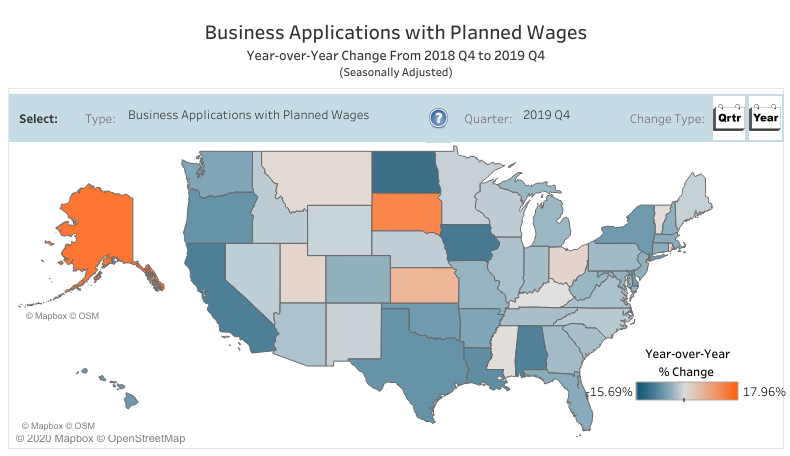
    Initial Unemployment Claims Remain Near Historical Highs (Upjohn Institute). The last few weeks have seen an extraordinary influx of workers losing their jobs and filing claims for unemployment that has accompanied state-ordered business closures and stay-at-home orders in response to the COVID-19 pandemic. For the week ending April 4, the number of initial claim filings for unemployment insurance (UI) after seasonal adjustment was 6,606,000, a decrease of 261,000 from the prior week’s (revised) record high of 6,867,000. The map below shows cumulative claims since the surge began during the week of March 15. To show magnitudes on a common scale, claims are shown as a percentage of the state’s average payroll employment over the past 12 months. Of the ten most populous states, five have cumulative initial claims that exceed 10 percent of employment: Michigan (18.4 percent), Pennsylvania (17.6 percent), Ohio (12.4 percent), California (12.4 percent) and Georgia (11.6 percent).


    Topics and Trends

    Industry Watch

    * SEDE Webinar Recording Now Available *

    State Approaches to Increasing Production of PPEs
    (Time 59:14)

    Listen Here

    States are wrestling with how to coordinate assets supporting increased production of Personal Protective Equipment (PPE) and the roles that state agencies and officials can play. This includes options for how to: engage the right partners to link demand with potential supply, tie together the suppliers of raw materials and component parts, and provide financial and technical assistance for companies willing to pivot. Listen to the April 10, 2020, SEDE Network webinar on State Approaches to Increasing Production of PPEs, where Kelly Schulz, Maryland Commerce Secretary, Mark Burton, Michigan Economic Development Corporation CEO, and Bert Brantley, Georgia Economic Development COO, highlight efforts in their states along with other examples and ideas that merit broader consideration. Stefan Pryor, Rhode Island Commerce Secretary, moderated the webinar.

    What Each State is Doing to Help Restaurants Harmed by COVID-19 (Restaurant Business). Individual states have been determining policies for dealing with the coronavirus. A vast majority of them have chosen to close restaurants to all but delivery and takeout, dealing a major blow to the industry. States are offering different types of assistance to restaurants in response. The most common concessions by states are allowing for the sale of alcohol for delivery and takeout as well as the extension of deadlines for filing and paying taxes. About a dozen states are offering emergency loans for eligible small businesses, including restaurants. Just a few have set aside funding for restaurants specifically. On the federal level, small businesses are eligible to apply for low-interest emergency loans via the Small Business Administration (SBA). And the $2 trillion aid bill passed by Congress also has provisions that can help restaurants.


    Trade/Tariffs

    * SEDE Webinar Recording Now Available *

    US Trade Policy Update for State Economic Development Executives
    (Time 1:02:44)

    Listen Here

    Passage of the USMCA, progress on China, new opportunities emerging with the UK, the European Union, India…and most recently, the Coronavirus pandemic. The landscape for trade and tariffs is changing quickly. Listen to the March 24, 2020, SEDE Network webinar on US Trade Policy Update for State Economic Development Executives, where Christopher Sands from Johns Hopkins University School of Advanced International Studies (SAIS) and Jennifer Hillman from the Council on Foreign Relations discussed the US Trade situation: what’s happened, what it means, and implications for state strategies. Andy Karellas, Executive Director of the State International Development Organizations (SIDO), moderated the webinar.

    Outdoor Recreation Industry Seeks Tariff Payment Deferrals (Daily Camera Colorado). If you think U.S. companies’ anxiety over tariffs has faded into the background with the coronavirus pandemic raging, it hasn’t. The outdoor recreation industry says the economic blows dealt by the worldwide health crisis make it more important to ease the tariff burden on goods from China. The Boulder-based Outdoor Industry Association is rallying its members nationwide to urge their elected representatives to support deferring tariff payments for at least 90 days consistent with the three-month delay in filing and paying income taxes. While agriculture has been a prime object of China’s counter punches, the outdoor recreation industry paid high tariffs on many goods before the trade war ignited. Levies on outdoor products, including clothes, backpacks and tents, averaged about 14% with some nearly 40%. Then the industry saw those tariffs jump by 10% and 25% on a wide range of goods. A delay in payments would help these businesses with cash flow issues given that stores like REI are closed and outdoor recreation is constricted with the closure of ski resorts and national parks.

    Opportunity Zones

    Opportunity Zone Deadlines Extended by Covid-19 Disaster Declarations (JD Supra). All 50 states as well as the U.S. Virgin Islands, the Northern Mariana Islands, Washington, D.C., Guam and Puerto Rico have received a federal disaster declaration. American Samoa is the one U.S. territory that isn’t under a major disaster declaration. These declarations will extend two important deadlines in the rules relating to investments in qualified opportunity zones. First, the 31-month deadline for spending cash or other financial assets held by a qualified opportunity zone business under a working capital safe harbor plan can be extended by as much as 24 additional months. Second, where an opportunity fund receives capital or proceeds from the sale of qualified property, it has 12 months to reinvest the funds before they will be counted in the fund’s 90% asset test. The fund can get an additional 12 months to reinvest the funds if the fund’s ability to reinvest is delayed by a federally declared disaster. To view the Final Regulations on Opportunity Zones issued by the U.S. Treasury Department and IRS, click here.

    How OZs Can Support Affordable Housing Creation, Preservation (Novogradac). Even with standard funding streams—affordable housing properties often rely on a combination of bank financing and tax credits—budget gaps remain. Federal sources of funds for construction and preservation, such as the Community Development Block Grant Program and HOME Investment Partnerships Program, have been traditionally used to cover funding shortfalls. However, those funds are in shorter supply in recent years, making it necessary to find funding alternatives. This is where the OZ incentive can make a difference. State housing finance agencies (HFAs) use qualified allocation plans (QAPs) to promote their LIHTC priorities and practices. By providing specific set-asides, directives for the location of affordable housing using LIHTCs and other preferences, HFAs can use QAPs to incentivize investments in OZs. Examples include Delaware, where the state provides two points for developments in an OZ and 10 if it also contributes to a concerted community revitalization plan; and Missouri which lists OZs as one of 11 “housing priorities”. For more information on Opportunity Zones, CDFA has extensive resources available, click here.

    The Opportunity Zones program provides a tax incentive for investors to re-invest their unrealized capital gains into Opportunity Funds that are dedicated to investing into Opportunity Zones designated by the chief executives of every U.S. state and territory. Treasury has certified more than 8,700 census tracts as Qualified Opportunity Zones (QOZs) across all states, territories, and the District of Columbia. For a map of all designated QOZs, click here.

    Inclusive Growth

    The Places a COVID-19 Recession Likely Hits Hardest (Brookings). At first blush, it seems like the coronavirus pandemic is shutting down the economy everywhere, equally, with frightening force and totality. In many respects, that’s true: Across the country, consumer spending—which supports 70% of the economy—is crashing in community after community, as people avoid stores, restaurants, movie theaters, offices, and other public places. Already, the layoffs have begun. However, while essentially all of America will likely be affected by COVID-19’s economic effects, those effects will be distinct and varied from place-to-place. Among the “most at risk” industry groups include mining/oil and gas, transportation, employment services, travel arrangements, and leisure and hospitality. The map shows those industries’ presence as a share of the economy within the nation’s various metropolitan areas. Among the nation’s 100 largest metro areas, Las Vegas is most exposed, followed by Orlando, New Orleans, which has ties to both the energy and tourism/hospitality sectors, Honolulu, and Oklahoma City. The economically safest are mostly tech-oriented university towns. For larger metros, Provo, UT is the least exposed, followed by Durham-Chapel Hill, NC, Hartford, CT., Albany, NY, and San Jose, CA.


    Innovation

    How an Economic Crisis Impacts Innovation (Sidewalk Talk). The Great Depression fundamentally altered the course of American innovation, shifting it from independent inventors into companies. During the Depression, independent patents from economically distressed counties dropped, on average, 13 percent more than independent patents from places whose banks stayed active — suggesting a strong, direct role of local distress on independent innovation. However, a county’s economic distress had no impact on company-filed patents. This suggests the Great Depression destroyed the ecosystem of early-stage financing that made independent innovation possible. What does that mean post-Covid? Even today, proximity still matters for innovation, with frequent in-person interaction between investor and inventor a known predictor of venture success. Therefore, it is important for governments and others to support local funding networks and establish early-stage venture funds specifically designed to support local entrepreneurs and startups.

    Infrastructure

    Rural Broadband in the Time of Coronavirus (Harvard Kennedy School Shorenstein Center). Almost everyone with a job that offers a telework option is now teleworking due to the coronavirus pandemic. But being able to telework requires more than an office job — it requires stable broadband. More than 21 million people in America lack advanced broadband internet access, according to the U.S. Federal Communications Commission. The FCC defines “advanced” broadband as download speeds of at least 25 megabits per second with upload speeds of 3 mbps, “25-3” for short. Rural America fares poorly on broadband speeds. The case for making urgent rural broadband investments hinges on “six pillars”. The first is economic development. Housing values increase and businesses move more product when rural communities have broadband. The second is public health with a shortage of doctors and health centers in rural America. Teleworking is the third pillar. Education is the fourth. For instance, the homework gap — kids who can’t do online homework at home because they don’t have internet access — is now extending to higher education. The fifth pillar is public safety, having to do with emergency response call lines that rely on broadband. The sixth is broadband improves quality of life, as rural communities then become an option for young people. After the coronavirus, rural America cannot afford to return to broadband as usual.


    * Check out the SEDE Website *

    StateEconomicDevelopment.org

    The SEDE Network engages in regular activities and events throughout the year. You can stay up to date on all these activities via the SEDE Network website. The newest addition to the site includes a collection of websites and other communication resources used by states to address the Coronavirus Challenge.

    Click the link above and check it out!


    Deal Makers

    Incentives in Action

    New Mexico Offers New Loan Program, Priority Assistance to Virus-Impacted Businesses (NewMexico.gov). The state of New Mexico is adjusting its business loan guarantee programs in order to make capital available to business owners whose operations are severely impacted by the COVID-19 health emergency. The New Mexico Economic Development Department (NMEDD) has created he COVID-19 Business Loan Guarantee Program to assist businesses seeking emergency loans or lines of credit to deal with negative economic impacts from COVID-19. NMEDD can guarantee a portion of a loan or line of credit up to 80% of principal or $50,000. Loan proceeds are flexible and can be used for (and not limited to) the following: working capital, inventory, and payroll. The department’s signature Local Economic Development Act (LEDA) program provides grants to certain businesses pay for land, buildings, and infrastructure to relocate or expand. Under the Statewide Public Health Emergency declaration, the Governor has authorized the NMEDD to make no-interest loans from LEDA to assist COVID-19 impacted businesses as well. The loans are limited to expenditures for land, building, and infrastructure, and can also be used for lease abatement or mortgage assistance. Companies applying for the loans must be a qualified manufacturing business with over 50% of its revenue coming from outside of New Mexico or a retail business in a community under 15,000. All loans will be required to provide security equal to the amount of the loan.

    New Jersey Offers Technical Assistance to COVID-19 Impacted Small Businesses Applying to SBA (MyVerona New Jersey). The New Jersey Economic Development Authority (NJEDA) announced that it is partnering with four organizations to offer support services to businesses seeking federal financial assistance through Small Business Administration (SBA) programs. These organizations include the African American Chamber of Commerce of New Jersey, New Jersey State Veterans Chamber of Commerce, Rising Tide Capital, and the Statewide Hispanic Chamber of Commerce of New Jersey. Each will help small business owners file their applications through the SBA to receive working capital loans to help them survive this crisis. This assistance includes, but is not limited to, preparing financial information, packaging application documentation, and completing and submitting the on-line or paper-based application. Compensation for these organizations will be based on completed and submitted SBA applications. This technical assistance is the latest in a series of steps New Jersey is taking to help small businesses impacted by the COVID-19 outbreak.

    The State Business Incentives Database is a national database maintained by the Council for Community and Economic Research (C2ER) with almost 2,000 programs listed and described from all U.S. states and territories. The Database gives economic developers, business development finance professionals, and economic researchers a one-stop resource for searching and comparing state incentive programs. To view the information available in the database, click here.

    New Growth Opportunities

    A Road Map to Reopening (American Enterprise Institute). To move away from a reliance on physical distancing as the primary tool for controlling virus spread, we need better data to identify areas of spread and the rate of exposure and immunity in the population. Improvements are also needed in state and local health care system capabilities, public-health infrastructure for early outbreak identification, case containment, and adequate medical supplies; and therapeutic, prophylactic, and preventive treatments and better-informed medical interventions. Each requires advancement in our ability to aggregate and analyze data in real time, and more investments in pharmaceutical research and development for the rapid deployment of effective diagnostics, therapies, and eventually a vaccine. After we successfully defeat COVID-19, we must ensure that America is never again unprepared to face a new infectious disease threat. This will require focused investments and directed initiatives for research and development, expansion of public-health and health care infrastructure and workforce, and clear governance structures to execute strong preparedness plans.

    Talent Development/Attraction

    How Many Jobs Can be Done at Home? (University of Chicago Becker Friedman Institute). Evaluating the economic impact of “social distancing” measures taken to arrest the spread of COVID-19 raises fundamental questions about the modern economy: How many jobs can be performed at home? How does the scope for working from home vary across cities or industries? The report classifies the feasibility of working at home for all occupations and merges this classification with occupational employment counts for the United States. The results imply that 37 percent of U.S. jobs can plausibly be performed at home. Identifying which jobs cannot be performed from home may be useful as policymakers try to target social insurance payments to those that need them most. Likewise, the share of jobs that could be performed at home is an important input to predicting the economy’s performance during this or subsequent periods of social distancing.


    Many U.S. Workers in Critical Occupations in the Fight Against COVID-19 (LMI Institute). As the COVID-19 pandemic continues to spread across the United States, many states and communities have enacted “Stay-at-Home” orders with exemptions for essential businesses and workers. The list of businesses and occupations deemed “essential” is not uniform, nor clearly defined in most cases using the government-established classification scheme for industries and occupations. This can create difficulties for the ongoing monitoring and longer-term analysis of impacts from these mitigation efforts. The LMI Institute and C2ER produced a list of Standard Occupation Classification (SOC) codes connected to critical infrastructure (e.g., essential) industries. The list is based on the Department of Homeland Security’s guidance for identifying the critical infrastructure workforce during COVID-19 response. More than 104 million U.S. workers, or 71 percent of the total U.S. workforce, are employed in the “Essential Critical Infrastructure Workforce” battling COVID-19. Critical worker numbers vary by state, with around 75 percent employed in these essential occupations in Mississippi, Indiana, and Kentucky, to a low of 48 percent in the District of Columbia.


    * * *

    SEDE Network Updates
    * Upcoming SEDE Event Postponed *

    The previously scheduled
    May 31, 2020
    In-Person SEDE Meeting before the SelectUSA Summit
    in Washington, DC

    POSTPONED Due to the CORONAVIRUS TRAVEL RESTRICTIONS
    and Cancellation of the SelectUSA Summit

    We are currently considering alternatives for continuing to share information and support the network. Please check the events page at www.stateeconomicdevelopment.org for the latest updates.


    * * *

    The SEDE Network Steering Committee includes: Stefan Pryor (RI), Chair; Val Hale (UT), Vice Chair; Julie Anderson (AK); Dennis Davin (PA); Jennifer Fletcher (SC); Kurt Foreman (DE); Joan Goldstein (VT); Manuel Laboy Rivera (PR); Jeff Mason (MI); Kevin McKinnon (MN); Don Pierson (LA); Mike Preston (AR); Sandra Watson (AZ).

    For further questions on the content in this Bulletin or for information on the SEDE Network contact Marty Romitti, CREC Senior Vice President, at mromitti@crec.net

  • State Economic Development Bulletin – March 2020

    State Economic Development Bulletin – March 2020

    Latest News

    Senior state executives representing more than 30 states joined a SEDE Network conference call on March 16 to share information about how they are addressing challenges from the Covid-19 virus. Several states talked about their strategies on many different topics of mutual interest. Notes on key issues and initiatives discussed during the call will be posted to the SEDE website at stateeconomicdevelopment.org asap.

    * * *

    House Passes Coronavirus Relief Bill, Sending to Senate (CNBC). The House passed a coronavirus relief plan early Saturday after hours of talks between Democrats and the Trump administration on how to blunt the economic damage of the global pandemic. The chamber approved the 110-page bill to provide relief to consumers and workers walloped by the outbreak less than an hour after text was released. The measure passed in an overwhelming 363-40-1 vote. The legislation now heads to the Senate. The legislation:

    • Requires private health plans to cover coronavirus testing at no cost, and allocates $1 billion for testing for uninsured Americans
    • Ensures employers with fewer than 500 employees and government employers offer two weeks of paid sick leave. The provision expires at the end of the year
    • Requires those same kinds of employers to provide up to 3 months of paid family and medical leave for people forced to quarantine due to the virus or care for children or family members because of the outbreak
    • Offers payroll tax credits for employers providing those leave benefits
    • Puts $1 billion into emergency state grants for providing unemployment insurance benefits. It includes $500 million for staffing and logistical costs for states, with an additional $500 million reserved for states that see a 10% increase in unemployment
    • Puts $500 million into food assistance for low-income pregnant women and mothers with young children, $400 million into local food banks and $250 million into a senior nutrition program
    • Suspends the Supplemental Nutrition Assistance Program work requirements for the duration of the crisis

    The president also said he directed Treasury Secretary Mnuchin and Labor Secretary Scalia to issue regulations that will provide flexibility so that in no way will Small Businesses be hurt.


    State Economic Performance

    State Employment-to-Population Ratios (U.S. Bureau of Labor Statistics). The employment-to-population ratio is a macroeconomic statistic that measures the civilian labor force currently employed to the total working-age population. Iowa had the highest employment–population ratio in 2019, 68.5 percent, followed by Minnesota, 68.0 percent. Overall, 22 states and the District of Columbia had employment–population ratios in 2019 that were significantly higher than the U.S. ratio of 60.8 percent. The largest increases in employment–population ratios over the previous year occurred in Iowa (+1.5 percentage points), followed by West Virginia (+1.2 points) and New Jersey and Tennessee (+1.1 points each). Twelve other states also had significant increases in their ratios. Compared with other metrics, the employment-to-population ratio is not as affected by seasonal variations or short-term fluctuations in the labor market. As a result, it is often considered to be a more reliable indicator of job shrinkage or growth than the unemployment number.


    Topics and Trends

    Industry Watch

    A Talent Road Map for the Automotive Industry (McKinsey & Company). The automotive sector is experiencing unprecedented disruption through changing technologies, business models, competitors, and buying behaviors. McKinsey’s Center for Future Mobility predicts that by 2030, up to 30 percent of a vehicle’s total costs are expected to be driven by software and electronics, but only 9 percent of automotive suppliers surveyed say they prioritize recruiting for software-architect and -developer roles and for system-integrator roles. This report shares six best practices for talent management in the automotive-supply industry. 1. Create a group of 3 (G3)—a close collaboration of the CEO, CFO, and chief human resources officer (CHRO). 2. Reinvent and elevate the HR function. 3. Identify the critical two percent of roles that create outsized value. 4. Transition to an agile organization to rapidly assemble small, cross-functional teams. 5. Leverage new digital and analytical tools across all elements of workforce planning. 6. Build the workforce of the future informed by a deep understanding of the skills the organization will need to execute its strategy. These best practices can provide a road map for setting an organization on a path to win, even amid disruption.


    Trade/Tariffs

    * Join Us for our Upcoming SEDE Event *

    Webinar:
    US Trade Policy Update for State Economic Development Executives
    March 24, 2020
    2:30 PM – 3:30 PM EDT

    REGISTER

    Passage of the USMCA, progress on China, new opportunities emerging with the UK, the European Union, India…and most recently, the Coronavirus pandemic. The landscape for trade and tariffs is changing quickly. As state economic development leaders, it is critical to understand the lay of the land and the implications for attracting foreign direct investment, promoting exports, and supporting growth opportunities for existing companies. Join us for this webinar that will provide an update and overview of the US Trade situation: what’s happened, what it means, and implications for state strategies.

    Declining Business Sentiment, Not Trade Uncertainty, Explains Slowdown (Federal Reserve Bank of New York). Many analysts contend that an increase in trade policy uncertainty leads to a decrease in business investment and a contraction in industrial production. A new study by the Federal Reserve Bank of New York suggests that it may instead reflect the decline in business sentiment. Using data from 1985 to 2019, the findings show that while trade policy uncertainty negatively impacts economic activities abroad, it does not cause U.S. business investment to decline. In contrast, a negative business sentiment shock causes a decline in U.S. and foreign production as well as U.S. business investment. The study concludes that recent patterns in financial conditions and economic activity are more in line with the effects of a deterioration of U.S. business sentiment than of trade policy uncertainty. As a result, the mitigation of trade tensions with China might not lead to a rebound in economy activity if business sentiment does not recover.

    Opportunity Zones

    Vermont Considers $20,000 to New Workers in Opportunity Zones (VT Digger). The Vermont Senate Committee on Economic Development, Housing and General Affairs will hear on the impact of S.331, a bill that contains measures aimed at helping people with the burden of student loan debt. The bill’s language describes historic levels of student debt as possible reasons for less home ownership nationwide, especially among the young. It calls on the Commerce and Community Development agency to work with the Vermont Housing Finance Authority, or VHFA, to design and implement a program that would provide down payment assistance to qualifying buyers. Buyers working in an area where Vermont’s workforce shortage is most severe would get priority. They would have to buy homes in Vermont’s “opportunity zones,” designated areas where investors can receive capital gains tax breaks. The down payment assistance would take the form of five annual $4,000 payments that would be sent directly to the lenders holding the buyers’ student loans. To view the Final Regulations on Opportunity Zones issued by the U.S. Treasury Department and IRS, click here.

    Construction Begins on $200M Mixed-Use Project in Illinois Opportunity Zone (Multifamily Biz). The Habitat Company has announced construction is underway at Ogden Commons, the $200 million mixed-use project in Chicago’s North Lawndale neighborhood being developed in a public-private partnership. Located in a Qualified Opportunity Zone, the 10-acre development will offer 120,000 square feet of commercial and retail space and over 350 mixed-income housing units. Ogden Commons will be located on land that once was occupied by the Chicago Housing Authority’s former Ogden Courts and Lawndale public housing developments. Through a combination of debt and Opportunity Zone equity, PNC Bank funded $15 million of the $22 million development cost for phase one at Ogden Commons. It is hoped the project will create a positive ripple effect in the neighborhood for years to come. Not only will it bring the first new outpatient facilities to the area in more than 20 years, but the project will also add new restaurants, a bank, office space and much-needed affordable housing – all while creating jobs and building the local economy. For more information on Opportunity Zones, CDFA has extensive resources available, click here.

    The Opportunity Zones program provides a tax incentive for investors to re-invest their unrealized capital gains into Opportunity Funds that are dedicated to investing into Opportunity Zones designated by the chief executives of every U.S. state and territory. Treasury has certified more than 8,700 census tracts as Qualified Opportunity Zones (QOZs) across all states, territories, and the District of Columbia. For a map of all designated QOZs, click here.

    Inclusive Growth

    America After Climate Change, Mapped (McHarg Center for Urbanism and Ecology). According to GDP projections through 2099, more than three quarters of U.S. counties will be suffering economically because of the damage climate change wreaks; about a quarter will benefit. The losses are largest in the regions that are already poorer on average (Southern, Central, and Mid-Atlantic), increasing inequality as value transfers to the Pacific Northwest, Great Lakes Region, and New England. These grim economic projections are part of the report, The 2100 Project: An Atlas for A Green New Deal, by the University of Pennsylvania’s McHarg Center for Urbanism and Ecology. The project visualizes how the warming world will reshape the United States and recommends bold policies like the Green New Deal to mitigate the effects.

    Innovation

    Widespread Support for Pro-Innovation Bayh-Dole Law (Townhall). Enacted forty years ago, Bayh-Dole was a way to super-charge the American innovation system by allowing the research institutions to hold the patents arising from federally funded research. For decades this has enjoyed broad, bipartisan support because it was recognized that just throwing money around isn’t a solution. If the government keeps the patents on federally funded research, companies aren’t going to invest in transforming that research into a marketable product. This system has been an unqualified success. Much of the federal research money flows to universities, which in turn license their patented discoveries to companies that see a chance for a beneficial consumer product. All of this is threatened if the “march-in” provision is abused causing the private sector to be hesitant or unwilling to license federally funded inventions from universities.


    Infrastructure

    Understanding the True State of Connectivity in America (National Association of Counties). Broadband is imperative to building resilient and future-ready communities in the 21st century. Lack of reliable broadband is a major economic barrier and an issue of socioeconomic equality. Over the past year, TestIT users from across the country have helped paint a clearer picture of connectivity in America. Through the app, it was discovered that over half of our nation’s counties – on average – are experiencing Internet speeds below 25 megabytes per second (mbps) which is the federal definition of minimum broadband standards. Additionally, 65 percent of counties are experiencing service levels below what has been reported by the industry. The discrepancies lie between the maximum advertised speeds – required by the FCC’s Form 477 process – and the actual levels of Internet service experienced by users. Without access to high-speed internet, many of our rural and underserved communities are becoming increasingly isolated and left behind.


    * Check out the SEDE Website *

    StateEconomicDevelopment.org

    The SEDE Network engages in regular activities and events throughout the year. You can stay up to date on all these activities via the SEDE Network website. The newest addition to the site includes a collection of websites and other communication resources used by states to address the Corona Virus Challenge.

    Click the link above and check it out!


    Deal Makers

    Incentives in Action

    JobsOhio to Invest $100 million in Cincinnati Innovation District (Cincinnati Business Courier). JobsOhio, the state’s economic development corporation, has committed to invest up to $100 million to improve talent development and accelerate research and development initiatives at the University of Cincinnati and Cincinnati Children’s Hospital with the establishment of the Cincinnati Innovation District. JobsOhio’s initial investment will be used to raise the number of degrees in STEM fields awarded by UC to 15,000 over the next decade and the amount of combined executed federal research at UC and Cincinnati Children’s to $2 billion in the same time period. Today, UC and Cincinnati Children’s contribute more than $450 million annually in research. Future investments will be used for placemaking initiatives within the Cincinnati Innovation District. JobsOhio projects the overall district investments will result in the creation or attraction of 20,000 high-skilled jobs and an annual economic impact of $3 billion.

    Washington Rolls Back Boeing Tax Break (Seattle Times). The Washington Legislature has approved a bill to repeal a tax break for Boeing, a measure that was requested by the aerospace giant to resolve a long-running international trade dispute. Boeing wanted the repeal to head off retaliatory trade tariffs. The state’s Business & Occupation (B&O) tax preference for aerospace manufacturers has allowed Boeing and aerospace businesses to pay a lower state tax rate compared to other manufacturing companies. Right now, 335 companies benefit from the B&O aerospace tax preference, but Boeing is by far the biggest beneficiary having saved hundreds of millions of dollars since 2003. The tax break was extended to 2040, helping convince the company to build the 777X in Everett, Washington. Concerns were raised that World Trade Organization tariffs could ripple out far beyond Boeing, ensnaring other Washington products like wine. The measure would allow a return to a preferential tax rate if an agreement between the United States and European Union settles their disagreement in a way that allows for some tax incentives.


    * SEDE Webinar Recording Now Available *

    Rethinking Economic Development Incentives for the 2020’s
    (Time 59:07)

    Listen Here

    State economic development leaders across the nation are being challenged to examine and update existing incentive policies and practices to provide for more transparency and for more equitable and widely shared growth. Listen to the March 10, 2020, SEDE Network webinar on Rethinking Economic Development Incentives for the 2020’s, where Smart Incentives Founder Ellen Harpel and CREC CEO Ken Poole discussed strategies to review and redesign incentives to better address rural development, tight labor markets and talent shortages, equity and community considerations, and the trade-off between quality and quantity of incentives offered. The presentation also included key trends across states and a Q&A discussion of key questions that state leaders are facing in their work. Wesley White, Deputy Cabinet Secretary at the West Virginia Department of Commerce, moderated the webinar.

    The State Business Incentives Database is a national database maintained by the Council for Community and Economic Research (C2ER) with almost 2,000 programs listed and described from all U.S. states and territories. The Database gives economic developers, business development finance professionals, and economic researchers a one-stop resource for searching and comparing state incentive programs. To view the information available in the database, click here.

    New Growth Opportunities

    Millennials Find New Hope in the Heartland (Heartland Forward). Millennials are the largest generation and they represent the largest portion of the American workforce. In the aftermath of the Great Recession, there was substantial evidence that tech fueled growth on the coasts lured highly educated Millennials from the Heartland and kept many from the coasts at home. Leading technology innovation ecosystems on the coasts, such as Silicon Valley, San Francisco, Seattle, Portland, Raleigh, Boston and D.C., acted as magnets for young talent. If Millennials do not find the Heartland more attractive, even the most well-conceived and articulated economic development strategies will be rendered mute. According to a new study, there is evidence that Heartland locations are doing better at retaining and attracting members of the Millennial generation with three of the nation’s ten best performing metropolitan areas for Millennials and five in the top twenty.

    Talent Development/Attraction

    States Divert to Telework Amid Coronavirus Concerns (Government Technology). Given the current pandemic, how long the public will be asked to stay home is anyone’s guess, but the question may be especially pertinent for state and local governments, whose preparedness for telework at scale is highly variable. The state governments of New Jersey and North Carolina recently issued recommendations for state agencies to implement work-from-home policies to curb the spread of COVID-19 (the new coronavirus). Other governors across the country have been making moves to slow the virus’ transmission as well. For some state and local governments, the evolving pandemic will be a test of telework systems they’ve been developing for such contingencies; for others, it may be a logistical hurdle that proves the need for such systems. The challenges of managing a remote workforce are likely to be greater when decisions about telework are made quickly, while the impacts to certain services will be difficult to mitigate without bodies in an office.

    Age-Friendly Employer Certification to be Offered (Age Friendly Foundation). An advocacy campaign against age discrimination has debuted an “Certified Age-Friendly Employer” initiative that recognizes companies in Colorado that support employees aged 50 and older. The state’s labor force participation of those aged 55 and older is nearly six percentage points higher than the national average, yet labor markets remain tight. Mature workers generate measurably higher customer satisfaction rates and remain three times longer in their jobs than younger workers, reducing the costs associated with hiring new workers. The special designation comes from a confidential, in-depth analysis, based on interviews from an authorized representative like Changing the Narrative Colorado. Among the employer policies making workplaces more age-friendly include: investing in training for people of all ages; flexible schedules; including age in diversity policies; removing age-identifiers from applications; and encouraging reciprocal mentoring so that younger people and older people can learn from each other.


    SEDE Network Updates
    * Join Us for our Upcoming SEDE Events *

    Webinar:
    US Trade Policy Update for State Economic Development Executives
    Tuesday, March 24, 2020
    2:30 – 3:30 pm ET

    REGISTER

    Passage of the USMCA, progress on China, new opportunities emerging with Britain, India…and now the Covid-19 virus impacting everyone. The landscape for trade and tariffs is changing quickly. As state economic development leaders, it is critical to understand the lay of the land and the implications for attracting foreign direct investment, promoting exports, and supporting growth opportunities for existing companies. Join us for this webinar that will provide an update and overview of the US Trade situation: what’s happened, what it means, and implications for state strategies.

    Speakers:
    Christopher Sands, Director, Woodrow Wilson International Center for Scholars’ Canada Institute
    Jennifer Hillman, Senior Fellow, Trade and International Political Economy, Council on Foreign Relations

    Moderator:
    Andy Karellas, Executive Director, State International Development Organizations


    * * *

    The SEDE Network Steering Committee includes: Stefan Pryor (RI), Chair; Val Hale (UT), Vice Chair; Julie Anderson (AK); Dennis Davin (PA); Jennifer Fletcher (SC); Kurt Foreman (DE); Joan Goldstein (VT); Manuel Laboy Rivera (PR); Jeff Mason (MI); Kevin McKinnon (MN); Don Pierson (LA); Mike Preston (AR); Sandra Watson (AZ).

    For further questions on the content in this Bulletin or for information on the SEDE Network contact Marty Romitti, CREC Senior Vice President, at mromitti@crec.net

  • State Economic Development Bulletin – February 2020

    State Economic Development Bulletin – February 2020

    Latest News

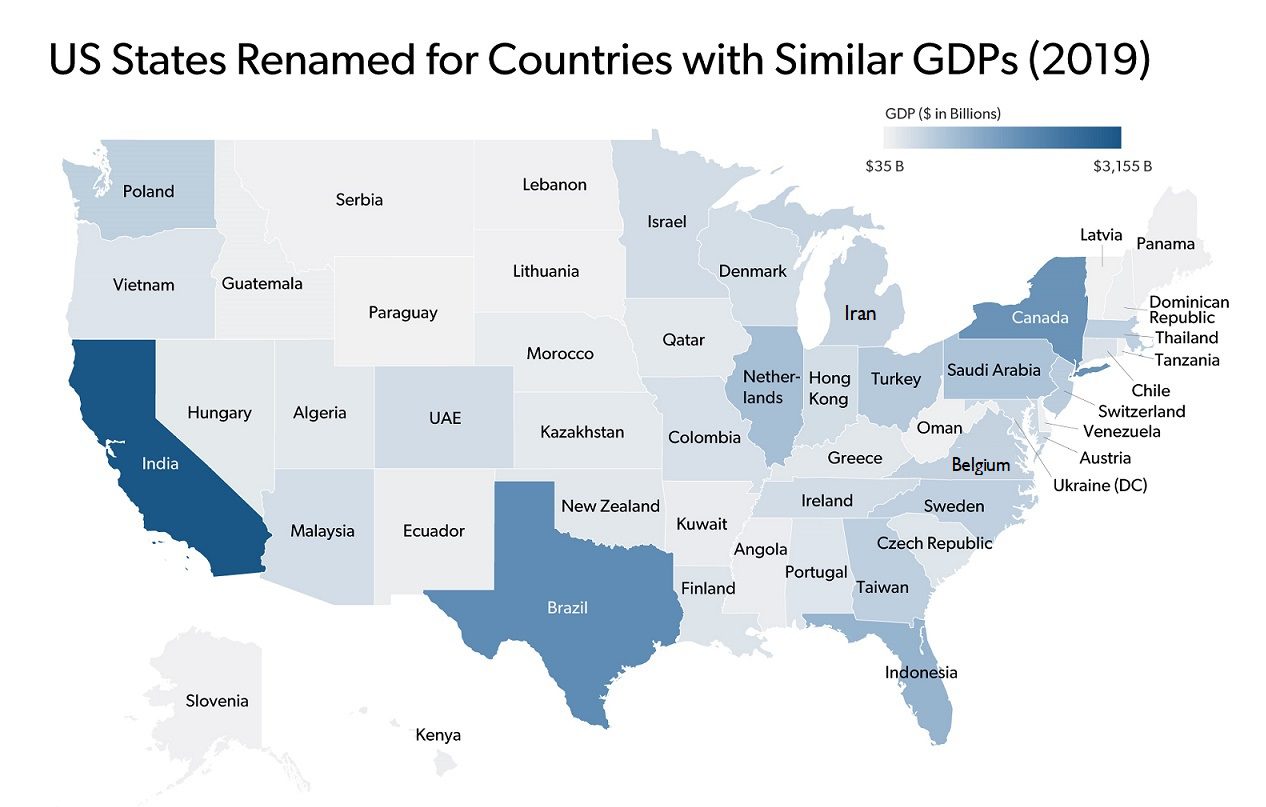
    Comparing State GDPs to Entire Countries (American Enterprise Institute). The U.S. produced nearly 25 percent ($21.5 trillion) of world GDP ($87.2 trillion) in 2019, with only about 4.3 percent of the world’s population. Four of America’s states (California, Texas, New York and Florida) produced more than $1 trillion in output and as separate countries each would have ranked in the world’s top 17 largest economies. Adjusted for the size of the workforce, there might not be any country in the world that produces as much output per worker as the U.S., thanks to the world-class productivity of the American workforce. The map matches the economic output (Gross Domestic Product) for each U.S. state and DC to a foreign country with a comparable nominal GDP last year, using data from the BEA for GDP by state and data for GDP by country from the International Monetary Fund.


    State Economic Performance

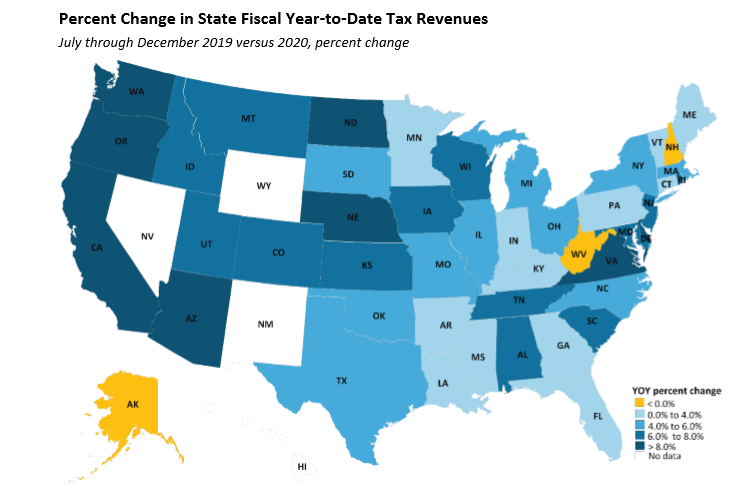
    State Tax Revenues Trend Higher (Urban Institute). Recent data from 46 states show continued growth in overall state tax collections, including reported growth in all three major sources of taxes: personal income tax, corporate income tax, and sales tax. State tax revenues totaled $429.7 billion from July 2019 through December 2019 (which corresponds to the first six months of fiscal year 2020 for 46 states). This was $25.1 billion or 6.2 percent higher than the previous year. From July–December 2019, 43 states reported growth while 3 states reported declines in total tax revenue collections compared with the same period a year earlier. Four states did not yet report data. The State and Local Finance Initiative at the Urban Institute reports Monthly State Revenue Highlights on tax revenue trends for major sources of taxes and trends across the states.


    Topics and Trends

    Industry Watch

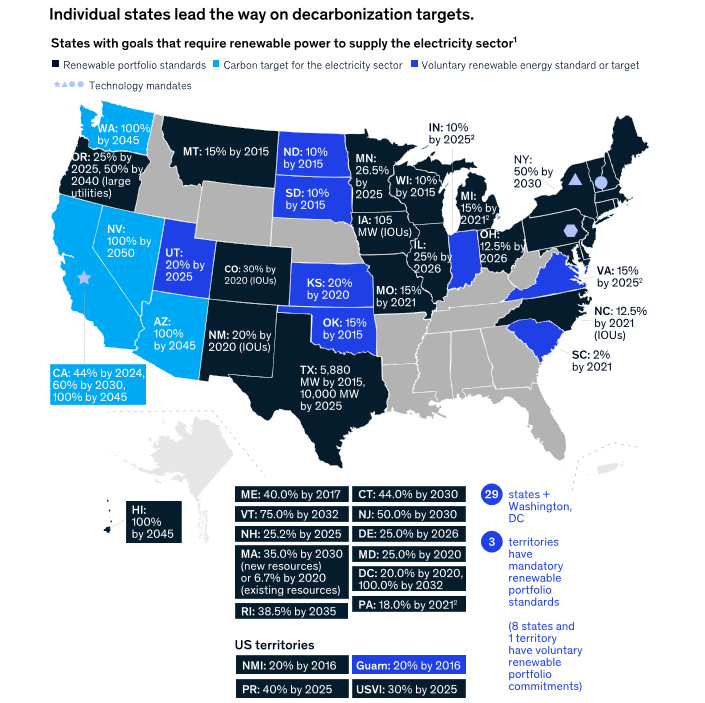
    The Future of Natural Gas in North America (McKinsey & Company). Industry discussions about the future of gas in North America are polarizing. On one hand, the shale revolution keeps delivering, displacing liquefied natural gas (LNG) imports since the late 2000s, as abundant gas resources and technological innovation drive costs down. In the past few years, shale has entered a new phase with the rise of LNG exports from North America. By 2023, North America is expected to head the list of the world’s top LNG exporting regions. On the other hand, as state-level decarbonization policies ramp up, the demand for natural gas in key segments such as power generation and local distribution companies is expected to decline. These contrasting outlooks reflect different perspectives and interests of stakeholders, regions, and segments. However, gas will continue to play a role in North America, even in areas with nearly full decarbonization policies. Expect to see gas turbines using “clean”—that is, zero-carbon—gas such as biogas, hydrogen (co-firing), gas plus carbon capture and storage (CCS), or nature-based solutions. However, scaling these gas sources will take some time.


    Trade/Tariffs

    Coronavirus Will Impact the U.S. Economy (The Conversation). As coronavirus spreads around the world, and confirmed cases and deaths mount, economists are increasingly concerned about the impact on the U.S. economy. In a recent report to Congress, the Federal Reserve warned that disruptions from the coronavirus could spill over into the global economy, creating new risks here as well. Goldman Sachs estimates the virus will cut a half point off U.S. economic output in the first quarter of 2020. Specific disruptions to monitor include sales to China, as one of the largest markets for U.S. products, especially for electronics and fashion. Second, manufacturers that use components in their products mostly sourced from infected areas in China such as Wuhan, where more than 500 car parts manufacturers operate, are coping with constrained and disrupted supply chains. Many U.S. companies have or are looking to move all or most of their manufacturing facilities out of China to other countries in the region, such as Vietnam, Taiwan, Bangladesh and South Korea. Third, US tourism will take a hit. The number of visitors coming to the United States from China could drop by as much as 28% in 2020, translating to $5.8 billion in less spending this year.

    Opportunity Zones

    Final Regulations Offer More Certainty to OZ Investors (Orrick, Herrington & Sutcliffe LLP). OZ investment stalled in 2018 and 2019 due to significant uncertainty over how the tax incentives enacted by Congress in 2017 would be implemented by the Internal Revenue Service. The Final Regulations issued by the IRS in December 2019 have addressed many areas of major concern for managers of a qualified opportunity fund (QOF) and investors in those QOFs, opening the door for many more opportunities for these tax-advantaged investments. The Final Regulations are effective for tax years beginning after March 13, 2020 but an election may be made to apply the regulations retroactively, which likely will be applied in most cases. The Final Regulations are divided into six parts, corresponding with operative sections of the Internal Revenue Code: (1) Procedure for deferring gains and operative definitions; (2) Inclusion of gains that have been deferred; (3) Issues associated with QOF investments that have been held for at least 10 years; (4) Requirements for QOZP; (5) QOZB property requirements; and (6) Reinvestment of proceeds and anti-abuse rules. To view the Final Regulations on Opportunity Zones issued by the U.S. Treasury Department and IRS, click here.

    Opportunity Zones Bring New Life to Small Town Indiana (Opportunity Investment Consortium Indiana). Brookville, Indiana, a town of about 3,000 people, had seen no new development in more than 20 years. Town leaders sought to transform their community and began by organizing a redevelopment plan for the historic downtown. Leadership then approached a local developer with a strong track record in redeveloping similar projects near and around Brookville. The project proposed to provide mixed-income apartments with an assisted living component for seniors and retail on the first floor, including a pharmacy, restaurant, primary care facility, and other community-servicing amenities. The project also entailed rehabilitation of the historic buildings along the corridor as well as new construction of apartments to meet workforce needs in the area. When an area family sold their business – Sur-Seal – in June 2018 and incurred significant capital gains, they saw Opportunity Zones as a chance to further invest in their community and specifically this project. The designation of the Opportunity Zone allowed the family to form a partnership with the developer where they committed to financing the remaining components of the deal – allowing the developer to move forward with the full concept as initially planned. For more information on Opportunity Zones, CDFA has extensive resources available, click here.

    Why Cannabis and Opportunity Zones Could be a Budding Industry (Bisnow Los Angeles). Downtown Los Angeles could soon see one of the first mixed-use cannabis projects in a designated opportunity zone in the nation. Oakland-based Oak Investment Fund is planning to develop the estimated $75M to $100M project on the former 50K SF Honda dealership across the street from the Los Angeles Convention Center. The proposed mixed-use development will feature a boutique hotel that could rise as high as 50 stories, with a music recording studio, a film screening room, an event space, retail, and a cannabis dispensary and lounge on the ground floor. This could be the start of a bigger nationwide trend of cannabis investors and operators setting up cannabis operations in opportunity zones, despite the federal government classifying the drug in its most restrictive category. Why? The OZ program published a list of prohibited investments or “sin businesses” that includes setting up country clubs, massage parlors, strip clubs, racetracks, liquor stores and casinos in opportunity zone areas. Cannabis businesses were not included on the list. While the IRS might classify cannabis businesses in the program’s liquor store sin category, or in its own separate category in the future, the developer feels confident they can include a cannabis operation as part of this mixed-use project.

    The Opportunity Zones program provides a tax incentive for investors to re-invest their unrealized capital gains into Opportunity Funds that are dedicated to investing into Opportunity Zones designated by the chief executives of every U.S. state and territory. Treasury has certified more than 8,700 census tracts as Qualified Opportunity Zones (QOZs) across all states, territories, and the District of Columbia. For a map of all designated QOZs, click here.

    Inclusive Growth

    Rural Community Action Guide (Office of National Drug Control Policy). Rural communities face many hurdles in addressing opioid and other drug addiction. Research shows that people living in rural America who need help are falling through the cracks, often losing their lives. Treatment services are insufficient to meet rural demand. Access to quality medical care, resources, and training is limited in rural communities, particularly for specialized populations, such as pregnant women, parents, and seniors. Further, drug courts, which are known to be significantly more effective than incarceration for non-violent offenders, are not available in many rural areas. In recent years, drug overdose deaths in rural counties jumped by 325 percent as compared to 198 percent in metropolitan areas. The Rural Community Action Guide is a compilation of data collected from numerous community organizations. The guide aims to provide an overview of the key challenges rural communities face when addressing the consequences of prescription opioid misuse and the use of other illicit substances. It also showcases localized efforts implemented to help mitigate the impact of substance use disorder.

    Innovation

    Preparing for a New Decade of U.S. Manufacturing (NIST MEP). U.S. manufacturing is entering this new decade in a much different state than when it entered the last. The industry is no longer shaking off the aftereffects of the Great Recession, but it is still grappling with the economic uncertainty that comes with new trade deals and tariffs. There is also the need to keep pace with the ever-increasing speed of technological change. Industry 4.0 and its adoption by U.S. manufacturers has begun to pick up steam, and manufacturing’s digitization is only going to increase. Things like 3D printing, advanced robotics, artificial intelligence, and smart factories are becoming more commonplace, emphasizing a deepening need for stronger cybersecurity. The prioritization of challenges among the Manufacturing Extension Partnership (MEP) National Network of clients is shown below. Some of the challenges have been consistent such as continuous improvement, while others have become increasingly important over time. For instance, the share of MEP Center clients reporting employee recruitment and retention as a challenge has more than doubled and is now the second most frequently reported challenge companies are facing.


    Infrastructure

    FCC Approves $20 Billion Rural Broadband Funding Plan (Route Fifty). The Federal Communications Commission (FCC) voted to approve a $20.4 billion plan to subsidize the construction of high-speed broadband networks in rural America. FCC Chairman Pai called the vote the “biggest step the FCC has ever taken to close the rural digital divide.” The Rural Digital Opportunity Fund will help internet service providers deploy broadband over 10 years to areas currently lacking service of at least 25 megabits per second download and 3 Mbps upload speeds. The federal agency estimates about six million rural homes and businesses are located in areas that could benefit from the initiative. Internet service providers, including telecoms and government utilities, would bid to provide broadband and voice services to the locations. The FCC released an analysis in January indicating which states had the most locations eligible for funding. California, Texas, Michigan and Wisconsin topped the list. For the number of locations eligible for bidding in each state for high-speed broadband, click here.


    Deal Makers

    Incentives in Action

    States Use Annual Caps to Control Tax Incentive Costs (Pew Charitable Trusts). Research by The Pew Charitable Trusts shows that caps are among the most effective tools for governments to guarantee that business incentives do not cost more than expected or intended. A cap is an annual limit on a state’s costs or commitments from an incentive program. Some jurisdictions place limits on the amount of incentives that individual companies can receive, but to offer the greatest protection, these caps generally must apply to entire programs—a film tax credit cap, for instance, would limit the credits that all film productions could receive, not just any single production. Most states cap at least some of their programs, but few use this protection consistently. By applying caps systematically, policymakers can ensure incentives do not cause unexpected strains on state budgets, while still achieving their economic development goals.

    New Mexico Releases Economic Development Innovation Recommendations (New Mexico Economic Development Department). House Memorial 16 passed in 2019 directed the New Mexico Economic Development Department (NMEDD) to bring together stakeholders and convene an Economic Development Innovation Task Force to spur collaboration and develop concepts and ideas to enhance the state’s economy. A major recommendation from this effort was the proposed creation of a $100 million New Mexico Infrastructure Innovation Fund to identify and prepare sites to garner the attention of site selection firms and meet the economic development needs of communities. The fund would help establish a Certified Sites designation that identifies properties that are shovel ready for capital investment. Broadband and projects supporting targeted industries would also be priorities. Task Force recommendations also included increased funding for the New Mexico Partnership to $3 million annually, $2 million each year for an Economic Development Cooperative Advertising/Marketing Fund to support community level business attraction efforts, and $1 million annually for an Economic Development Grant Program requiring a 1:1 match from regional and local economic development organizations, among others.

    Behind Amazon’s HQ2 Fiasco: Jeff Bezos Was Jealous of Elon Musk (Bloomberg). When Elon Musk secured $1.3 billion from Nevada in 2014 to open a gigantic battery plant, Jeff Bezos noticed. In meetings, the Amazon.com Inc. chief expressed envy for how Musk had pitted five Western states against one another in a bidding war for thousands of manufacturing jobs; he wondered why Amazon was okay with accepting comparatively trifling incentives. It was a theme Bezos returned to often, according to four people privy to his thinking. Then in 2017, an Amazon executive sent around a congratulatory email lauding his team for landing $40 million in government incentives to build a $1.5 billion air hub near Cincinnati. The paltry sum irked Bezos, the people say, and made him even more determined to try something new. And so, when Amazon launched a bakeoff for a second headquarters in September 2017, the company made plain that it was looking for government handouts in exchange for a pledge to invest $5 billion and hire 50,000 people. The contest for HQ2 attracted bids from 238 cities across North America and ended with Amazon deciding on New York and Virginia.

    The State Business Incentives Database is a national database maintained by the Council for Community and Economic Research (C2ER) with almost 2,000 programs listed and described from all U.S. states and territories. The Database gives economic developers, business development finance professionals, and economic researchers a one-stop resource for searching and comparing state incentive programs. To view the information available in the database, click here.

    New Growth Opportunities

    Digital Infrastructure Opportunities Expected to Stay on Growth Track (Pensions & Investments). Infrastructure for the growing digital economy, which are in both real estate and infrastructure portfolios, will continue to grow in 2020. In its annual global outlook report, LaSalle Investment Management notes that emerging real estate sectors including data centers and cybersecurity have the potential to earn higher returns, even in a slow-growth economy. The roll out of 5G and 5G-enabled handsets will be ushering in another up cycle of growth in the digital infrastructure sector. While there is uncertainty around the T-Mobile and Sprint merger, which together represent one-third of the market, the merger was recently found by the court to be lawful. Attorneys general for 14 states had sued to stop the merger, claiming that it would harm competition and raise prices. However, one way or another, there will have to be significant investment in networks as 5G requires a significantly denser network design. There will be new macro towers and many small cell antennas, primarily in urban areas. Each existing cell tower will also have to be modified so it can handle 5G.

    Talent Development/Attraction

    Preparing for the Future of Work (American Association of Community Colleges). The nature of work is changing right before our eyes. Technology advancements are transforming existing industries and creating new ones at an unprecedented pace. The World Economic Forum predicts significant disruption in the jobs landscape over the next three years, with as many as 75 million current job roles being displaced. The upside is that more than 130 million new roles could emerge. Many of those roles will be those enhanced by technology, or what the National Science Foundation describes as the “future of work at the human-technology frontier.” These are technologies that can collaborate with humans to enrich lives and workplaces. The challenge is ensuring the future workforce can acquire the expanding skill sets necessary for success in a rapidly changing employment environment. Therefore, helpful advice includes don’t ignore the future, strengthen your employer partnerships, leverage stackable credentials, and focus on outcomes.

    Hiring in the Modern Talent Marketplace (U.S. Chamber of Commerce Foundation). As the U.S. labor market becomes one of the most competitive talent markets in recent history, employers of all sizes across multiple industries are struggling to hire qualified candidates. More than half of U.S. states (28) have more open jobs than available workers to fill them. This means that even if every single individual in that state who wants a job – and is available to work – could find a job, there would still be positions left unfilled. As competition for job candidates increases, hiring mangers face pressure to get innovative and deliver qualified candidates who are the ‘right fit’ for their organizations. To better understand the modern talent marketplace, the U.S. Chamber of Commerce Foundation commissioned a survey of HR professionals. Among the findings, nearly three-quarters of respondents (74%) agree that a ‘skills gap’ persists in the current U.S. labor and hiring economy. Employers and hiring managers are preparing for a world where competencies – not degrees – are the most important factors when filling a job. According to the survey, respondents (78%) acknowledged the need to overhaul their hiring practices to make this shift to focus on competencies. Employers are also working with higher education to align what is taught in the classroom with the needs of the economy.


    The SEDE Network Steering Committee includes: Stefan Pryor (RI), Chair; Val Hale (UT), Vice Chair; Julie Anderson (AK); Dennis Davin (PA); Jennifer Fletcher (SC); Kurt Foreman (DE); Joan Goldstein (VT); Manuel Laboy Rivera (PR); Jeff Mason (MI); Kevin McKinnon (MN); Don Pierson (LA); Mike Preston (AR); Sandra Watson (AZ).

    For further questions on the content in this Bulletin or for information on the SEDE Network contact Marty Romitti, CREC Senior Vice President, at mromitti@crec.net

  • State Economic Development Bulletin – January 2020

    State Economic Development Bulletin – January 2020

    Latest News

    What the Experts See Coming in 2020 (Visual Capitalist). In the modern era, data and media are the new magic 8-ball. The jury is still out on whether we’ve gotten any better at anticipating the forces that will shape the coming year, but that certainly hasn’t stopped people from trying. Of the hundreds of forward-looking pieces of content published in the lead-up to 2020, how many of the expert predictions lined up? Was there a consensus on any trends, or were predictions all over the map? During the month of December Visual Capitalist analyzed over 100 articles, whitepapers, and interviews to answer that question. While there was no firm consensus on where 2020 will take us, there were a few themes that appeared in multiple publications. The graphic below highlights the reappearing predictions.


    State Economic Performance

    Business Formation Statistics by State (U.S. Census Bureau). Overall, the U.S. received 114,969 business applications with planned wages in 2019 Q4. This was a 6.9% decrease from 2018 Q4. Business Formation Statistics (BFS) are a product of the U.S. Census Bureau developed in research collaboration with economists affiliated with Board of Governors of the Federal Reserve System, Federal Reserve Bank of Atlanta, University of Maryland, and University of Notre Dame. The BFS provide timely and high frequency information on new business applications and formations in the United States. This includes business applications as indicated by applications for an Employer Identification Number (EIN), actual and projected business formations originating from business applications based on the record of first payroll tax liability for an EIN, and the delay in business formation as indicated by the average duration between business application and business formation nationwide and individual states.


    Topics and Trends

    Industry Watch

    Bridging the ‘Valley of Death’ for U.S. Biomanufacturing (National Institute of Standards & Technology). Biopharmaceutical manufacturing uses living cells to produce therapies that treat diseases like cancer, diabetes and autoimmune disorders. Manufacturing medicine using biology presents different challenges from the traditional chemical manufacturing processes that stamp out identical pressed pills. Biomanufacturing processes are hard to control, and the products are difficult to define as “identical” from batch to batch. Despite these challenges, biopharmaceuticals are critical to public health because the advantages are significantly greater. Scientific understanding of diseases and the success of biologically manufactured therapies to treat them has increased dramatically. But it can take a decade from design to full production of a biopharmaceutical — not fast enough to meet the needs of all the patients, or to beat competition from overseas. The U.S. leads the world in innovations and inventions, yet the manufacturing capabilities and new products are often “stranded in the lab,” or get developed in other countries. It is important to ensure that American innovations get made in America, so more must be done to resolve biopharma’s “Missing Middle.”


    Trade/Tariffs

    China says the ‘Trade War is Not Over Yet’ with Phase-One Deal (Markets Insider). Chinese state media reiterated Monday that an interim trade agreement wouldn’t mark the end of its tit-for-tat economic dispute with the US, underscoring key issues that have been left unresolved between the two sides. The US and China completed a so-called phase-one agreement. As part of that deal, the US will lower a portion of tariffs against China in exchange for increased market access for international finance firms, stricter rules around intellectual property and currency movements, and agricultural purchases. The phase-one agreement has been widely cheered by companies and investors who have increasingly complained that the dispute has raised costs and cast uncertainty on business plans. But it left out some of the most complex issues the US cited in the Section 301 investigation that initially led to escalations in early 2018, including the large-scale subsidies and cheap loans awarded to Chinese businesses by the government. American officials and executives have long argued that practice has put domestic companies at a disadvantage in the global market. To view the Phase One Economic and Trade Agreement Between the U.S. and China, click here.


    Effects of 2018-2019 Tariffs on a Globally Connected U.S. Manufacturing Sector (Federal Reserve Board). This paper from the Federal Reserve examines the effect of the tariff increases imposed by the United States and its trading partners in 2018 on outcomes in the U.S. manufacturing sector. It calculates measures of each industry’s exposure to tariff changes via three channels: the import protection that comes when an industry’s output is subject to U.S. tariffs, the increase in production costs resulting from tariffs on imported inputs, and the reduction in foreign competitiveness due to retaliatory tariffs in U.S. export markets. It then estimates the relationship between these measures of exposure to tariffs and manufacturing employment, output, and producer prices. The Federal Reserve researchers find that the tariffs are associated with relative reductions in manufacturing employment and relative increases in producer prices. For manufacturing employment, a small boost from the import protection effect of tariffs is more than offset by larger drags from the effects of rising input costs and retaliatory tariffs. For producer prices, the effect of tariffs is mediated solely through rising input costs. The results suggest that the traditional use of trade policy as a tool for the protection and promotion of domestic manufacturing is complicated by the presence of globally interconnected supply chains.

    Opportunity Zones

    IRS Publishes Final Opportunity Zone Regulations (Forbes). The U.S. Department of Treasury released the long-awaited final Opportunity Zone Treasury Regulations. The Final Regulations and explanatory materials span 544 pages and give some needed clarity into how the Opportunity Zone tax rules work. Treasury has issued two prior sets of proposed regulations. The Final Regulations consolidate these proposed regulations as well as change various parts to reflect comments received on the rules over the last two years. Among the changes that were made, the Final Regulations clarify aspects of the 180-day investment period, clarify how the substantial improvement test is met, changed the rules relating to the purchase and development of vacant property, expanded the working capital safe harbor for start-up businesses, and provided a de minimis exception for “sin” businesses. The deadlines under the program have not changed. In order to be eligible for the full 15 percent exclusion from income of the deferred capital gains, an investment in a QOF must have been made by December 31, 2019. The exclusion now drops to 10 percent provided the investment is held for at least five years prior to December 31, 2026. To view the Final Regulations on Opportunity Zones issued by the U.S. Treasury Department and IRS, click here.


    Opportunity Zones: The Complete Guide (The Motley Fool). There are currently 8,700 opportunity zones in both rural and urban areas throughout the country, with OZs in every state and territory. Over 35 million people reside in the designated OZs. As a whole opportunity zones have an average poverty rate of 29% and troubled real estate markets. In the past decade they’ve seen a sluggish overall economic progress and a decline in population. While these areas are some of the most underserved communities of the country, there is an opportunity for revitalization. The zones currently have 379 colleges or universities, 479 airports, 475 solar energy installations, 127 wind farms, 15 battery plants in the zones, 24 million jobs, and 1.6 million businesses. The influx of capital is an opportunity to help established businesses grow and expand while also bringing new measures for economic growth. This comprehensive guide explains what an opportunity zone is, how they work, and why they are attractive to real estate investors. For more information on Opportunity Zones, CDFA has extensive resources available, click here.


    Opportunity Zones ‘Full Steam Ahead’ After Final Rules Debut (Bisnow Los Angeles). For the past several months, after the launch of his opportunity zone fund, Avanath Capital CEO and founder Daryl Carter had approached investors to invest in his project, only to hear a common word: “Wait.” Last year, with so many questions and so much uncertainty surrounding the opportunity zone program, many investors sat on their hands waiting for the IRS and the Department of Treasury to answer some much-needed questions before releasing capital. But with the release of the third and final set of guidelines in mid-December, Carter believes many of those wait-and-see investors are going to start putting money into opportunity zones. As part of Carter’s opportunity zone fund, he plans to rehab a couple of existing apartments in his portfolio that are in opportunity zones and add more units on an adjacent vacant lot. Carter launched a qualified opportunity zone fund with a target of raising $300M that would go toward the improvements and renovations of three existing multifamily properties, one each in Ontario, California; Orlando, Florida; and Cary, North Carolina; as well as for the development of a property in Detroit. The IRS and the Treasury Department will now allow an opportunity zone investor to aggregate certain buildings on the same parcel as a single property, as long as it is in the same opportunity zone fund and it shares certain facilities and business elements.

    The Opportunity Zones program provides a tax incentive for investors to re-invest their unrealized capital gains into Opportunity Funds that are dedicated to investing into Opportunity Zones designated by the chief executives of every U.S. state and territory. Treasury has certified more than 8,700 census tracts as Qualified Opportunity Zones (QOZs) across all states, territories, and the District of Columbia. For a map of all designated QOZs, click here.

    Inclusive Growth

    Developing Affordable Housing Isn’t Easy (Public Source). Affordable housing depends on federal tax credits. Securing them is a complex, competitive process. Oakland Affordable Living, a 49-unit complex, opened in 2018 to help stabilize housing prices in the neighborhood. The complex was financed with low-income housing tax credits [LIHTC]. A federal program managed by state agencies, LIHTC is the financial skeleton key that unlocks most of the affordable rental housing developed in the United States. Without this crucial funding, the Oakland Planning and Development Corporation [OPDC] would not have been able to finance the $16.3 million project. In simple terms, LIHTC enables developers to turn federal tax credits into homes for low-income families. Developers sell their tax credits to an investor, such as a bank, that provides an upfront construction loan. In exchange, the investor gets a 10-year tax reduction, roughly equal to the loan amount. The project illustrates the power of LIHTC to produce high-quality housing and support families as rents rise. But it also reveals LIHTC’s limitations to address a nationwide housing crisis.

    Infrastructure

    A Framework for Making Better Infrastructure Decisions (McKinsey & Company). Infrastructure—like transportation, power, water, and telecom systems—underpins economic activity and catalyzes growth and development. The world spends more than $2.5 trillion a year on infrastructure, but $3.7 trillion a year will be needed through 2035 just to keep pace with projected GDP growth. National, state, and local governments are devoting increased amounts of capital to meet these needs, and for good reason. The McKinsey Global Institute estimates that infrastructure has a socioeconomic rate of return around 20 percent. In other words, $1 of infrastructure investment can raise GDP by 20 cents in the long run. Gains from infrastructure are fully realized, however, only when projects generate tangible public benefits. Four best practices depicted below can help governments improve and modernize decision making for infrastructure. By approaching infrastructure projects in this way, a government can improve not only their selection but also their outcome.

    Innovation

    Consumer Electronics Show 2020: The Future of Cities, Transportation and Equity (Government Technology). Making smart city design citizen centric — with an eye toward security and inclusion — has been a big theme at this year’s Consumer Electronics Show (CES) in Las Vegas. The annual electronics conference gives corporate and government insiders a chance to look at future trends in tech, but also to discuss how it can be paired with policy to improve citizens’ lives. A number of events at CES this year highlighted the importance of transportation, not the least of which was the keynote given by U.S. Transportation Secretary Elaine Chao, who unveiled a new set of federal guidelines designed to pave the way for safe and efficient private development of autonomous vehicles. Paired with Chao’s announcement were AV models from Audi, Honda, Bertrand and many other car makers. The transportation options of the future won’t just involve driving cars, however, but also flying ones. This year, Hyundai showcased its partnership with Uber to create the “flying taxi,” or the S-A1. Bell, meanwhile, made a similar move in showing off its new Nexus 4EX, a flying car that is also a partial hybrid vehicle.


    Deal Makers

    Incentives in Action

    Governments Increasingly Rely on Evaluations for Tax Incentive Reform (Pew Charitable Trusts). A growing number of state and local governments are regularly evaluating the effectiveness of their economic development tax incentives and considering whether these programs are worth the cost. In 2019, Kansas and Montana joined the nearly two-thirds of states that require rigorous evaluation processes. Evaluations offer evidence to help states and cities make informed decisions about incentives that can lead to improvements in program performance. Incentive reviews also can identify issues involving unclear or confusing program guidelines or highlight unused or ineffective programs. In addition to altering or eliminating existing programs, policymakers can use the evaluation process to develop new strategies for bolstering state economic development tools.

    Georgia’s Film and TV incentives Could Become Part of a 2020 Budget Battle (Atlanta Journal Constitution). Georgia’s generous tax credits to film and TV production companies have sparked a billion-dollar studio boom here. This is a solid fact. The question now is whether the financial lure will remain a sacred cow in a season of widespread cuts to the state budget. The tax credits, which grew from $141 million in 2010 to an estimated $870 million in 2019, have been a policy mainstay. The credits amount to roughly 3% of the current state budget. The governor has called for a 4% cut in many areas for this year and 6% in cuts for next year. The state’s film and TV tax credit system has two unique features. First, there is no cap. Second, the tax credits are transferable. Let us suppose that a film company spends $3,333,333 in Georgia and meets all the necessary state criteria — which include putting that Georgia peach at the end of the movie — they earn a 30% tax credit worth $1 million. But the film company isn’t based in Georgia, and so its tax obligations to the state are minimal. The film company can sell that tax credit — for cash — to any entity that owes state taxes, whether it produces widgets, okra, carpets or nothing at all.

    Large Incentive Deals Don’t Spur Growth at State and Local Level (Journal of Economic Perspectives). Large incentive packages targeted at individual companies don’t seem to spur broader economic growth at the state and local level, according to a new research paper. The study — co-authored by Columbia and Princeton economists — questions the use of incentives to lure or retain businesses, a practice that has tripled in size across the U.S. since the 1990s. While the authors find some evidence of direct employment gains from attracting a firm via incentives, they do not find strong evidence that firm-specific tax incentives increase broader economic growth at the state and local level. The research documents an average growth of roughly 1,500 jobs within the specific industry of each deal but doesn’t find strong evidence of job growth in other industries or an effect on county-wide employment. The study argues state and local business tax incentives must better demonstrate that these policies improve equity, either by improving economic conditions in the most distressed places or by improving the well-being of underemployed and low-income workers.

    The State Business Incentives Database is a national database maintained by the Council for Community and Economic Research (C2ER) with almost 2,000 programs listed and described from all U.S. states and territories. The Database gives economic developers, business development finance professionals, and economic researchers a one-stop resource for searching and comparing state incentive programs. To view the information available in the database, click here.

    New Growth Opportunities

    Apple is Trying to Change the Way Electronics are Recycled (Reuters). Inside a nondescript warehouse on the outskirts of Austin, Texas, Apple’s Daisy robot breaks apart iPhones so that 14 minerals, including lithium, can be extracted and recycled. Apple is already using recycled tin, cobalt and rare earths in some of its products, with plans to add to that list. The company recently bought the first commercial batch of carbon-free aluminum from a joint venture between Rio Tinto and Alcoa. The Daisy robot is part of its plan to become a “closed-loop” manufacturer that does not rely on the mining industry, an aggressive goal that some industry analysts have said is impossible. Many mining executives note that with the rising popularity of electric vehicles, newly mined minerals will be needed on an even larger scale, a reality that Apple acknowledges.

    Talent Development/Attraction

    ROI of Liberal Arts Colleges: Value Adds Up Over Time (Georgetown Center on Education and the Workforce). The value of a liberal arts education has come into question as more students are opting for undergraduate degrees with direct connections to the job market. In response to demand, some liberal arts colleges have cut programs in traditional liberal arts fields and created programs in career-oriented fields like business. Despite these efforts to attract more students, some small liberal arts colleges have closed or are in danger of closing. Given these challenges, it is worth asking: How do students who attend the 210 or so liberal arts colleges in the United States fare financially once they enter the labor force? It turns out they fare quite well. These colleges’ median return on investment (ROI) 40 years after enrollment is $918,000. That puts the ROI at these colleges just below the ROI at universities with the two highest levels of research activity. The report notes the ROIs of most four-year institutions typically lag those of two-year institutions in the short term because it takes longer for students to earn a bachelor’s degree before they enter the workforce and begin earning money. At the 40-year mark, the value of the credential is more evident.


    The Workforce of 2020 and 3 Things to Expect (Inc.). Today, leaders often discuss the war for talent. This war is only expected to grow worse. As the dawn of a new decade takes over, there will be a not so new force to be reckoned with in the workforce…Millennials. According to a recent study, in 2020 millennials will make up 50 percent of the US workforce while Gen Z, who have recently been garnering a lot of attention will make up 7 percent; giving this next gen talent combo a tremendous amount of influence. While there has been much discussion around millennials and Gen Z’s and their influence, it is ironic that most organizations have struggled to figure out how to effectively recruit, engage and retain next generation talent. These failures are going to create a major problem for individual organizations and the US economy in the coming decade.


    The SEDE Network Steering Committee includes: Stefan Pryor (RI), Chair; Val Hale (UT), Vice Chair; Julie Anderson (AK); Dennis Davin (PA); Jennifer Fletcher (SC); Kurt Foreman (DE); Joan Goldstein (VT); Manuel Laboy Rivera (PR); Jeff Mason (MI); Kevin McKinnon (MN); Don Pierson (LA); Mike Preston (AR); Sandra Watson (AZ).

    For further questions on the content in this Bulletin or for information on the SEDE Network contact Marty Romitti, CREC Senior Vice President, at mromitti@crec.net