Author: Allison Ulaky

  • State Economic Development Bulletin – Issue 69, May 2024

    Issue 69, May 2024

    HEADLINES

    SEDE News 🗞️

    Webinars

    News

    Economy 💰

    Trade 📈

    Industry Trends 💡

    Workforce ⚒️

    Business Finance and Incentives 📊

    SEDE News 🗞️

    Webinars

    June 7: Update on the NSF Regional Innovation Engines (SEDE) SEDE is hosting a May 30th webinar to allow NSF to update attendees on the NSF Regional Innovation Engines initiative. The NSF Engines program will provide up to $160 million to each Regional Engine for up to 10 years to support the development of diverse regional coalitions to engage in use-inspired research and development, translation of innovation to society, and workforce development — with the goal of growing and sustaining regional innovation ecosystems throughout the U.S. State and local governments, non-profit organizations, higher education institutions, for-profit organizations are eligible to apply, meaning your organization may be able to apply as a lead and/or partner with an eligible applicant. Register here.

    News

    Statewide Planning Grant Survey and Interview Report (SEDE) The Economic Development Administration (EDA) supported states in economic planning efforts by allocating $59 million in grants through the Statewide Planning Grants to 59 states, territories, federally recognized areas, and the District of Columbia. The Center for Regional Economic Competitiveness (CREC) was awarded a grant from EDA to gain additional insights into the Statewide Planning Grants by conducting a follow-up survey in 2023 along with one-on-one interviews with all 59 recipients. The State of the EDA Statewide Planning Grants Report details CREC’s findings from the follow-up survey and individual interviews. This report and other items related to the Statewide Planning Grants can be found here.

    Statewide Planning Grant Convening (SEDE) In March 2024, CREC hosted a convening of Statewide Planning Grant grantees in Arlington, Virginia to not only share research findings, but to provide an opportunity for state and EDD leaders to discuss project activities, roadblocks, and state-EDD alignment. The two-day convening brought together state and EDD leaders from 18 states to engage and learn about other SPG projects. A blog summarizing the event can be found here.

    Strengthening EDD-Higher Education Partnerships (NADO) As part of the NADO Research Foundation’s Economic Development District Community of Practice (EDD CoP), the University Economic Development Association (UEDA) has created resources to highlight best practices and case studies for encouraging collaborative partnerships between EDDs and higher education institutions. These include a Tip Sheet for Research, Partnerships, and Technical Assistance Between EDDs and Higher Education Institutions, and two case studies; the first titled Utah Post-Secondary Educational Partners and Future Ready Utah and the other on Resilient Areas and Equitable Regions: A Case Study of Virginia Tech and New River Valley Commission. These resources share lessons for improving relationships between EDDs and universities.

    USDA and EDA Update Resources in Joint Guide to Boost Rural Communities (USDA/EDA) The Stronger Together: Federal funding and planning opportunities designed to promote sustainable economic development in rural America guide has been updated to provide a summary of EDA and USDA Rural Development programs that can be used to support common rural development strategies. The guide is separated into four key focus areas: Planning and Technical Assistance, Infrastructure and High-Speed Internet Expansion, Entrepreneurship and Business Assistance, and Workforce Development and Livability. The guide is designed to help eliminate barriers and encourage collaboration among stakeholders by stacking and leveraging resources.

    BEAD Report: Grading States’ Initial Proposals for Federal Broadband Funds (ITIF) If all goes well, the $42.5 billion in BEAD funding that Congress allotted in the Infrastructure Investment and Jobs Act should be enough to extend broadband coverage across the country. But it will depend on how states and territories use the money. There are three major criteria that state policymakers and federal administrators should focus on to ensure BEAD finding is used to the greatest possible benefit: States should plan to rely on a range of technologies to maximize their broadband coverage, states should create a streamlined regulatory environment that minimized funds wasted, and states should articulate a plan for digital inclusion within their BEAD plans.

    Economy 💰

    SSBCI Report Shows Funds Flowing to American Small Businesses (Smart Incentives) The State Small Business Credit Initiative (SSBCI) is a $10 billion federal program administered by the U.S. Department of Treasury that provides funding via state and tribal governments for small business lending and equity investment programs. This article describes the funding allocation and deployment thus far. As of now, 54 state and territory capital programs have been approved by Treasury, with $1.1 billion disbursed to small businesses by jurisdictions. SSBCI technical assistance programs will complement these capital programs in the coming months.

    Shovel-Ready Status Gave Polar Semiconductor an Edge in CHIPS Act Funding (Finance & Commerce) Polar Semiconductor is not wasting time getting started with the $525 million expansion of its manufacturing facility in Minnesota, a project that’s advancing with help from a familiar construction partner and $195 million in recently announced federal and state money. The ability to move quickly gave the company an edge in competing for money from the federal CHIPS and Science Act. Other projects seeking federal money involve new construction, which can take three to five years to complete. Polar says the project will double the company’s U.S. production capacity of semiconductor “wafers,” expand and modernize the facility with new automation and AI capabilities, and create more than 160 new jobs, including 60 construction jobs.

    U.S. Job Market Eases but Hiring Remains Firm (The NY Times) Employers added 175,000 jobs in April, a milder pace than experienced during  past winter. A less torrid expansion after the 242,000-job average over the prior 12 months isn’t necessarily bad news, given that layoffs have remained low and most sectors appear stable. The labor market has defied projections of a considerable slowdown for over a year in the face of a rapid escalation in borrowing costs, a minor banking crisis and two major wars. But economic growth declined markedly in the first quarter, suggesting that the exuberance of the last two years might be settling into a more sustainable rhythm.

    Trade 📈

    What U.S.-China Trade Looks Like by Sector (Reuters) China relies on the U.S. for agricultural products like soybeans and semiconductors, while electronic equipment and machinery are the top imports from China. The article includes a list of top exports and imports between the two countries by sector. Machinery and Mechanical Appliances leads the list, making up 46.40% of total imports from China. This portfolio may be affected by a bundle of steep tariff increases on an array of Chinese imports including electric vehicles, computer chips, and medical products was unveiled by the United States in April.

    Industry Trends 💡


    Responding to the Childcare Needs of Shift Workers (Federal Reserve Bank of Chicago) This article reviews a range of current and past child and family care options offered to address the needs of shift workers, with examples from the automotive industry. Automotive employers were among the first U.S. employers to offer on-site childcare and family care benefits to address the childcare challenges. The most common childcare benefit offered by automakers and suppliers is a combination of discounts and referrals (such as those offered by Ford, GM, and Stellantis) plus reimbursements and subsidies. According to the National Survey of Early Care and Education, just 8% of U.S. childcare centers offer 24-hour or weekend options for parents, even though 13% of all working parents with children under age 13 work non-standard hours.

    Billions in Chips Grants are Expected to Fuel Industry Growth (The NY Times) The United States will triple its domestic chip manufacturing capacity by 2032, the largest increase in the world. Much of the growth will be fueled by the CHIPS Act, but the U.S. is also expected to see a substantial boost in the domestic production of advanced logic chips, which are used for artificial intelligence, smartphones, and autonomous vehicles. Still, challenges remain. A lack of construction workers, technicians and electricians could make it more difficult for companies to build and operate manufacturing plants. Sustained support may be necessary to further strengthen America’s semiconductor manufacturing capacity.

    Energizing the Game Changers: How to Grow the Renewable Energy Workforce (Forbes) Driven by the need to decarbonize and increase efficiencies, as well as the Inflation Reduction Act and other policies, the renewable energy industry has grown exponentially in the last few years. The trick, now that we have gained so much speed in such a short period of time, is to sustain the momentum. Workforce is the main challenge to support the industry. One step is to hire locally whenever possible to create job opportunities for the local workforce and businesses. Strengthening the talent pipeline by investing resources with higher education institutions and mentorship programs is also important. Bringing in the younger generation will be key to reaching net-zero goals.

    Mass Timber Rising: The Story of Mass Timber in the Pacific Northwest (Oregon Mass Timber Coalition)

    The Oregon Mass Timber Coalition launched a video narrating the story of mass timber in the Pacific Northwest. Through strategic partnerships, mass timber can solve the region’s three grand challenges: affordable housing, forest health, and economic opportunity. The Oregon Mass Timber Coalition creates equitable economic development and family-wage rural and urban jobs from sustainable wood products grown and manufactured in Oregon. The full video can be found here.

    Workforce ⚒️

    Heartland Visas: A Policy Primer (Economic Innovation Group) The United States has benefited tremendously from skilled immigration. Yet the enormous benefits of skilled immigration are not reaching many communities across the heartlands which fueled the Heartland Visa proposal. The initiative recommends giving communities the choice to opt-in to a new immigration pathway for highly skilled workers, entrepreneurs, and innovators. Prioritizing higher-earning applicants and those with local ties, the Heartland Visa would serve as a key component of economic revitalization in participating places. In exchange for living in a Heartland Visa community, workers with sufficient earnings will gain permanent residency, cutting through burdensome red tape and bureaucracy embedded in the status quo immigration system.

    $7M Jackson Training Facility Will Offer Chance for Careers in Advanced Manufacturing (MLive) A new training facility near Jackson, Michigan aims to help prepare youths and adults for careers in manufacturing. The Jackson Area Manufacturers Association announced the purchase of a facility, with the plan to turn the space into the group’s new headquarters and use it as an advanced manufacturing training center. The new building will be focused on offering training and programs geared toward advanced manufacturing and Computer Numerical Control machines. It will include a precision machining lab, a welding lab, classroom spaces, robotics, 3D printers and metrology labs.

    Leveraging Teacher Apprenticeship to Grow ESL and Bilingual Teacher Workforce (New America) Over the past two years, K-12 teacher apprenticeship programs have been registered in 34 states and Puerto Rico. While many of these programs are in the early stages, this moment offers an opportunity to develop approaches that both address specific teacher workforce needs that align with changing student demographics. Leveraging teacher apprenticeships could be a strategic way to reverse the trend in a decline in teachers certified to teach English learners.

    Workforce Development Bill to Help Low-Income New Yorkers Land High-Paying Tech Jobs (AMNY) The Good Jobs Guarantee Act could unlock $1 billion in private funding for workforce development. The legislation was introduced in partnership with Pursuit, a workforce development company based in Long Island City that has a proven job training program for low-income New Yorkers. Pursuit’s fellows go through full-time training, with no upfront cost, before receiving job placements at leading tech companies. Officials estimate that the legislation will provide 24,000 low-income residents across the state with good-paying jobs over a ten-year period.

    Pennsylvania Launches Pioneering Organic Inspector Apprenticeship Program (Rodale Institute) A $350,000 grant for the development of a first-in-Pennsylvania apprenticeship program was announced that will offer real opportunity to Pennsylvanians seeking in-demand careers as organic compliance inspectors in the agriculture industry. Rodale Institute, a prestigious agricultural research and education nonprofit based in Berks County and dedicated to advancing regenerative organic agriculture, plans to create an earn-as-you-learn registered apprenticeship program and develop a diverse pipeline of highly skilled professionals to serve the certified organic industry throughout the Commonwealth. Apprenticeship programs have traditionally served the building trades, and efforts to continue growing opportunities in the trades remains a top priority.

    Hawaiʻi Announces $100K Grant to Support Construction Industry’s Future Workforce (MauiNow) The Building Industry Association (BIA) of Hawaiʻi has announced a strategic partnership with the Harry and Jeanette Weinberg Foundation to support the Youth Build Green Pre-Apprenticeship Construction Training Program (Green PACT). The $100,000 funding will support the building industry’s future workforce. The Green PACT training program is designed to equip unemployed and underemployed young adults with the knowledge and skills necessary for environmentally friendly construction employment in a training environment with financial support that allows underprivileged students to concentrate on their learning. Each Green PACT training spans three months and will accommodate two student group cohort trainings: 12 students in the fiscal year 24 cohort and eight students in the FY25 cohort for a total training initiative of 20 students and 2,500 training hours.

    Business Finance and Incentives 📊

    Amazon to Invest $11B in Indiana to Build Data Centers (Reuters) Amazon’s cloud-computing arm will invest $11 billion in Indiana to build data centers, marking the state’s largest capital investment, and promising at least 1,000 jobs. The new facilities will be built in St Joseph County in north-central Indiana and house computer equipment used to power cloud computing and generative artificial intelligence. Big technology companies have been racing over the past year to build data centers needed to power applications such as OpenAI’s viral ChatGPT as they try to capitalize on what is expected to be the industry’s next key growth driver. The Indiana Economic Development Corp (IEDC) will offer Amazon Web Services data center sales tax exemptions for eligible capital investments over a 50-year term.

    Manufacturing Company Plans Expansion in Lexington, Creating 60 New Jobs (WEKU) Manufacturing company SRC of Lexington, Kentucky, is planning an expansion that would see 60 new jobs created. The manufacturer creates products for the construction and energy industry. They’re investing more than $15 million dollars into the project. The company says the expansion is meant to accommodate a growing demand from customers.

    Commerce Invests $6.3M to Support Business Growth in Texas (EDA) The U.S. Economic Development Administration is investing $6.3 million in Texas to support business growth and workforce development following natural disasters in the state. One of the investments includes the Texas Biomedical Research Institute, San Antonio, which will receive a $2.5 million EDA grant to construct a multi-species veterinary care facility and support biomedical research. The project will be matched with $625,000 in local funds and is expected to create 445 jobs and generate $700 million in private investment, according to grantee estimates. These projects are funded under the Disaster Relief Supplemental Appropriations Act.

    Tennessee Awards $14M in Business Incentive Grants (News-Herald) The Tennessee Department of Economic and Community Development is set to approve $14 million in incentives to businesses through its FastTrack program. The FastTrack grant program offers state grants to companies to help offset the costs of expanding or moving into the state with the goal of increasing the number of full-time jobs and the average wages of jobs in an area. For example, Greenheck Fan Corp. will receive $6.5 million toward a $300 million Knoxville corporate campus, which is expected to employ 440 new workers, including manufacturing and warehousing facilities and dedicated space for training and research and development.
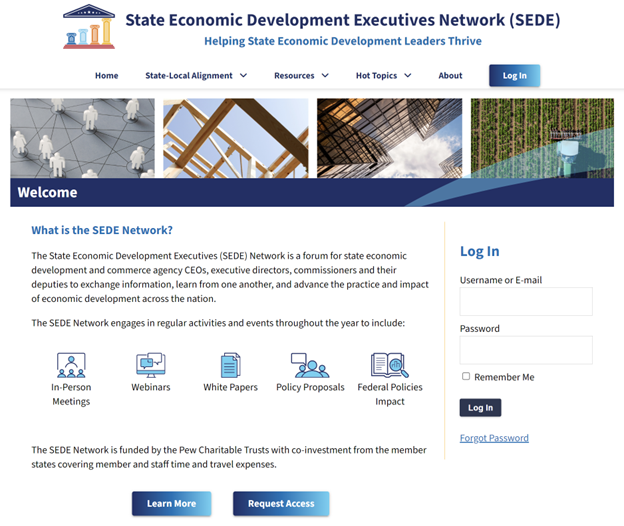


    The State Economic Development Executives (SEDE) Network engages in regular events throughout the year. State Economic Development.org lists these activities and offers an interactive forum for discussion among peers. The SEDE Steering Committee includes: Sandra Watson (AZ), Chair; Joan Goldstein (VT), Vice-Chair; Kurt Foreman (DE); Kevin McKinnon (MN); Christopher Chung (NC); Andrew Deye (OH); Sophorn Cheang (OR); Adriana Cruz (TX);  and Mike Graney (WV).

    Allison Ulaky of the Center for Regional Economic Competitiveness (CREC) led the development of this Bulletin; for questions on the content in this Bulletin or for information on the SEDE Network contact Bob Isaacson, CREC Senior Vice President.
  • Meeting of the Minds: States and EDDs Discuss the EDA Statewide Planning Grants

    | May 23, 2024 |

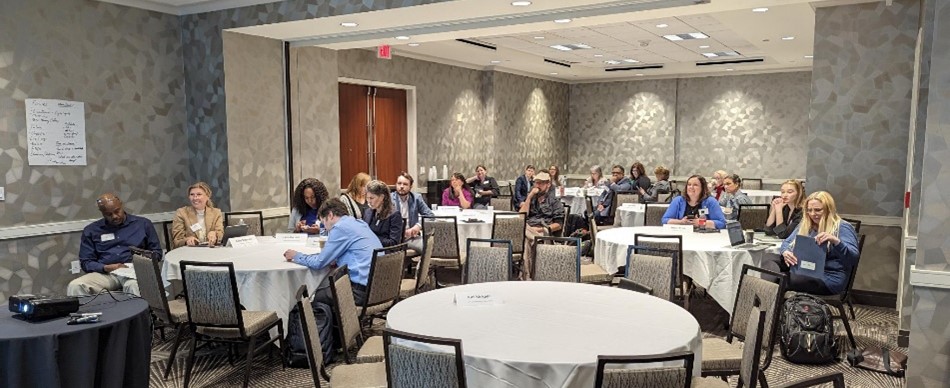
    The U.S. Economic Development Administration’s Statewide Planning Grants (SPG) offered states, territories, the District of Columbia, and federally recognized areas a unique research opportunity: a one-time $1 million grant to each “state” to fund projects to help these 59 areas recover from the pandemic and prepare for future challenges. CREC hosted a convening of SPG grantees to not only share research findings, but to provide an opportunity for state and Economic Development District (EDD) leaders to discuss project activities, roadblocks, and state-EDD alignment.

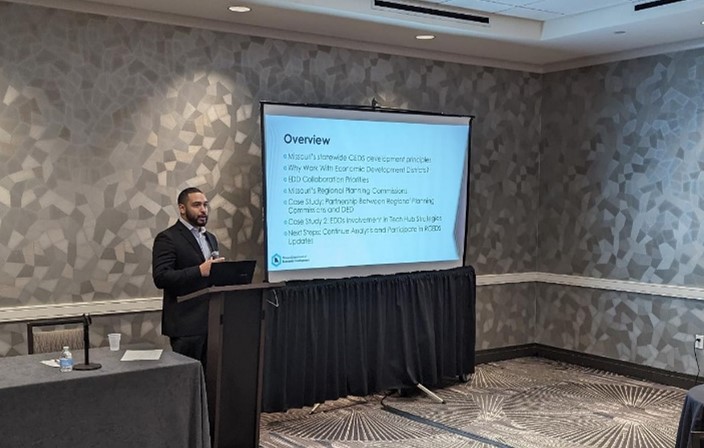
    The two-day convening brought together state and EDD leaders from 18 states to engage and learn about other SPG projects. The first day was state-focused with states discussing program activities, unique projects, and methods to include EDDs in grant planning and implementation. Two states gave presentations on their industry-related projects, with Washington sharing their industry cluster project and South Carolina discussing their work on AI and EVs. Following those conversations, North Carolina and Missouri presented the benefits of working with EDDs, with North Carolina focusing on economic recovery and resiliency and Missouri on the development of a statewide CEDs.

    The first day also included breakouts by EDA Region where states gathered and discussed their project focus areas, key partners, strategies for EDD collaboration, roadblocks, successes, and what they hoped to learn from the convening. Participants used this session to learn from others about combatting roadblocks, knowledge sharing, sustaining these efforts beyond the grant period, benefits of collaborating with EDDs, and how to develop consistent metrics. The discussion facilitated discussion among states to learn from one another and to generate new ideas as they finalize their project research.
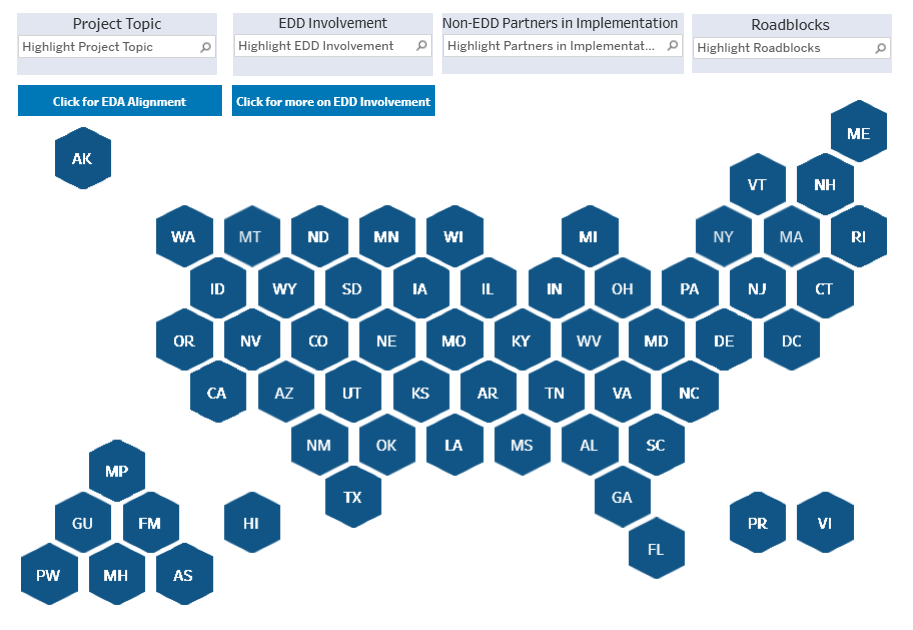

    The second day brought EDDs into the conversation, with both state and EDD participants discussing the SPG projects. Nancy Gilbert, Acting Networks Program Manager for EDA’s Office of Regional Affairs in Washington, DC, kicked off the session by offering comments on the SPG and other EDA programs and answered questions from leaders. Following Nancy’s comments, Utah attendees gave a presentation that highlighted state-EDD collaboration. The Utah state and EDD officials spoke about their efforts to strengthen local partnerships and how they built trust between state and regions. After the Utah discussion, all attendees participated in a breakout session to discuss ways to improve collaboration and communication, while also providing an opportunity for leaders to connect.

    The convening concluded with CREC presenting on the SPG database and website that will launch in the coming months. The website will provide reports and key findings from CREC’s research on the Statewide Planning Grants, providing the capability to learn about other projects.

    Leaders left the convening with ideas on how to strengthen their projects by improving alignment and overcoming roadblocks, as well as gaining insight into grant activities from fellow grantees. In a post-meeting survey, participants indicated they valued learning about other projects and developing relationships with fellow grantees. Key takeaways included the diversity of how the grant was used in different states, ideas to leverage economic development and partnerships, and what the role of an EDD is/can be in economic development. As each grantee adopted a distinct approach with the SPG funds, this gathering facilitated invaluable exchanges, particularly as many states near the conclusion of their projects.


    The materials included on these State-Local Alignment webpages were prepared by the Center for Regional Economic Competitiveness using Federal funds under award ED21HDQ3070060 from the Economic Development Administration, U.S. Department of Commerce. The statements, findings, conclusions, and recommendations are those of the author(s) and do not necessarily reflect the views of the Economic Development Administration or the U.S. Department of Commerce.


  • State Economic Development Bulletin – Issue 68, April 2024

    Issue 68, April 2024

    HEADLINES

    SEDE News 🗞️

    Webinars

    News

    Economy 💰

    Trade 📈

    Industry Trends 💡

    Workforce ⚒️

    Business Finance and Incentives 📊

    SEDE News 🗞️

    Webinars

    April 18: Statewide Planning Grant Resiliency Webinar (CREC) Join EDA Statewide Planning Grant recipients for the final topical webinar surrounding grant activities, focused on projects related to economic recovery and resiliency. CREC will present findings from research on the Statewide Planning Grants related to resiliency efforts. The Federated States of Micronesia will share how the funds were used to address an ongoing health crisis. This webinar is funded by EDA. Register here.

    April 29: Statewide Planning Grants: Overcoming Roadblocks Webinar (CREC) Join EDA Statewide Planning Grant recipients for this webinar on overcoming project roadblocks. Many states have faced significant challenges when implementing their statewide planning grants; this webinar features presentations from New Jersey and Missouri as they delve into navigating various roadblocks. Learn how to overcome challenges in this and future EDA projects! This webinar is funded by EDA. Register here.

    May 9: State Strategies for Successful Rural Projects (CREC) Ellen Harpel from Smart incentives will lead a discussion on how states are preparing for successful rural development projects. Harpel will be joined by Joan Goldstein and Nick Grimley, Vermont Department of Economic Development, Larry Holsgang, Business Oregon, Iain Macdonald, Tallwood Design Institute, and Marcus Kaufman, Oregon Department of Forestry. Learn how state economic development leaders are working with local partners to win and implement impactful rural development projects. Hear about strategies for leveraging federal funding opportunities and positioning rural regions for success. Register here.

    News

    New Funding for Additional NSF Innovation Engines (NSF) The initial NSF Engines announcement represented one of the single largest broad investments in place-based research and development in the nation’s history — uniquely placing science and technology leadership as the central driver for regional economic competitiveness. This latest funding opportunity advances the bipartisan priorities outlined in the “CHIPS and Science Act of 2022,” which authorized the NSF Engines program. In this round of funding, the NSF Engines program is only accepting proposals for full NSF Engines, competing for up to $160 million over 10 years. Proposers will be asked to submit a letter of intent in place of a concept outline and a short preliminary proposal. New to this round of funding, tribal nations and state and local government agencies are eligible to submit a proposal as the lead organization. Letters of intent are due by June 18, 2024.

    DOE Advanced Energy Manufacturing and Recycling Grant Program (MESC) In March 2024, DOE announced the opening of the next Funding Opportunity of the Advanced Energy Manufacturing and Recycling Grant Program with $425 million in funds to support small- and medium-sized manufacturers (SMMs) in coal transition communities. Just about any SMM (with specific eligibility requirements) in a coal community is eligible, regardless of what they are manufacturing – as long as they are making improvements to reduce the greenhouse gas emissions of their facility. Concept Papers are due April 22 (just ~5 pages plus short Excel worksheet); these are required in order to submit a Full Applications due July 1. More information can be found here.

    EDA’s Good Jobs Challenge Puts Thousands of Americans to Work (EDA) Since 2022, EDA’s Good Jobs Challenge grantees have been working to significantly improve the lives and livelihoods of Americans across the country. As of December 2023, over 11,000 participants have entered training programs and, as a direct result of the program, over 3,000 people have secured good, quality jobs in high-demand industries like construction, manufacturing, clean tech, forestry, and healthcare. The programs provide training in 31 states and Puerto Rico in 15 different industries. This fiscal year, EDA has been appropriated an additional $25 million in funding for the Good Jobs Challenge, and EDA anticipates releasing a Notice of Funding Opportunity in the coming months. Additionally, the FY25 Budget requested $41 million for the Good Jobs Challenge to continue EDA’s workforce programming.

    BEAD Broadband Funding Guide (CORI) The $42.5 billion allocation for building broadband infrastructure from the Broadband Equity, Access, and Deployment (BEAD) program will be transformational for rural communities with long-standing connectivity gaps. Yet, smaller, community-centric internet service providers (ISPs) will face unique challenges compared to national incumbents when applying for BEAD grants. The Center on Rural Innovation has created a suite of BEAD application resources and an interactive mapping tool to help smaller ISPs be more competitive when applying for this historic funding.

    DOE Seeking Input on State Partnerships to Enable Grants for SMMs (DOE) The U.S. Department of Energy’s (DOE) Office of Manufacturing and Energy Supply Chains released a Request for Information to better understand how DOE can support small- and medium-sized automotive manufacturers and assembly companies transition from internal combustion engine (ICE) assembly and parts production to assembly and parts production for electric, hybrid, and fuel cell vehicles. This RFI seeks input from local, state, and government-level entities on current and/or new potential state-federal partnerships that could enable federal funding to reach automotive SMMs embarking on the transition to serve the electric, hybrid, or fuel cell vehicle supply chains. Responses to this RFI must be submitted on May 20, 2024.

    Economy 💰

    Facts That Help Explain a Confusing Economic Moment (The New York Times) Recent economic news may appear disappointing, but when looked at in the longer run, the economic outlook has shifted in subtle but important ways. Inflation, for example, has slowed, but has not reached policy goals. The recent leveling-off in inflation would be a big concern if it were accompanied by rising unemployment or other signs of economic trouble, but that is not what is happening. Outside of inflation, most of recent economic news has been reassuring.

    Research, Partnerships, and TA Between EDDs and Higher Education Institutions Tip Sheet (NADO) Higher Education Institutions (HEIs) offer unique resources that help increase the capacity of EDDs to carry out their work, including specialized research, training programs, technology transfer, and commercialization capabilities. Explore this piece, written by Economic Development District Community of Practice project partner UEDA, for tips on initiating, improving, and sustaining partnerships between EDDs and HEIs.

    A New Way to Measure the Drivers of Consumer Inflation Expectations (Brookings) Understanding how households form their inflation expectations is of critical interest to central bankers, who often try to influence expectations through their monetary policy actions and communications. The Federal Reserve, like many other central banks, conducts and monitors a variety of expectations surveys, including the Federal Reserve Bank of New York’s Survey of Consumer Expectations (SCE). Since June 2013, the SCE has surveyed approximately 1,300 household heads each month. Thus, the effect on inflation expectations of any event from June 2013 through December 2021 can be studied, analyzing changes in expectations over time and studying the effect on inflation expectations of any event that occurred in this period. This is helpful to understand how consumers associate news with inflation. This methodology can be used in future studies to interpret the effects of the news, including political and pandemic-related events, on expectations.

    What the Baltimore Bridge Collapse Means for the U.S. Economy (Business Insider) The collapse of the Francis Scott Key Bridge in Baltimore, Maryland is a reminder that the economy remains vulnerable to sudden supply-chain shocks. While the disaster is unlikely to have a tangible effect on headline GDP growth or inflation, it could affect specific sectors by driving up shipping and trucking costs and affect employment in Baltimore. The port of Baltimore is the busiest for “roll-on/roll-off” cargo, which includes cars, light trucks, and agricultural and construction equipment. If it stays shut for some time, then companies face higher costs by having to reroute goods. The accident highlights shipping and trade’s sensitivity to unpredictable events.

    Trade 📈

    U.S. Trade Deficit Widens in February on Strong Imports (Reuters) The U.S. trade deficit widened for a second straight month in February as an increase in exports to a record high was offset by surging imports, suggesting trade could be a drag on economic growth in the first quarter. The trade deficit increased 1.9% to $68.9 billion, the Commerce Department’s Bureau of Economic Analysis said. Data for January was revised slightly to show the trade gap rising to $67.6 billion instead of $67.4 billion as previously reported. Most of the imported goods likely ended up as inventories, which could offset the anticipated hit on gross domestic product from the widening trade gap.

    WTO Forecasts Rebound in Global Trade, But Warns of Downside Risks (The World Trade Organization) In the latest “Global Trade Outlook and Statistics” report, WTO economists note that inflationary pressures are expected to abate this year, allowing real incomes to grow again — particularly in advanced economies — thus providing a boost to the consumption of manufactured goods. A recovery of demand for tradable goods in 2024 is already evident, with indices of new export orders pointing to improving conditions for trade at the start of the year. However, regional conflicts, geopolitical tensions and economic policy uncertainty pose substantial downside risks to the forecast.

    Industry Trends 💡

    Five Ways AI Can Help Industry Reach Sustainability Goals (Forbes) Driven in part by the acceleration of AI capabilities in recent years, a growing number of companies are exploring the use of AI as a tool to help reach their sustainability goals. Today, AI systems can monitor and analyze emissions to identify areas for improvement, increase energy efficiency and potentially optimize the integration of renewable energy resources into the grid. While the impact of AI depends on each organization’s strengths and capabilities, there are five major areas where it will have the most impact going forward: identifying opportunities, efficiency, flexibility, reliability and optimization.

    Vacant Storefronts are Killing Our Downtowns: Small-Scale Manufacturing Can Help (Next City) One of the long-term effects of the COVID-19 pandemic is the way it has transformed office use, threatening the viability of storefront retail in downtown office buildings. The range of alternative options needs to be expanded – and small-scale manufacturing offers a proven, yet often overlooked, solution. Small-scale manufacturing – from hardware to handbags to hot sauce – creates products that are sold online as well as in person. This means that storefront settings of small-scale manufacturers have more than one source of revenue, so they are not solely dependent on foot traffic. It’s a win-win opportunity in a difficult economic moment: Real estate owners can enhance their own properties while adding new downtown destinations and expanding local business opportunities.

    Intel Reveal Recap of its 10 Manufacturing Projects Worldwide (Telecomlead) Intel has revealed a recap of its 10 manufacturing projects worldwide – in Arizona, New Mexico, Ohio, Oregon, Ireland, Israel, Magdeburg, Penang and Kulim in Malaysia, and Poland. Though China and India are key markets for Intel, the semiconductor giant does not have huge funding plans in these two Asian countries. Examples include Arizona, where Intel is investing more than $32 billion to build two new chip factories. New Mexico also celebrated the recent opening of Fab 9, the company’s packaging manufacturing hub and the only U.S. advanced packaging site to date.

    Workforce ⚒️

    NIST Awards $3.6M for Community-Based Cybersecurity Workforce Development (NIST) The U.S. Department of Commerce’s National Institute of Standards and Technology (NIST) has awarded cooperative agreements totaling nearly $3.6 million aimed at building the workforce needed to safeguard enterprises from cybersecurity risks. The grants of roughly $200,000 each will go to 18 education and community organizations in 15 states that are working to address the nation’s shortage of skilled cybersecurity employees. The organizations receiving the awards will build Regional Alliances and Multistakeholder Partnerships to Stimulate (RAMPS) cybersecurity education and workforce development.

    North Carolina Community Colleges Focus on Short-Term, High-Demand Workforce Programs (EDNC) Nearly 5,000 students received a total of approximately $3 million in aid through short-term workforce development grant programs during the 2022-23 fiscal year, and approximately 1,136 students have received $511,000 in aid during the 2023-24 fiscal year. The General Assembly created the grant program in 2021 to promote student enrollment in high demand industries. Under the program, students pursuing short-term, noncredit state- and industry-recognized workforce credentials can receive up to $750. Federal financial aid is not available in these programs. Programs include architecture and construction, health sciences, information technology, manufacturing, and more.

    Texas to Launch Semiconductor Training Center (UT News) A new partnership among The University of Texas at Austin, Austin Community College District, and Texas Institute for Electronics (TIE) will make Central Texas a premier hub for comprehensive workforce development that will fuel the needs of the semiconductor industry. The joint program will serve as a one-stop shop for an industry in need of skilled labor, creating seamless and coordinated education pathways between UT and ACC to address every skill set on the semiconductor workforce continuum, ranging from equipment technician to semiconductor engineer. The initiative includes developing a joint Semiconductor Training Center and developing Semiconductor Curriculum and Credentialing programs.

    U.S. Department of Commerce Invests $8.1 Million to Workforce Development in Louisiana (EDA) U.S. Secretary of Commerce Gina Raimondo announced the Department’s Economic Development Administration (EDA) is investing $8.1 million in the state of Louisiana to support workforce development and business growth. The EDA investments include: SOWELA Technical Community College in Lake Charles will receive a $3.5 million EDA grant to establish a Flight Training School and support aerospace workforce development; The South Central Planning and Development Commission in Houma will receive a $2.6 million EDA grant for building infrastructure improvements to support workforce development and create jobs; and Jefferson Parish Economic Development and Port District in Westwego will receive a $2 million EDA grant to construct the Greater New Orleans Food & Beverage Incubator, providing facilities and technical assistance to small businesses in the region.

    Business Finance and Incentives 📊

    Intel Awarded Up to $8.5 Billion in CHIPS Act Grants (CNBC) Intel has been awarded up to $8.5 billion in CHIPS Act funding, as efforts are being ramped up to bring semiconductor manufacturing to U.S. soil. Intel said it would spend its CHIPS Act funds on fabs and research centers in Arizona, Ohio, New Mexico and Oregon. The company previously announced plans to spend $100 billion on U.S. programs and facilities. Intel has announced a plan to catch up in leading-edge manufacturing by 2026.

    Samsung Receives $6.4 Billion for Chip Manufacturing in Texas (TechStory) Samsung is eligible for up to $6.4 billion in CHIPS funding which marks a significant step in revitalizing domestic semiconductor production. Facilitated through the CHIPS and Science Act, the initiative aims to establish a cutting-edge semiconductor ecosystem in Texas, positioning the United States to reclaim its leadership in chip manufacturing. The proposed cluster in Taylor, Texas will house a dedicated research and development facility, as well as a packaging facility for chip components. The project is projected to generate at least 17,000 construction jobs and over 4,500 manufacturing jobs. With operations expected to commence as early as 2026, the cluster represents a significant investment in expanding Samsung’s footprint in the United States.

    EPL America Invests $37.4M to Expand Manufacturing Facility in Danville, VA (WXFR Roanoke) A specialty packaging manufacturing company will invest $37.4 million to expand its facility in the Danville, Virginia and create 24 new jobs. EPL American, LLC, a global specialty packaging manufacturer, intends to invest the money for building upgrades at its current 200,000-square-foot facility in Danville. The company will also add new machinery that will allow it to grow into a beauty and cosmetic market to serve customers interested in replacing plastic products with laminated tubes. The Virginia Economic Development Partnership worked with the city and the Southern Virginia Regional Alliance to secure the project.

    Multi-Million-Dollar Expansion to Fiber Optic Cable Manufacturing Operations (Yahoo Finance) AFL, an industry-leading manufacturer of fiber optic cables, connectivity and equipment, today announced an investment of over $50 million to expand its fiber optic cable manufacturing operations in South Carolina. This investment aligns with the Infrastructure Investment and Jobs Act and Internet for All initiatives to increase broadband access. This announcement builds on AFL’s previous investment of more than $35 million in the expansion of domestic cable manufacturing to support broadband deployment and modernization of the power grid.


    The State Economic Development Executives (SEDE) Network engages in regular events throughout the year. State Economic Development.org lists these activities and offers an interactive forum for discussion among peers. The SEDE Steering Committee includes: Sandra Watson (AZ), Chair; Joan Goldstein (VT), Vice-Chair; Kurt Foreman (DE); Kevin McKinnon (MN); Christopher Chung (NC); Andrew Deye (OH); Sophorn Cheang (OR); Adriana Cruz (TX);  and Mike Graney (WV).

    Allison Ulaky of the Center for Regional Economic Competitiveness (CREC) led the development of this Bulletin; for questions on the content in this Bulletin or for information on the SEDE Network contact Bob Isaacson, CREC Senior Vice President.

  • State Economic Development Bulletin – Issue 67, Mar 2024

    Issue 67, March 2024

    HEADLINES

    SEDE News 🗞️

    Webinars

    News

    Economy 💰

    Trade 📈

    Industry Trends 💡

    Workforce ⚒️

    Business Finance and Incentives 📊

    SEDE News 🗞️

    Webinars

    March 25: Understand Power Generation for Business Needs Webinar (IED) IEDC and NASEO are hosting a virtual working group on Understanding Power Generation for Business Needs on Monday, March 25 from 2:00 – 3:15 pm (ET), featuring a presentation from the Clean Energy Buyers Association which represents corporate buyers of clean energy including Google, Amazon, McDonalds and others, as well as representatives of utilities. The 75-minute meeting will also include breakout sessions to share approaches and insights between economic developers, state energy offices, and presenters. The Zoom link for this meeting is here.

    April 4: How CREC’s Issue Briefs Can Help Strategic Alignment (CREC) CREC has just published nine issue briefs to help states and EDDs see some real-life examples of how alignment has made a difference. Interested in an overview of these new publications? CREC will be hosting a webinar on April 4 at 4 pm (ET) to introduce the issue briefs and discuss how they can guide your alignment journey as you explore increased collaboration and co-investment. This webinar is funded by EDA. Register here.

    April 18: Statewide Planning Grant Resiliency Webinar (CREC) Join EDA Statewide Planning Grant recipients for the final topical webinar surrounding grant activities, focused on projects related to economic recovery and resiliency. Virginia will share how they used the grant to help build economic resiliency in underserved areas via entrepreneurship ecosystems. The Federated States of Micronesia will share how the funds were used to address an ongoing health crisis. This webinar is funded by EDA. Register here.

    News

    Introducing the Economic Recovery Corps (EDA) EDA has introduced the inaugural cohort of EDA’s Economic Recovery Corps (ERC)  and in the coming weeks, these 65 talented professionals will deploy to communities across the country for 2.5 years. The cohort will work to advance regional projects, enhancing economic development capacity of under-resourced communities through their host organizations, including local governments, Economic Development Organizations, Tribes, local nonprofits, community development financial institutions, and Economic Development Districts. This program is led by the International Economic Development Council.

    Reauthorization of the U.S. Economic Development Organization (NADO) The U.S. Senate introduced bipartisan legislation in March to reauthorize the Economic Development Administration (EDA) for the first time in nearly 20 years. The Economic Development Reauthorization Act of 2024 makes key reforms to modernize EDA’s core programs and authorizes activities such as workforce development and disaster assistance. This bill would also authorize and update the laws pertaining to certain federal regional commissions, as well as establish two new regional commissions. The National Association of Development Organizations (NADO) has created a one-pager that summarizes the legislation.

    Statewide Planning Grant Case Studies (SEDE) In 2022, EDA funded CREC to research the impacts of EDA’s State Planning Grant Program. CREC’s survey and interview research provided a more comprehensive view of the grants allowing the team to create a series of case studies of best practices in grant expenditure covering project creativity and state alignment with EDA-designated Economic Development Districts (EDDs). These six case studies and other resources related to state-local alignment can be found here.

    Economy 💰

    Another Burst of Hiring Shows Off the Resilience of the U.S. Jobs Market (Associated Press) February’s job growth of 275,000 jobs on top of the revised gain of 229,000 jobs in January reflects a strong labor market. At the same time, the unemployment rate ticked up two-tenths of a point in February to 3.9%. Though that was the highest rate in two years, it is still low by historic standards. And it marked the 25th straight month in which joblessness has remained below 4% — the longest such streak since the 1960s.

    Who Still Works from Home? (The New York Times) The American workplace’s experiment with remote work happened, effectively, overnight: With the onset of the pandemic in March 2020, more than half of workers began working from home at least part of the time. But the shift to a permanent hybrid-work reality has been gradual, with periods of tension as workers across white-collar industries pushed against executives’ return-to-office directives. Workplaces have reached a new hybrid-work status quo with roughly one-tenth of workers cobbling together a combination of work in the office and from home, and a similar portion are working entirely remotely. This population of hybrid and remote workers in the United States doesn’t quite mirror the larger population of workers: Government data shows they tend to have more education and are more often white and Asian. This article reviews the trends on who is still working from home.

    Unpacking ARPA’s “Revenue Loss’ Provision for Local Governments (Brookings) This month marks the third anniversary of the passage of the American Rescue Plan Act (ARPA) and its $350 billion Coronavirus State and Local Fiscal Recovery Funds (SLFRF) program, administered by the U.S. Department of the Treasury. State, local, and tribal governments have had three years to appropriate, obligate, and spend SLFRF dollars to address the health, economic, and fiscal effects of the COVID-19 pandemic. Since the SLFRF program’s inception, Brookings Metro, the National League of Cities, and the National Association of Counties have monitored how the nation’s largest cities and counties (those with populations greater than 250,000) have used their $65 billion share of these funds through the Local Government ARPA Investment Tracker. This update provides new insights into how large local governments have used SLFRF dollars over the past three years to foster an equitable economic recovery from COVID-19, and their progress to date in obligating these funds in time for Treasury’s impending December 2024 deadline.

    Trade 📈

    U.S. is Committed to Deepening Trade Ties with South Africa (Daily Maverick) A little over one year ago, the U.S. hosted the US-Africa Leaders’ Summit and underscored that Africa will shape the future of the global economy. By 2050, Africa’s population is expected to grow from just over 1.4 billion people to over 2.5 billion people. Economic growth in Africa is good for the global economy, including the American economy which is why the United States is committed to deepening trade ties, investing in the South African economy, and fostering people-to-people relationships among our citizens, businesses, and universities. At the heart of this relationship is the African Growth and Opportunity Act (Agoa), the nation’s mutually beneficial economic partnership. South Africa has become America’s largest trading partner in Africa, with over $20 billion of two-way trade of goods. Deepening this relationship will be beneficial for both economies moving forward.

    U.S. Says Falling Trade with China Could be Positive (BBC) The steep drop in trade with China could be a positive development. It comes amid deepening divisions in the global economy as trade between the two hit a record high in 2022 but has fallen as many big US companies move production outside of China. Both countries are trying to grow their economic influence in parts of Africa and Asia as they try to secure access to natural resources and build resilience into supply chains. It has led to growing concerns that the world is splitting into two trading blocs but could be positive for national security risks. It could also be a positive indication of diversification on both sides and expanding trade relations, as the amount of goods amount of goods the world’s two biggest economies sold to each other fell 17% last year.

    U.S. Aims to be ‘Economic Partner of Choice’ for Indo-Pacific (Reuters) U.S. Commerce Secretary Gina Raimondo is leading a presidential trade and investment mission to the Philippines as the United States looks to fortify economic ties across the region. Raimondo plans to tout the Philippines as a key hub for regional supply chains and investment in support of the U.S. Indo-Pacific Strategy, followed by a visit to Thailand. Raimondo’s Thailand visit will focus on manufacturing, supply chain resiliency, artificial intelligence, and clean technology.

    Industry Trends 💡

    U.S. Manufacturing Outlook: Better Times Are Coming (MENAFN) U.S. manufacturing is a highly diversified sector that contributed more than $2 trillion to GDP in 2023, equivalent to just over 10% of all economic output. It also employed 13 million people, accounting for 8.3% of all US jobs. The January ISM manufacturing index was better than expected with its new orders rising above the break-even 50 level, the threshold indicating industry expansion, for the first time since August 2022. This may be tied to the decline in market borrowing costs in late 2023, receding recession fears and signs that banks are increasingly willing to lend to the sector. Manufacturing output is forecasted to increase 1.5% in 2024, with a 3% increase in 2025 before settling back to 2.5% growth in 2026. Nonetheless, there are risks – be it political, geopolitical or financial – that mean uncertainty over these projections are high, both to the downside and the upside.

    Manufacturing’s Energy Tech Future is Here Already – And Women Will Be At The Heart of It (Forbes) While manufacturing employment remains male-dominated, emerging tech can play a key role in attracting a new generation of women into the sector. Right now, 30% of manufacturing jobs are currently filled by women but firms are increasingly offering  female workers a vision of creativity, collaboration and innovation, all rooted in a digitally enabled future, encompassing everything from the smarter use of data to the responsible deployment of AI. In other words, manufacturing stands on the brink of not one, but two, revolutions at the same time. As the industry’s digitalization accelerates, the profile of the workforce will rapidly recalibrate too. Ultimately, these twin forces could mean that manufacturers find themselves better prepared to sense and respond to all of the dynamics of an ever-shifting market.

    NIST to Launch Competition for AI-Focused Manufacturing USA institute (Manufacturing.net) The U.S. Department of Commerce’s National Institute of Standards and Technology (NIST) plans to announce an open competition for a new Manufacturing USA institute focused on using artificial intelligence to improve the resilience of U.S. manufacturing. The AI institute will focus on conducting research and development projects, establishing employer-led sectoral partnerships to develop training resources, and creating pathways for the skilled workforce needed to move innovation into industrial practice. NIST expects to open the competition in spring of 2024, and more information on the Notice of Intent is available on NIST’s website.

    Workforce ⚒️

    Three Spheres of Equity in Workforce Development Programs (EDA) Recently, the Economic Development administration (EDA) partnered with the University of Michigan Economic Growth Institute and the New Growth Innovation Network (NGIN) to document and elevate the efforts GJC grantees are taking to advance equity and ensure strong outcomes for all communities. Their first report, “Three Spheres of Equity in Workforce Development Programs: An Early Analysis of Equity Within Good Jobs Challenge Programs,” is an important and insightful look into equity across programming in the Good Jobs Challenge. Funded by the American Rescue Plan, the Good Jobs Challenge (GJC) invested $500 million across 31 states and Puerto Rico in industry-led workforce training partnerships. Through this once-in-a-generation investment, the EDA enters new terrain in workforce development and is placing a heightened focus on addressing disparities and uplifting underserved communities by creating pipelines to good jobs. Equity is a leading investment priority for EDA, and this new report contributes to the bureau’s effort to meet that commitment.

    MADE Institute in Flint Begins Carpentry Registered Apprenticeship Program (Flint Courier) Made Institute, a vocational training institution in Flint, Michigan, recently announced the launch of its Residential Carpenter Specialist Registered Apprenticeship Program in partnership with GST Michigan Works! This program is designed to provide individuals with the skills and knowledge necessary to pursue a successful career in the carpentry industry. Apprentices will learn the fundamental principles of carpentry, including blueprint reading, framing, finishing and safety procedures, and will be required to complete 309 hours of classroom instruction and between 3,900-6,000 hours of on-the-job training over the next two years. Upon successful completion of the program, apprentices will receive a nationally recognized credential from the United States Department of Labor, Office of Apprenticeship as a Residential Carpenter Specialist.

    New AI Workforce Development Program Launched by Info-Tech (TMCNET) Info-Tech Research Group has announced the launch of a new AI training program designed to develop today’s workforce for the digital age. The 12-week program is strategically designed to future-proof IT workforces by equipping them with the essential business and technical skills for AI adoption. Structured to bridge the prevalent AI skills gap, the firm’s program combines in-depth technical training with practical, hands-on experience. Participants will benefit from live training sessions and role-based coaching, all tailored to enhance their understanding and application of AI. Key components of the program include a standardized curriculum with flexible projects, AI virtual labs, ready-to-deploy deliverables, and a comprehensive assurance of skill development.

    This Workforce Development Program Supports 50 Local Businesses Each Week (KSBY California) Last year, San Luis Obispo County, CA, created a Workforce Development Board to serve small businesses countywide. The Atascadero Chamber of Commerce now oversees the Board and works with San Luis Obispo County to offer workforce development services across the county by hiring full-time staff to visit businesses and have one-on-one conversations about their challenges and offer solutions. The two full-time staff members provide one-on-one support to about 50 businesses total each week and offer suggestions about grant opportunities, HR resources, employee retention, and more.

    Business Finance and Incentives 📊

    Toyota to Invest Nearly $10B in Noth Carolina and Kentucky (Associated Press) Toyota says it will invest $1.3 billion at its factory complex in Georgetown, Kentucky, in part so it can build an all-new three-row electric SUV to be sold in the U.S. The company says the money will help with future electric vehicle production, including the addition of a line to assemble battery cells into packs for other EVs. But it won’t add any new jobs to the complex, which now employs nearly 9,400 workers. In October Toyota said it would invest another $8 billion in a hybrid and electric vehicle battery factory it’s building in North Carolina, more than doubling previous investments and the expected number of new jobs. The company now expects the plant to employ more than 5,000 people when it begins operations near Greensboro in 2025. Toyota has put about $13.9 billion into the plant, which will be a key supplier for the Kentucky factory that will build the company’s first U.S.-made electric vehicles.

    Texas Launches New Property Tax Incentive Program (The Texas Tribune) Texas launched a new economic incentives program intended to bring new companies and jobs to the state, replacing a prior job creation system that lawmakers phased out after complaints that it contributed to inequity in public schools. Passed with bipartisan support by lawmakers last year, the Texas Jobs Energy, Technology, and Innovation (JETI) program will provide property tax cuts to eligible companies that move into Texas communities in exchange for job creation. Companies that participate in the new program are also required to create a specific number of new full-time jobs, salaried or contracted, with health benefits and competitive pay for salaried positions.

    New $20M Program Aims to Boost Montgomery County, Maryland’s Economy (WTOP News) Maryland’s Montgomery County need to compete has prompted the introduction of a $20 million package designed to give businesses incentives to come to and stay in the county while attracting employees to high-paying jobs. The elements of the Jobs, Opportunities and Business Support (J.O.B.S.) Initiative includes three parts: a $10 million job creation fund, a $7 million innovation fund and a $3 million equity fund. The job creation fund has the potential to create 1,000 new high-paying jobs and generate up to $161 million in additional economic output.

    Incentives for Electric Vehicle Production in Illinois (Electrek) After announcing its compact, more affordable R2 electric SUV production will kick off in Illinois, Rivian is poised to earn additional incentives with plans to expand its Normal, Illinois, EV plant. Despite initial plans to build R2 at its new $5 billion EV plant in Georgia, Rivian said the move will save $2.25 billion while speeding up R2’s launch. Illinois looks to double down on the EV maker with new expansion plans at its Normal facility. The State of Illinois is working with Rivian for additional incentives as it prepares to build R2 in the state. The move is more to get out R2 quicker. Rivian said it will expand the plant to support up to 215,000 units of annual production capacity, up 43% from the previous 150,000 target.


    The State Economic Development Executives (SEDE) Network engages in regular events throughout the year. State Economic Development.org lists these activities and offers an interactive forum for discussion among peers.

    The SEDE Steering Committee includes: Sandra Watson (AZ), Chair; Joan Goldstein (VT), Vice-Chair; Kurt Foreman (DE); Kevin McKinnon (MN); Christopher Chung (NC); Andrew Deye (OH); Sophorn Cheang (OR); Adriana Cruz (TX);  and Mike Graney (WV).

    Allison Ulaky of the Center for Regional Economic Competitiveness (CREC) led the development of this Bulletin; for questions on the content in this Bulletin or for information on the SEDE Network contact Bob Isaacson, CREC Senior Vice President.

  • State Economic Development Bulletin – Issue 66, Feb 2024

    Issue 66, February 2024

    HEADLINES

    SEDE News 🗞️

    Meetings and Conferences

    Webinars

    News

    Economy 💰

    Trade 📈

    Industry Trends 💡

    Workforce ⚒️

    Business Finance and Incentives 📊

    SEDE News 🗞️

    Meetings and Conferences

    SEDE Hosts Meeting for Top Executives (SEDE) The State Economic Development Executives (SEDE) Network hosted its Winter 2024 meeting for state economic development executives in Las Vegas on January 29 and 30. Tom Burns (Executive Director of Nevada Governor’s Office of Economic Development) and his team hosted the meeting. The agenda included discussions of current issues facing states and many opportunities for networking among the state economic development commissioners, secretaries and executive directors or their top deputy. The executive summary of the meeting can be found here.

    NADO & DDAA Washington Conference (NADO) Join the National Association of Development Organizations (NADO) and the Development District Association of Appalachia (DDAA) for conference sessions focused on regional development, the federal landscape, and the programs and policies that matter most to Regional Development Organizations and their stakeholders. Conference content will begin on the morning of Sunday, March 10 for Committee and Board meetings with conference plenary and breakout sessions beginning on Monday, March 11 and continuing through 11:00 a.m. on Wednesday, March 13. Register here.

    State Planning Grantee Summit (CREC) Following the NADO & DDAA Washington Conference, CREC will be hosting a Summit for EDA Statewide Planning Grant recipients and EDD partners. Attendees will have the opportunity to meet other grant administrators and share best practices from their projects. The agenda includes insightful presentations and discussions where grantees can share valuable lessons learned in the grant administration journey. This is an opportunity to meet other grantees, while also offering a platform to provide crucial feedback and learn tips to improve research skills, grant applications and project management. Register here.

    Webinars

    February 29th Webinar: Statewide Planning Grant Topical Webinar, Supply Chain (SEDE) Join fellow EDA Statewide Planning Grant recipients as they discuss their activities related to industry and supply chain. New Jersey focused their work on the aviation industry, and will share on their five projects, including supply chain developments and improvements on an air cargo facility at the Atlantic City airport. Wisconsin will share their story on their numerous automotive suppliers, but with the coming electric vehicle transitions, WEDC wanted to study the extent the supply chain depends on the internal combustion engine. Join us on February 29th from 3:00 PM – 4:00 PM ET. Register here.

    March 7th: State Energy Financing: A Conversation with LPO and IWG (SEDE) Please join the SEDE Network for this webinar on state energy financing and federal programming. We will host two presenters, Hans Reimer, Senior consultant and state and local outreach lead at DOE’s Loan Programs Office (LPO) and Brian Anderson, Executive Director, The Interagency Working Group (IWG) on Coal and Power Plant Communities and Economic Revitalization. These presentations will focus on available federal programs and potential partnership opportunities for states interested in energy finance. Join us on March 7th at 4:00 PM ET. Register here.

    News

    NACIE Releases Recommendations to Strengthen Leadership in Technology Innovation (EDA) The National Advisory Council on Innovation and Entrepreneurship (NACIE) released its “Competitiveness Through Entrepreneurship: A Strategy for U.S. Innovation” report that includes 10 recommendations for how the U.S. Department of Commerce, the federal government, and the private sector can foster an entrepreneurship ecosystem that ensures the United States leads in critical technology innovation. The 10 recommendations include investments in research & development (R&D), entrepreneurial ecosystems, talent pipelines, and incentives for intellectual property commercialization. The report identifies opportunities for providing capital, tools, and resources to entrepreneurs to break down barriers and enable faster U.S. innovation in technologies of the future. The recommendations also include action items that ensure diversity, equity, and inclusion are prioritized, including proposed tax credits and incentives for those that invest in early-stage startups, and women- and minority-owned startups.

    Deadline Extension: RFP for SSBCI for Manufacturers in the Southeast (Urban Manufacturing Alliance) The Urban Manufacturing Alliance is launching a practitioner cohort in selected regions of the Southeast to better connect SSBCI funding to small and mid-sized manufacturers and product based companies – particularly those in the SEDI category. This project addresses the knowledge gap of small and mid-size manufacturers around SSBCI and how its funding and technical assistance can benefit their business. The goal of the project is to build a robust local lending and technical support ecosystem for small and mid-sized manufacturers and makers to assist them in seeking and obtaining capital and scaling their business with SSBCI funds and related partners. Click here to view the RFP. The application deadline has been extended to March 8th.

    Economy 💰

    January CPI Report – Prices Rose More than Expected (CNBC) The consumer price index, a broad-based measure of the prices shoppers face for goods and services across the economy, increased 0.3% for the month, the Bureau of Labor Statistics reported. On a 12-month basis, that came to 3.1%, down from 3.4% in December. Shelter prices, which comprise about one-third of the CPI weighting, accounted for much of the rise. The index for that category climbed 0.6% on the month, contributing more than two-thirds of the headline increase, the BLS said. On a 12-month basis, shelter rose 6%. Fed officials expect inflation to recede back to their 2% long-run target in large part because they think shelter prices will decelerate through the year.

    CHIPS and Science Act Programs are Writing a New Story About the Rust Belt (Brookings) The U.S. is beginning to roll out striking instances of place-based industrial policy — a good amount of it focused on federal investment in heartland geographies still making a spotty transition from their “old” industrial economy to a new tech-driven model. The Midwest has formidable innovation assets upon which to build a tech economy and leadership in multiple emerging sectors. Add up investment announcements such as Build Back Better, NSF Engines, and EDA Tech Hubs and the recognition of value with the possibility of follow-up investment in heartland communities is writing a new story about the industrial Midwest and its technology-oriented revitalization.

    Understanding America’s Labor Shortage (U.S. Chamber of Commerce) The latest data captured by a Chamber analysis shows that the U.S. has 9.5 million job openings, but only 6.5 million unemployed workers. There are a lot of jobs, but not enough workers to fill them. Factors contributing to labor shortages include early retirements and an aging workforce, lower levels of international migration, lack of access to childcare, and a growing number of new entrepreneurs.

    Trade 📈

    U.S. is Now Buying More from Mexico than China for the First Time in 20 Years (Business Insider) The Commerce Department released data showing that in 2023, Mexico was the leading source of goods imported to the U.S. — ahead of China for the first time in over 20 years. Mexico surpassing China as America’s top trade partner signals a significant shift in global commerce dynamics. As tensions between the U.S. and China persist, fueled by trade disputes and tariffs, this transition to Mexico may help reduce costs and speed up the supply chain, ultimately lowering the costs of goods.

    U.S. Trade Gap Narrows to Smallest in Three Years (Yahoo News) For all of 2023, the overall trade gap was $773.4 billion, down 18.7 percent from the $951.2 billion figure in the prior year, U.S. Commerce Department figures showed. In 2022, the country saw the biggest deficit in government data dating back to 1960. But the latest numbers showed a fall in the goods deficit last year, with imports of products dropping more than exports. Purchases of supplies like crude oil and fuel oil fell, while Americans bought less consumer goods like clothing and cell phones. Surprisingly, resilient consumption last year has helped to support the US economy, but analysts expect higher interest rates to slow consumer spending and add pressure on imports.

    China and U.S. Hold Economic Talks as Trade Issues Heat up (Associated Press) Chinese and U.S. officials have met in Beijing for talks on tough issues dividing the two largest economies, as trade and tariffs increasingly draw attention. The U.S. Treasury Department said U.S. officials reiterated concerns over Chinese industrial policy practices and overcapacity, and the resulting impact on U.S. workers and firms. The two sides said the talks in Beijing also touched on issues such as debt problems in developing countries, financial cooperation, and economic policies. Both sides agreed to meet again in April.

    Industry Trends 💡

    Solving the Housing Puzzle: EDDs as Regional Housing Changemakers (NADO) This housing research report is the first step for NADO Research Foundation staff and partners in showcasing the valuable housing work that Economic Development Districts (EDDs) are doing in their communities. Each EDD approaches housing in a different way depending on the regional housing market, community priorities, regional stakeholder input, and what other organizations or businesses are doing in their regional housing ecosystem. This report will showcase EDD best practices from across the country in a variety of regional market contexts and provide implementable strategies for a variety of different roles that EDDs have taken including Planner, Financier, Land Manager, and Developer.

    Rethinking Concerns About AI’s Energy Use (Center for Data Innovation) Some observers speculate that the rapid adoption of AI combined with an increase in the size of deep learning models will lead to a massive increase in energy use with a potentially devastating environmental impact. This report provides an overview of the debate, including some of the early missteps and how they have already shaped the policy conversation, reviews AI’s energy footprint and how it will likely evolve in the coming years, and recommends that policymakers address potential concerns about AI’s energy consumption.

    A Realist Approach to Hydrogen (ITIF) Clean hydrogen is expensive to produce, difficult to transport, and a second- or third-best clean energy solution in almost all proposed markets. To help drive the global green transition, this report suggests that hydrogen policy must address all these practical challenges. Key takeaways include the fact that it is critically important to see past the self-interest of multiple players in the hydrogen space. U.S. policymakers should view hydrogen through the “P3” lens: the primary objective should be to find pathways for clean hydrogen to achieve price/performance parity with dirty hydrogen. This is true in theory today, but not necessarily in practice. Most proposed markets for hydrogen are not feasible; they are not competitive with fossil fuels, and often are not competitive with electrification using renewable energy, so advancing R&D will be critical.

    Announcement of $5B for R&D of Computer Chips (Associated Press) The investment of $5 billion in a newly established public-private consortium – the National Semiconductor Technology Center – is aimed at supporting research and development in advanced computer chips. The Center is being funded through the CHIPS and Science Act and will  help fund the design and prototyping of new chips, in addition to training workers for the sector. Companies say they need a skilled workforce to capitalize on the separate $39 billion CHIPS funding being provided to fund new and expanded computer chip plants. U.S. Department of Labor data says that about 375,000 people are employed in the production of computer chips with an average income of $82,830.

    Workforce ⚒️

    Bridging Data Disparities Report (CREC) The Center for Regional Economic Competitiveness prepared a report, titled “Bridging Data Disparities: How Intermediary Organizations Can Build Capacity to Support Equitable Education and Career Pathways,” which demonstrates how state and regional organizations can gain data-related capabilities to improve the education and employment results for low-income, Black, and Latinx youth. State economic development leaders can share this report with education and workforce agency leaders and partners to inspire more data-driven programming. If you find this useful, please forward this to education and workforce policy leaders in your state. Contact Allison Forbes, VP of Research at CREC, if you have any questions. Access the report here.

    Commerce Invests $7M to Support Healthcare Workforce Training in Arkansas (EDA) The U.S. Economic Development Administration announced that it is investing $7 million in the state of Arkansas. These investments will support healthcare workforce development and critical infrastructure improvements to support current and future business needs. Arkansas State University – Newport will receive a $5 million EDA grant to support construction of a 24,000-square foot Nursing and Health Sciences workforce training center. The project will be matched with $1.3 million in local funds and is expected to create 225 jobs, according to grantee estimates. The city of Trumann will receive a $2 million EDA grant for construction of a new water treatment facility and ground water storage tank, to support current residents and businesses while providing capacity for future industrial growth. The project will be matched with $500,000 in local funds. These projects are funded under the Disaster Relief Supplemental Appropriations Act.

    Philadelphia Wins $1.47M for Workforce Development Pilot Program (City of Philadelphia) The City of Philadelphia has been awarded $1.47 million in federal funds from the U.S. Joint Office of Energy and Transportation to fund the Plug In Philly initiative. The pilot is a workforce development program developed to initially recruit and train 45 diverse Philadelphians for careers in electric vehicle supplies and equipment (EVSE). This pre-apprenticeship program will expand access to career-track training and employment in EVSE installation and maintenance work. During the two-year pilot, a total of 45 participants over three cohorts will successfully complete the pre-apprenticeship program, and City officials are committed to helping these participants access pathways to permanent, fulltime jobs in the EV industry. Long-term aims include an increase in BIPOC, and women electricians employed by 2030 on Philadelphia public works projects.

    Can Apprentice Programs Increase Worker Satisfaction? (International Journal of STEM Education) Despite the significant relationship between life satisfaction and education, less is known about the connection between life satisfaction and informal learning in the context of training and apprenticeship programs. This research paper examines the influence of the LaunchCode program, a novel training and apprentice program in STEM, on participant’s life satisfaction and optimism. Findings show high life satisfaction and optimism among those who completed both the training course and the apprenticeship component.

    Business Finance and Incentives 📊

    How Investing in Sites and Infrastructure In Ohio Will Help Your Business Thrive (Business Facilities) The cornerstone of Ohio’s budget strategy is to double down on industrial site identification and development with the All Ohio Future Fund. This $750 million fund will support the preparation of large-scale economic development sites requiring robust water, sewer, energy, and other infrastructure. Ohio is preparing these sites to meet the needs of major projects — semiconductor fabs, industrial recycling, and other advanced manufacturing. The biennial budget provides another $124 million to enhance water infrastructure, remediate brownfield sites, and pursue demolition and site revitalization projects to improve quality of life and support economic growth in Ohio communities.

    Mississippi Finalizes Largest Economic Development Project in State History (MEC) Amazon Web Services, Inc. (AWS) is investing $10 billion to establish multiple data center complexes in two Madison County, Mississippi industrial parks. The investment will create at least 1,000 high-paying, high-tech jobs. This $10 billion investment by AWS is the single largest capital investment in Mississippi history and four times the size of the previous largest economic development project. Additionally, it follows a $1.9 billion private sector investment by Accelera by Cummins, Daimler Trucks & Buses, and PACCAR, which is bringing advanced battery cell production operations to Marshall County. The economic development project will create 2,000 jobs with an average annual salary of $66,000. This represents the largest payroll commitment of any major project in state history.

    U.S. to Announce Billions in Subsidies for Advanced Chips (Reuters) Top semiconductor companies such as Intel and Taiwan Semiconductor Manufacturing, Co. are expected to be awarded billions of dollars in CHIPS funding in the coming weeks to fuel the construction of  new factories in the U.S. The forthcoming announcements aim to kick-start manufacturing of advanced semiconductors that power smartphones, artificial intelligence, and weapons systems. In December last year, U.S. Commerce Secretary Gina Raimondo said she would make around a dozen funding awards for semiconductor chips within the next year, including multi-billion-dollar announcements that could drastically reshape U.S. chip production.

    Minnesota Announces Over $7.8M for Business Expansion Statewide (State of Minnesota) The Minnesota Department of Employment and Economic Development (DEED) announced more than $7.8 million in funding for seven business expansion projects statewide. The projects are expected to support 719 jobs and leverage more than $169 million in outside investment. The Job Creation Fund and the Minnesota Investment Fund are the state’s major incentive programs that help stimulate economic investment across the state. The seven projects funded included companies in manufacturing and biosciences, among others.

    Michigan Proposed Spending Plan Includes $60M for Innovation Fund (SSTI) Michigan Governor Gretchen Whitmer presented her Fiscal Year 2025 Executive Budget recommendations to a joint session of the House and Senate Appropriations committees and included a new $60 million Innovation Fund. The Fund would assist high-growth scalable startups and the innovation and entrepreneurship eco-system. The fund would also provide universities and nonprofits funding to invest in tech startups, with all returns on investment being reinvested back into the program to support additional startups in the future. Overall, the governor’s recommendations are focused on lowering the costs for Michiganders, providing high-quality education, and boosting the state’s economic growth through targeted investments to economic and workforce development initiatives.


    The State Economic Development Executives (SEDE) Network engages in regular events throughout the year. State Economic Development.org lists these activities and offers an interactive forum for discussion among peers.

    The SEDE Steering Committee includes: Sandra Watson (AZ), Chair; Joan Goldstein (VT), Vice-Chair; Kurt Foreman (DE); Kevin McKinnon (MN); Christopher Chung (NC); Andrew Deye (OH); Sophorn Cheang (OR); Adriana Cruz (TX);  and Mike Graney (WV).

    Allison Ulaky of the Center for Regional Economic Competitiveness (CREC) led the development of this Bulletin; for questions on the content in this Bulletin or for information on the SEDE Network contact Bob Isaacson, CREC Senior Vice President.

  • Bolstering Apprenticeships in the US: Lessons from Germany

    | February 6, 2024 |

    From October 15 – 21, 2023, nine representatives of the State Economic Development Executive (SEDE) network visited Bonn, Cologne, and Stuttgart to learn about Germany’s dual education and training (Dual VET) system, aiming to expand apprenticeship in the US. The German model of apprenticeships is considered “dual” because it combines theoretical training at a vocational school with practical training in a certified company. The student applies through the employer, and once selected, their three-year program begins, including instruction at a publicly funded vocational training school. Students spend 25% of their time at a vocational school and 75% of their time at the company.  

    During the visit, the delegation met with German economic development professionals, government officials, employer associations, unions, vocational schools, training centers, and manufacturers. This visit allowed the delegation to gain firsthand insights into Dual VET system, its policies and funding mechanisms, and which social partners were involved. The delegation had a few primary research questions going into the trip including, but not limited to: Who are the relevant social partners involved in the dual vocational education training (Dual VET) system? How is the Dual VET system funded? And what are some practices that can inform apprenticeship program expansion in the US? 

    Takeaway #1: Employer investment is key to the success of the Dual VET system in Germany. Employers pay monthly salaries to apprentices (typically €600 – €1300) as well as any costs associated with training, while the German government funds the vocational schools. Major companies often have in-house training centers which allow them to tailor programming specifically to emergent workforce needs. There are also multi-company private sector solutions to provide this training for companies who do not have the capacity. Most notably, a focus on competence-based training leads to an extremely high retention rate for apprenticeships in leading companies (e.g., Porsche) in addition to a significant return on investment. 

    Takeaway #2: Germany’s success with dual track degree programs can serve as a model for the US. Germany’s dual track degree programs are public-private partnerships that offer university studies alongside corporate partners, providing both intensive academic studies and practical work-integrated learning experience while earning a Bachelor’s degree. Companies must apply to the school for accreditation to participate as well as provide students with a monthly stipend to support them through the program. To maintain program effectiveness, university directors engage frequently with employers and require professors at the school to have at least five years of work experience in the field. 

    Takeaway #3: Auxiliary organizations, especially chambers and unions, are integral for supporting stakeholders in the Dual VET system. Every social partner participates in the Dual VET system and, in theory, an equal partner in the consensus-building process. Chambers of Commerce and Industry monitor vocational training and appraise companies’ aptitude to provide training for larger companies, while Chambers of Handicrafts focus on smaller companies. Unions, alongside employers and the government, are the third pillar in the dual system of apprenticeship and are currently advocating for proper compensation for apprentices as well as affordable housing options. 

    With these key questions answered, the SEDE delegation found that communicating the return on investment of apprenticeships will ultimately be the key to bolstering support in the US. Clarifying misconceptions and biases around vocational training is important to change overall attitudes in the US and advance this work as a viable alternative, or complement, to traditional academic education. Looking forward, the delegation is already working on some exciting new developments in this space. In Arizona, the Senior VP for Workforce Solutions and Partnerships led the development of the state’s first-ever Multi-Employer Registered Apprenticeship Program for the semiconductor industry. Governor Hobbs announced the $4 million investment from the Arizona Commerce Authority, along with other collaborative programs, to support apprentices as they advance in their training. 

    The SEDE delegation supports future learning exchanges as they can provide new perspectives on these issues and opportunities to dive deeper into innovative solutions. This space will be one to watch closely moving forward as more employers, education institutions, and governmental bodies come together to invest more strategically in work-based learning. For more information about the Dual VET system, read the delegation’s full report here. 

  • State Economic Development Bulletin – Issue 65, Jan 2024

    Issue 65, January 2024

    HEADLINES

    SEDE News 🗞️

    Meetings and Conferences

    Webinars

    News

    Economy 💰

    Trade 📈

    Industry Trends 💡

    Workforce ⚒️

    Business Finance and Incentives 📊

    SEDE News 🗞️

    Meetings and Conferences

    SEDE Hosts Meeting for Top Executives. (SEDE) The State Economic Development Executives (SEDE) Network is holding its Winter 2024 meeting for state economic development executives or their deputies in Las Vegas on January 29 and 30. Tom Burns (Executive Director of Nevada Governor’s Office of Economic Development) and his team will be hosting the meeting. The agenda will include discussions of current issues facing states and many opportunities for networking among the state economic development commissioners, secretaries and executive directors or their top deputy.

    NADO & DDAA Washington Conference (NADO) Join the National Association of Development Organizations (NADO) and the Development District Association of Appalachia (DDAA) for sessions focused on regional development, the federal landscape, and the programs and policies that matter most to Regional Development Organizations and their stakeholders. Conference content will begin on the morning of Sunday, March 10 for Committee and Board meetings with conference plenary and breakout sessions beginning on Monday, March 11 and continuing through 11:00 a.m. on Wednesday, March 13. Register here.

    Register: State Planning Grantee Summit (CREC) Following the NADO & DDAA Washington Conference, CREC will be hosting a Summit for EDA Statewide Planning Grant recipients. This summit is open to both grantees and EDDs. Attendees will have the opportunity to meet other grant administrators and share best practices from their projects. The agenda includes insightful presentations and discussions where grantees can share valuable lessons learned in the grant administration journey. This is an opportunity to meet other grantees, while also offering a platform to provide crucial feedback and learn tips to improve research skills, grant applications and project management. Register here.

    Webinars

    February 8th and 15th Webinars: Aligning Strategies: Lessons from 6 States (SEDE) Strategy alignment is essential to economic development. Join us for two webinars to learn how teams from six states have driven improved alignment between economic development districts and state economic development agencies through a policy academy process guided by the Center for Regional Competitiveness (CREC) and funded by EDA. Each webinar will provide an opportunity for the three teams to share highlights from their 9-month journey. Join us on February 8th at 4:00 PM CT to listen to presentations from Idaho, Louisiana, and Michigan. Register here. Join us on February 15th at 4:00 PM CT to listen to presentations from Colorado, Kansas, and Wisconsin. Register here.

    February 29th Webinar: Statewide Planning Grant Topical Webinar, Supply Chain (SEDE) Join fellow EDA Statewide Planning Grant recipients as they discuss their activities related to industry and supply chain. New Jersey focused their work on the aviation industry, and will share on their five projects, including supply chain developments and improvements on an air cargo facility at the Atlantic City airport. Wisconsin will share their story on their numerous automotive suppliers, but with the coming electric vehicle transitions, WEDC wanted to study the extent the supply chain depends on the internal combustion engine. Join us on February 29th from 3:00 PM – 4:00 PM ET. Register here.

    3/7 Webinar: State Energy Financing: A Conversation with LPO and IWG (SEDE) Please join the SEDE Network for this webinar on state energy financing and federal programming. We will host two presenters, Hans Reimer, Senior consultant and state and local outreach lead at DOE’s Loan Programs Office (LPO) and Brian Anderson, Executive Director, The Interagency Working Group (IWG) on Coal and Power Plant Communities and Economic Revitalization. These presentations will focus on available federal programs and potential partnership opportunities for states interested in energy finance. Join us on March 7th at 4:00 PM ET. Register here.

    News

    Recompete Pilot Program Finalists Announced (U.S. EDA) The U.S. Department of Commerce’s Economic Development Administration (EDA) announced the 22 finalists of the Distressed Area Recompete Pilot Program (Recompete). Recompete targets the hardest-hit and most economically distressed areas where prime-age (25-54 years) employment is significantly lower than the national average, with the goal to close this gap through flexible, locally-driven investments. Authorized by the CHIPS and Science Act, Recompete will invest $200 million in economic and workforce development projects that connect workers to good jobs in geographically diverse and persistently distressed communities across the country. These Recompete Finalists are located across 20 states and Territories and represent a cross-section of urban and rural regions. Of the 22 Finalists, seven are focused exclusively on rural American communities and five are led by or involve Tribal organizations as a primary partner.

    Investing in Rural Downtowns: What Roles are EDDs Playing? (NADO) Investing in Rural Downtowns is a new resource from NADO Research Foundation exploring what it means to be investment ready for engaging in downtown development, while also showcasing the varied downtown revitalization work that Economic Development Districts (EDDs) are doing in their communities. This report highlights EDD best practices from across the country in a variety of geographies and provides an idea of the roles that EDDs have taken including Downtown Planning, Brownfields, Facilitation, Funding and Implementation and EDD-Produced Resources. 

    RFP for SSBCI for Manufacturers in the Southeast (Urban Manufacturing Alliance) The Urban Manufacturing Alliance is launching a practitioner cohort in selected regions of the Southeast to better connect SSBCI funding to small and mid-sized manufacturers and product based companies – particularly those in the SEDI category. This project addresses the current issue of small and mid-size manufacturers being unaware of SSBCI or how its funding and technical assistance can benefit their business. The goal of the project is to build a robust local lending and technical support ecosystem for small and mid-sized manufacturers and makers to assist them in seeking and obtaining capital and scaling their business with SSBCI funds and related partners. Click here to view the RFP. The application deadline is February 9th.

    Economy 💰

    The 2023 U.S. Economy in a Dozen Charts (CNBC) The state of the U.S. economy may be a chief concern among Americans, but 2023 wound up as a pretty good year for the macroenvironment. Spending remained high, markets posted big gains and the Federal Reserve’s battle against inflation showed signs of cooling — without freezing. Then there’s the almost logic-defying resilience of the job market.

    The U.S. labor market ended the year strong, creating more than 200,000 jobs in December, according to figures released by the U.S. Bureau of Labor Statistics. While previous job creation estimates for October and November were revised downward by a combined 75,000, the unemployment rate remained at a low 3.7%, and December marked the 36th consecutive month of job creation for the U.S. economy.

     Higher Education R&D by State and Institution (SSTI) This edition of Useful Stats explores Higher Education Research and Development (HERD) Survey data from the newest fiscal year (FY) 2022 data release. Specifically, this edition explores trends in  state and institution-level HERD expenditures over the last decade of available data. Twenty-seven states had higher education R&D expenditures totaling over $1 billion in FY 2022, while an additional nine states and Washington, D.C. had less than a billion but more than half a million. The remaining 14 states and Puerto Rico had between $100-500 million in HERD expenditures. California had the highest HERD expenditures of any state or territory at $12.1 billion—over 12% of the national total—while New York and Texas followed behind with $8.3 and $7.4 billion, respectively. Two additional states, Pennsylvania and Maryland, were the only others with over $5 billion in HERD expenditures.

    How Cities Can Thrive in the New Industrial Era (Governing) Fueled by macro dynamics and unprecedented federal investments, businesses are reshoring advanced manufacturing at a pace and scale that would have been inconceivable even three years ago. As a result, in many respects the hierarchy of American metros is being reset. If the decade between the Great Recession and the pandemic seemed to be all about “superstar” tech cities, many of the winners in the remote-work era are going to be places that make tangible things. Building networks of public, private and civic players is key to rebuilding a robust industrial base, because advanced industries need many kinds of support to thrive. This means that collaborating across sectors and knitting together investments in a wide range of areas are the core elements of modern competitiveness.

    Trade 📈

    Does Trade Uncertainty Affect Bank Lending? (Federal Reserve Bank of Atlanta) This post describes how the lending activities of US banks were affected by the rise in trade uncertainty during the 2018–19 “trade war.” In particular, banks that were more exposed to trade uncertainty contracted lending to all of their domestic nonfinancial business borrowers, regardless of whether these borrowers were facing high or low uncertainty themselves. Furthermore, banks’ lending strategies exhibited the type of “wait-and-see” behavior usually found in corporate firms facing investment decisions under uncertainty, and the lending contraction was larger for those banks that were more financially constrained. Overall, this study confirms that banks are a conduit for amplifying the effects of trade uncertainty. This financial channel is contractionary for a broad spectrum of firms, not exclusively those in sectors directly exposed to the trade war.

    U.S. Trade Gaps Fell in November (Kiplinger) The U.S. trade deficit narrowed slightly as both imports and exports fell in November. Including both goods and services, it fell to a seasonally adjusted $63.2 billion in November, from $64.5 billion in October. With the global economy weakening and domestic consumption and investment growth slowing down, the strength in trade flows will subside over the coming months. Through November, the combined goods and services deficit decreased $161.8 billion, or 18.4%, from the same 11-month period in 2022, thanks to a 1% increase in year-to-date exports and a 3.6% decline in imports.

    U.S. and India Bolster Trade Ties on Critical Minerals (Business Standard) India and the United States have agreed to bolster trade ties and deepen cooperation in critical minerals. The two nations are pushing to improve bilateral trade prospects, overcoming diplomatic tensions. India said it was interested in a bilateral critical mineral partnership, and Washington and New Delhi would exchange information to deepen their partnership in this area. India also asked the United States to improve its visa processes for business professionals from India and requested Washington restore duty-free access to some goods under the so-called generalized system of preferences.

    Industry Trends 💡

    AI Will Transform the Global Economy. Let’s Make Sure It Benefits Humanity (IMF) The rapid advance of artificial intelligence has captivated the world, causing both excitement and alarm, and raising important questions about its potential impact on the global economy. The net effect is difficult to foresee, as AI will ripple through economies in complex ways. In a new analysis, IMF staff examine the potential impact of AI on the global labor market. The findings are striking: almost 40 percent of global employment is exposed to AI. In advanced economies, about 60 percent of jobs may be impacted by AI. Roughly half the exposed jobs may benefit from AI integration, enhancing productivity. For the other half, AI applications may execute key tasks currently performed by humans, which could lower labor demand, leading to lower wages and reduced hiring. In the most extreme cases, some of these jobs may disappear. In emerging markets and low-income countries, by contrast, AI exposure is expected to be 40 percent and 26 percent, respectively.

     How Leaders Can Leverage the CHIPS Act as a Landmark Workforce Opportunity (Brookings) The CHIPS and Science Act remains under-recognized not just for its focus on higher-level STEM education, but also as a source of programs and resources for training the nation’s skilled technical workers without bachelor’s degrees—a workforce of great importance as the nation seeks to expand its high-value industrial base. Both the semiconductor industry specifically and the advanced sector more broadly report persistent challenges in securing sufficient science, technology, engineering, and math (STEM) professionals and technicians. In this vein, the U.S. faces an economy-wide shortage of skilled workers In light of that—and in hopes of further informing state and local implementors—this report provides a practical overview of the numerous but underdiscussed and sometimes indistinct workforce programs included in the CHIPS and Science Act.

    How AI is Reshaping Five Manufacturing Industries (Forbes) The manufacturing industry is at the forefront of digital transformation, leveraging technologies like big data analytics, AI, and robotics. The results are tangible, according to McKinsey, who found that machine downtime can be reduced by 30% to 50% and quality-related costs can be reduced by 10% to 20%, among other benefits. Five industries are explored in this article, along with what leaders need to know about what is next for each industry: Automotives, Electronics, Aerospace and Defense, Food and Beverage, and the Pharmaceutical Industry.

    Workforce ⚒️

    Semiconductor and Advanced Manufacturing Technician Apprenticeship Program (NIIT) The National Institute for Innovation and Technology launched the national Semiconductor and Advanced Manufacturing Technician Apprenticeship Program (SAM-TAP). The SAM-TAP initiative is designed to build the nation’s ecosystem of talent needed to support the semiconductor industry and broader advanced manufacturing. Through SAM-TAP, and in collaboration with state apprenticeship offices and commerce departments, the Institute will provide states, employers, and training providers intermediary services free of charge to develop innovative, competency-based Registered Apprenticeship Programs (RAPs). As part of the program, the Institute’s subject matter experts will work with community colleges and training providers to establish the Required Technical Instruction (RTI) to support the programs. State representatives and semiconductor supply chain employers are encouraged to reach out to the Institute directly to learn how to participate in the program.

     Duke Energy to Invest $350K to Support Future Energy Workforce (CSR Wire) The Duke Energy Foundation announced $350,000 to support 11 community college programs across the state working to create a pipeline of skilled lineworkers that will help meet the energy industry’s future workforce needs. With this additional funding, the Foundation has awarded more than $6.7 million over the past five years in support of workforce development programs with a focus on the energy sector. The lineworker training program funds will be primarily used by grantees for diversity recruitment, instructor stipends, equipment, materials and program marketing. As Duke Energy executes its clean energy transition, the need for a skilled workforce is rapidly growing. Lineworkers play an integral role in a more efficient, more reliable digital grid. The company’s investment into lineworker training programs and coordination with community colleges will result in a more diverse talent pipeline for the utility industry.

     DOE Sponsors Underrepresented Institutions in STEM Workforce Programs (HPC Wire) The U.S. Department of Energy’s Office of Science will sponsor the participation of 173 undergraduate students and eight faculty members in three science, technology, engineering, and mathematics (STEM)-focused workforce development programs at 13 DOE national laboratories and facilities this spring. Collectively, these programs ensure that both DOE and communities across the nation have a strong, sustained workforce trained in the skills needed to address the energy, environment, and national security challenges of today and tomorrow.

    Workforce Training Program Created for Indiana Biomanufacturing Plant (Inside Indiana Business) Liberation Labs is partnering with Ivy Tech Community College in Richmond, Indiana, to train future employees at the company’s $115 million biomanufacturing facility currently under construction. The biomanufacturing workforce training program will equip workers with the required skills to work in precision fermentation, which is the primary focus of the facility. Liberation Labs says the goal is to ensure that about 30 people are trained and ready to work in the plant when operations begin later this year. Liberation Labs says the training program will include classroom, laboratory and online training. An on-site training component will be added later. The curriculum will cover biotechnology fundamentals, fermentation fundamentals, biomanufacturing best practices, quality, compliance, and health & safety.

    Business Finance and Incentives 📊

    Life Science Companies Announce Connecticut Expansions (Hartford Business Journal) Four life science companies are expanding their operations in Connecticut, with one making its U.S. debut. ReST Therapeutics, based in Paris, will establish a headquarter facility in New Haven. Another of the four companies, Millstone Medical, recently relocated into a 25,000-square-foot facility in Bloomfield that will allow the company to triple its employee count and increase service capacity by more than 400%. The $10 million investment in the expanded facility, which is expected to be operational in the second quarter of 2024, will allow Millstone to offer a variety of new services to life sciences companies in Connecticut.

    Missouri Expansion Investing Nearly $6M (Business Facilities) A full-service residential and commercial HVAC provider plans to create 300 new jobs as part of its nearly $6 million expansion in Maryland Heights, Missouri. The Hoffman Brothers’ 20,000-square-foot expansion includes a shared services space to accommodate its growth in the greater St. Louis area. The average wage for jobs is expected to be above the county and city average.

    Birmingham Construction Firm to Receive $5.3M in Incentives (Alabama Daily News) Construction firm Brasfield & Gorrie is expected to receive nearly $5.3 million in economic incentives to expand its headquarters in Birmingham, an expansion expected to create 85 jobs and yield an economic impact of $13.5 million over 20 years. The expansion will see the construction of a 28,500 square-foot, three-story building at its headquarters in the city’s Lakeview District, with an estimated completion date of mid-2025. The 85 jobs will be created over a period of five years, with an average annual salary of $74,000.

     Colorado Springs Receives CHIPS Act Grant (Colorado Public Radio) A semiconductor manufacturer with facilities in Colorado and Oregon expects to triple its domestic production of computer chips as part of $162 million worth of federal grants. The U.S. Commerce Department is splitting the total $162 million in CHIPS Act funds between Microchip locations in Colorado Springs and in Gresham, Oregon. That money feeds into a broad modernization project the company announced nearly a year ago to boost its production of specialty semiconductors such as microcontrollers and silicon carbide chips, the latter important for electric cars and other decarbonization efforts. The full multi-year modernization of the Springs facility is expected to cost about $940 million. On top of the CHIPS Act funds, the project also received about $47 million in state and local tax incentives.

    Nebraska Manufacturing Facility to Invest $50M to Expand (PR Newswire) Lindsay Corporation, a leading global manufacturer and distributor of irrigation and infrastructure equipment and technology, has announced plans to invest more than $50 million over the next two years in its largest global manufacturing facility located in Lindsay, Nebraska. Plans for the modernization of the facility include implementing Industry 4.0 technologies, including data connectivity, analytics, artificial intelligence and the additions of automation and robotics. The facility will house new equipment and the latest advancements in galvanizing, a core process for manufacturing pivot irrigation systems and road safety products. Lindsay will also expand the facility footprint by 40,000 square feet to allow for increased capacity and capabilities in metal forming. This investment is the largest in Lindsay’s history. The company expects to begin capital spending in the second quarter of fiscal 2024 and complete the facility modernization by the end of 2025.


    The State Economic Development Executives (SEDE) Network engages in regular events throughout the year. State Economic Development.org lists these activities and offers an interactive forum for discussion among peers.

    The SEDE Steering Committee includes: Sandra Watson (AZ), Chair; Kurt Foreman (DE); Kevin McKinnon (MN); Christopher Chung (NC); Andrew Deye (OH); Sophorn Cheang (OR); Adriana Cruz (TX); Joan Goldstein (VT); and Mike Graney (WV).

    Allison Ulaky of the Center for Regional Economic Competitiveness (CREC) led the development of this Bulletin; for questions on the content in this Bulletin or for information on the SEDE Network contact Bob Isaacson, CREC Senior Vice President.

  • State Economic Development Bulletin – Issue 64, Dec 2023

    State Economic Development Bulletin – December 2023

    Headlines 

    SEDE News

    SEDE Hosts Meeting for Top Executives (SEDE)

    Webinar: Alternative Metrics: New Ways to Communicate Incentive Performance (SEDE)

    Webinar: National State Planning Grant Webinar (SEDE)

    NADO & DDAA Washington Conference (NADO)

    Register: State Planning Grantee Summit (CREC)

    Empowering Economic Development: CREC Policy Academy Progress (SEDE)


    Economy 

    Job Growth Holds Up as Economy Gradually Cools (The New York Times)

    Identifying Measures of Distress for Economic Development (Argonne National Laboratory)


    Trade

    Why Healthy Trade Relations Matter for Advanced-Technology Industries (ITIF)

    U.S. Begins Discussions on Renewing NAFTA (Reuters)

    U.S.-Mexico Trade Trends Indicate Nearshoring Has Momentum (Transport Topics)

    Industry Trends

    BAE Systems Chosen as First CHIPS Act Grantee (The New York Times)

    Plan for Boosting Advanced Packaging Capabilities for Semiconductors (SSTI)

    Actions to Strengthen Supply Chain Resilience (The White House)

    Selections for Advanced Energy Manufacturing and Recycling Grant Program (DOE)

    Selections for Industrial Assessment Centers and Building Training and Assessment Centers (DOE)


    Workforce

    Bipartisan Bill to Allow Pell Grants for Workforce Programs (The Hill)

    How One Manufacturer is Building a Local Talent Pipeline (NAM)

    Idaho Invests in Schools to Meet Workforce Needs (Spokane Journal)

    Montana Announces Incentive to Boost Childcare Workforce (NBC Montana)


    Business Expansions

    Aligning State and Local Incentives (Smart Incentives)

    Manufacturing Company Plans for $90M Investment in Lewistown (KTVH)

    New York Plans to Invest $1 Billion to Chip Research (The New York Times)

    Funding to Support Small Businesses in 20 States (Department of Treasury)

    Springfield Food Distribution Business Proposing $31M Expansion (MassLive)

    Howell Foundry Announces $7.4M Modernization Project at Metal Casting Facility (LED)


    SEDE News

    SEDE Hosts Meeting for Top Executives. (SEDE) The State Economic Development Executives (SEDE) Network is holding its Winter 2024 meeting for state economic development executives or their deputies in Las Vegas on January 29 and 30. Tom Burns (Executive Director of Nevada Governor’s Office of Economic Development) and his team will be hosting the meeting. The agenda will include discussions of current issues facing states and many opportunities for networking among the state economic development commissioners, secretaries and executive directors or their top deputy. Registration is available here.

    Webinar: Alternative Metrics: New Ways to Communicate Incentive Performance (SEDE) Economic development is more than business attraction and retention, but jobs are still the main metric by which programs are evaluated. How can economic development leaders move the conversation beyond “jobs, jobs, jobs” to convey the scope and impact of their efforts? On January 4 at 4pm ET, Ellen Harpel from Smart Incentives and Emily Maher from the National Conference of State Legislatures will discuss alternative metrics, pros and cons of implementation, and the metrics that resonate with legislators and other stakeholders. Register here.

    Webinar: National State Planning Grant Webinar (SEDE) Please join CREC on January 11th at 3pm EST for the national State Planning Grant project update! At this webinar, we will present findings based on a comprehensive survey and detailed interviews with each State Planning Grant recipient. CREC will also debut the new State Planning Grant database and webpage and discuss the upcoming national State Planning Grant conference. Register here.

    NADO & DDAA Washington Conference (NADO) Join the National Association of Development Organizations (NADO) and the Development District Association of Appalachia (DDAA) for sessions focused on regional development, the federal landscape, and the programs and policies that matter most to Regional Development Organizations and their stakeholders. Conference content will begin on the morning of Sunday, March 10 for NADO Executive Committee members, NADO Board members, NADO Research Foundation Advisory Committee Members, and DDAA Board Members. On the evening of Sunday, March 10, an opening reception will be held for all conference attendees, as well as a dinner for DDAA members. Conference plenary and breakout sessions begin Monday, March 11 and continue through 11:00 a.m. on Wednesday, March 13. Register here.

    Register: State Planning Grantee Summit (CREC) Following the NADO & DDAA Washington Conference, CREC will be hosting a Summit for EDA Statewide Planning Grant recipients. This summit is open to both grantees and EDDs. Attendees will have the opportunity to meet other grant administrators and share best practices from their projects. The agenda includes insightful presentations and discussions where grantees can share valuable lessons learned in the grant administration journey. This is an opportunity to meet other grantees, while also offering a platform to provide crucial feedback and learn tips to improve grant applications and management. Register here.

    Empowering Economic Development: CREC Policy Academy Progress (SEDE) Nearing the end of CREC Policy Academy, six teams comprised of state and EDD leaders are making progress toward aligning state and regional activities. The report provides detailed insights into the progress and strategies of each team, emphasizing the importance of continued collaboration and long-term alignment in shaping the economic future. Read about their progress and goals that may be helpful in your own state here.

    Economy 

    Job Growth Holds Up as Economy Gradually Cools (The New York Times) Employers added 199,000 jobs last month, the Labor Department reported, while the unemployment rate dropped to 3.7%, from 3.9%. The increase in employment includes tens of thousands of autoworkers and actors who returned to their jobs after strikes, and others in related businesses that had been stalled by the walkouts, meaning underlying job growth is slightly weaker. This signals that the economy remains far from recession territory despite a year and a half of interest rate increases that have weighed on consumer spending and business investment. Reinforcing the picture of energetic labor demand, wages jumped 0.4% over the month, more than expected, and the workweek lengthened slightly.

    Identifying Measures of Distress for Economic Development (Argonne National Laboratory) Economic distress measures serve as important tools for economic development professionals, providing structure and narrowing focus on key areas of investment. The use of distress measures can illuminate unseen challenges and enable policy makers and professionals to formulate strategies and justify resource allocation tailored to address the unique needs, stresses, and opportunities within their localities. This paper serves as a roadmap to understand the current landscape of distress measures and the origins of distress metrics in economic development, as well as to guide practitioners toward using distress measures, both traditional and novel, within the local economic development context.

    Trade

    Why Healthy Trade Relations Matter for Advanced-Technology Industries (ITIF) Global trade is key to U.S. competitiveness in many advanced traded sectors that have high fixed costs for R&D and engineering. Trade lets firms in these advanced-technology industries access larger markets to achieve scale economies, decrease marginal costs, and gain customer feedback. In 2021, the United States exported $391 billion in advanced-technology products (ATP) around the globe. Of that $391 billion, $124 billion (32%) was to three trading partners: Mexico, Canada, and China. More than half of exports in advanced-technology products went to just 10 nations.

    U.S. Begins Discussions on Renewing NAFTA (Reuters) U.S. officials have begun informal talks to prepare for new negotiations on the North American Free Trade Agreement (NAFTA). In the U.S., these internal discussions include potential discussion topics with Mexico and Canada. NAFTA was substituted by the United States-Mexico-Canada Agreement (USMCA) in 2020, with this process being devoid of the “existential drama” that gripped the negotiations in 2017-2018.

    U.S.-Mexico Trade Trends Indicate Nearshoring Has Momentum (Transport Topics) The post-pandemic trend toward nearshoring of trade is on course to finish the year strong despite an earlier slowdown in broader trade activity. The U.S. Census Bureau reported that imports from Mexico increased 6.3% year-over-year to $42.9 billion from $40.4 billion in October, while exports increased 6.7% year-over-year to $29.9 billion from $28 billion. Laredo, Texas, has become a focal point of the nearshoring boom as a trade hub situated on the border. TQL data showed that trade going through the city is up about 8% from last year, now making it the busiest trade port in the U.S. with growth expected to continue.

    Industry Trends

    BAE Systems Chosen as First CHIPS Act Grantee (The New York Times) BAE Systems, a defense contractor, will receive the first federal grant from the CHIPS Act. The company is expected to receive a $35 million grant to quadruple its domestic production of a type of chip used in F-15 and F-35 fighter jets, as well as satellites and other defense systems. The grant is intended to help ensure a more secure supply of a component that is critical for the United States and its allies. The award is the first of several expected in the coming months, as the Commerce Department begins distributing the $39 billion in federal funding that Congress authorized under the 2022 CHIPS and Science Act.

    Plan for Boosting Advanced Packaging Capabilities for Semiconductors (SSTI) Approximately $3 billion in funding for the National Advanced Packaging Manufacturing Program (NAPMP) will be used to drive U.S. leadership in advanced packaging. Advanced packaging is a cutting-edge design and manufacturing method that places multiple chips with a variety of functions in a densely interconnected two- or three-dimensional “package.” NAPMP will be dedicated to activities that include an advanced packaging piloting facility for validating and transitioning new technologies to U.S. manufacturers, workforce training programs to ensure that new processes and tools are capably staffed, and funding for projects. NIST anticipates announcing the NAPMP’s first funding opportunity in 2024.

    Actions to Strengthen Supply Chain Resilience (The White House) Nearly 30 new actions to strengthen supply chains critical to America’s economic and national security were announced in late 2023, aimed to prioritize supply chain resiliency. Robust supply chains are fundamental to a strong economy. When supply chains are smooth, prices fall for goods, food, and equipment, putting more money in the pockets of workers. These actions include the creation of the Council on Supply Chain Resilience, implementing new cross-governmental supply chain data-sharing capabilities, and investing in critical supply chains.

    Selections for Advanced Energy Manufacturing and Recycling Grant Program (DOE) The Department of Energy selected seven projects located in several states for negotiation of award for $275 million from the Bipartisan Infrastructure Law to revitalize communities affected by coal mine or coal power plant closures through investments in new builds, retrofits, and expansions of clean energy manufacturing facilities. Selections will increase the domestic manufacturing of critical materials, battery components, energy conservation technologies, and onshore wind to support the transition of former coal workers into clean energy jobs and shift energy infrastructure into hubs for future economic growth.  This program is investing in projects that strengthen place-based economic development strategies and utilize existing assets in impacted communities. The next round of the program will include additional programming to include projects that reduce greenhouse gas emissions, another opportunity space for financial assistance to be deployed to small-to-medium manufacturers.

    Selections for Industrial Assessment Centers and Building Training and Assessment Centers (DOE) The Department of Energy announced the selection of 27 new Industrial Assessment Centers (IAC) and Building Training and Assessment Centers (BTAC). These workforce training and assessment centers will serve hundreds of industrial facilities and buildings across 25 states and Puerto Rico. They’ll prepare students, apprentices, and incumbent workers for high-quality green jobs, from facility automation specialists to heating, cooling, and refrigeration professionals to advanced manufacturing technicians. Over 75% of these awards will go to organizations that serve disadvantaged communities. In the coming months, the IAC Program will release additional opportunities to expand the network of IACs at community colleges, trade schools, and union training programs.

    Workforce

    Bipartisan Bill to Allow Pell Grants for Workforce Programs (The Hill) A group of bipartisan lawmakers introduced legislation to allow students to use Pell Grants for high-quality short-term programs that equip them to join the workforce immediately. The bill says programs must have a cost that lines up with the economic value they provide, give education that makes students competent for “in-demand industries” and offer a process for accreditors to oversee the process. Workforce Pell Grants would be available starting in 2025 and initially funded at $40 million, with another $30 million for each of the next four fiscal years.

    How One Manufacturer is Building a Local Talent Pipeline (NAM) Penn Globe, a Connecticut-based outdoor lighting manufacturer, recently oversaw the launch of a long-awaited passion project: the Manufacturing and Technical Community Hub, or MATCH, a New Haven, Connecticut–area nonprofit contract manufacturing organization and training program designed to fill job openings in the sector. MATCH begins with a two-week, earn-as-you-learn program, offered in both English and Spanish. The organization offers training in everything from basic welding to CNC machining, allowing participants to choose the type of manufacturing that interests them most. Then, depending on the complexity of their chosen specialty, they may spend up to six additional weeks in paid, on-the-job training before being placed in jobs with local manufacturers. Unlike job-training offerings that expect a certain level of familiarity with an industry, MATCH starts from scratch. One of MATCH’s main goals is to reach parents, many of them women, who have left the workforce due to difficulty securing childcare.

    Idaho Invests in Schools to Meet Workforce Needs (Spokane Journal) The state of Idaho is attempting to address workforce shortages by investing in middle and high school career technical education programs. As of Nov., $35.8 million of the available $45 million in funding through the Idaho Career Ready Students program has been awarded to school districts across the state. The one-time, $45 million investment—administered through the Idaho State Department of Education—is prioritized for in-demand and highly skilled career training, specifically in welding, fabrication, machining, agriculture, forestry, mining, nursing, cybersecurity, and other trades, according to the program’s website. The program allows schools to tailor their career technical education offerings to the unique needs of the community.

    Montana Announces Incentive to Boost Childcare Workforce (NBC Montana) The Department of Public Health and Human Services (DPHHS) and Governor Greg Gianforte announced a $3 million in incentives to support Montana’s childcare workforce. The funding will be available to childcare providers and parents who are staff members at registered childcare facilities. The DPHHS estimates over 300 caregivers will be eligible to receive the one-year grant. The funding is part of the Montana Bright Futures project, which they unveiled earlier this year to increase access to quality childcare, promote strong, healthy families, and address childcare workforce availability, recruitment, and retention.


    Business Expansions and Incentives

    Aligning State and Local Incentives (Smart Incentives) On paper, state and local governments seem well-aligned when offering incentives. Many local programs are enabled by state statute. State incentive programs often require local participation, commonly a city or county contribution to the incentive package. State and local governments both have an interest in supporting good quality investments that benefit their citizens. In reality, incentives are often a source of conflict, with disagreements arising between state and local governments around incentive use. A few lessons learned in aligning state and local incentives includes better communication with local government, prioritizing coordination, and continuing communication even after the deal is done.

    Manufacturing Company Plans for $90M Investment in Lewistown (KTVH) VACOM, a high-tech manufacturing company from Germany, is building a new headquarters in Lewistown, Montana. VACOM is a family-held business specializing in vacuum components, measurement technology, and other products using high-tech applications, from microscopes to microchips. The plan is to invest $20 million in the buildings and $15 million in equipment and technology for the first phase. The company expects to ramp up to 100 employees by 2026, and 200 by 2027.

    New York Plans to Invest $1 Billion to Chip Research (The New York Times) Gov. Kathy Hochul of New York announced a plan to invest $1 billion to expand chip research activities in Albany, as the state aims to continue as a global semiconductor center. The plan is expected to create 700 new permanent jobs and retain thousands more and includes the purchase of a new version of one of the world’s most expensive and sophisticated manufacturing machines, along with the construction of a new building to house it. The initiative should draw $9 billion in additional investments from chip-related companies. State officials expect it to boost New York’s chances to be selected to host a new National Semiconductor Technology Center, a planned centerpiece of the research portion of federal money that Congress allocated in 2022 as part of the CHIPS Act.

    Funding to Support Small Businesses in 20 States (Department of Treasury) The U.S. Department of the Treasury announced the approval of 20 additional state awards under the State Small Business Credit Initiative (SSBCI) Technical Assistance Grant Program, totaling more than $50.8 million. These awards will be used to provide legal, accounting, and financial advisory services to eligible small businesses applying for the SSBCI capital program and other government small business programs. The expanded SSBCI includes funding for technical assistance to help very small businesses – defined as businesses with fewer than ten employees, including independent contractors and sole proprietors – and underserved small businesses applying for SSBCI Capital Programs or other government small business programs.

    Springfield Food Distribution Business Proposing $31M Expansion (MassLive) A food distribution company in East Springfield, Massachusetts, is planning a $31 million expansion that will attract some 350 new jobs to the city. Performance Foodservice expects to construct a 117,000-square-foot addition to its existing building. The company, which currently employs about 560 people, plans to prioritize hiring workers from the city and neighborhood. It also expects to use local labor for construction, the announcement said. Company owners have applied for a tax incentive, which was endorsed by the City Council’s Committee on Planning and Economic Development. The recommendation from the committee is to offer a 10-year tax incentive agreement that will call for the company to pay 10% of the assessed real estate taxes in the first year. That will increase by 10% annually until they reach the full amount. The incentive, which will save the company about 53% of its tax bill over the duration of the deal, will only be for the new addition. The company will continue paying the same taxes on its existing building and property.

    Howell Foundry Announces $7.4M Modernization Project at Metal Casting Facility (LED) Howell Foundry, an industrial metal casting company, announced it is investing $7.4 million to upgrade its processing facility in West Feliciana Parish. The investment will allow the company to expand its utilization of state-of-the-art 3D technology and meet increasing demand from customers in the paper, energy, mining and petrochemical industries. The company expects to create 26 direct new jobs with an average annual salary of more than $59,000, while retaining 22 current positions. Louisiana Economic Development estimates the project will result in 27 indirect new jobs, for a total of 53 new jobs in the Capital Region. The company expects to start the three-phase expansion project this month and anticipates it will be complete by the end of 2027.


    The State Economic Development Executives (SEDE) Network engages in regular events throughout the year. State Economic Development.org lists these activities and offers an interactive forum for discussion among peers.

    The SEDE Steering Committee includes: Sandra Watson (AZ), Chair; Don Pierson (LA), Vice-Chair; Kurt Foreman (DE); Kevin McKinnon (MN); Christopher Chung (NC); Andrew Deye (OH); Sophorn Cheang (OR); Adriana Cruz (TX); Joan Goldstein (VT); and Mike Graney (WV).

    Allison Ulaky of the Center for Regional Economic Competitiveness (CREC) led the development of this Bulletin; for questions on the content in this Bulletin or for information on the SEDE Network contact Bob Isaacson, CREC Senior Vice President.

  • State Economic Development Bulletin – Issue 63, Nov 2023

    State Economic Development Bulletin – November 2023

    Headlines

    SEDE News

    SEDE Hosts Meeting for Top Executives. (SEDE)

    Upcoming Webinar: Bolstering Apprenticeships in the US (SEDE)

    Upcoming Webinar: Statewide Planning Grant Workforce Webinar (SEDE)

    Treasury Announces Competitive TA Grants. (US Treasury)

    Announcement of the Designation of 31 Tech Hubs (EDA)

    Announcement of “Build To Scale” Program Recipients (EDA)

    Economy 

    Job Growth Slows, Sowing a Mix of Concern and Calm (The New York Times)

    One Million International Students Contributed $40B to Economy (Forbes)

    “A Tipping Point” in Equal Pay: Scrapping Tiered Wages (The Washington Post)

    How to Improve City-State Economic Development Cooperation (Pew Charitable Trusts)

    Trade

    Trade Gap Widens More than Expected (Reuters)

    US and Indonesia to Discuss Deal on Electric Vehicle Minerals (Reuters)

    Has the U.S. Trade Pact Helped Africa? (BBC)

    San Francisco Hosting APEC Trade Summit (CBS)

    Industry Trends

    CHIPS: A Progress Report (Duke Today)

    EV Charger Manufacturing Jobs and $41M Investment in North Carolina (WRAL News)

    Rivian Approved for $5B Manufacturing Plant in Georgia (Teslarati)


    Workforce

    Powering Climate & Infrastructure Careers for All (The Families & Workers)

    Workforce Hub Convening in Baltimore (The White House)

    Worker Voices Explores Views on Job Market (Economy Matters)

    Oregon Gives $35M to Training Programs in High Demand Industries (OPB)

    Arizona Workforce Program Helps Aerospace Manufacturing (Phoenix Business Journal)


    Business Expansions

    SSBCI Funding the “Gold Rush Outpost” Now in Indigenous Hands (NCJ)

    The Use of State Business Incentives to Support Agriculture (University of Illinois)

    Ohio Turns Into a Magnet for Chip Fabs (Financial Times)

    Creating 2,500 Jobs and Investing $1.5B Under Nebraska Incentive Act (Nebraska Examiner)


    SEDE News

    SEDE Hosts Meeting for Top Executives. (SEDE) The State Economic Development Executives (SEDE) Network is holding its Winter 2024 meeting for state economic development executives or their deputies in Las Vegas on January 29 and 30. Tom Burns (Executive Director of Nevada Governor’s Office of Economic Development) and his team will be hosting the meeting. The agenda will include discussions of current issues facing states and many opportunities for networking among the state economic development commissioners, secretaries and executive directors or their top deputy. Registration is available here.

    Upcoming Webinar: Bolstering Apprenticeships in the US (SEDE) Please join us on November 29 from 4 pm – 5 pm (ET) to discuss SEDE’s Economic Developers’ Apprenticeship Learning Academy and their recent trip to Germany to learn about different models for vocational education and training. From October 15-21, 2023, nine members from the SEDE network visited Bonn, Cologne, and Stuttgart to learn more about the strengths and shortcomings of Germany’s dual education system and to identify positive elements and potential applications to expanding apprenticeship in the US. During this webinar we will discuss key themes from the trip and how these states are planning to apply what they learned to workforce programs and policies back home. Login to the SEDE website to register here.

    Upcoming Webinar: Statewide Planning Grant Workforce Webinar (SEDE) Join fellow EDA $1 million Statewide Planning Grant recipients on December 20 at 4pm ET as they discuss lessons learned related to workforce development. Iowa will share lessons learned through identifying key workforce attraction needs and challenges, specifically in the biosciences industry cluster, and Delaware will share its work in developing multiple workforce-related reports, such as a gap analysis, skills assessment, and an equity-centered workforce development study. Register here.

    Treasury Announces Competitive TA Grants. (US Treasury) The U.S. Department of Treasury announced that it is seeking applications through December 23, 2023 from eligible applicants for grant funding under the new SSBCI Investing in America Small Business Opportunity Program (SBOP) that propose innovative and high-impact models for delivering technical assistance (TA) in the areas of legal, accounting, and financial advisory services to very small businesses (VSBs) and businesses owned and controlled by socially and economically disadvantaged individuals (SEDI‑owned businesses). Any state, territory, the District of Columbia, or tribal government (each a “jurisdiction”) that has been approved as a participating jurisdiction in the SSBCI Capital Program is eligible to apply.

    Announcement of the Designation of 31 Tech Hubs (EDA) The EDA announced 31 areas have been designated as Tech Hubs and will receive funds designed to drive regional innovation and job creation by strengthening a region’s capacity to manufacture, commercialize, and deploy technology that will advance American competitiveness. These Tech Hubs are located across 32 states and Puerto Rico and represent a cross-section of urban and rural regions. Designation is an endorsement of the region’s plans to supercharge their respective technological industries to create jobs, strengthen U.S. competitiveness, and protect national security.

    Announcement of Build To Scale Program Recipients (EDA) The U.S. Department of Commerce announced “Build to Scale” grants awarded to 60 organizations across the country — located in 36 states, the District of Columbia, and Puerto Rico — totaling $53 million for programs that support technology entrepreneurs, catalyze innovation, and fuel economic growth. This is the 10th cohort of grantees for this program. The grants, part of the “Build to Scale” program administered annually by the U.S. Department of Commerce’s Economic Development Administration (EDA), aim to accelerate technology entrepreneurship by increasing inclusive access to entrepreneurial assistance and startup capital.

    Economy 

    Job Growth Slows, Sowing a Mix of Concern and Calm (The New York Times) Employers added 150,000 jobs in October on a seasonally adjusted basis, the Labor Department reported, a number that fell short of economists’ forecasts. Hiring figures for August and September were revised downward, subtracting more than 100,000 jobs from earlier reports. And the unemployment rate, based on a survey of households, rose to 3.9% from 3.8% in September. But there were extenuating factors in the data. Some 96,000 people reported being out of work because of a strike or labor dispute, the most since 1997 — largely because of auto industry walkouts that have since ended. Accounting for those quirks, job creation still looks healthy. The three-month average — a frequent reference point for economists — is 204,000, a robust pace by historical standards. The economy has generated job gains for a remarkable 34 straight months.

    One Million International Students Contributed $40B to Economy (Forbes) Over one million international students contributed $40.1 billion to the U.S. economy in the 2022-2023 academic year, marking a significant 19% increase compared to the previous academic year, according to data from NAFSA: Association for International Educators in Washington, DC. International students make contributions not only through the tuition they pay to U.S. higher education institutions but also through their spending on accommodations, transportation, food, and consumer goods while they are living in the U.S. The economic activity of international students also supported 368,333 jobs, a 9.8% rise compared to the year before. NAFSA estimates that three international students contribute to the creation or support of one U.S. job.

    “A Tipping Point” in Equal Pay: Scrapping Tiered Wages (The Washington Post) The country’s largest automakers — Ford Motor Co., General Motors and Stellantis — are poised to become the latest U.S. corporations to do away with tiered wage arrangements, a system that confines newer employees to lower wages. All three auto giants have agreed to sweeping improvements in employee pay, including the elimination of unequal pay scales that made it difficult for new hires to catch up with longtime employees. While the deal still needs to be approved by union workers, it’s a big win for employees and indicative of a recent trend sweeping workplaces.

    How to Improve City-State Economic Development Cooperation (Pew Charitable Trusts) Effective urban economic development strategies require close cooperation between state and city governments, especially in the era of unprecedented federal funds for local projects. The interview features Ellen Harpel who discusses the importance of local and state cooperation and communication in economic development, focusing on the relationship between Philadelphia and Pennsylvania, as well as examples in other states. This work is similar to an EDA project being done by the Center for Regional Economic Competitiveness for EDA to drive alignment between states and economic development districts.

    Trade

    Trade Gap Widens More than Expected (Reuters) The U.S. trade deficit widened more than expected in September, making it less likely for trade to have contributed to growth in the third quarter. The trade deficit expanded 4.9% to $61.5 billion from a modestly revised $58.7 billion in August, which was the lowest level since September 2020, the Commerce Department said. Economists polled by Reuters had forecast the trade deficit shrinking to $59.9 billion in September. Exports of goods and services increased 2.2% to $261.1 billion. Goods exports shot up 3.1% to $176.7 billion. At $84.4 billion, exports of services were the highest on record.

    US and Indonesia to Discuss Deal on Electric Vehicle Minerals (Reuters) The United States and Indonesia will discuss how to advance a potential minerals partnership aimed at stimulating trade of nickel – a key metal for the electric vehicle (EV) battery. Indonesia, which has the world’s biggest nickel ore reserves, asked the United States to begin discussions for a trade deal for critical minerals so that exports from the Southeast Asian country can be covered under the U.S. Inflation Reduction Act (IRA). The United States is still concerned about environmental, social and governance standards in Indonesia and is examining how a deal might work.

    Has the U.S. Trade Pact Helped Africa? (BBC) The future of what was billed as a game-changing trade agreement between Africa and the U.S. is up for discussion, with calls for it to be turned into a much longer-term pact, despite some criticism of the deal. The African Growth and Opportunity Act (Agoa) was signed into law by former United States President Bill Clinton in May 2000, in a bid to improve trade and investment ties with sub-Saharan Africa on the basis that the best way to raise living standards on the continent and create badly needed jobs, was through trade, not aid. Detractors are pushing for removing access to Agoa because of human rights concerns. Despite the controversy, Agoa beneficiaries are expected to call for an early extension and renewal of the trade pact by 10 years.


    San Francisco Hosting APEC Trade Summit (CBS) The United States is hosting the annual APEC summit of world leaders this week for the first time since 2011. Leaders from the 21-member Asia-Pacific Economic Cooperation group will gather in San Francisco to talk about how to better spur trade and economic growth across the Pacific region. The annual leaders’ conference brings together heads of nations and other top economic and diplomatic leaders. White House aides say the goal for this year’s summit is to try to make APEC economies more resilient, particularly in the face of growing climate issues and following a global pandemic that killed millions of people and strained supply chains.

    Industry Trends

    CHIPS: A Progress Report (Duke Today) It’s been more than a year since Congress passed the bipartisan CHIPS and Science Act, which invests $52 billion in federal subsidies and another $24 billion in tax credits to reinvigorate the U.S. computer chip industry. Semiconductors form the brains of electronic devices like cars, smartphones, medical devices, even missile defense systems. Duke University held a forum with leaders in academia, government, and industry to discuss lessons learned thus far and what challenges still lie ahead. Industry representatives at the meeting from Samsung, Wolfspeed and Intel said that while $52 billion is a “drop in the bucket” — companies will also have to invest significantly — it’s a move in the right direction. Since the CHIPS Act was signed into law, U.S. companies have pledged more than $200 billion to new projects such as building semiconductor fabrication plants — investments that are expected to create some 44,000 jobs.

    EV Charger Manufacturing Jobs and $41M Investment in North Carolina (WRAL News) North Carolina is becoming a hub for EV and battery manufacturing. Kempower is one of many companies setting down roots in the state, with its North America manufacturing facility currently under construction in Durham. The company is based in Finland, where electric vehicle adoption is widespread. Currently, about 5% of U.S. vehicles are EVs, compared to 30% in Finland. By 2025, projections show 42% of the Finnish fleet will be electric. It is estimated that the facility will be online by the end of the year, with 100 employees on-boarded, with the company hiring 200 more by the end of next year.

    Rivian Approved for $5B Manufacturing Plant in Georgia (Teslarati) Electric vehicle (EV) maker Rivian has gained approval to start construction on a new manufacturing plant outside of Atlanta, Georgia. According to the state’s initial announcement, the Rivian location includes “just under 2,000 acres” at a site previously called the East Atlanta Megasite. The facility is expected to bring as many as 7,500 jobs to the area, and Rivian will invest $5 billion into building the facility. In addition to building the manufacturing facility, Rivian is expected to accelerate charging station deployment in the area.

    Workforce

    Powering Climate & Infrastructure Careers for All (The Families & Workers) This new initiative is part of the Families and Workers Fund’s recent growth to a more than $110 million pooled fund and platform for collective action. Through $50 million in grants, strategic partnerships, and technical assistance to nonprofits, state and local governments, training and education providers, and private sector employer groups, the new initiative will deploy philanthropic capital to help tackle the serious workforce implementation challenges facing the United States on its path toward a net-zero economy and 21st-century infrastructure. The Fund’s efforts will help connect people in underinvested communities to uplifting careers in energy, construction, and other specialized industries, along with supporting public agencies, employers, community colleges, and nonprofits on the frontlines.

    Workforce Hub Convening in Baltimore (The White House) In May, the Biden-Harris Administration announced it will partner with state and local officials, employers, unions, community colleges, high schools, and other stakeholders to develop Workforce Hubs to ensure a diverse and skilled workforce can meet the demand for labor driven by investments such as the Bipartisan Infrastructure Law, CHIPS and Science Act, and Inflation Reduction Act. Baltimore was announced along with Pittsburgh, Augusta, Columbus, and Phoenix, as Workforce Hubs. In Baltimore, the Administration is assisting in preparing a skilled workforce to support transportation projects funded through the Investing in America agenda. Across the state of Maryland, the Administration has announced $9.6 billion in projects to upgrade transportation, deliver clean and reliable energy, expand access to high-speed internet, ensure that residents have clean water, and more. The city held a Workforce Hub convening to announce commitments to ensure students and workers have equitable access to good-paying jobs.

    Worker Voices Explores Views on Job Market (Economy Matters) Worker Voices, comprised of representatives of all 12 Reserve Banks, is designed to reach workers who do not have a college degree and the comparative job stability it represents. The Worker Voices project team conducted 20 focus groups between May and September 2022. Of the 1,243 workers and job seekers who responded to a questionnaire, 175 were selected to participate. The main topics involved what workers experienced at the outset of the pandemic and how they weathered the economic recovery. The discussions reinforced how profoundly participants felt the pandemic employment shocks as they navigated an objectively strong labor market with an increased expectation of finding a job with high-quality characteristics.

    Oregon Gives $35M to Training Programs in High Demand Industries (OPB) Oregon is sending a total of $35 million in grant funding to 30 projects across the state designed to support workforce training in high-demand industries. It’s the largest round of funding awarded so far under the Future Ready Oregon plan approved by state lawmakers in 2022. The legislation overall steers $200 million from the state’s general fund and federal pandemic relief aid to education and training for Oregonians. The plan focuses on historically underserved communities, such as people of color, veterans and people living in rural areas. The program targets workforce training in three industries key to the state’s economy: health care, manufacturing, and technology.


    Arizona Workforce Program Helps Aerospace Manufacturing (Phoenix Business Journal) Arizona is emerging as a prominent hub for the aerospace, defense and manufacturing industry with billion-dollar corporations coming to the state. Maricopa Community Colleges, with 10 colleges and 31 satellite locations, is a member of the Arizona Advanced Technology Network (AATN) and serves as a reliable talent pipeline for the fast-growing aerospace and manufacturing industry in Maricopa County. Programs include an Aircraft Maintenance Technology program, an Aviation Sheetmetal Bootcamp, an Unmanned Aircraft Systems program, and more.


    Business Expansions

    SSBCI Funding the “Gold Rush Outpost” Now in Indigenous Hands (NCJ) Founded during the mid-1800s gold rush, the Salmon River Outpost is situated in Northern California. After nearly two centuries of contentious relationships between historical owners and local Indigenous communities, an Indigenous couple bought the Outpost. That’s due to the $73 million in State Small Business Credit Initiative (SSBCI) funds received by the Affiliated Tribes of Northwest Indians Economic Development Corporation (ATNI-EDC). The ATNI-EDC will operate the State Small Business Credit Initiative programs in partnership with 25 tribal governments spread across California, Oregon, Washington, Idaho and Arizona.

    The Use of State Business Incentives to Support Agriculture (University of Illinois) Given its significant influence on U.S. Agriculture, the uncertainty surrounding the next Farm Bill has garnered great interest. This uncertainty may loom over the U.S. agricultural sector, but the federal government is not the only public sector actor that influences farm operators and agricultural businesses. State governments also create and operate programs that support and grow their agricultural sectors. This brief focuses specifically on how states use business incentives to support their agricultural sector. As a result, it draws on the C2ER Business Incentives Database to examine the wide range of state business incentives that support the agricultural sector. This searchable database includes information on over 2,000 state business incentive programs that states use to promote business attraction, retention, and expansion.

    Ohio Turns Into a Magnet for Chip Fabs (Financial Times) In Licking County, Ohio, Intel is building two new chip factories. The $20 billion investment has been touted by local government officials as the single biggest economic development project in the history of Ohio. The mega-site, spanning some 1,000 acres of predominantly former farmland, could accommodate eight chip factories, or fabs, with a total investment of as much as $100 billion over the next decade. That would make it one of the largest semiconductor manufacturing facilities in the world. The investments are expected to deliver tens of thousands of new jobs in Ohio alone. Intel has said that the initial phase of its “Ohio One” project will create 3,000 high-paying jobs with average annual wages of $135,000 across the two factories.

    Creating 2,500 Jobs and Investing $1.5B Under Nebraska Incentive Act (Nebraska Examiner) Nebraska’s newest program to spur economic growth, passed in 2020, has so far attracted agreements with 50 companies that pledge to create a total of 2,481 jobs and invest $1.55 billion. The agreements under the ImagiNE Act — the state’s newest business incentive program — were contained in a report issued Oct. 31 by the state Departments of Revenue and Economic Development. Those departments have projected that the state will provide $112 million in state tax refunds and credits to companies in the current fiscal year under all of Nebraska’s economic incentive programs.


    The State Economic Development Executives (SEDE) Network engages in regular events throughout the year. State Economic Development.org lists these activities and offers an interactive forum for discussion among peers.

    The SEDE Steering Committee includes: Sandra Watson (AZ), Chair; Don Pierson (LA), Vice-Chair; Kurt Foreman (DE); Kevin McKinnon (MN); Christopher Chung (NC); Andrew Deye (OH); Sophorn Cheang (OR); Adriana Cruz (TX); Joan Goldstein (VT); and Mike Graney (WV).

    Allison Ulaky of the Center for Regional Economic Competitiveness (CREC) led the development of this Bulletin; for questions on the content in this Bulletin or for information on the SEDE Network contact Bob Isaacson, CREC Senior Vice President.

  • State Economic Development Bulletin – Issue 62, Oct 2023

    State Economic Development Bulletin – October 2023

    Headlines

    SEDE News

    SEDE Hosts Meeting for Top Executives (SEDE)

    Treasury Announces Competitive TA Grants (US Treasury)

    Upcoming Webinar: Statewide Planning Grant Topical Webinar: Planning (SEDE)

    Upcoming Webinar: SLEDS: A New Tool for Economic Development Strategies (SEDE)

    Webinar: CHIPS: The Intersection with States (SEDE)

    Webinar: Marketing Your Alignment Changes (SEDE)

    CHIPS Notice of Funding Opportunity: Small-Scale Supplier Projects (NIST)

    Selectees Announced for the State Manufacturing Leadership Program (Energy.gov)

    Commerce Announces $13.5M to Support U.S. Manufacturers (EDA)

    23 Colleges and Universities Selected as EDA University Centers (EDA)


    Economy 

    Labor Force Can’t Grow Fast Enough to Fill Job Openings (U.S. Chamber of Commerce)

    Inflation Slowdown Remains Bumpy (The New York Times)


    Trade

    U.S. Scales Back Hopes for Climate Trade Deal with Europe (The New York Times)

    Trade Slumps Reshuffles World’s Economic Cards in Favor of U.S. (The Wall Street Journal)

    Trade Deficit Shrinks 10% and Hits Nearly 3-Year Low (Market Watch)


    Industry Trends

    U.S. Finalizes Rules to Prevent China from Benefiting from CHPS Funding (Reuters)

    Exxon Secures Lead in Top U.S. Oilfield (Reuters)

    ISM September Manufacturing Index Update (ISM)


    Workforce

    PPG Foundation to Invest $2 Million for Workforce Training (Pittsburgh Post-Gazette)

    Illinois Announces Paid Tech Trainee Program (City Colleges of Chicago)

    New Deal-Style Plan will Boost Green Workforce (StarTribune)

    NY Nursing Workforce Programs Receive $11M Investment (Rochester Beacon)


    Finance And Incentives

    Commerce Invests $2.8M to Boost Businesses in Missouri (EDA)

    Commerce Invests $2.6M for Manufacturing Industry in Alabama (EDA)

    Incentive program Nets More than 200 Jobs for Rural Utah (Business Facilities)

    DOD Launches $32.9M Microelectronics Hub (Yahoo News)

    San Antonio Welcomes $30B Manufacturing Facility (San Antonio Report)


    SEDE News

    SEDE Hosts Meeting for Top Executives. (SEDE) The State Economic Development Executives (SEDE) Network is holding its Winter 2024 meeting for state economic development executives or their deputies in Las Vegas on January 29 and 30. Tom Burns (Executive Director of Nevada Governor’s Office of Economic Development) and his team will be hosting the meeting. The agenda will include discussions of current issues facing states and many opportunities for networking among the state economic development commissioners, secretaries and executive directors or their top deputy. Registration is available here.


    Treasury Announces Competitive TA Grants. (US Treasury) The U.S. Department of the Treasury (Treasury) announced that it is seeking applications through December 23, 2023 from eligible applicants for grant funding under the new SSBCI Investing in America Small Business Opportunity Program (SBOP) that propose innovative and high-impact models for delivering technical assistance (TA) in the areas of legal, accounting, and financial advisory services to very small businesses (VSBs) and businesses owned and controlled by socially and economically disadvantaged individuals (SEDI‑owned businesses). The SSBCI Investing in America SBOP is related to and supports the SSBCI Capital Program and the allocation formula-based SSBCI TA Grant Program. Any state, territory, the District of Columbia, or Tribal government (each a “jurisdiction”) that has been approved as a participating jurisdiction in the SSBCI Capital Program is eligible to apply.

    Upcoming Webinar: Statewide Planning Grant Topical Webinar: Planning (SEDE) Join fellow EDA Statewide Planning Grant recipients as they discuss lessons learned in planning. Nevada will share practices on bringing tribes and regional groups together, and Utah will discuss the importance of regions giving feedback and showing up in the planning process. The webinar will be on November 20 at 1pm ET. Sign in to the SEDE website to register for this webinar here.

    Upcoming Webinar: SLEDS: A New Tool for Economic Development Strategies (SEDE) Please join Tyler Baines of the Center for Regional Economic Competitiveness (CREC) for a November 1 (4 pm ET) webinar to introduce and demonstrate SLEDS – the State and Local Economic Development Strategies tool. SLEDS was created by CREC with funding from EDA to help economic developers develop strategy and improve their alignment with partner organizations. SLEDS provides comprehensive information on 402 Comprehensive Economic Development Strategy (CEDS) plans created by economic development districts (EDDs) and 53 state/territory strategic plans. SLEDS breaks down the plans into objective categories, approaches, and actions/activities. Register for this webinar here.

    Upcoming Webinar: CHIPS: The Intersection with States (SEDE) On October 26, the SEDE Network hosted a webinar to learn more about the CHIPS and Science Act and how state governments can support the semiconductor industry. SEDE was pleased to host Rachel Lipson, Senior Advisor for Policy for the CHIPS Program Office. Discussion included insights on the important roles states can play in supporting industry clusters, including investments necessary to support economic and workforce development, infrastructure, and innovation ecosystems. The webinar recording and slides can be found here.

    Webinar: Marketing Your Alignment Changes (SEDE) On October 6, the SEDE Network hosted a webinar in which two state leaders discussed the techniques they used to market the changes they that are implementing to better align with local partners including economic development districts. The webinar included insights on how to get others to accept and embrace the changes you’re executing – whether or not you are part of CREC’s Policy Academy on strategic alignment. Webinar speakers included Anne Villa, Undersecretary with Louisiana Economic Development, and Beth Haskovec, Director for the Office of Rural Prosperity with the Wisconsin Economic Development Corporation. The webinar recording and slides are available here.


    CHIPS Notice of Funding Opportunity: Small-Scale Supplier Projects (NIST) On September 29, CHIPS for America released its second funding opportunity to strengthen the resilience of the semiconductor supply chain, advance U.S. technology leadership, and support vibrant domestic semiconductor clusters. This funding opportunity seeks applications for projects for the construction, expansion, or modernization of commercial facilities for the fabrication of leading-edge, current-generation, and mature-node semiconductors with capital investments less than $300 million. This funding opportunity builds upon the Department’s announcement in June 2023 that expanded funding to larger supply chain projects. The application process includes two primary phases. In the first phase, applicants will be asked to submit a concept plan describing how their proposed project addresses core program priorities. Concept plans will be accepted between December 1, 2023, and February 1, 2024. The Department will then invite the most promising applicants to the second phase, where they will have the opportunity to submit a full application.

    Selectees Announced for the State Manufacturing Leadership Program (Energy.gov) With $22 million in funding, provided by the Bipartisan Infrastructure Law, the 12 selected state-run programs in the State Manufacturing Leadership Program will make smart manufacturing technologies and high-performance computing more accessible by domestic manufacturing firms. The State Manufacturing Leadership Program aims to remove existing barriers that prevent innovative, data-driven tools and technologies from being used by small- and medium-sized manufacturers (SMMs). Additional information about the selections can be found here, with fact sheets for each selected state here.

    Commerce Announces $13.5M to Support U.S. Manufacturers (EDA) U.S. Secretary of Commerce announced $13.5 million in U.S. Economic Development Administration (EDA) grants to support 11 Trade Adjustment Assistance Centers (TAACs) that help manufacturers affected by imports adjust to increasing global competition and to create jobs. The TAACs, which each service multiple states/regions, are located in California, Colorado, Georgia, Illinois, Massachusetts, Michigan, Missouri, New York, Pennsylvania, Texas, and Washington. EDA’s Trade Adjustment Assistance for Firms program funds 11 Trade Adjustment Assistance Centers across the nation. The centers support a wide range of technical, planning, and business recovery projects that help companies and the communities that depend on them adapt to international competition and diversify their economies. The grants announced are for the eighth year of a funding cycle running from 2016 to 2024.

    23 Colleges and Universities Selected as EDA University Centers (EDA) U.S. Secretary of Commerce announced the grantees of the U.S. Economic Development Administration’s (EDA) 2023 University Center Economic Development Program Competition in the Denver and Austin regions. EDA is providing a total of $16.5 million in grants to 23 colleges and universities in 14 states to administer programs to leverage their assets, promote innovation, and strengthen regional economies. EDA prioritizes economic development planning or implementation projects that advance equity across America through investments that directly benefit traditionally underserved populations. The 23 University Centers announced include a Historically Black College and University (HBCU), Native American-Serving Nontribal Institutions (NASNTIs), Hispanic-Serving Institutions (HSIs), and Minority Serving Institutions (MSI). EDA’s University Center grants are 5-year awards, and each University Center will receive funding annually to support programs.


    Economy 

    Labor Force Can’t Grow Fast Enough to Fill Job Openings (U.S. Chamber of Commerce) The job market continued to grow in September with 336,000 new jobs created, with the majority in the private sector. Job gains for July and August were revised up a combined 119,000. Workers made more as well with wages rising 0.2%, up 4.2% annually. While the labor force continued growing, it’s not growing fast enough to fill millions of open jobs. Finding more workers is critical for businesses to grow and compete, with solutions including more legal immigration, along with helping Americans get in-demand skills and removing barriers keeping people from entering the workforce.

    Inflation Slowdown Remains Bumpy (The New York Times) Consumer prices grew at the same pace in September as they had in August, showing that the path toward fully wrangling inflation remains a long and bumpy one. The Consumer Price Index climbed 3.7% from a year earlier, but there are some optimistic details. After cutting out food and fuel prices, a “core” measure that tries to gauge underlying price trends climbed 4.1%, which matched what economists had expected and was down from 4.3% previously. Inflation is still running at a pace that is much less rapid than in 2022 or even earlier this year. Even so, Fed policymakers have been raising interest rates to slow economic growth and wrestle inflation under control. Given the fresh inflation data, economists predict that policymakers are likely to keep the door open to that additional rate increase until they can be more confident that they are well on their way to winning the battle against rising prices.

    Trade

    U.S. Scales Back Hopes for Climate Trade Deal with Europe (The New York Times) For the past two years, the United States and the European Union have been working toward a deal that would encourage trade in steel and aluminum made in more environmentally friendly ways to combat climate change. But longstanding differences on the way governments should treat trade and regulation have cropped up, preventing the allies from coming to a compromise. With an Oct. 31 deadline to reach a deal, the United States has significantly narrowed its ambition for the pact, at least in its initial iteration. The United States and Europe have fundamental differences in how they are addressing climate change, trade and competition from China, and neither side is yet willing to significantly depart from its own policies. There is some optimism that progress could be made in the final weeks of the negotiations.

    Trade Slumps Reshuffles World’s Economic Cards in Favor of U.S. (The Wall Street Journal) The U.S. economy is chugging along while the rest of the world falls behind. The U.S., the world’s largest economy, is expanding at an annualized rate of nearly 6%, according to an early indicator produced by the Federal Reserve Bank of Atlanta. India’s economy grew 7.8% in the three months through June, the fastest pace of growth in a year. By contrast, growth in the more trade-dependent Eurozone was barely positive in the most recent quarter, and the economy is still languishing below its pre-pandemic growth path. The trade slump reflects a slew of temporary factors including rising interest rates and living costs, and a snapback in business inventories as global goods shortages ease. But it also results from longer-term changes such as a slowdown in China’s growth rate, more protectionist industrial policies in the West, and the increasing recourse to economic measures, from technology embargoes to outbound investment screening, as tools of geopolitical competition.


    Trade Deficit Shrinks 10% and Hits Nearly 3-Year Low (Market Watch) The U.S. trade deficit shrank by 10% in August to a nearly three-year low of $58.3 billion, reflecting a change in consumer spending habits and possibly some developing weakness in the economy. The last time the deficit was that low was in September 2020, as the U.S. was beginning a long recovery from the economic shutdown early in the pandemic. Whatever the cause, smaller deficits add to gross domestic product, the official scorecard for the U.S. economy. The declining trade gap could give a boost to third-quarter GDP, which is on track to increase by 4% or more. The U.S. imported fewer consumer goods such as cell phones as well as computer chips. Part of the drop stems from a smaller inflow of new iPhones after the initial sales rush. Consumers have also shifted more of their purchases to services and away from goods, a reversal of what happened during the pandemic.


    Industry Trends

    U.S. Finalizes Rules to Prevent China from Benefiting from CHPS Funding (Reuters) The U.S. Commerce Department issued rules to prevent semiconductor manufacturing subsidies from being used by China and other countries deemed to pose American national security concerns. The regulation is the final hurdle before the government can begin awarding $39 billion in subsidies for semiconductor production. The regulation sets “guardrails” by limiting recipients of U.S. funding from investing in expanding semiconductor manufacturing in foreign countries of concern, and limits recipients of incentive funds from engaging in joint research or technology licensing efforts with foreign entities of concern.


    Exxon Secures Lead in Top U.S. Oilfield (Reuters) Exxon Mobil agreed to buy U.S. rival Pioneer Natural Resources in an all-stock deal valued at $59.5 billion that would make it the biggest producer in the largest U.S. oil field and secure a decade of low-cost production. The deal, valued at $253 a share, combines the largest U.S. oil company with one of the most successful names to emerge from the shale revolution that turned the U.S. into the world’s largest oil producer in little more than a decade. The merged company could add 700,000 barrels per day of new oil and gas (boepd) within four years of the deal closing, raising output to 2 million barrels. It also aims to cut greenhouse gas emissions and increase oil output per well by combining Exxon technology with Pioneer’s lower cost of operations, Exxon said.


    ISM September Manufacturing Index Update (ISM) In the latest Manufacturing ISM Report on Business, the nation’s supply chain executives stated that economic activity in the manufacturing sector contracted in September for the 11th consecutive month following a 28-month period of growth. The U.S. manufacturing sector continued its contraction trend but at a slower rate, recording its best performance since November 2022. Of the six biggest manufacturing industries, two — Food, Beverage & Tobacco Products; and Petroleum & Coal Products — registered growth in September. Summaries of the Manufacturing Indices are provided in the full September update report.


    Workforce

    PPG Foundation to Invest $2 Million for Workforce Training (Pittsburgh Post-Gazette) PPG and the PPG Foundation will invest $2 million to support programs that provide training and workforce development opportunities in manufacturing and coatings application for students. The goal of the commitment is to introduce future workers to different career paths while providing them with educational opportunities in advanced manufacturing, automotive collision repair, automotive refinishing, and painting. Technical schools, community colleges, and organizations are partnering with PPG to train students. Gov. Josh Shapiro in August signed an executive order creating the Commonwealth Workforce Transformation Program to work in partnership with contractors, unions and employers involved in federally funded infrastructure projects. The partners need to agree to train workers for up to six months and the program is said to bring jobs to 10,000 people around the state.

    Illinois Announces Paid Tech Trainee Program (City Colleges of Chicago) Governor Pritzker announced that the Illinois Department of Innovation & Technology (DoIT) is launching a paid trainee program to build a pipeline of tech talent to meet the growing demand for skilled professionals and diversify the agency’s workforce. Trainees will receive a minimum yearly salary of $54,000 from DoIT while pursuing tracks in one of five high-need concentration areas: cybersecurity, networking, coding and database, end user computing and enterprise infrastructure. Additional tracks will be added as the program grows. Cohorts will begin with initial classes of 20 participants, with additional cohorts launching as needed. Lincoln Land Community College developed the curriculum for participants and will host a training site in Springfield. DoIT is also pleased to partner with City Colleges of Chicago to provide a Chicago-based training site and expand the program’s reach.

    New Deal-Style Plan will Boost Green Workforce (StarTribune) Minnesota and five other states issued a joint statement detailing their intent to create parallel state-level climate corps programs. Participants in state-level programs, which will be funded through both AmeriCorps and philanthropy, will earn $30,000 if they work full-time during their term. American Climate Corps members will be paid to deploy clean energy technology, aid in restoration efforts, and build communities’ resilience to climate change and otherwise advance environmental protection goals. The corps was also designed to create pathways for members to secure good-paying jobs in clean energy and climate following their completion of the program.

    NY Nursing Workforce Programs Receive $11M Investment (Rochester Beacon) Workforce programs at Finger Lakes Performing Provider Systems and Monroe Community College got a boost with an $11 million investment. . The FLPPS Long-Term Care Workforce Program will use $5.5 million to establish career pathway systems with skilled nursing facilities that will cover training costs, tuition and other employee-related expenses for certified nursing assistants, licensed practical nurses, and registered nurses, officials say. The program expects to expand service capacity with participating facilities and home health care agencies. FLPPS has also been awarded $5.5 million for a partnership with MCC’s Transforming Lives Through Nursing Pathways program. The funding will help grow and bolster clinical programming at MCC to serve more students.


    Finance and Incentives

    Commerce Invests $2.8M to Boost Businesses in Missouri (EDA) The U.S. Secretary of Commerce announced the Department’s Economic Development Administration (EDA) is investing $2.8 million in the state of Missouri to make critical infrastructure improvements needed to support current and future business needs. The city of Moberly will receive a $1.5 million EDA grant for roadway infrastructure improvements needed to support an industrial park and promote local business growth. The project, to be matched with $1.6 million in local funds, is expected to retain 120 jobs, according to grantee estimates. The city of Washington will also receive a $1.3 million EDA grant for critical infrastructure improvements to support a new industrial park and business growth. The project, to be matched with $1.3 million in local funds, is expected to create 88 jobs and generate $110 million in private investment, according to grantee estimates.

    Commerce Invests $2.6M for Manufacturing Industry in Alabama (EDA) The EDA is awarding a $2.6 million grant to the Utilities Board of the City of Tuskegee, Alabama, for construction of a new electrical distribution substation. This will assist in supporting the growing automotive manufacturing industry in the city. This grant will provide the necessary power to support the Tuskegee Commerce Park, currently in development, and an automotive manufacturing facility. This EDA investment will be matched with $1.1 million in local funds. This project was made possible by the regional planning efforts led by the South-Central Alabama Development Commission (SCADC). EDA funds SCADC to bring together the public and private sectors to create an economic development roadmap to strengthen the regional economy, support private capital investment and create jobs.

    Incentive program Nets More than 200 Jobs for Rural Utah (Business Facilities) Two companies will bring a combined 274 jobs to rural Utah because of a state incentive program. C&J Specialties, a Utah-based snack manufacturing company, and Kent Outdoors, a sporting goods manufacturing company, both received a post-performance tax reduction through the Rural Economic Development Tax Increment Financing (REDTIF) program. Over the next two decades, C&J Specialties plans to add 190 jobs and invest $1.7 million in rural Utah. Kent Outdoors expects to add 84 high-paying jobs and invest nearly $540,000 over the next five years. Utah’s blend of agricultural resources, infrastructure, and a skilled workforce make the state ideal for food manufacturing companies.

    DOD Launches $32.9M Microelectronics Hub (Yahoo News) The Department of Defense has established a national network of microelectronics prototyping innovation hubs. These eight newly created hubs led by seven different states will provide a direct pathway to reduce the country’s reliance on foreign microelectronics and safeguard the nation from supply chain risks by accelerating domestic prototyping and growing a pipeline of U.S.-based semiconductor talent.. With this announcement, the hubs will be supporting prototyping capabilities for six technical areas, effectively bridging the gap from lab to fabrication. Those areas are secure edge/internet-of-things computing, quantum technology, 5G/6G technology, electromagnetic warfare, artificial intelligence hardware, and commercial leap-ahead technologies.

    San Antonio Welcomes $30B Manufacturing Facility (San Antonio Report) The world’s largest privately owned construction and agricultural equipment maker is expanding to San Antonio with plans to build a 72,000-square-foot facility that could employ more than 1,500 people within five years. JCB’s expansion is estimated to have a $30 billion impact over the next decade, officials said. The company is seeking a 400-acre site for its new plant, which will be the second in the U.S.; it began manufacturing in Savannah, Georgia, in 2001. JCB North America already employs 1,000 people. Bexar County would offer the company a 100% tax abatement (not including University Health System and Southwest Independent School District) for 10 years plus a $5 million reimbursable grant for public infrastructure.